


The secret to a stress-free address change when you're moving house is all in the timing. Honestly, it's a game-changer. If you can get started about four weeks before the big day, you can work through your list methodically, from the DVLA to your favourite online shop. This avoids the classic moving headaches like missed bills and lost parcels.
Crafting Your Address Change Timeline
Let's be real – changing your address everywhere can feel like a mammoth task. It’s easy to underestimate just how many companies and organisations have your details on file, and that often leads to a last-minute panic. The trick is to break it down into smaller, more manageable chunks. Having a proper timeline in place stops the important stuff from slipping through the cracks.
This visual guide gives you a clear overview of the key stages, helping you see what needs doing from four weeks out right up to the week you actually move.
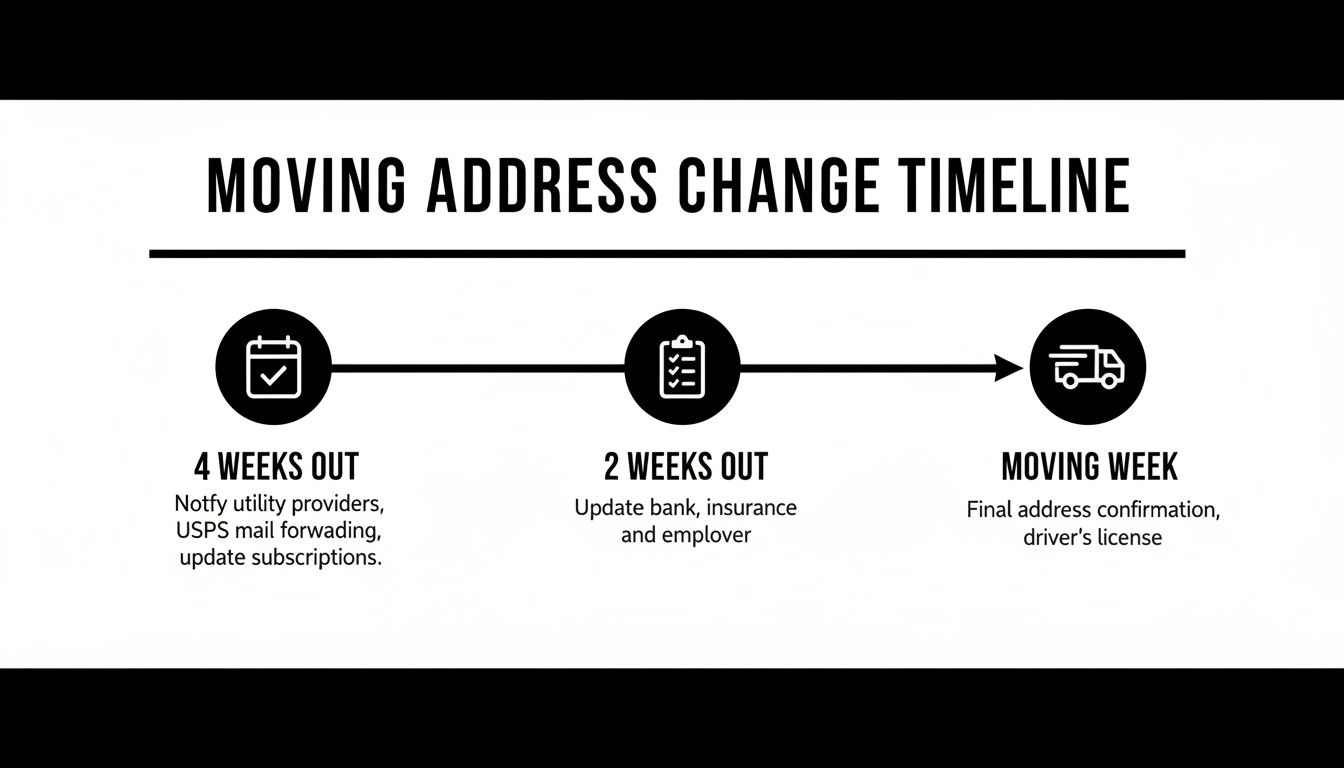
As you can see, it all builds up. You start with the groundwork and then move on to the final confirmations as moving day gets closer.
Four Weeks Before You Move
Think of this as your prep phase. The goal right now is to figure out everyone who needs your new address and get all the necessary documents in one place. Trust me, being proactive here will save you from frantically digging around for account numbers later on.
Start by making a master list. A simple spreadsheet works wonders, but a notebook is fine too. A great way to jog your memory is to go through your last few bank statements and your email inbox – you’ll quickly spot all those regular bills, subscriptions, and memberships.
To make the list less overwhelming, try splitting it into categories:
- Government: HMRC, DVLA, Electoral Roll, Council Tax
- Financial: Banks, credit cards, pension providers, loans, insurance companies
- Utilities: Gas, electricity, water, broadband, mobile phone
- Personal: GP, dentist, vet, magazine subscriptions, loyalty cards
For each one, just make a quick note of how you need to update them. Is it an online portal, a phone call, or an old-school form in the post? Doing this little bit of research now will pay off massively.
Two Weeks Before You Move
Okay, you've got your master list. Now it's time to actually start telling people you're moving. From experience, two weeks out is the sweet spot for most organisations. It gives them enough time to process the change without being so early that they stop sending important letters to your old address too soon.
Begin with your high-priority contacts – the ones where a missed update could cause real problems, like a financial penalty or even a security risk.
One of the most common things people forget is their car insurance provider. Your postcode is a massive factor in how your premium is calculated. If you don't update it and then need to make a claim, your policy could actually be invalid. It's a five-minute job that could save you from a huge financial hit.
This is also the perfect moment to sort out your Royal Mail Redirection service. It might feel like just a safety net, but I'd say it's an essential part of the process. It usually takes about five working days to kick in, so applying two weeks ahead ensures it’s active from day one, catching any post you’ve inevitably missed.
The Week of Your Move
The final week is all about tying up loose ends and getting ready for the handover. Most of the critical address changes should be well underway by now, but a few things are best left until the last minute.
You’ll need to get in touch with your utility providers with your final moving date. They'll need this to schedule final meter readings at your old place and get the account set up for your new one. For a deeper dive on this, check out our guide on what to do when moving house.
Finally, don't forget your digital life! It's so easy to overlook, but take a moment to update your primary delivery address on Amazon, eBay, and your online supermarket. Nothing is more frustrating than seeing your first post-move takeaway get delivered to your old address. It’s also worth a quick check of the saved addresses in your web browser's autofill settings – it’s another one that’s easy to miss.
The Ultimate UK Address Change Checklist
Knowing who to tell about your move is just as important as knowing when. It's a daunting task, and it's easy to forget someone. A missed notification can be a minor hiccup, like your favourite magazine going astray, or a major headache, like a hefty fine or even a voided insurance policy.
To make things less overwhelming, I've broken down the list into four simple categories. Think of this as your master checklist—work through it, tick each one off, and you can rest easy knowing nothing critical has been missed.
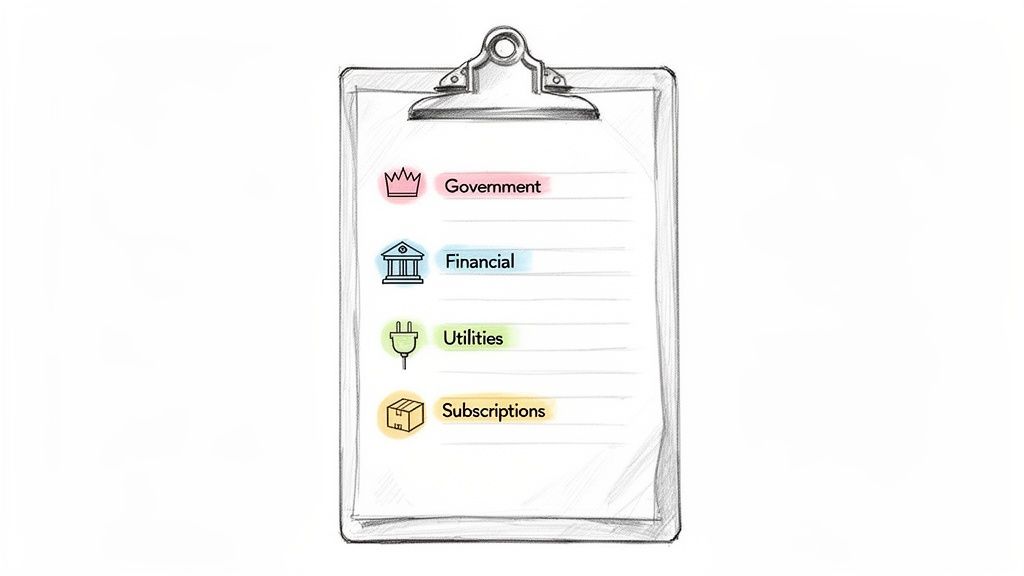
Essential Government Bodies
First things first, let's tackle the non-negotiables. These are the official bodies you absolutely must inform to stay compliant and keep essential services running smoothly. Getting these wrong can lead to some serious problems down the line.
-
HM Revenue & Customs (HMRC): This one is vital. Your address is directly linked to everything from your National Insurance and income tax to any state benefits you receive. Get it wrong, and you could miss crucial tax code notifications, leading to a financial mess later. The easiest way to update HMRC is usually through your online Government Gateway account.
-
Driver and Vehicle Licensing Agency (DVLA): If you're a driver, this isn't just a suggestion—it's a legal requirement. You need to update the address on both your driving licence and your vehicle's V5C logbook. Don't put this off, as you could face a fine of up to £1,000. The good news? It’s free and simple to do on the GOV.UK website.
-
Electoral Roll: Registering at your new address ensures you can have your say in future elections. But just as importantly, it's a huge factor in your credit score. Lenders use the electoral roll to confirm who you are, so being registered at your current home can make a real difference when you apply for a mortgage, loan, or credit card.
-
Council Tax: You'll need to speak to two different councils here. Let your old council know your move-out date to close that account, and then register with the new council from the day you move in. This simple step stops you from paying for two properties at once and prevents any nasty backdated bills from landing on your new doormat.
The UK is a nation on the move. To give you an idea, the Postcode Address File (PAF), which Royal Mail manages, grew by 18,795 new delivery points in January 2025 alone, pushing the total number of active addresses past 32 million. With so much activity, it's no wonder people forget key updates. You can see more of these stats on the Powered by PAF website.
Your Financial Footprint
Next up: your finances. From banks to insurance providers, everyone needs your new address for security and communication. An old address can trigger fraud alerts, cause delays in receiving new bank cards, or, worst of all, send sensitive financial statements to the wrong person.
Most banks and credit card companies let you do this quickly and securely through their mobile app or online banking. Here’s a quick list of who to get in touch with:
- Banks and Building Societies (for current accounts, savings, and mortgages)
- Credit Card Companies (don't forget store cards!)
- Loan Providers (think student loans, personal loans, or car finance)
- Pension Providers (this includes both private and workplace schemes)
- Investment Companies (for stocks, shares, and ISAs)
- Insurance Providers (car, home, life, pet, and health insurance)
Remember, your postcode directly influences your home and car insurance premiums. Notifying your insurer of your move is not just a formality—it’s a contractual obligation. An incorrect address could invalidate your policy, leaving you uninsured in the event of a claim.
Household and Utility Services
Nothing says "welcome home" like having the lights on and the Wi-Fi working. Ensuring a seamless switch of your home services just takes a bit of timely communication. Trust me, the last thing you want after a long day of moving is to discover there's no electricity.
Get in touch with these providers at least a couple of weeks before you move. You'll need to schedule the disconnection at your old place and the connection at your new one, and don't forget to take final meter readings on moving day itself.
- Energy Suppliers (Gas and Electricity)
- Water Company
- Broadband and Landline Provider
- Mobile Phone Provider
- TV Licensing: Your TV Licence needs to move with you. It's easy to transfer your licence to your new address online. If you're moving somewhere you no longer need one (or into a shared house that has one), you can cancel it and might even get a refund.
Just imagine this: you've just moved into your new Bristol flat on a Friday evening, exhausted, only to find the internet won't be connected for another week. A little bit of advance planning completely avoids that first-weekend frustration.
Personal and Lifestyle Subscriptions
This last group covers all the 'nice-to-haves' that are part of your everyday life. While maybe not as critical as HMRC, updating them saves you money and stops your deliveries from ending up at your old address.
A great tip is to scan your bank statements from the last few months—it's the best way to catch any recurring payments you might have forgotten about.
Here are the common ones people miss:
- Subscription Boxes (food, coffee, beauty, you name it)
- Magazine and Newspaper Deliveries
- Gym Memberships
- Online Shopping Accounts (Amazon, eBay, and ASOS are the big ones)
- Loyalty and Reward Schemes (like your Tesco Clubcard or Nectar card)
- Professional Bodies and Trade Unions
- Your Vets (crucial for keeping your pet's microchip details up to date)
- Healthcare Providers (GP, dentist, and optician)
Taking an hour to work through this list methodically will pay off big time. It stops the new residents from enjoying your coffee subscription and ensures your pet’s microchip details are correct in an emergency, paving the way for a smooth, stress-free transition.
Key Address Tasks for Moving Week
Moving week is an absolute whirlwind. It’s a blur of boxes, final checks, and that unique mix of excitement and stress. While you’ve hopefully ticked off most of your address changes by now, there are a few key tasks that have to happen right in the thick of it. Think of this as your immediate action plan for the first few days in your new place, making sure you start off on the right foot.
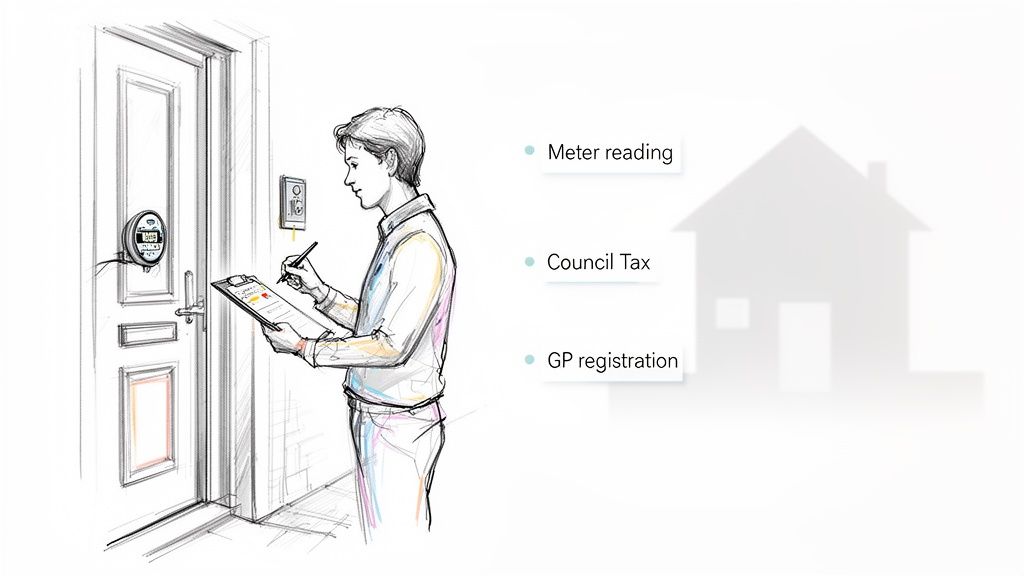
The second you hand over the keys to your old property, you’re also finalising your financial responsibility there. It’s all about creating a clean break so you’re only ever paying for what you’ve actually used.
Finalising Utility Readings
Just before you pull that old front door closed for the last time, stop and take your final meter readings. It's so easy to forget this in the chaos, but trust me, skipping this step can lead to a world of pain with estimated bills and disputes down the line.
Find your gas, electricity, and water meters. Take a clear photo of each one, making sure the reading and the meter serial number are both crystal clear. This photo is your golden ticket, your undeniable proof. Fire these readings off to your suppliers straight away to officially close your account at that address.
Then, as soon as you step into your new home, do the exact same thing. Find the new meters, take photos of their readings, and get them sent over to either the existing supplier or the new company you've chosen. This simple five-minute job ensures your first bill is spot-on from day one.
Taking a date-stamped photo of your meter readings is a small but powerful step. It provides concrete evidence that protects you from being overcharged by suppliers who might otherwise rely on estimates, saving you both money and hassle.
Registering for Council Tax
Next on your immediate to-do list: get registered for council tax at your new address. Don't put this off. Councils can, and often do, backdate bills, and a surprise invoice for a few hundred quid is the last thing you need after splashing out on a move.
Most councils have a simple online form for new residents. You'll need to tell them:
- Your new full address and the date you moved in.
- Your previous address and the date you moved out.
- Your contact details so they can set up the new account.
Giving them this information also kicks off the process of closing your old account. By providing both addresses, you ensure a smooth handover between the two local authorities, which stops you from being charged for two properties at once.
Sorting Out Local Healthcare
This one might not feel as urgent as the power and water, but registering with a local GP and dentist should be right at the top of your list for that first week. You never know when you’ll need a doctor, and trying to register when you’re unwell is a nightmare.
Start by hopping on the NHS website to find the nearest surgery accepting new patients. Once you've found one, you'll usually just need to fill out a form and show proof of your new address, like a recent council tax or utility bill.
Do the same for a dentist. NHS dental places can be like gold dust in some areas, so it's a good idea to get your name on a list as soon as you arrive. Getting your local healthcare sorted gives you incredible peace of mind. Getting these tasks done and dusted during moving week makes for a seamless address change for moving and sets you up for a happy, hassle-free start in your new community.
A Few Words for Renters and Businesses
Changing your address isn't a one-size-fits-all job. The core idea is the same for everyone, but the actual to-do list looks very different depending on your circumstances. Moving a business, for instance, comes with a whole layer of legal and operational headaches that someone moving flats won't face. Likewise, renters have specific duties to their landlords that homeowners simply don't need to worry about.
Getting these specific details right is the key to a smooth transition, whether you're shifting your company across town or just moving into a new rental.
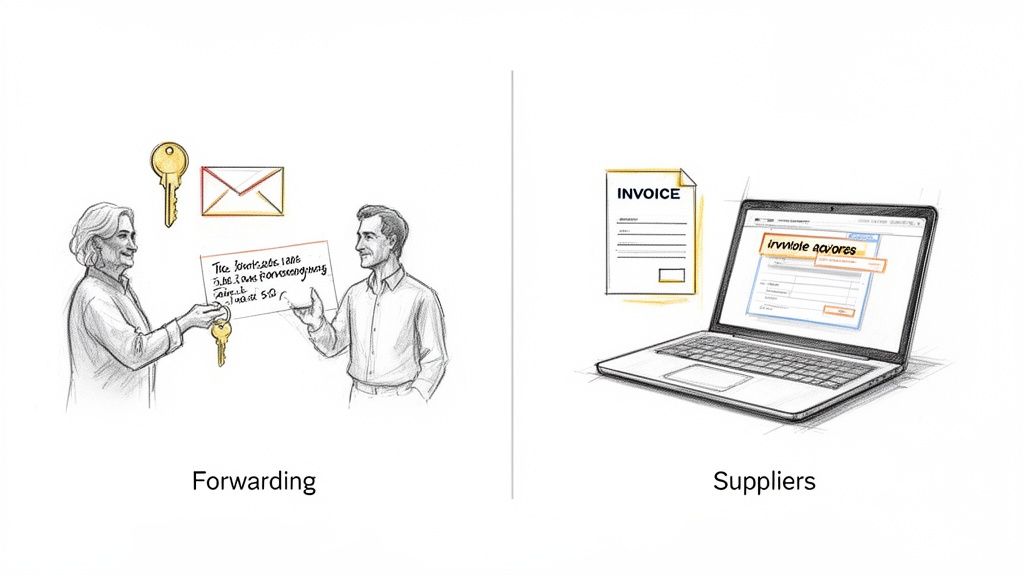
Here's a breakdown of the unique challenges you might be facing and how to handle them.
Special Considerations for Businesses
Relocating a business is a major project, and the address change is a legally critical part of it. This isn't just about making sure your post finds you; it's about compliance. Your first two calls should be to Companies House and HMRC. You must officially update your registered office address with them. Get this wrong, and you risk penalties and could miss vital statutory notices.
Once the official side is handled, you’ve got to think about keeping the wheels turning.
- Suppliers and Creditors: Let everyone you work with know you're moving, well ahead of time. This is crucial for making sure your invoices are paid on time and that your deliveries don’t end up at the old building.
- Clients and Customers: Tell your customers you're on the move! Update your website, your Google Business Profile, and all your social media accounts the moment you can. You don't want people turning up at the wrong place.
- Business Banking: Give your bank a heads-up. You need to ensure new cards, bank statements, and any other sensitive financial information lands securely at your new address.
Moving a whole office is a logistical puzzle. For a much deeper dive, our office move planning checklist breaks down every single step.
Key Tasks for Renters
If you're renting, your priorities are slightly different. Your main focus is tying up loose ends at your old place and ensuring a clean start at the new one, especially when it comes to your tenancy agreement and that all-important deposit.
It's absolutely essential to give your landlord or letting agent your new forwarding address, and make sure you do it in writing. If you don't, they have no way to send you your deposit back, which can cause massive delays and headaches.
Your landlord has a legal duty to protect your deposit in a government-approved scheme, but they also need a reliable way to contact you after the tenancy ends. Giving them a forwarding address is more than just polite—it's the fastest way to get your deposit returned.
Renters are constantly on the move. With 35% of UK households now in the rental sector, this is a huge part of the moving landscape. In places like Bath, it’s common for people to move every 12-18 months. This high turnover makes timely updates even more critical. We know that delays in GP registration can affect 20% of movers, and forgetting to tell HMRC can lead to tax code problems down the line.
When you're dealing with the ins and outs of a new tenancy, having clear documentation is a lifesaver. A good free rental agreement template can be a great resource for understanding exactly what's expected of you.
Guidance for Landlords and Letting Agents
Now, let's flip the script. If you're a landlord, managing the changeover between tenants requires a bit of planning. It’s almost inevitable that post will keep showing up for the old tenant after they’ve left.
While you're not legally required to forward their mail, it's a simple courtesy that goes a long way in maintaining a good reputation.
The easiest thing to do is just cross out the address, write "Not at this address, please return to sender" on the envelope, and pop it back in a postbox. If you find mail is persistently arriving, it's worth encouraging outgoing tenants to set up a Royal Mail Redirection service before they leave. It’s a small step for them that saves you a lot of admin and helps protect their personal information.
Local Moving Insights for Bristol and Bath
Moving to a place as unique as Bristol or Bath requires a bit more than the standard change-of-address checklist. While you absolutely need to cover the national bases, it's the local knowledge that really turns a potentially stressful relocation into a smooth transition. After years of helping people move around these vibrant cities, we’ve learned exactly where the common tripwires are.
The market here is always buzzing. We see it every day. The broader UK housing market is constantly in motion, with average UK house prices hitting £271,000 by November 2025, a 2.5% jump in a year. England's average alone was up to £293,000, according to the UK House Price Index summary. This constant activity means a steady stream of families and businesses moving right here in our area, all facing the same local council hurdles.
Navigating Local Council Specifics
Your first local task? Council tax. It's not the most exciting job, but it's crucial. Whether you're moving into Bristol City Council territory or Bath & North East Somerset Council, get yourself registered the moment you have the keys. Don’t put this off. Both councils are pretty efficient, but getting into their system from day one stops any surprise backdated bills from landing on your new doormat.
Next, you’ll want to get to grips with waste and recycling. Collection schedules can vary wildly, even from one street to the next, particularly in Bristol. Pop your new postcode into the relevant council website straight away. You’ll find your collection day and get the lowdown on the local recycling rules. Missing your first bin day could mean a two-week wait with overflowing boxes and bags, which is hardly the welcome you want.
A classic oversight for newcomers is underestimating the residents' parking zones (RPZs). In neighbourhoods like Clifton in Bristol or anywhere in central Bath, a parking permit isn’t just a nice-to-have; it's essential. Apply for your permit before you even pack a box, as processing can take a while and the parking wardens are famously on the ball.
Getting Ahead with Parking and Permits
Seriously, applying for a residents' parking permit should be right at the top of your to-do list. These zones are in place to manage the notoriously tight on-street parking. To get your application sorted, you'll need proof of residency, like your new tenancy agreement or first council tax bill. Don't leave it until moving day to realise the van has nowhere to park.
This is exactly where bringing in a professional moving team can be a game-changer. While you're tied up with these vital bits of admin—sorting the council tax, applying for permits, and figuring out bin days—we're taking care of the entire physical move.
Handing over the heavy lifting frees up your time and headspace to focus on the paperwork that only you can do. Taking a look at professional removals and storage services could be the key to juggling these local demands without the overwhelm, making sure your whole move is as smooth as possible.
Got a Question About Changing Your Address?
Even with the best moving checklist in hand, a few little questions always seem to pop up. It’s totally normal to get stuck on the details – and it’s much better to ask now than to find out you’ve missed something important later on.
We get asked these questions all the time, so we’ve put together some straight-talking answers to help you feel confident you’ve got everything covered.
How Long Does a Royal Mail Redirection Really Take to Set Up?
This is a brilliant question because timing is everything when you're moving. While Royal Mail says they can get a redirection running in as little as five working days, our advice is simple: don't cut it that fine.
From experience, we always tell our clients to apply at least two weeks before your moving day. This builds in a sensible buffer for any unexpected hold-ups and makes sure your mail starts arriving at your new front door from day one.
They offer a few different options, so you can pick what works for you:
- 3 months: A good safety net if you're super organised and just want to catch any last-minute stragglers.
- 6 months: This is the most popular choice. It gives you plenty of time to update everyone without feeling rushed.
- 12 months: The best option if you have complex finances or receive important annual statements you can't afford to miss.
A small investment here buys you a massive amount of peace of mind.
What Happens If I Forget to Update My Driving Licence?
Forgetting to tell the DVLA you've moved isn't just a minor admin error; it’s a legal issue. You're required by law to keep the address on both your photocard driving licence and your V5C log book up to date. The penalty for not doing so can be a hefty fine of up to £1,000.
That potential fine isn't just a scare tactic. The DVLA needs your current address for everything from routine reminders to official notices. An old address could mean you miss critical information about your licence or vehicle.
The good news? It's completely free and surprisingly quick to do. The easiest way is to use the official GOV.UK online service for changing your driving licence address.
Is There a Single Service That Can Tell Everyone I've Moved?
Wouldn't that be a dream? One click to notify every bank, utility company, and government department. While some paid services claim to do this, their results can be a bit hit-and-miss. You might have also heard of the 'Tell Us Once' service, but it's crucial to know this is only for reporting a death, not for when you move house.
So, for now, there isn't one official "master service" that handles a personal address change for you. The most reliable way is still the old-fashioned one: work through a checklist and contact each organisation yourself.
Do I Have to Tell My Car Insurer Before I Move?
Yes, absolutely. This one is non-negotiable. Your postcode is a huge factor in how your car insurance premium is calculated, as it reflects local statistics for things like theft and accidents. You need to let your insurer know your new address before you officially move.
If you don't, you could technically invalidate your policy. Just think of the nightmare scenario: you have a bump on moving day and then discover you aren't covered because your policy is tied to your old address. It’s a risk that’s just not worth taking. One quick phone call is all it takes to keep your cover intact and see if your premium needs adjusting.
Sorting out the admin for a move is a big job. While you're busy ticking off your to-do list, why not let SimplyPro Removal & Storage Ltd take the strain of the actual move? Get your free, no-obligation quote today and let our experts handle the heavy lifting.