

Every home has them: those awkward, unused alcoves beside fireplaces, under stairs, or tucked into hallways. In bustling cities like Bristol and Bath, where space is a premium, these neglected nooks represent untapped potential. Far from being a design challenge, an alcove is an opportunity to create beautiful, functional storage that enhances your living space and reduces clutter. This comprehensive guide explores a variety of innovative alcove storage ideas, offering practical solutions that cater to every home, from period properties to modern flats.
We will delve into detailed plans, from custom-built cabinetry to flexible, renter-friendly options, helping you reclaim wasted space with style and purpose. Whether you're a homeowner planning a permanent installation or a tenant looking for a temporary fix, this article provides actionable insights for every scenario. Before you begin building, however, the first step is always to assess what you truly need to store. To truly transform unused corners into smart storage, begin with a thorough decluttering using an ultimate room-by-room declutter checklist to identify what to keep and what to organise.
This roundup covers everything from classic built-in shelving to clever window seats and modular systems. Each idea is broken down with guidance on materials, estimated costs, and whether a DIY approach is feasible or if you should hire a professional. We will also provide styling tips to ensure your new storage solution seamlessly integrates with your home's aesthetic. Get ready to turn that overlooked corner into one of your home’s most valuable features.
1. Built-In Alcove Shelving Systems
Built-in alcove shelving systems are a classic and highly effective solution for reclaiming wasted space. These custom-fitted units are designed to slot perfectly into wall recesses, particularly those flanking fireplaces in Victorian and Edwardian properties common across Bristol and Bath. By converting these architectural quirks into functional storage, you gain valuable shelf space without encroaching on your living area, creating a seamless, integrated look.
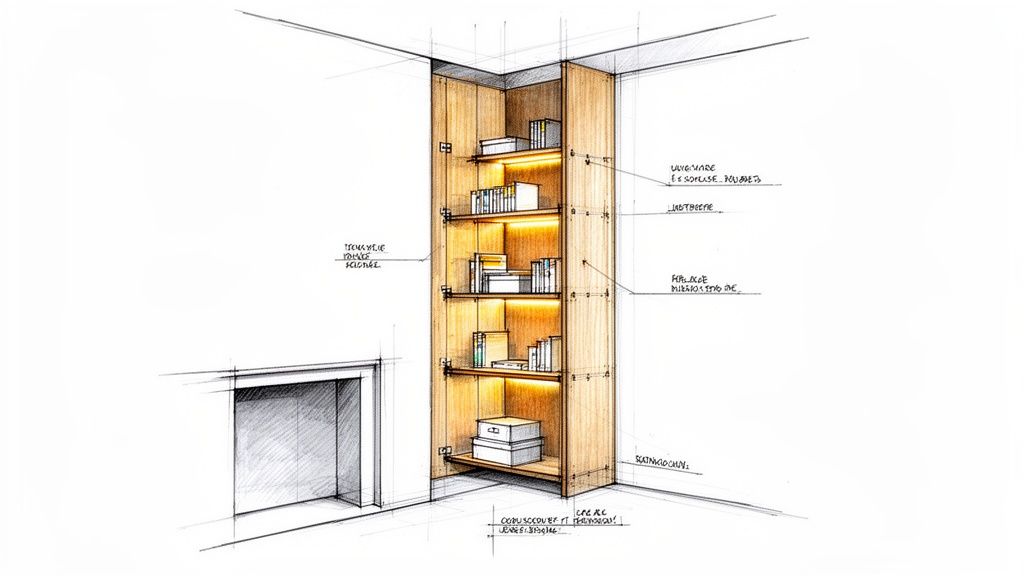
This permanent storage solution is ideal for homeowners looking to add lasting value and character to their property. It transforms awkward nooks into statement features, perfect for a home library, displaying treasured objects, or organising home office supplies.
### Implementation and Best Practices
When planning your built-in alcove shelving, precision is paramount.
- Accurate Measurements: Measure the height, width, and depth of the alcove at multiple points. Older walls are rarely perfectly straight, so these variations must be accounted for to ensure a snug fit.
- Material Choice: The material impacts both aesthetics and durability. MDF is a cost-effective and smooth option for painting, while solid woods like oak or pine offer a traditional, warm finish. Consider the weight of what you'll be storing; books require stronger, thicker shelves than decorative items.
- DIY vs. Professional Installation: A competent DIYer can tackle a simple shelving project. However, for a flawless, high-end finish, especially in period homes with uneven walls, hiring a professional carpenter or a specialist furniture assembler is recommended. If you need help with a complex flat-pack system or custom unit, you can find expert Bristol furniture assembly services here.
### Pros and Cons
Pros:
- Maximises Space: Fully utilises vertical and recessed space for a clutter-free floor.
- Seamless Integration: Looks like an original architectural feature, enhancing room aesthetics.
- Adds Property Value: A well-executed permanent feature is attractive to future buyers.
Cons:
- Permanent: Cannot be moved, making it unsuitable for renters or those who frequently redecorate.
- Higher Cost: Custom joinery is more expensive than freestanding alternatives.
- Requires Professional Skill: Achieving a perfect fit can be challenging without expertise.
2. Cupboard and Cabinet Alcove Insertions
For those who prefer a more streamlined, minimalist aesthetic, cupboard and cabinet alcove insertions offer a brilliant way to conceal clutter. These bespoke units are built to fit snugly into a recess, providing enclosed storage that hides belongings from view and protects them from dust. This makes them one of the most practical alcove storage ideas, particularly for bedrooms, living rooms, and hallways in Bristol's many terraced properties.
This solution is perfect for creating discreet wardrobes, media units, or even a hidden home office. By enclosing the space, you transform an awkward nook into a highly functional storage feature that contributes to a calm and organised living environment. It's an excellent choice for anyone looking to reduce visual noise and maintain clean lines in their interior design.
### Implementation and Best Practices
Careful planning is essential to maximise the utility of your alcove cupboards.
- Internal Configuration: Decide the primary function before you build. Will it be a wardrobe needing hanging rails and shoe racks, or a media unit requiring cable management holes and shelving for devices? Map out the interior layout for optimal organisation.
- Doors and Hardware: The style of door (e.g., shaker, flat-panel, louvred) will define the look. Choose high-quality, soft-close hinges and durable handles that complement your room's decor. Push-to-open mechanisms can create an ultra-minimalist, handleless finish.
- Ventilation: Enclosed spaces can trap moisture. Ensure adequate ventilation, especially in older properties or if storing electronics. Small vents cut into the back or top of the unit are often sufficient to promote air circulation.
- Professional vs. DIY: While flat-pack cabinet systems can be adapted by a skilled DIYer, achieving a truly seamless, wall-to-wall fitted look requires professional joinery. A carpenter can scribe the units perfectly to crooked walls, a common challenge in period homes across Bath and Bristol.
### Pros and Cons
Pros:
- Conceals Clutter: Hides items completely, creating a tidy and serene appearance.
- Dust Protection: Protects contents like clothing, electronics, and documents from dust.
- Highly Customisable: Interiors can be configured precisely to your storage needs.
Cons:
- Can Feel Bulky: Depending on the design, floor-to-ceiling units can feel more imposing than open shelves.
- Access Limitations: You need to open doors to see and access contents, which can be less convenient than open shelving.
- More Complex Installation: Requires precise fitting and hardware installation, often best left to professionals.
3. Alcove Window Seat Storage Benches
Alcove window seat storage benches are a charming and highly practical solution for transforming an often-underused space into a dual-purpose feature. These custom-fitted units slot perfectly into window alcoves, common in the bay-fronted Victorian houses of Bristol and the elegant cottages of Bath, providing comfortable seating while incorporating valuable hidden storage. By utilising the space beneath the window, you gain a cosy nook and discreet storage without sacrificing floor space.
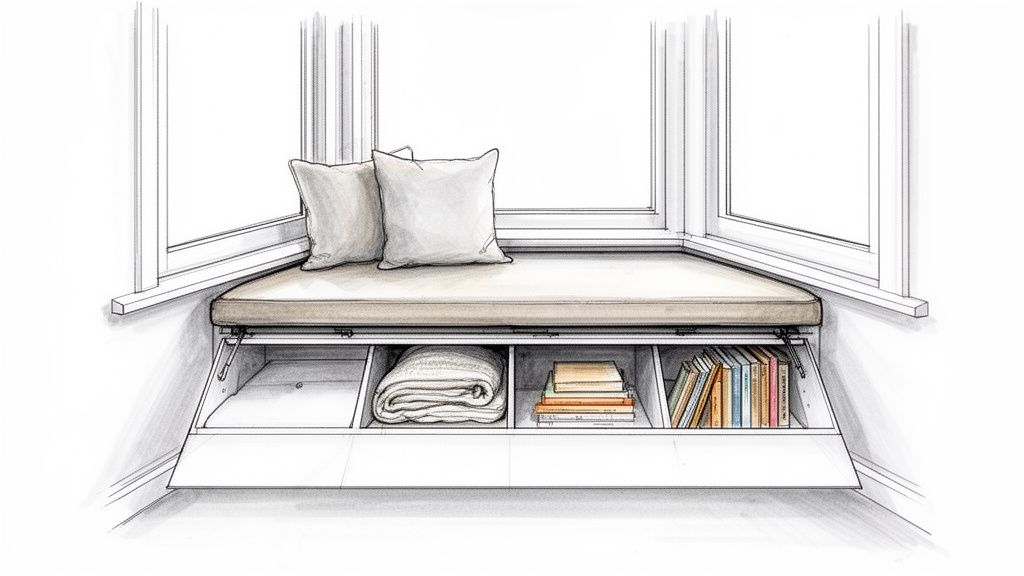
This solution is ideal for anyone looking to add functionality, comfort, and character to a room. It creates a perfect reading spot, a place to enjoy a morning coffee, or extra seating for guests, all while cleverly concealing items like guest bedding, seasonal decorations, or children's toys. It's one of the most inviting alcove storage ideas available.
### Implementation and Best Practices
Careful planning is key to creating a window seat that is both comfortable and functional.
- Comfortable Dimensions: Ensure the seat height is comfortable for sitting, typically around 45-50 cm including the cushion. The depth should be at least 50 cm to allow for proper seating without feeling perched.
- Storage Access: Decide between a lift-up hinged lid or pull-out drawers. Hinged lids offer maximum internal space but require you to clear the seat for access. Drawers are more convenient for frequently used items. Always install soft-close hinges or runners to prevent slamming.
- Material and Finish: Moisture-resistant MDF is an excellent choice, especially near windows where condensation can occur, and it provides a smooth surface for painting. For a more traditional look, solid wood offers warmth and durability.
- Ventilation: If the bench is covering a radiator, ensure the design incorporates a grille or vent in the front panel to allow for proper air circulation and heat distribution.
### Pros and Cons
Pros:
- Dual Functionality: Provides both comfortable seating and significant hidden storage.
- Adds Charm and Character: Creates a cosy, architectural focal point in any room.
- Space Efficient: Makes excellent use of an awkward space without taking up valuable floor area.
Cons:
- Can Block Radiators: Requires careful design to ensure heat can still circulate if a radiator is present.
- Fixed Position: As a permanent or semi-permanent installation, it cannot be easily moved.
- Potentially Costly: Custom-built units require skilled craftsmanship, making them more expensive than freestanding options.
4. Alcove Drawer and Pull-Out Storage Units
For those seeking a more concealed and organised approach, alcove drawer and pull-out storage units offer a sleek, modern solution. Instead of open shelving, this method fills the recess with custom cabinetry featuring drawers, pull-out baskets, or sliding organisers. This is one of the most practical alcove storage ideas for managing smaller items and preventing visual clutter, transforming an awkward space into a highly functional storage hub.
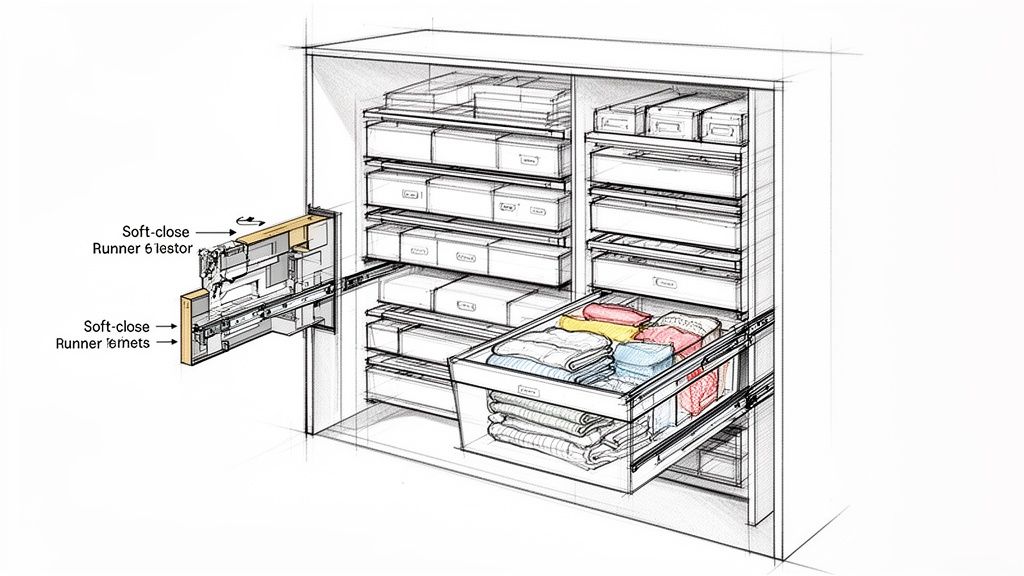
This style of storage is exceptionally versatile, making it perfect for bedrooms needing a compact chest of drawers, home offices requiring organised file and stationery storage, or even living rooms looking to hide away electronics and media. It provides deep, accessible storage that keeps everything neatly out of sight.
### Implementation and Best Practices
Careful planning is crucial to ensure the functionality of drawers and pull-outs.
- Mind the Depth: Accurately measure the alcove's depth. Ensure there is enough clearance for drawers to extend fully without being obstructed by nearby furniture or architectural features.
- Choose the Right Mechanism: For heavy loads, opt for high-quality, full-extension metal runners. Soft-close mechanisms are a worthwhile addition, preventing slamming and reducing wear and tear on the unit.
- Organisation is Key: Maximise the utility of your drawers by using internal dividers. This is especially helpful for organising clothing, kitchen utensils, or office supplies, preventing small items from becoming jumbled.
- Professional Assembly: Drawer units, particularly complex flat-pack systems or custom builds, require precise alignment to function smoothly. Engaging a professional furniture assembly service ensures all mechanisms are installed correctly for long-lasting, stable use.
### Pros and Cons
Pros:
- Concealed Storage: Keeps clutter hidden behind a clean, uniform facade.
- Excellent Organisation: Drawers and dividers make it easy to categorise and find items.
- Highly Accessible: Pull-out designs bring the back of the space to you, eliminating hard-to-reach corners.
Cons:
- Complex Installation: Requires more technical skill to install than simple shelves.
- Can Be Expensive: Custom cabinetry and quality drawer hardware are a significant investment.
- Less Display Space: Not suitable for showcasing decorative items or books.
5. Alcove Door and Bi-Fold Storage Systems
For a storage solution that offers complete concealment, alcove door and bi-fold systems are an excellent choice. This approach transforms a recess into a fully-fledged hidden cupboard or wardrobe, using hinged, sliding, or concertina-style bi-fold doors to close off the space. This is one of the most effective alcove storage ideas for creating a calm, uncluttered aesthetic, especially in minimalist interiors or busy open-plan living areas found in modern Bristol apartments.
This method is perfect for homeowners who want to hide away less decorative items, such as cleaning equipment, children's toys, or a bulky media system. It provides the ultimate streamlined finish, turning an awkward nook into a functional, discreet utility space that blends seamlessly with the surrounding wall.
### Implementation and Best Practices
Careful planning is crucial for ensuring your doors operate smoothly and look integrated.
- Door Type and Clearance: Choose the right door for your space. Hinged doors require ample swing room, sliding doors need a clear track, and bi-fold doors need a smaller clearance but still project into the room. Measure carefully to ensure they won't obstruct furniture or walkways.
- Track System Quality: For sliding and bi-fold systems, don't compromise on the quality of the tracks and runners. A robust, well-engineered system will ensure smooth, quiet operation for years to come. Regular cleaning of the tracks will prevent jamming.
- Professional Installation: While fitting a simple hinged door might be a DIY job, complex bi-fold or sliding systems, especially in older Bath properties with uneven walls, benefit from professional installation. This guarantees perfect alignment and functionality.
- Mirrored Finishes: Consider using mirrored doors to make the room feel larger and brighter. This is a particularly effective trick in smaller bedrooms or narrow hallways.
### Pros and Cons
Pros:
- Complete Concealment: Hides clutter entirely for a minimalist, tidy appearance.
- Versatile Storage: The internal space can be configured with any combination of shelves, rails, or drawers.
- Space-Saving Options: Sliding and bi-fold doors are ideal for tight spaces where a swinging door isn't practical.
Cons:
- Can Restrict Access: Depending on the design, you may not be able to view the entire contents of the alcove at once.
- Higher Mechanical Risk: Moving parts like tracks and hinges can wear out over time and may require maintenance or replacement.
- More Complex Installation: Requires precise measurements and fitting to ensure doors hang correctly and operate smoothly.
6. Alcove Basement and Under-Stair Storage Optimisation
Purpose-designed storage solutions can transform often-overlooked spaces like basement alcoves and under-stair nooks into highly functional areas. In many of Bristol and Bath's older properties, these irregular architectural features present a prime opportunity to create valuable, out-of-sight storage for seasonal items, household supplies, or even business stock, reclaiming otherwise wasted space.
This approach is perfect for homeowners looking to declutter their main living areas by relocating less-frequently used items. By optimising these hidden alcoves, you can convert awkward voids into practical, organised zones, such as pull-out drawers in a Georgian townhouse's staircase or robust shelving in the corner of a terraced house basement.
### Implementation and Best Practices
Careful planning is essential to make these damp-prone or awkward spaces usable.
- Assess Environmental Conditions: Before building, check for damp, condensation, and temperature fluctuations. Basements and under-stair areas can be prone to moisture, which can damage stored goods. Consider installing a dehumidifier or adding ventilation if necessary.
- Use Appropriate Materials: Opt for moisture-resistant materials like treated timber, PVC, or metal shelving systems. Use breathable storage containers, such as fabric boxes or vented plastic tubs, to prevent condensation build-up and mould growth.
- Prioritise Accessibility and Organisation: Design your solution with accessibility in mind. Pull-out drawers, rolling units, or deep shelves with clearly labelled boxes make it easy to retrieve items. Keep a detailed inventory to track what is stored where, especially for seasonal decorations or business stock. Just as with optimising roof spaces, a methodical approach is key; you can find more insights by reading our guide to loft storage conversions.
### Pros and Cons
Pros:
- Hidden Storage: Keeps clutter out of sight, freeing up primary living space.
- Utilises Awkward Spaces: Makes functional use of areas that are difficult to furnish.
- Highly Customisable: Solutions can be tailored to fit unusual shapes and specific storage needs.
Cons:
- Potential for Damp: These areas often require moisture management to protect stored items.
- Limited Accessibility: Can be difficult to access, making it unsuitable for frequently used items.
- Complex Installation: Fitting storage into irregular or cramped spaces may require professional help.
7. Modular and Portable Alcove Storage Systems
Modular and portable alcove storage systems offer ultimate flexibility, making them a superb choice for renters or those who enjoy reconfiguring their space. Unlike permanent built-ins, these solutions consist of freestanding shelves, stackable cubes, or customisable modular units that can be assembled to fit within a recess without any permanent fixtures. This makes them perfect for student accommodation in Bristol or short-term lets in Bath, where adaptability is key.
This approach is ideal for anyone needing adaptable alcove storage ideas that can move and grow with them. For flexible and adaptable storage solutions, particularly in alcoves, understanding what modular furniture is can help you choose the right system. These pieces can be easily disassembled and transported, offering a sustainable and cost-effective alternative to leaving furniture behind or buying new items after a move.
### Implementation and Best Practices
Careful planning ensures your modular system is both functional and safe.
- Measure for a Good Fit: While they aren't custom-built, you should still measure your alcove's height, width, and depth. Choose a modular system that leaves a small gap around the edges for a clean look and easy removal.
- Safety First: Always follow the manufacturer's assembly instructions. For taller units, it's crucial to use the anti-tip hardware provided to anchor them to the wall, even in a rental property, as small holes are easily filled later.
- Protect Your Floors: Place rubber or felt pads under the feet of the units to prevent scratching or damaging hardwood floors or carpets, ensuring you get your full deposit back.
- Plan for Future Moves: If you anticipate moving, take photos during the assembly process. This creates a visual guide for quick and stress-free disassembly and reassembly in your new home.
### Pros and Cons
Pros:
- Flexibility and Portability: Easily moved, reconfigured, or taken with you when you relocate.
- Rental-Friendly: No permanent alterations are needed, making it ideal for tenants.
- Cost-Effective: Generally more affordable than custom-built joinery.
- Scalable: You can add or remove sections as your storage needs change over time.
Cons:
- Less Integrated Look: May not look as seamless or high-end as a true built-in solution.
- Potential for Wasted Space: A perfect fit is not guaranteed, which can leave awkward gaps.
- Weight Limitations: Often have lower weight capacities per shelf compared to solid, built-in shelving.
8. Alcove Climate-Controlled and Secure Storage Solutions
For items that require more than just a shelf, converting an alcove into a climate-controlled and secure storage unit is a sophisticated solution. These purpose-built systems integrate temperature and humidity controls, as well as security features like reinforced locks or monitoring systems. This turns a simple recess into a specialised vault, essential for protecting valuable, sensitive, or fragile possessions.
This advanced storage idea is perfect for art collectors, wine connoisseurs, or businesses with critical assets. Imagine a discreet wine cellar built into a dining room alcove in a Bristol period property, or a secure recess for sensitive document storage in a Bath law office. It transforms an underused space into a high-functioning, protective environment.
### Implementation and Best Practices
Creating a controlled environment within an alcove requires technical precision and careful planning.
- Insulation and Vapour Barriers: Proper insulation is crucial to maintain a stable internal climate. A vapour barrier must be installed to prevent moisture from penetrating the walls and compromising the controlled environment.
- Climate Control Systems: Specialised compact cooling and humidification units are designed for small spaces like cellars or cabinets. These must be professionally installed to ensure correct airflow and consistent temperature, typically between 12-18°C (55-65°F) for wine.
- Security Measures: Beyond a sturdy, lockable door, consider adding discreet sensors or a small camera linked to your home security system for high-value collections. For business assets, this provides an extra layer of protection during and after relocation.
- Professional Packing and Storage: For sensitive IT equipment or business items needing protection during a move, professional packing is vital. For items requiring off-site protection, you can explore specialised Bristol storage solutions here that offer similar climate-controlled and secure features.
### Pros and Cons
Pros:
- Ultimate Protection: Safeguards valuable items from environmental damage, degradation, and theft.
- Adds Specialised Value: A built-in wine cellar or secure vault is a unique and highly desirable feature.
- Discreet and Integrated: Hides high-value storage within the existing architecture of your home or office.
Cons:
- Significant Investment: Requires professional installation of insulation, climate control units, and security systems.
- Complex Installation: Not a DIY project; requires expertise in HVAC, construction, and security.
- Ongoing Energy Costs: Climate control systems will add to your utility bills.
Alcove Storage: 8-Option Comparison
| Solution | Implementation 🔄 | Resources & Cost ⚡ | Expected Outcomes 📊⭐ | Ideal Use Cases | Practical Tip 💡 |
|---|---|---|---|---|---|
| Built-In Alcove Shelving Systems | High — professional fitting; possible structural checks | High — custom materials (wood/metal/composite) and labour | High storage density, seamless finish, increased property value | Living rooms, period properties, small apartments | Measure precisely; plan load capacity and lighting |
| Cupboard and Cabinet Alcove Insertions | High — bespoke carpentry and longer install time | High — custom cabinetry, quality hardware, expert installer | Enclosed, dust‑protected storage; polished finished look | Bedrooms, hallways, home offices preferring concealed storage | Plan internal layout (drawers/rails); include ventilation |
| Alcove Window Seat Storage Benches | Moderate — carpentry and upholstery (custom or prefab) | Medium — materials, cushions, occasional specialist | Dual-purpose seating + hidden storage; attractive focal point | Bay/windows in cottages, reading nooks, period homes | Use internal dividers; fit soft‑close hinges; match seat height |
| Alcove Drawer and Pull-Out Storage Units | Moderate–High — precise fitting for runners/slides | Medium–High — quality slides, hardware, professional fit recommended | Superior accessibility and organized storage; flexible layouts | Kitchens, bedrooms, offices needing easy access | Measure depth for full extension; use dividers and labels |
| Alcove Door and Bi-Fold Storage Systems | High — tracks/doors require accurate installation | High — door systems, tracks, specialist installation | Fully concealed storage with streamlined, modern appearance | Open‑plan living, small bedrooms, spaces needing neatness | Choose quality tracks; maintain regularly; consider mirrored doors |
| Alcove Basement & Under‑Stair Optimization | High — custom designs for irregular shapes; moisture mitigation | Medium–High — bespoke builds, moisture control, pro install | Makes use of wasted space; ideal for seasonal or infrequent items | Under‑stairs, basements, irregular alcoves in period properties | Assess moisture; use breathable containers and dehumidification |
| Modular & Portable Alcove Storage Systems | Low — DIY assembly; no permanent works | Low–Medium — affordable, portable components | Flexible, reconfigurable storage; lower seamlessness than built‑ins | Renters, students, businesses in transition, temporary needs | Anchor tall units, check weight limits, photograph assembly |
| Alcove Climate‑Controlled & Secure Storage | Very High — HVAC, security, electrical and specialist install | Very High — climate control, monitoring, ongoing energy costs | Optimal protection for sensitive/high‑value items; auditability | Art collections, wine, IT equipment, business records | Monitor conditions, insure items, document condition before storage |
From Awkward Nook to Smart Storage: Your Next Steps
We have explored the vast potential hidden within the often-overlooked alcoves of your home. From the classic elegance of built-in shelving systems to the practical ingenuity of window seat storage, it's clear that these architectural quirks are not problems to be solved, but opportunities to be seized. By thoughtfully implementing the right alcove storage ideas, you can transform a challenging space into a highly functional and aesthetically pleasing feature.
The journey from an awkward nook to smart, integrated storage is one of planning and precision. We’ve covered a wide spectrum of solutions, each with its own merits. Whether you’re drawn to the seamless, permanent finish of bespoke cupboards and cabinets or the adaptable, renter-friendly nature of modular systems, the core principle remains the same: your choice should reflect your lifestyle, your home’s character, and your long-term needs.
Recapping the Path to Perfect Alcove Storage
Before you begin measuring and sketching, let's revisit the crucial takeaways from our deep dive into alcove storage ideas:
- Function First, Form Second: The most successful projects start with a clear purpose. Are you creating a library, a discreet home office, a display for treasured objects, or simply hiding away clutter? Your answer will guide every subsequent decision, from material choice to internal configuration.
- Measurement is Non-Negotiable: The old adage ‘measure twice, cut once’ is paramount. In older Bristol and Bath properties, walls are rarely perfectly plumb and corners are seldom true right angles. Meticulous measurements, taken at multiple points (top, middle, bottom, and front to back), will be the foundation of a professional-looking result.
- Embrace the Details: The small things make a big impact. Integrated lighting can turn a dark corner into a dramatic focal point. Proper ventilation is essential for any enclosed cupboard, especially in period homes. The choice of hardware, paint colour, and finish can elevate a simple storage unit into a bespoke piece of furniture.
- DIY vs. Professional: Be realistic about your skills, time, and tools. While simple freestanding shelving is an achievable weekend project, complex built-ins that require scribing to uneven walls are often best left to experienced carpenters or joiners. A professional can ensure a flawless finish that adds tangible value to your property.
Your Action Plan for Alcove Transformation
Feeling inspired? It’s time to move from ideas to action. Here’s a practical, step-by-step guide to get you started on your alcove project:
- Assess and Define: Choose the alcove you want to tackle. Clearly define its primary function and list everything you intend to store there. This will inform the required depth, height, and strength of your chosen solution.
- Gather Inspiration: Revisit the ideas in this article. Create a mood board on a platform like Pinterest, saving images that capture the style and functionality you're aiming for.
- Budget and Plan: Research the estimated costs for materials or professional labour. Decide whether you are opting for a DIY approach or hiring a tradesperson. If hiring, now is the time to seek quotes from local Bristol or Bath-based joiners.
- Finalise Your Design: Create a detailed sketch, including all dimensions, shelving placements, and any special features like lighting or power outlets.
- Execute with Confidence: Whether you're assembling a flat-pack unit or briefing a carpenter, your detailed plan will ensure the final result aligns perfectly with your vision.
Transforming an alcove is more than just a home improvement project; it’s an investment in your home’s functionality and your daily peace of mind. By reclaiming these underused spaces, you create a more organised, spacious, and harmonious living environment.
Whether you’re embarking on a full-scale renovation that includes new alcove installations or simply need a hand moving furniture to clear the way, SimplyPro Removal & Storage Ltd can help. Our teams provide expert furniture assembly, professional packing for your belongings, and secure transport for custom-built pieces in the Bristol and Bath area. Let us handle the heavy lifting so you can focus on bringing your perfect alcove storage ideas to life.