


Trying to pin down the average removal costs in the UK can feel like you're trying to hit a moving target. But to give you a solid starting point, the typical price for moving a 3-bedroom house locally is around £867. This is a great ballpark figure, but remember that the final bill can swing quite a bit depending on how much stuff you have and how far you're going.
Understanding the Baseline for UK Removal Costs
Before we get into the nitty-gritty details that can push your quote up or down, it helps to know what "average" actually means in the world of removals. Moving house isn’t a one-size-fits-all job.
Think of it like booking a flight. A quick city-hop with just a carry-on will always be cheaper than a long-haul flight with three suitcases. In the same way, moving the contents of a small flat across town is a world away from relocating a large family home from Bristol to Edinburgh.
At its core, the baseline cost is driven by two simple things: the volume of your belongings and the distance they need to travel. It’s common sense, really. A larger house means more furniture, more boxes, and more personal items, which means you’ll need a bigger lorry and more hands on deck. All of that directly adds to the cost.
A Quick Look at Typical Prices
So, what are people actually paying? To give you a clearer idea, we can look at some reliable industry figures. According to data from the HomeOwners Alliance, the average cost for moving a 3-bedroom house is £867, including VAT. This is a handy benchmark for a standard local move.
Of course, this price changes dramatically with the size of your home. A 1-bedroom flat, for example, comes in at an average of just £432, while a sprawling 5-bedroom house can easily top £1,590.
This chart gives you a quick visual on how those average costs stack up.
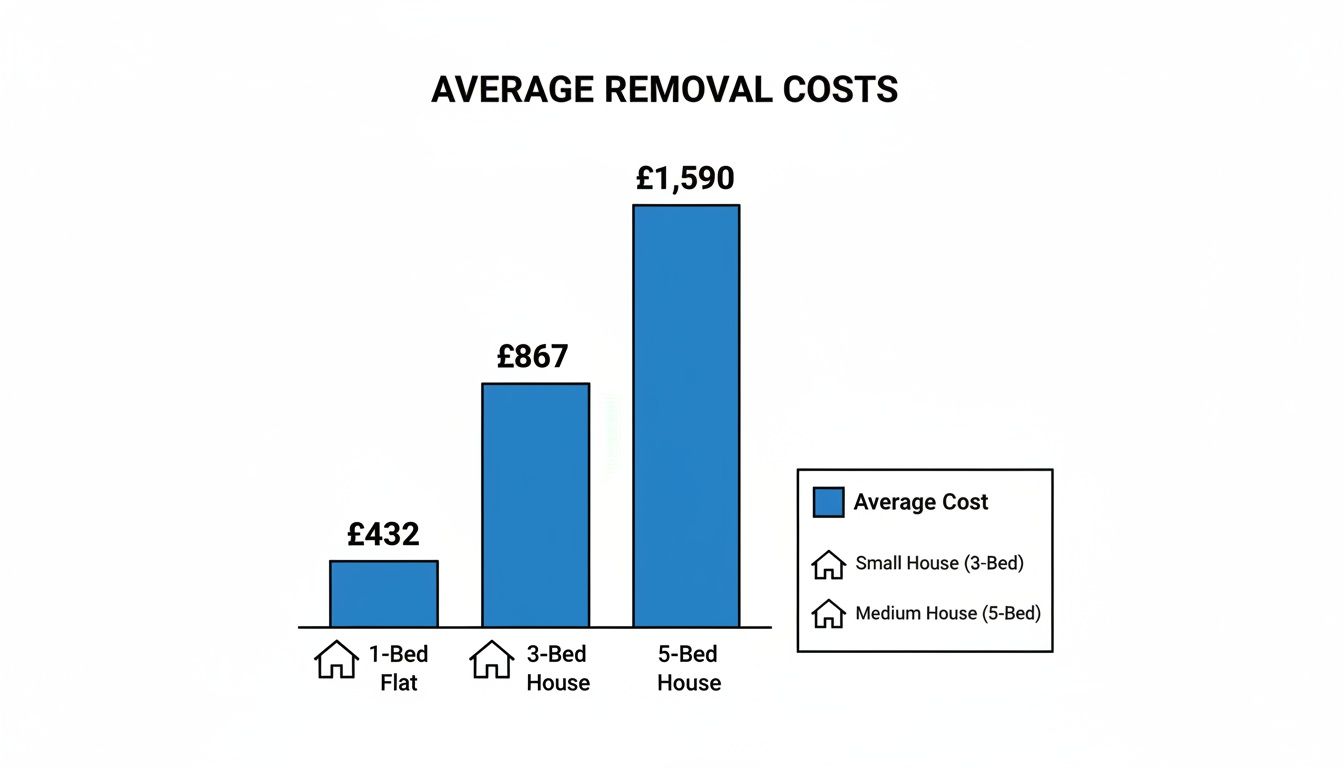
As you can see, the jump is pretty significant. The cost for a 5-bedroom home is nearly four times that of a 1-bedroom flat, which really highlights how much the volume of your possessions matters.
Cost Estimates by Property Size and Distance
To help you get a better handle on your own moving budget, we’ve put together a table that breaks down the estimated costs by both property size and distance. Use this as a rough guide to see where you might land.
Estimated UK Removal Costs by Property Size and Distance
| Property Size | Average Local Move Cost (Under 50 miles) | Average Long-Distance Move Cost (Over 100 miles) |
|---|---|---|
| 1-Bedroom Flat | £400 – £600 | £600 – £900 |
| 2-Bedroom House | £600 – £850 | £850 – £1,200 |
| 3-Bedroom House | £850 – £1,100 | £1,100 – £1,500 |
| 4-Bedroom House | £1,100 – £1,400 | £1,400 – £1,900 |
| 5-Bedroom House | £1,400 – £1,800 | £1,800 – £2,500+ |
These ranges should give you a more refined idea of what to expect. Just keep in mind that they are estimates, and a proper survey is the only way to get a firm quote.
Key Takeaway: The size of your home sets the foundation for the cost, but distance is a major multiplier. Crossing that 100-mile mark often adds 30-50% to the final bill, thanks to the extra fuel, labour hours, and complex logistics involved.
What Really Drives Your Removal Bill
Those average removal costs are a great starting point, but the quote you get will be completely personal to your move. It’s the difference between a suit off the rack and one that's been tailored just for you; the final price comes down to the specific measurements and materials. Several key factors shape your final bill, and once you get your head around them, you’re in a much better position to manage your moving budget.
The single biggest thing that influences the price? The sheer volume of your belongings. It's the bedrock of any quote. More stuff means you'll need a bigger lorry, more crew members to get everything loaded and unloaded safely, and, naturally, the whole job takes longer. A removals company will work this out based on the total cubic feet your possessions take up.
For example, a one-bedroom flat might only need a small Luton van and a two-person team for half a day. But a four-bedroom house, packed with family heirlooms, garden furniture, and a garage full of gear, will probably need a 7.5-tonne lorry and a team of four for the entire day. The difference in resources is huge, and the price will reflect that.
Property Access and Logistical Hurdles
It's not just about what you're moving, but where you're moving it from and to. The access to your properties can throw up all sorts of logistical challenges that add time and labour to the job, which in turn bumps up the cost. The dream scenario is moving from a ground-floor house with a big, clear driveway.
Of course, most moves aren't quite that straightforward. You'll often run into common access issues like these:
- Stairs and Lifts: Shifting everything out of a fifth-floor flat with no lift is a serious workout and takes far more time than a ground-floor property. Even if there is a lift, you can lose time waiting for it or making multiple trips.
- Parking Restrictions: If the removals lorry can't park right outside your front door, the crew has a much longer walk with every single box and piece of furniture. We call this a "long carry," and it can add hours to the job. You might also have to foot the bill for parking permits.
- Narrow Hallways or Doorways: Tight corners and awkward layouts can turn moving a large sofa or wardrobe into a real puzzle. Sometimes, the only solution is to dismantle items and then put them back together at the other end.
A tricky access situation can easily add 20-30% or more to the labour time. This is exactly why a proper survey is so crucial—it lets the removals company spot these problems beforehand and give you an accurate quote, so there are no nasty surprises on moving day.
The Impact of Timing and Seasonality
Finally, the day you pick to move has a surprisingly big say in the final price. Just like booking a holiday, the removals industry has its peak and off-peak seasons, all driven by simple supply and demand.
The busiest—and therefore most expensive—times to move are:
- Weekends: Saturday is the most popular day by a long shot, which makes it the priciest.
- End of the Month: So many tenancy agreements and house completions are scheduled for the end of the month, creating a massive rush.
- Summer Months: June, July, and August are prime moving season, thanks to the nicer weather and school holidays.
Booking your move for a Tuesday in February will almost always be cheaper than a sunny Saturday in August. If you have some flexibility with your dates, choosing a mid-week, mid-month move in the autumn or winter can lead to some really decent savings. For a deeper dive into how all these factors add up, it's worth reading this detailed breakdown of the cost of professional movers.
Getting to grips with these core elements is the first step to understanding your quote. For a more tailored estimate, you can check out our local guide on the cost to move house for more insights.
How Distance and Location Affect Your Price
When you start getting quotes for your move, two things will jump out as major price drivers: how far you’re going and where you’re moving from. Geography plays a massive role in your final bill, affecting everything from fuel costs to the total time the removal crew is on the clock. It’s not just about the mileage; your postcode can have just as big an impact on the average removal costs you'll face.
Let's break it down. Think of it as two separate but connected factors. First, you have the journey itself. It’s simple, really – a short 10-mile hop across Bristol will always be cheaper than a 200-mile trek up to Manchester. Every extra mile adds to the cost, not just in fuel, but also in time.
A crew that spends hours driving on the motorway is a crew that can't be working on another job, and that time has to be accounted for in your quote.
The True Cost of Covering More Ground
The further your life’s belongings have to travel, the more the logistics ramp up. A straightforward local move might be done and dusted in half a day with just one trip. On the other hand, a long-distance move is a full-day operation, often demanding an early start and a late finish from the team.
This extra time and distance bring a few key costs into the mix:
- Fuel Consumption: A fully loaded 7.5-tonne lorry isn't exactly economical. The price of diesel for a round trip of several hundred miles is a significant and unavoidable expense for any removal firm.
- Driver Hours: Strict regulations limit how long a driver can be on the road without a break. A longer journey might mean planning for strategic stops or even an overnight stay for the crew, which naturally adds to the overall cost.
- Vehicle Wear and Tear: More miles mean more strain on the lorry, from its tyres to the engine. This depreciation is a very real operating cost for the removals company.
For instance, a family moving from Bristol to Bath is looking at a journey of about 15 miles. That's a classic local move, probably completed in just a few hours. Now, consider another family moving from London to Kent. While it's only a 40-mile journey, their bill will almost certainly be higher, thanks to the higher operating costs associated with London. This is where your postcode really starts to matter.
Why Your Postcode Dictates the Price
It's not just about the miles on the road. The part of the UK you live in can dramatically change your removal quote. Why? Because the day-to-day costs of running a business—things like wages, insurance, and vehicle storage—vary hugely from one region to another. A company based in the heart of London faces much higher overheads than one in a smaller city, and that’s reflected in their prices.
London is consistently the most expensive place to move from, to, or within. A 3-bedroom house move in the capital, for example, averages between £1,400 to £2,200. This can be almost double the £800–£1,800 you might pay for the same size move in the North West. You can discover more insights about regional removal costs in the UK to see just how much prices can differ.
The regional price gap is stark. The North East often comes out as the most affordable area for removals, where a 1-bedroom move might only cost £350–£700, compared to London's £600–£1,200 for the very same thing.
Key Insight: Your quote is a product of both distance and location. A 50-mile move starting in an expensive city like London will almost always cost more than a 100-mile move between two more affordable provincial towns.
To give you a clearer picture of these variations, we’ve put together a table comparing the average costs for moving a typical 3-bedroom house across different UK regions.
Regional Removal Cost Comparison for a 3-Bedroom House
The table below offers a snapshot of how much you can expect to pay for a 3-bedroom house move depending on where you are in the country. Notice how costs drop as you move away from London and the South East.
| Region/City | Estimated Cost Range |
|---|---|
| London | £1,400 – £2,200 |
| South East | £1,100 – £1,700 |
| South West (e.g., Bristol/Bath) | £900 – £1,400 |
| Midlands | £850 – £1,300 |
| North West (e.g., Manchester) | £800 – £1,200 |
| Scotland (e.g., Glasgow) | £950 – £1,500 |
| Wales (e.g., Cardiff) | £800 – £1,250 |
As you can see, the price difference is substantial. This is exactly why getting a localised quote from a company that really knows your area is so crucial for an accurate and fair budget.
What’s Actually in Your Quote? A Look at Optional Services
When that removal quote lands in your inbox, it can feel a bit like trying to decipher a secret code. You’ve got the main figure for the lorry and the crew, but then there's a whole list of optional extras that can really change the final price. Getting your head around these add-ons is the secret to tailoring a move that works for you without getting stung by unexpected fees.
Think of the basic quote as covering the essentials: the vehicle, the people, and the journey from your old front door to the new one. But the average removal costs you see online often don't account for the services that genuinely make moving day less of a headache. These are the 'à la carte' choices, and knowing what they are lets you decide where your money is best spent.
Is Professional Packing Worth the Money?
One of the first add-ons you'll come across is professional packing. For anyone staring down a mountain of stuff with no time or energy, it can be an absolute lifesaver. Most good removal firms will give you a couple of options.
- The Full Pack: This is the "walk out, walk in" dream. The team comes in and packs absolutely everything, from the tea towels to the telly. It’s the pricier option, for sure, but you don't have to lift a finger.
- The Fragile Pack: This is a brilliant middle ground. You pack the easy stuff – clothes, books, bedding – and the professionals handle all the breakables. We're talking glassware, china, mirrors, and anything else that makes you nervous. It gives you peace of mind where it counts most.
Opting for a fragile pack is often a savvy move. It balances the cost while making sure your most precious or delicate items are properly protected by people who do it every day.
The Headache of Flat-Pack Furniture
That huge wardrobe or the king-size bed with built-in storage? They aren't going down the stairs in one piece. That’s why dismantling and reassembling furniture is almost always listed as an optional extra.
Yes, it adds to the bill, but it saves you from a world of frustration (and a hunt for that one specific Allen key). The cost will depend on how many items need work and how tricky they are. A simple bed frame won't cost much, but a complex wall unit is a different story. You could be looking at anywhere from £100 to £450 added to your bill for furniture. When you weigh that against the time and potential damage of doing it yourself, many people find it’s money well spent. You can find a deeper dive into how extra services influence UK removal costs to see more price examples.
Moving Pianos and Other Awkward Items
Got a piano? A grandfather clock? Maybe a snooker table or a massive American-style fridge-freezer? These things need special attention, and that’s never part of a standard quote. Moving a piano, for example, is a specialist skill that requires the right equipment, techniques, and often a bigger crew.
A Quick Word of Warning: Always, always declare these items when you're getting a quote. If the team turns up on the day and discovers an unmentioned piano, it will cause major delays and extra charges. They simply won't have the gear to move it safely.
The One Extra You Shouldn’t Skip: Removals Insurance
While you can debate the merits of packing services, removals insurance is non-negotiable. Don't assume your home insurance has you covered – it almost certainly doesn't protect your belongings once they're on a lorry.
Every professional removal company is required to have a basic level of insurance, but you need to read the small print. This standard cover often has limits on value and circumstances. For true peace of mind, it’s always worth considering upgrading to a full "all-risks" policy. Knowing that the entire contents of your life are properly protected against any eventuality is invaluable.
How to Get an Accurate Removal Quote
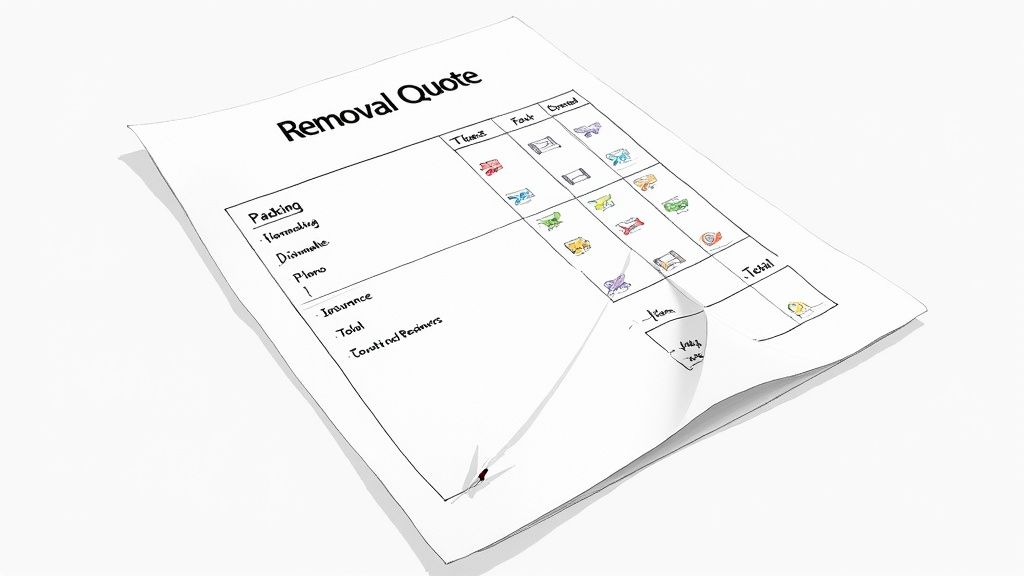
Getting a removal quote you can actually trust—one without any nasty surprises on the day—really comes down to a bit of prep work and asking the right questions. An estimate is just a ballpark figure, but a proper quote is something you can build your moving budget around. Thankfully, the process is pretty straightforward and puts you in the driver's seat.
Before you even think about contacting a removal firm, the most powerful thing you can do to control your average removal costs is to have a good clear-out. Every single item you donate, sell, or bin is one less thing to pack up, carry out, and load onto the lorry. Less stuff literally means a smaller vehicle, fewer crew hours, and ultimately, a lower bill.
Once you’ve whittled down your belongings, it’s time to start the quoting process. This all hinges on one crucial step: the survey.
The Importance of a Thorough Survey
For any reputable firm to give you a fixed price, they need to know exactly what they’re up against. This is usually done through one of two types of survey, and knowing the difference helps you avoid those dreaded extra charges down the line.
- Video Survey: This is the quick and easy option. You’ll just walk a surveyor through your home on a video call, showing them everything that needs to go. It’s perfect for smaller flats or houses with no tricky bits.
- In-Person Survey: For larger properties, or if you have concerns about access (like tight corners, narrow stairs, or difficult parking), nothing beats an in-person visit. A surveyor’s experienced eye can spot potential issues a camera might miss, making sure they’re factored into the quote from the very beginning.
An in-person survey might feel a bit old-school, but that thoroughness is its biggest advantage. It prevents the classic mistake of underestimating the job, which is a one-way ticket to extra fees on moving day. A detailed survey is the bedrock of a reliable quote.
Comparing Your Quotes Effectively
Whatever you do, don't just accept the first quote that lands in your inbox. The golden rule is to get at least three quotes from different, well-regarded companies. This isn't just about finding the cheapest price; it’s about getting a sense of the going rate and the different levels of service available.
When the quotes come in, resist the urge to just glance at the final total. Lay them out side-by-side and compare them properly.
Look for answers to these questions:
- Is insurance cover clearly stated? What’s the value limit and what does it actually cover?
- What’s included in the price? Does it cover packing materials and dismantling furniture, or is it just the move itself?
- Is VAT included? Or is that going to be an extra 20% on top?
- What do the terms and conditions say? Pay special attention to clauses on waiting time charges, cancellation policies, and other potential fees.
Key Takeaway: A professional quote should be a detailed, itemised document, not just a number scribbled in an email. If a company is vague about what’s included, that’s a massive red flag.
By following these steps, you can confidently pick a removals firm that offers fair value and transparent pricing. If you want a quick starting point for your budget, our UK moving cost calculator for 2025 can give you a helpful initial estimate.
Smart Ways to Reduce Your Removal Costs
Knowing the average removal costs is a good start, but actively finding ways to lower that figure is where you can really take control of your moving budget. With a bit of forward-thinking and a flexible attitude, you can make a real dent in the final bill without piling on the stress. It’s all about being strategic.
The single biggest thing you can do to cut costs? Move less stuff. Simple as that. Before you even start thinking about boxes, it's time for a proper clear-out. Go room by room and be honest about what you actually need to take with you. Selling things you no longer use not only reduces the volume (and therefore the price) of your move, but it can also pop a bit of cash back into your wallet. For a head start, you can find great guides on where to sell old electronics and other bits and bobs online.
Be Flexible with Your Timing
When it comes to removals, timing is a huge factor. The industry has very clear busy and quiet periods, and the date you choose to move can massively influence the price you pay.
- Avoid Weekends and Month-Ends: Fridays, Saturdays, and the last few days of any given month are prime time for moving. That high demand means you'll pay a premium.
- Embrace Mid-Week Moves: If your schedule allows it, aim for a Tuesday or Wednesday. Demand is significantly lower, making it a great time to find a better rate.
- Choose an Off-Peak Season: The summer months, from June to August, are the absolute busiest. Moving in the autumn or winter can often lead to some hefty savings.
A mid-week move in an off-peak month like October or February could save you hundreds of pounds compared to a peak-season Saturday move. It pays to be flexible.
Source Your Packing Materials Wisely
While getting the professionals to pack for you is wonderfully convenient, tackling the job yourself is a surefire way to save money. And you don’t have to fork out for brand-new boxes, either. There are plenty of places to get them for free or very cheaply.
Try asking at your local supermarket or retail shops if they have any spare delivery boxes they'd be happy to part with. You’d be surprised how often they do! Online community groups are also a goldmine for people looking to pass on their boxes after they've unpacked. For a full list of ideas, check out our guide on finding free boxes for moving.
By doing your own packing and sourcing your materials cleverly, you can shave a considerable amount off the total cost, making your budget stretch that much further.
A Few Common Questions About Moving Costs
When you start looking at removal quotes, a few questions always seem to pop up. It's completely normal to want to get the details right, so we've answered some of the most common ones we hear from people planning their move. Getting these sorted will help you budget properly and feel much more in control of the process.
Let's tackle these questions one by one, covering everything from timing your booking to thanking the crew on the day.
How Far in Advance Should I Book Movers?
Honestly, the sooner, the better. As a rule of thumb, try to book your removal company at least four to six weeks before you plan to move. This is crucial if you're aiming for a popular time, like a weekend, the end of the month, or any time during the summer holidays.
If you leave it to the last minute, you're really rolling the dice. The best, most reliable firms get snapped up quickly, and you could be left with limited options or get hit with higher prices because of the urgent demand. Booking early just gives you peace of mind, more choice, and a better chance to find a team you trust.
Key Insight: Booking a month or more ahead doesn't just secure your date; it often locks in a better price. Many companies adjust their rates based on availability, so the early bird really does get the worm here.
Is It Really Cheaper to Move on a Weekday?
Yes, it absolutely is. You’ll almost always find it cheaper to move on a Tuesday, Wednesday, or Thursday compared to a Friday or Saturday. The savings can be surprisingly significant, often cutting 10-20% off your final bill.
It all comes down to simple supply and demand. Everyone wants to move on a Friday or over the weekend so they don't have to take time off work to unpack. This spike in demand means removal companies charge a premium for these slots. If you have a bit of flexibility in your schedule, choosing a mid-week move is one of the simplest and most effective ways to reduce your costs.
Do I Need to Tip the Removal Team?
Tipping isn't expected in the UK, but it’s always a welcome gesture if you feel the team has done a great job. Moving is hard, physical work, and if the crew has been efficient, professional, and taken good care of your things, a tip is a brilliant way to say thank you.
There's no hard-and-fast rule on how much to give. Many people tip each crew member around £10 to £20, depending on how long and difficult the job was. Another way is to give about 5% of the total bill for the team to share. But look, even if a cash tip isn't on the cards, just keeping them supplied with tea, coffee, and water throughout the day goes a long way and is always appreciated.
Ready to get a clear, no-nonsense quote for your move in Bristol or Bath? The team at SimplyPro Removal & Storage Ltd keeps things straightforward. Get your accurate, fixed-price quote today and take the first step towards a move without the stress. Get Your Free Quote Now.