


The secret to a stress-free move? Don't leave packing to the last minute. The best approach is a steady, organised one that starts weeks, or even months, before the moving van arrives. It all begins with a proper clear-out 8-12 weeks before your move, then moves on to getting the right supplies, and finishes with a smart, room-by-room packing strategy. Thinking about it this way turns a mammoth task into a series of manageable steps.
Your Essential Moving House Packing Plan
Let's be honest, moving house can feel completely overwhelming. But having a solid plan is your best defence against the chaos. The real work doesn’t start with taping up the first box; it starts with careful prep long before that. By breaking the process down—decluttering, gathering supplies, and packing methodically—you can dodge the classic moving-day disasters like broken heirlooms and frantic searches for the kettle.
This simple timeline gives you a bird's-eye view of how to pace yourself.
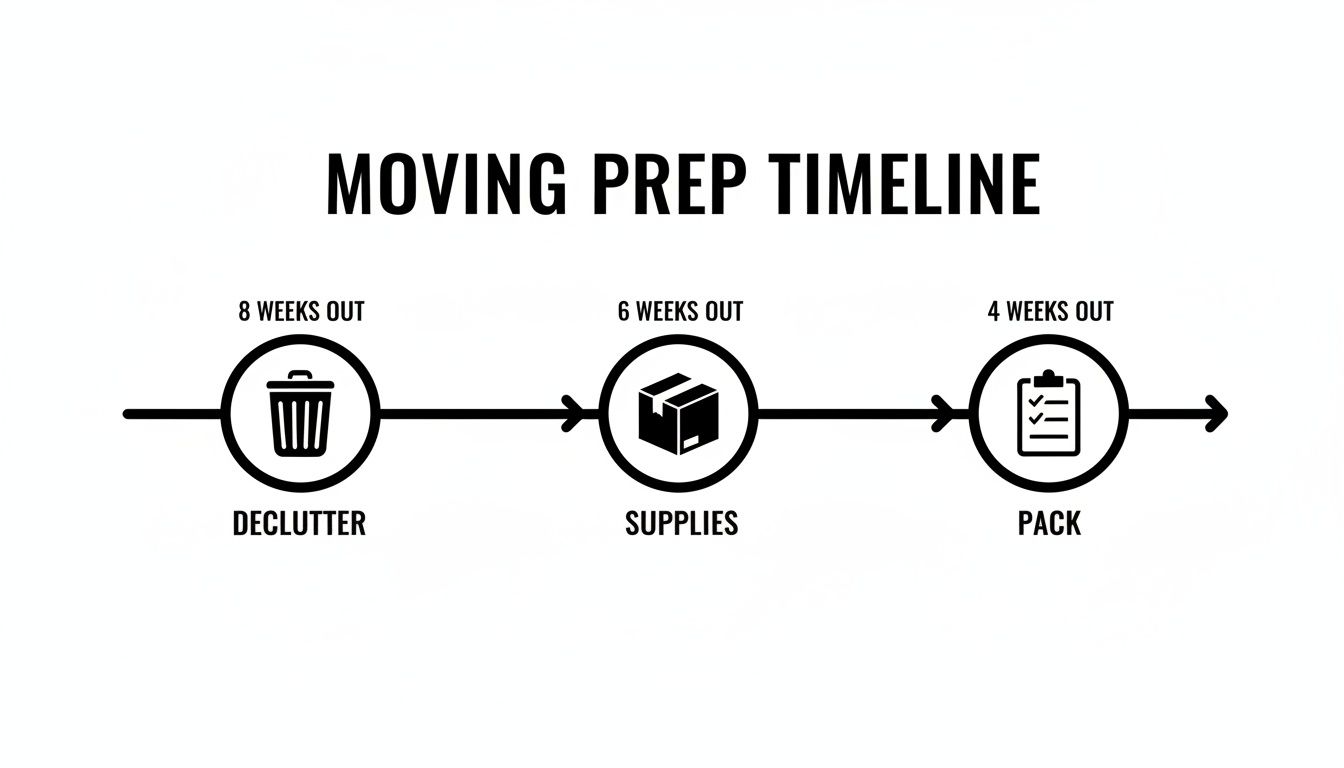
As you can see, a successful move is a marathon, not a sprint. Starting early is the key.
Making the UK's Timeline Work for You
The UK house-buying process is famously slow, taking an average of 179 days from the initial listing to getting the keys. While it can be frustrating, this long wait is actually a golden opportunity for strategic packing. We always advise clients to start decluttering up to 12 weeks out; you'd be amazed, but this alone can cut the volume of what you need to move by 20-30%.
Use this time to your advantage. Pack away things you won't need for a while—think out-of-season clothes, spare bedding, and books you've already read. It's also the perfect time to finally tackle that drawer of old gadgets and stop storing old electronics at home.
Two Things You Absolutely Must Do
If you only take away two pieces of advice, make them these. A successful packing plan really comes down to two things: a master inventory list and an 'essentials' box.
- The Master Inventory: This is your command centre. Number every single box you pack. Then, in a notebook or a simple spreadsheet, jot down that number, a brief summary of what's inside, and which room it belongs in. Trust me, when you're desperately trying to find the cutlery on moving day, you'll thank yourself for doing this.
- The 'First-Night' Box: This is, without a doubt, the most important box you'll pack. It's your survival kit for the first 24 hours. Fill it with essentials like toiletries, phone chargers, any medications, the kettle, a couple of mugs, tea bags, and a few basic tools. The crucial part? This box travels with you in the car, not in the removals van.
A well-organised move is defined by what you do before the first box is even packed. A detailed checklist and a clear timeline are your most powerful tools against moving day stress.
Feeling more in control already? For a complete, week-by-week guide that covers every single detail, our moving house checklist is an absolute lifesaver.
Your 8-Week Moving Countdown Checklist
Here's a simplified timeline to keep your packing on track without the stress.
| Timeframe | Key Packing Tasks | Pro Tip |
|---|---|---|
| 8 Weeks Out | Start the great declutter. Sort rooms into 'keep', 'donate', 'sell', and 'bin' piles. | Be ruthless! If you haven't used it in a year, it's time for it to go. This will save you time and money. |
| 6 Weeks Out | Order or gather all your packing supplies: boxes, tape, bubble wrap, packing paper, and marker pens. | Get more than you think you'll need. Running out of tape halfway through is a classic moving headache. |
| 4 Weeks Out | Begin packing non-essential items. Think books, decorative items, out-of-season clothing, and spare linens. | Pack heavy items (like books) in small boxes and light items (like duvets) in large boxes to make them liftable. |
| 2 Weeks Out | Pack the majority of your belongings, leaving only daily essentials. Dismantle any large furniture. | Take photos of the back of your electronics before you unplug everything. It makes reconnecting so much easier. |
| The Final Week | Pack your 'first-night' essentials box. Confirm details with your removals company. Defrost the fridge/freezer. | Keep important documents (passports, moving contracts, solicitor details) in a separate, clearly marked folder. |
| Moving Day | Do a final walkthrough of every room and cupboard to ensure nothing is left behind. | Strip the beds last. It gives you somewhere to sit and feels like a final, definitive action before you leave. |
Following this timeline helps break the process down, making your move feel less like a monumental chore and more like an exciting new chapter.
Gathering the Right Packing Supplies
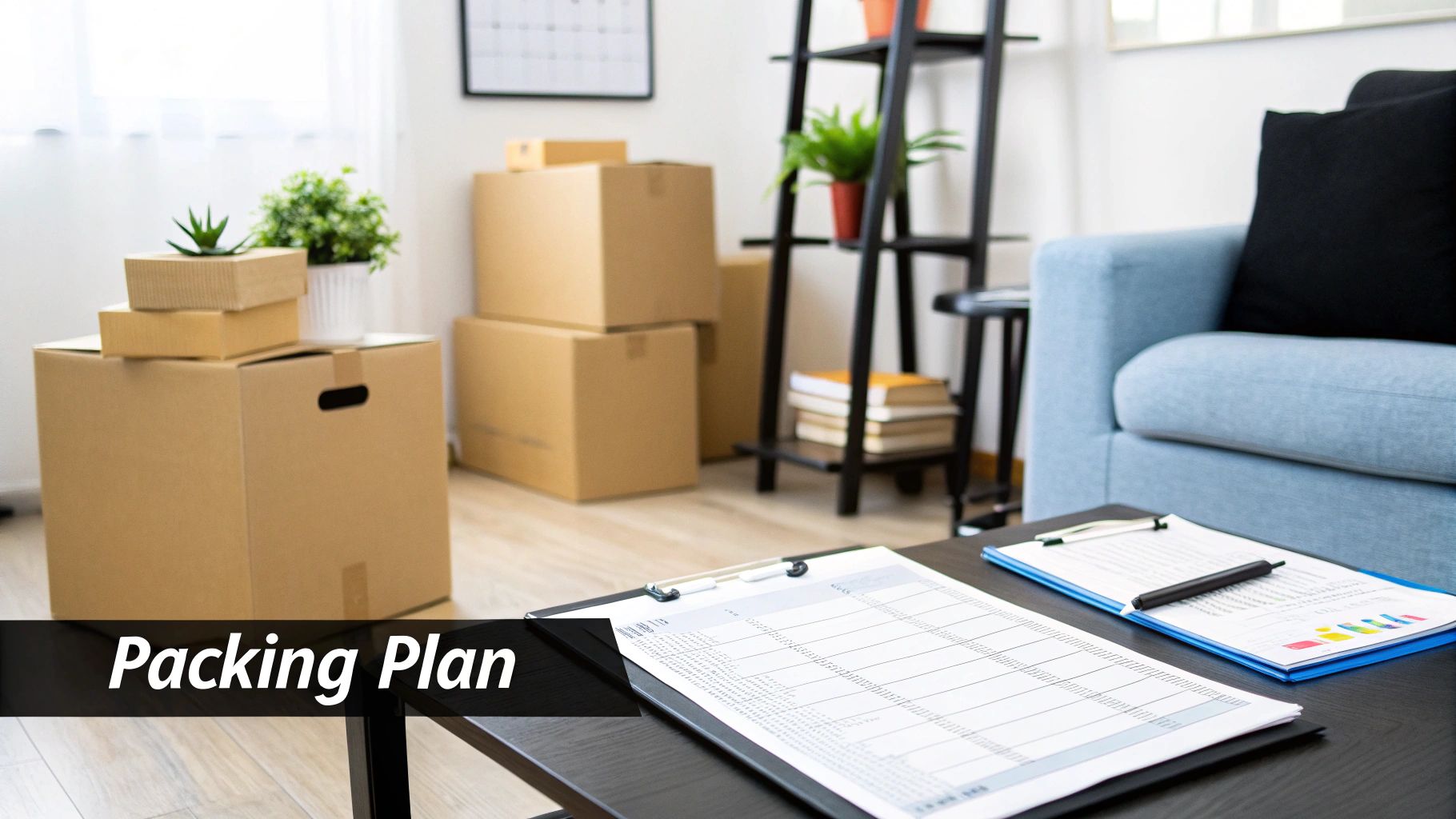
We’ve all been there: trying to pack your entire life into a motley collection of flimsy boxes held together with cheap tape. It feels like a smart way to save a few quid, but it's a classic false economy. The first line of defence against breakages isn’t how you pack, but what you pack with.
Getting your packing supplies right from the start is an investment in a less stressful move. Skimping now often leads to split boxes, broken heirlooms, and a whole lot of frustration when you should be feeling excited. Before you wrap a single glass, let's get your toolkit sorted.
Boxes Are Not All Created Equal
The humble cardboard box is your workhorse, but it's crucial to understand they’re not all the same. Using the right box for the right job is one of the simplest yet most effective packing strategies you can adopt.
-
Single-Walled Boxes: These are your standard, everyday boxes. They’re perfect for light, non-fragile items – think cushions, clothing, toys, and bedding. Just don't be tempted to overload them with heavy stuff.
-
Double-Walled Boxes: This is your go-to for anything with a bit of weight or fragility. With two layers of corrugated card, they offer far superior strength. Use these for books, kitchenware, small appliances, and delicate ornaments.
-
Wardrobe Boxes: An absolute game-changer. These tall boxes have a built-in rail, saving you hours of folding and ironing by letting you transfer clothes straight from your wardrobe. They’re also brilliant for awkward, tall items like floor lamps.
A quick word of advice: don't just grab used boxes from the local supermarket. While the price (free!) is tempting, you have no idea if they’ve been weakened by moisture or a previous heavy load. Proper moving boxes are designed to be stacked without collapsing.
You’ll probably be surprised by how many boxes you actually need. A rough guide is about 10-15 boxes per room, but this can vary wildly depending on your lifestyle. It’s always better to have a few too many than to run out mid-pack. For a more tailored estimate, check out our detailed guide to packing materials for moving to help you build a precise shopping list.
Your Essential Packing Toolkit
Aside from boxes, a few key items will make the whole process smoother, safer, and faster. Getting this kit together before you begin prevents those annoying last-minute dashes to the shops when you’re in the zone.
The Non-Negotiables
| Item | Why It's Essential | Pro Tip |
|---|---|---|
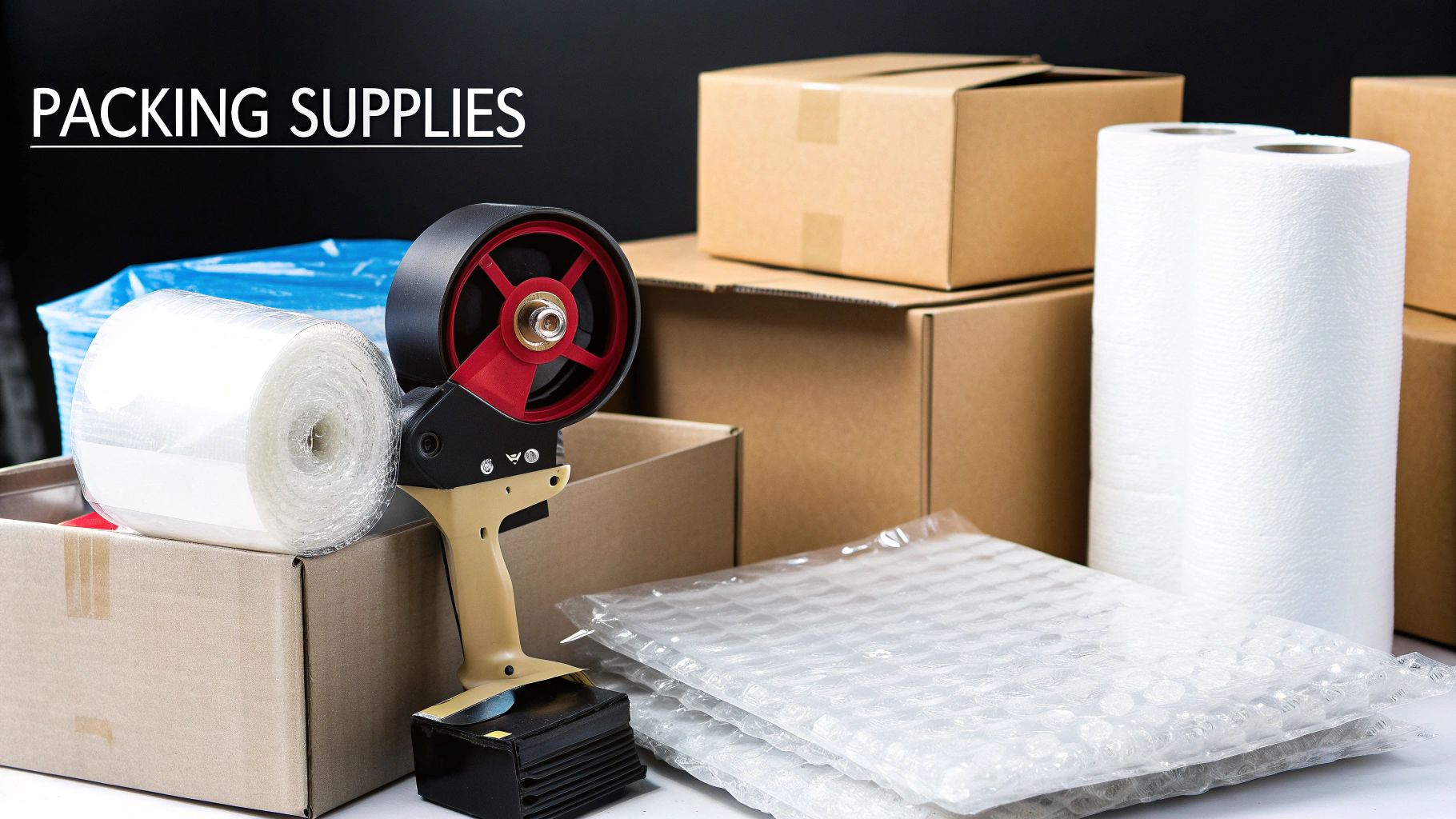
| Strong Packing Tape | Cheap tape splits under pressure. A quality, low-noise vinyl tape will keep your boxes securely sealed. | Get a dispenser gun. It makes sealing boxes faster and saves you from losing the end of the roll! |
| Marker Pens | Use thick, permanent markers for clear labelling. Keep a few handy in different rooms. | Use a different colour for each room. It makes identifying boxes at a glance so much easier. |
| Bubble Wrap | An absolute must for protecting fragile items like mirrors, picture frames, and delicate electronics. | The big-bubble variety is great for larger items; use the small-bubble type for smaller pieces. |
| Packing Paper | Unprinted newsprint is perfect for wrapping individual kitchen items and filling empty spaces in boxes. | Steer clear of actual newspaper. The ink can easily transfer and stain your belongings. |
| Stretch Wrap | Fantastic for securing bubble wrap to furniture or keeping sets of things, like cutlery, bundled together. | Wrap it around a chest of drawers to stop them from sliding open while being carried. |
Having these supplies ready to go means you can get into a good packing rhythm without interruption. It’s this kind of organised approach that protects your belongings and makes the journey to your new home in Bristol or Bath a much smoother ride.
A Strategic Room-by-Room Packing Guide
The secret to a stress-free move isn't just about what you pack, but how you pack. Forget randomly stuffing things into boxes. The real pros use a methodical, room-by-room strategy. It’s the difference between a smooth transition and absolute chaos when you arrive at your new home in Bristol or Bath.
The trick is to start with the rooms you use the least and work your way towards the heart of your home. You'll build momentum and feel a real sense of progress without turning your daily life upside down.
By clearing out these lesser-used spaces first, you also cleverly create a staging area for all your packed boxes, keeping your main living areas free of clutter right up until the final days.
Start With the Least-Used Spaces
Get the ball rolling in the rooms you won’t miss. I’m talking about the guest room, the study, or even storage areas like the loft and garage. These places are usually full of non-essentials that can be boxed up weeks in advance.
A few tips for these low-traffic rooms:
- Books & Media: Don't underestimate how heavy books are. Small, double-walled boxes are a must to keep the weight manageable. Pack them either lying flat or with the spine facing down to avoid any damage.
- Decorative Bits & Bobs: Wrap every single photo frame, ornament, and vase in packing paper. A great space-saving trick is the 'Russian doll' method – pop smaller wrapped items inside larger hollow ones.
- Off-Season Gear: Vacuum-seal bags are a game-changer here. You can shrink bulky winter coats, duvets, and blankets by up to 70%. It’s incredibly satisfying.
Getting the easiest rooms done and dusted first gives you a massive psychological boost. Each box you tape up feels like a small victory, building the momentum you'll need for the more challenging parts of the house. It breaks a huge job down into bite-sized, achievable tasks.
Conquering the Kitchen
Ah, the kitchen. It’s often the most dreaded room to pack, and for good reason. It’s a minefield of fragile, heavy, and awkwardly shaped items. My advice? Leave it until near the end, but block out a good chunk of time. A rushed kitchen pack is a recipe for disaster (and a lot of broken plates).
First things first: declutter. Be ruthless. If that bread maker you got for your wedding is still gathering dust in its box, it’s time to let it go.
Packing Your Kitchenware Like a Pro
| Item Type | Best Packing Method | Pro Tip |
|---|---|---|
| Plates & Bowls | Wrap each one and stand them vertically in a sturdy box, like records in a crate. | Never, ever lay plates flat on top of each other. The pressure makes them incredibly vulnerable. |
| Glasses & Mugs | Cell divider boxes are your best friend. Wrap each glass, putting heavier ones at the bottom. | For extra padding, stuff clean socks or crumpled paper inside the glassware. It really works. |
| Pots & Pans | Nest smaller pots inside larger ones, with a sheet of packing paper between each to prevent scratches. | Use the empty space inside pots for small, non-fragile things like spice jars or utensils. |
| Small Appliances | Original boxes are ideal. If you don't have them, find a sturdy box and use plenty of cushioning. | Tape loose cords securely to the appliance itself and wrap any detachable parts separately. |
This methodical approach not only protects your belongings but also makes setting up your new kitchen a much quicker, more pleasant job.
Packing Bedrooms and Wardrobes
Bedrooms are personal, so tackle them in stages. Begin with out-of-season clothing and things you rarely use, leaving your everyday essentials for the last few days. Wardrobe boxes are a brilliant investment; they let you move clothes on their hangers, no folding required.
For everything else, packing efficiently is key. You can actually learn a lot from travel experts; applying techniques for how to fold clothes for travel can seriously maximise your box space. Rolling clothes tightly is often much better than folding them flat.
For fiddly things like jewellery, use pill organisers for rings and earrings. To stop necklaces from becoming a tangled mess, thread them through a drinking straw before packing.
Managing Living Rooms and Electronics
As the heart of the home, the living room is typically one of the last areas you'll pack up. The biggest headache here is usually the electronics – the TV, sound system, and games consoles.
Before you unplug a single thing, take a quick photo of the back of each device. This simple step will be your saviour when you're trying to remember what goes where. You can also use coloured tape to label cables and ports.
If you’ve kept the original boxes, now is their time to shine. If not, use strong, double-walled boxes and don’t skimp on the anti-static bubble wrap. And a crucial final check: make sure you’ve removed any discs from consoles before you pack them.
The Power of a Flawless Labelling System
A brilliant packing strategy is only as good as its labelling. This is what separates a seamless unpacking day from a chaotic nightmare. You want a system so clear that anyone, from your best mate to the removal crew, can know exactly where a box goes without asking.
Here’s a simple but incredibly effective method: assign a colour to each room. Buy a pack of large, colourful sticker dots and stick one on at least two sides of every box. Then, at the new house, put a matching sticker on the doorframe of each room.
Consider this: the UK sees around 2.1 million moves each year, and on peak days, that number skyrockets. On the busiest moving day of 2025, an estimated 22,386 households are expected to relocate. Removal firms report huge delays on these days, so every second counts. A clear, colour-coded system means your movers can get boxes to the right rooms instantly, saving time and helping you avoid expensive overtime fees. You can dig deeper into UK moving trends and their impact.
Handling Fragile and Specialty Items
Let's be honest, some of the things you love the most are often the biggest headache to move. Think about those delicate heirlooms, that massive corner sofa, or all the tech in your home office. When it comes to packing these, you need to go beyond just chucking things in a box with some tape. It takes a bit more finesse.
This isn't just about using an extra roll of bubble wrap. It's about knowing where each item is most vulnerable. A mirror can crack under the slightest pressure, and the tangle of wires behind your desk can become a nightmare. A smart approach now will save you a lot of heartache (and money) when you're unpacking.
Protecting Your Most Delicate Possessions
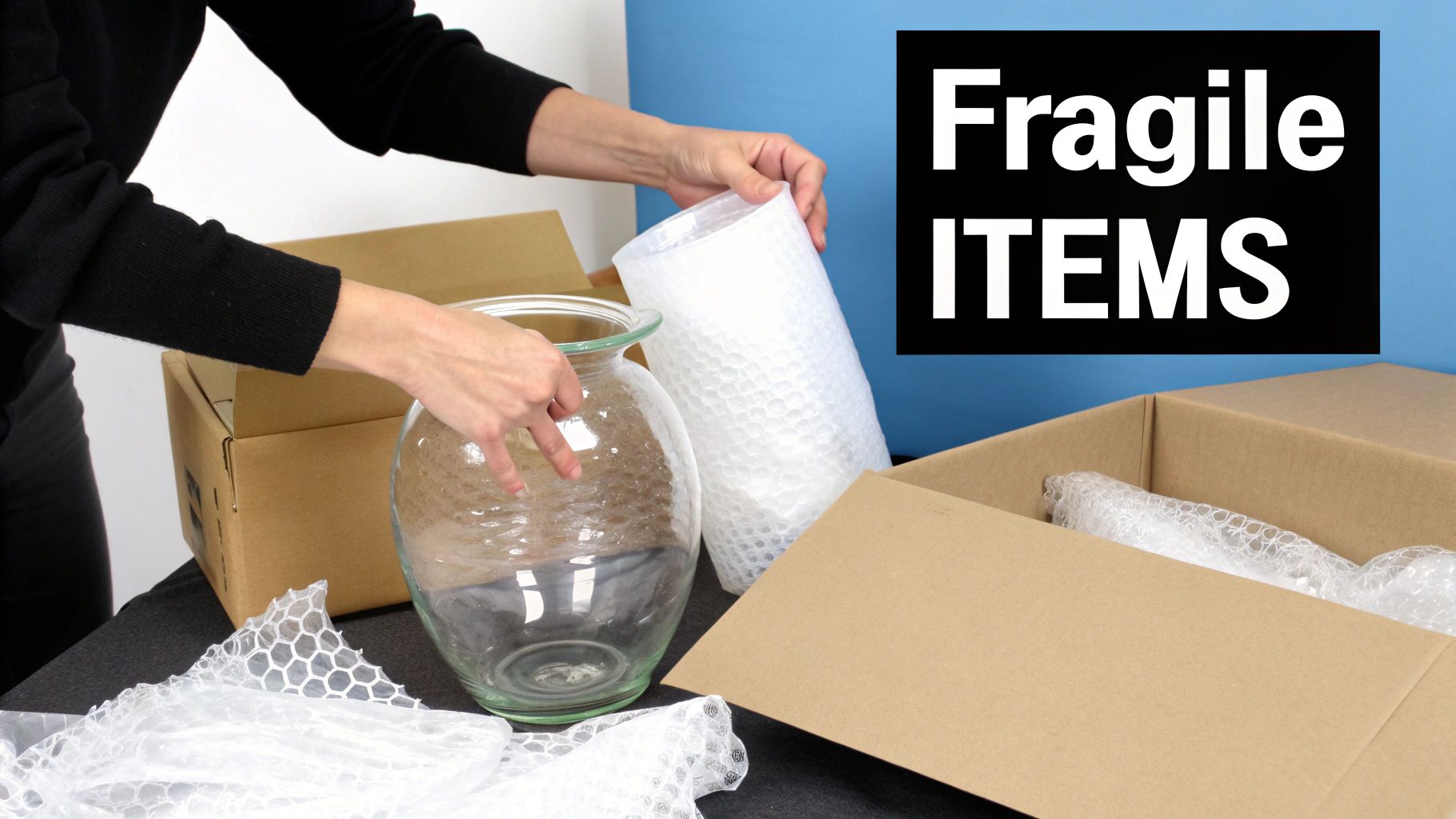
When you're dealing with glassware, antique china, or those little ornaments that mean the world to you, the goal is to build a protective nest inside the box. Every single piece should be wrapped individually in a few sheets of packing paper. Then, pop them into a sturdy, double-walled box. Empty space is your enemy here – it lets things rattle around and break.
Stuff any gaps with more crumpled paper, or even soft things like towels, tea towels, or clean socks. For the truly irreplaceable items, I always recommend the 'box-in-a-box' method. It's a game-changer.
- Wrap It Up: Start by wrapping the item carefully in bubble wrap and securing it with a bit of tape.
- The Inner Box: Find a small box, line it with soft cushioning, and place your wrapped item snugly inside.
- Nest It: Now, put that smaller box into a larger, stronger one that's also been lined with padding. Make sure you have at least a couple of inches of cushioning on all sides.
This creates a brilliant shock-absorbing buffer, protecting your valuables from the inevitable bumps and jolts of the journey.
Tackling Artwork and Mirrors
Big, flat, and fragile things like mirrors and framed art are a classic moving-day challenge. They are so easy to crack from a single knock or if something heavy is placed on them. Your standard moving boxes just won't cut it.
The answer is to get your hands on proper picture or mirror cartons. They’re clever telescopic boxes that you can adjust to fit your item perfectly.
- Protect the Surface: Before it goes anywhere near a box, wrap the whole thing in several layers of bubble wrap. A top tip for paintings: make sure the bubble side faces outwards so it doesn’t leave little imprints on the canvas.
- Guard the Corners: Add some cardboard or foam corner protectors. This is a crucial step for stopping chips and cracks if the box gets dropped.
- Label Like You Mean It: Scrawl 'FRAGILE' and 'GLASS' in big letters on every side. And don't forget to draw arrows showing which way up it needs to be carried and stored.
Preparing Bulky Furniture and Electronics
Moving large furniture is a two-part challenge: protecting the piece itself, and protecting your walls and doorframes from scrapes. Before moving day, have a good look at what can be taken apart. Unscrewing the legs from tables and sofas makes them far easier to manoeuvre and seriously cuts down the risk of damage.
Here's a trick that's saved me countless times: put all the screws, bolts, and washers for one piece of furniture into a single sandwich bag. Label it clearly and tape it firmly to the underside of that item. You'll thank yourself when you're not hunting for a tiny, specific screw later on.
When it comes to your tech, a little prep goes a long way. Before you unplug a single thing, grab your phone and take a quick photo of the cable connections on the back of your PC and router. Trust me, it’s an absolute lifesaver when you're setting up your new office. Label the cables themselves with coloured tape or tags, and always, always back up your computer to an external hard drive or the cloud before you pack it.
Monitors are especially fragile. Wrap them in anti-static bubble wrap and try to pack them upright in their original boxes. If you threw those out years ago, a strong, double-walled box filled with soft materials like blankets will do the trick. If you’re short on good boxes, our guide on how to pack books for moving has some great advice on finding sturdy ones that are perfect for heavy items.
Smart Moving Day Logistics and Unpacking
Even with the most perfectly packed boxes, the job's not done. The final piece of the puzzle is all about smart logistics. This is where your careful planning pays off, turning the potential chaos of moving day into a smooth, controlled process.
A successful move is less about brute force and much more about strategic thinking. It’s what helps your new house in Bristol or Bath feel like home from the very first night, rather than having you trip over boxes for weeks.
Timing Your Move for Success
Have you ever stopped to think about how the day you choose to move can affect your stress levels and your bank balance? Picking your moving day wisely can lead to some serious savings. Data from nearly 95,000 UK movers reveals that while Friday is the most popular day to move (34% of all moves), Sunday is actually the cheapest.
Moving on a Sunday averages £717—a 21% saving compared to the weekly average. An off-peak move often means you'll find more availability, smoother logistics, and less risk of things getting damaged by rushed professionals. You can learn more about the latest UK house moving trends and how to save.
Whatever day you choose, always pack high-value items like jewellery, important documents, and laptops in a personal bag that stays with you. It's also a great idea to create a detailed inventory with photos for insurance purposes—claims for poorly packed items run into the millions every year in the UK.
DIY Packing vs Professional Packers Which is Right for You?
One of the biggest calls you'll have to make is whether to pack everything yourself or bring in the professionals. There’s no single right answer here; it really comes down to your budget, your timeline, and how much you value your own time and energy.
To help you figure it out, here’s a straightforward comparison of the two approaches.
| Factor | DIY Packing | Professional Packers |
|---|---|---|
| Cost | Significantly lower. You only pay for the materials you use. | Higher initial cost. You're paying for labour, expertise, and all supplies. |
| Time | Very time-consuming. Can easily eat up weeks of your evenings and weekends. | Extremely fast. A trained crew can pack an entire house in just a day or two. |
| Convenience | Low. You're responsible for everything from sourcing boxes to the heavy lifting. | High. They handle it all, freeing you up to focus on other moving tasks. |
| Protection | Variable. Your items' safety depends on your skill and the quality of your materials. | Excellent. Professionals use top-quality materials and proven techniques to protect your belongings. |
| Insurance | Limited. Your items are usually only covered for loss, not for breakages due to poor packing. | Comprehensive. Reputable firms offer insurance that covers damage to items they have packed. |
Many people find that a hybrid approach works best. You could pack personal items, clothes, and other non-breakables yourself, then leave the tricky stuff like the kitchen and fragile heirlooms to the pros.
Your First Night Unpacking Strategy
You've made it! The van is empty, and you're standing in your new home, surrounded by a mountain of cardboard. It’s tempting to just start tearing into boxes at random, but a little bit of strategy here goes a very long way. The goal isn't to unpack everything at once; it's to make the house liveable for the first 24-48 hours.
Forget about perfection on day one. The best way to pack for moving house includes planning for a smooth unpacking process. Prioritise comfort and function to make your new space feel like home immediately.
This is where your 'essentials' box becomes the hero of the day. Beyond that, focus your energy on a few key areas to create an island of calm amidst the chaos.
The Unpacking Hit List:
- Set Up the Bedrooms First. Before you do anything else, get the beds assembled and put on fresh bedding. A proper night's sleep is non-negotiable after the exhaustion of moving day. Unpack a few clothes, toiletries, and pyjamas so you can wind down easily.
- Tackle the Kitchen Next. Get the kettle, mugs, tea, and coffee out. Then, find the essentials: a pan, a couple of plates and cutlery, and basic cleaning supplies like wipes and washing-up liquid. Being able to make a cuppa and a simple meal makes a world of difference.
- Sort the Bathroom. Unpack towels, soap, toothbrushes, and loo roll. Having a functional bathroom right away is one of those small comforts that feels like a huge win.
- Create a 'Living' Corner. You don't need to unpack the entire living room. Just clear a small space, set up the TV or a music speaker, and maybe a comfy chair. This gives you a dedicated spot to put your feet up and take a well-deserved break from the boxes.
By following this targeted approach, you can transform an empty shell into a comfortable home base in just a few hours. The rest can wait until tomorrow.
Got a Few Lingering Packing Questions? We’ve Got Answers
Even with the most meticulous plan, moving house can throw a few curveballs your way. It’s completely normal to have questions pop up when you're knee-deep in boxes and tape. Here are some of the most common queries we get from clients across Bristol and Bath, with straightforward answers to get you through those tricky spots.
Think of this as your go-to FAQ. Nailing these details is a huge part of a smooth move, helping you sidestep those all-too-common moving day hiccups.
How Far in Advance Should I Start Packing?
This one catches a lot of people out. Ideally, you want to start the packing process a good 6-8 weeks before you move. I know, it sounds like a lot of time, but it allows you to tackle the job in manageable chunks without the last-minute panic.
Begin with the rooms you use the least. Think guest bedrooms, the study, off-season clothes, or that collection of books you’ve been meaning to sort through. A gradual approach is always less stressful. And let's be honest, with the UK property market, you often have a fair bit of notice, which is the perfect window to start a proper declutter long before the first box is even folded.
What's the Best Way to Pack Kitchen Items?
When it comes to the kitchen, it's all about the cushioning. Every single fragile item needs to be wrapped individually in packing paper – no exceptions. Here’s a pro tip that saves a lot of heartaches: always pack plates and bowls vertically, on their edges, a bit like records in a crate. They are much, much stronger this way and far less likely to crack under the weight.
For glassware and mugs, those cardboard cell dividers you can get for boxes are an absolute game-changer.
And the golden rule? Fill every single gap. Use crumpled paper, tea towels, or even soft oven gloves to stop things from rattling around inside the box. Then, grab a thick marker and write 'FRAGILE' in big, bold letters on all sides.
Should I Bother Keeping an Inventory of My Boxes?
Yes, a thousand times yes! An inventory might feel like a bit of a chore at the time, but trust me, it's one of the best things you can do for a stress-free move. It doesn't have to be a complex database, either. A simple system is all you need.
- Number every single box with a marker.
- Keep a running list in a notebook or a quick spreadsheet on your phone.
- Jot down a brief summary of the contents and which room it's destined for (e.g., Box #24 – Kettle, toaster, mugs – Kitchen).
This little bit of effort makes finding that one specific thing you desperately need a breeze. It's also your proof if something goes missing or gets damaged and you need to make an insurance claim.
What Should I Put in My 'Essentials Box' for Moving Day?
Your essentials box is your moving day lifeline. This is the box that contains everything you'll need for the first 24 hours in your new place before the serious unpacking begins. Crucially, this box should travel with you in your car, not on the removals lorry.
Here’s what you can’t forget:
- Toiletries and any daily medications.
- A fresh change of clothes for everyone in the family.
- Phone chargers!
- Key documents – think moving paperwork, passports, and new house keys.
- A few basic cleaning bits, a simple toolkit, and a pair of scissors.
- And the most important item of all: the kettle, complete with tea bags, coffee, sugar, and a couple of mugs.
Moving house has a lot of moving parts, and it takes a steady, experienced hand to make it all run smoothly. For a seamless experience, from the first packed box to the final piece of furniture in your new Bristol or Bath home, it pays to trust the professionals. Contact SimplyPro Removal & Storage Ltd today for a friendly, no-obligation quote and let us show you how simple moving can be. https://www.simplyremovalsbristol.co.uk