


When it comes to moving house, the small details can make or break the experience. A well-thought-out timeline for changing your address is one of those crucial details that prevents missed bills, lost documents, and a whole lot of stress. The trick is to start early—about eight weeks before your move date—giving you plenty of breathing room to sort everything out without that last-minute panic.
Your Stress-Free Address Change Timeline
Let's be honest, moving house is a massive undertaking. But it doesn't have to be a chaotic one. The secret I've learned over the years is to break the whole process down into a simple, manageable timeline. When you tackle specific jobs at set intervals, starting two months out, you stay in control. That mountain of work suddenly becomes a series of achievable steps.
This countdown approach is your best friend. It ensures nothing gets forgotten, from the initial clear-out to confirming everything in the final week. It brings a sense of order to the madness, making the entire process of changing your address and settling in feel so much smoother.
Eight Weeks Before Your Move
This is where the journey really begins. Two months might feel like a lifetime away, but this period is all about laying the groundwork. Your first mission? A serious declutter. Go through every single room and be ruthless: what are you keeping, what can be sold or donated, and what’s heading for the tip?
This isn’t just about tidying up; it's a strategic move. Fewer belongings mean lower removal costs and, quite simply, less stuff to pack. It's the perfect chance to take stock of what you actually need in your new home. For a more detailed look at this stage, our guide on what to do when moving house has a brilliant checklist to get you started.
Once you’ve slimmed down your possessions, you can start getting quotes from professional removal companies. Doing this early gives you far more choice and often helps you lock in a better price.
Six Weeks Out: Booking and Planning
With a much better idea of how much stuff you’re actually moving, it’s time to get your removal company booked. Good firms get snapped up fast, especially during peak times like summer holidays and the end of the month. Securing your slot six weeks in advance is a huge weight off your mind.
This is also the moment to think about the nitty-gritty logistics. Do you need a hand with packing? Will you require temporary storage? Have a proper chat about these options with your chosen company. Arranging for services like furniture dismantling and reassembly now will save you a world of pain on moving day itself.
My top tip: start a dedicated "moving folder" right now. A simple ring binder or digital folder to keep all your documents, quotes, and confirmations in one place is an absolute lifesaver.
This initial phase is all about getting ahead of the game—clearing out, booking the essentials, and setting yourself up for the admin to come.
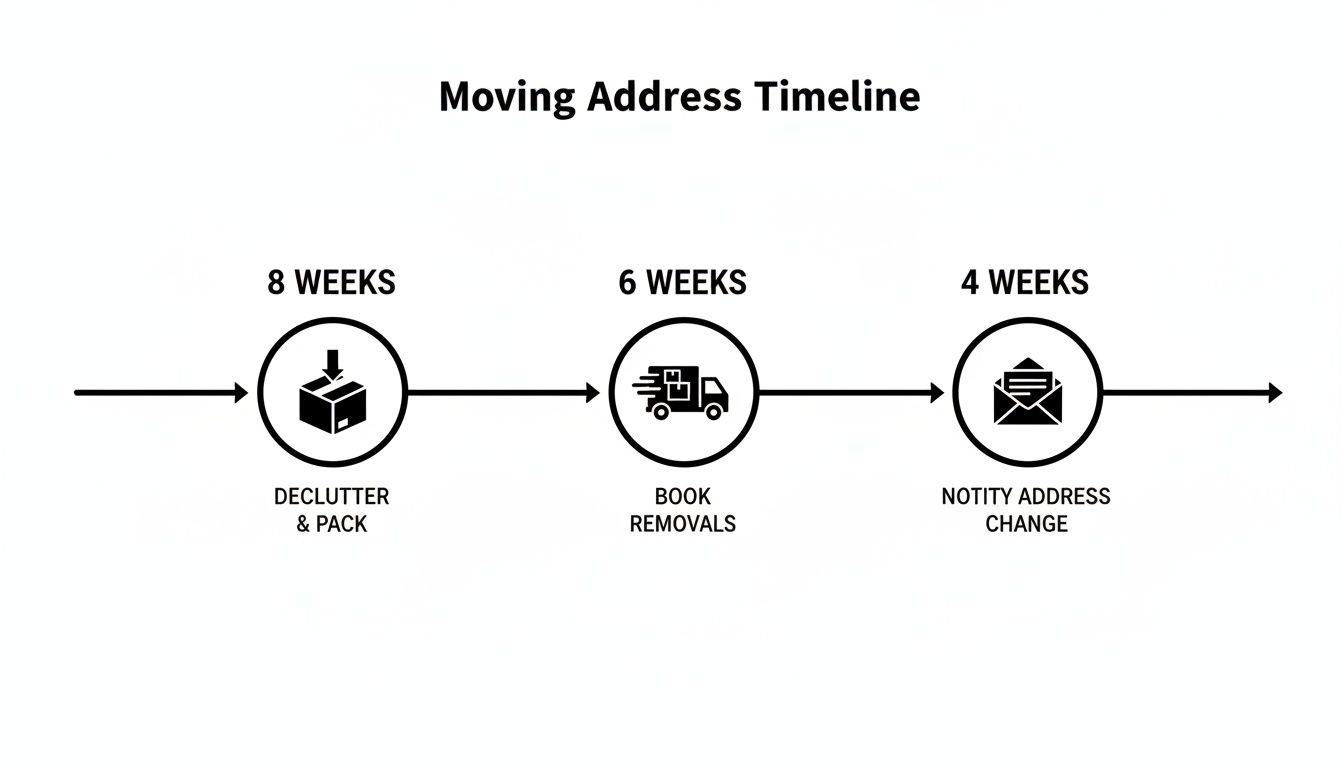
As you can see, proactive planning in these early weeks is what lays the foundation for a genuinely stress-free move later on.
Four Weeks to Go: The Admin Begins
Right, with one month to go, it's time to start the official process of changing your address. You don't want to do it too early, but believe me, leaving it until the final week is a recipe for disaster. The key is to start with the most important organisations first.
Start notifying companies of your new address about four weeks before you move. This gives everyone enough time to update their systems, so you don't miss any important mail or find your services cut off.
I always suggest starting a list and grouping it by priority. It makes the task feel much less daunting.
- Government: Think DVLA, HMRC, and your local council for Council Tax. These are non-negotiable.
- Financial: Get in touch with your banks, credit card providers, and any pension or investment companies.
- Utilities: Your gas, electricity, water, and broadband suppliers need to know when and where you're moving.
Getting these sorted early ensures a seamless transfer of services and stops final bills from going to the old address. Thankfully, most of these changes can be kicked off online these days, which makes it all relatively straightforward as long as you give yourself the time.
The Ultimate Checklist: Who to Tell When You Move
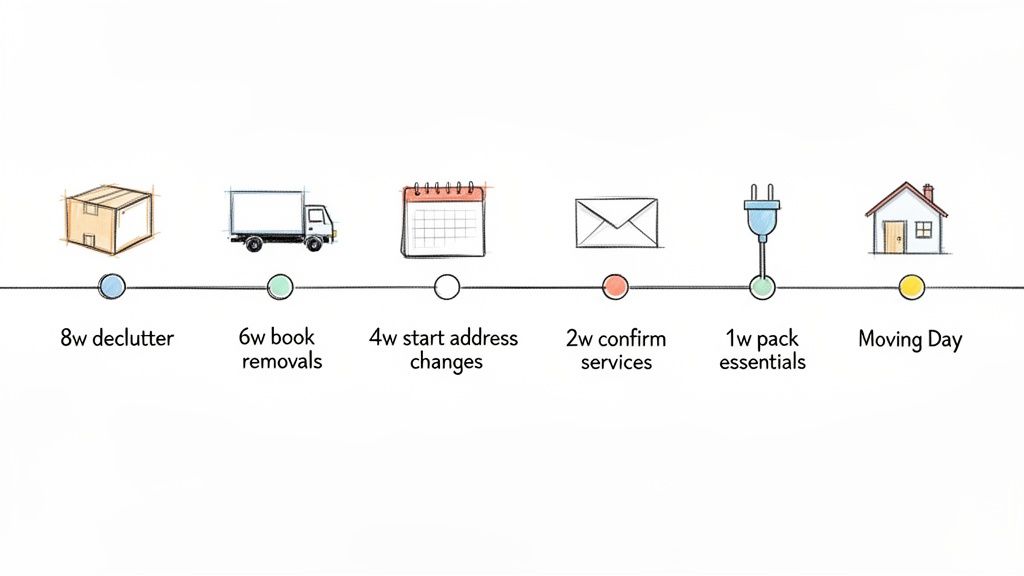
Knowing who to notify about your new address can feel like a mountain of admin. It’s one of those jobs that’s easy to put off, but forgetting someone important can lead to chaos—missed bills, lost documents, or even serious security risks like identity fraud.
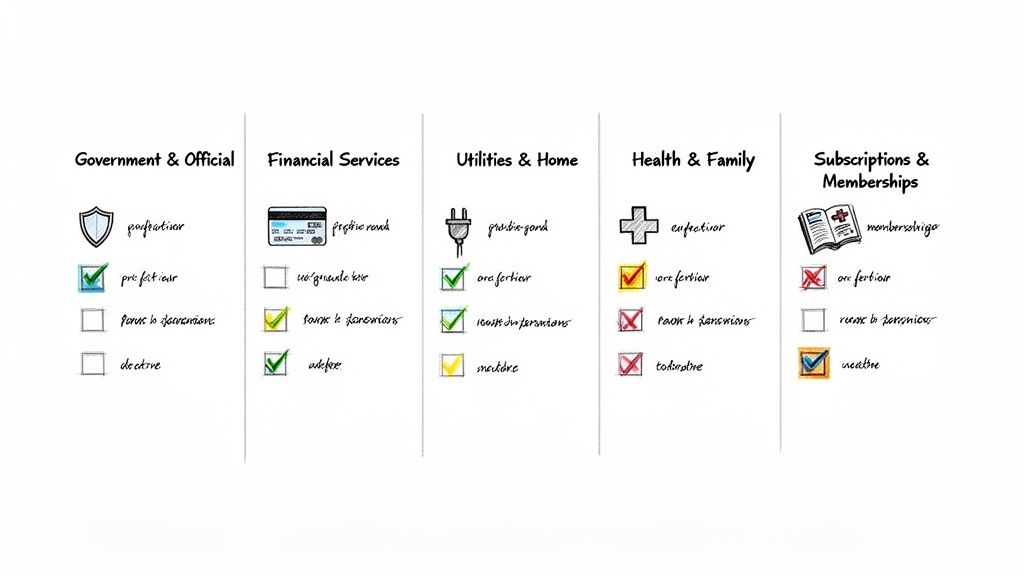
The trick is to not see it as one giant, terrifying list. Break it down. By grouping everyone into smaller, more manageable categories, you can work through it methodically. What was once a daunting chore becomes a simple, organised process that ensures a smooth start in your new home.
Government and Official Bodies
Let’s start with the non-negotiables. These are the organisations you absolutely must inform, often for legal reasons. Getting these wrong can lead to fines or problems with things like your right to vote, so tackle them first.
Your DVLA update is top of the pile. It's a legal requirement to have the correct address on your driving licence and your vehicle’s log book (V5C). You can be fined up to £1,000 if you don't, so this isn’t one to leave until later.
Next up, get in touch with your local councils—both the one you're leaving and the one you're moving to. This is essential for squaring up your final Council Tax bill and getting your new account set up properly. It also means you’ll be on the electoral roll at your new address, ready for any upcoming elections.
Don't forget His Majesty's Revenue and Customs (HMRC). Your tax records need to be spot on. HMRC uses your address for everything from changes to your tax code to National Insurance updates, so make sure they know where to find you.
Address Change Priority Checklist
When you're juggling so many tasks, it helps to know what to tackle first. This table breaks down the most critical address changes by urgency, helping you focus on what matters most, right away.
| Category | Organisation/Service | Why It's Critical | Recommended Timing |
|---|---|---|---|
| Legal & Government | DVLA | Legal requirement; avoids up to a £1,000 fine. | 2-4 weeks before moving |
| Local Authority | Council Tax | Prevents overpayment or falling into arrears. | 2-4 weeks before moving |
| Financial | Banks & Credit Cards | Prevents fraud and ensures you receive new cards/PINs. | 1-2 weeks before moving |
| Utilities | Gas, Electric, Water | Ensures seamless service and accurate final bills. | 1-2 weeks before moving |
| Insurance | Home, Car, Life | Invalidates your policy if the address is incorrect. | 2-4 weeks before moving |
| Health | GP & Dentist | Crucial for continuity of care and emergencies. | After moving (register in new area) |
Sorting these key players early on removes a huge amount of stress and protects you from the most common and costly moving-related problems.
Financial Services and Providers
Your financial security is directly linked to having the right address on file. Banks use it for identity verification and, more practically, to send out new debit cards, PINs, and important statements. An old address is an open invitation for fraudsters.
Make a list of every single financial institution you deal with:
- Current and Savings Accounts: Every bank and building society.
- Credit Cards: Don't forget any store cards you might have.
- Loans and Mortgages: This includes personal loans, car finance, and your mortgage provider.
- Pensions and Investments: Private pension providers, investment platforms, and any share registrars need to be on the list.
It's amazing how easily a small, forgotten account can cause a massive headache down the line. Thankfully, most banks now let you update your details in just a few clicks via their online portals or mobile apps. For a truly exhaustive list, our guide covers all the addresses to change when moving so you can be confident you haven’t missed a thing.
Utilities and Home Services
There's nothing worse than arriving at your new home to find the lights don't work or you have no internet. Coordinating your home services is all about ensuring a smooth transition.
The key is to give your suppliers plenty of notice—at least 48 hours is the bare minimum, but a week or two is much better. You’ll need to give them final meter readings from your old property to close that account correctly. This stops you from accidentally paying for the new occupant's energy use.
Your checklist should include:
- Energy Suppliers: Gas and electricity for both your old and new properties.
- Water Company: Your local water and sewerage provider.
- Internet and Phone: Your broadband and landline company.
- TV Licence: This one is easily forgotten! Your licence doesn’t move with you automatically; you have to update it online.
- Mobile Phone: Make sure they have the correct billing address.
Getting these transfers sorted early means you can walk into your new home and get the kettle on without any hassle.
Health and Family Contacts
Looking after your family’s wellbeing is a top priority. If you’re moving to a new area, you'll probably need to find new local services.
Start by letting your current GP, dentist, and optician know you're leaving. It's a good idea to ask for a copy of your medical records to make registering with a new practice much simpler. If you have pets, remember to do the same for your vet and, crucially, update their microchip details.
For those with children, the school or nursery needs to be one of your first calls. They’ll need your new contact information immediately. If you're switching schools, they’ll need to work with the new one to transfer records, ensuring your child's education continues without a hitch.
Subscriptions and Memberships
Finally, it's time to think about the lifestyle stuff. This might seem less urgent, but it’s where things get missed. Forgetting to update these can mean your favourite magazine ends up in your old neighbour's recycling bin, or you get charged for a gym you can no longer get to.
A great tip is to scan through your last few bank statements to see what recurring payments you have.
This final sweep usually includes:
- Online Shopping: Update your default delivery address on Amazon, eBay, and any other sites you use.
- Magazine and Newspaper Subscriptions: Make sure your weekly or monthly reads follow you.
- Gym and Club Memberships: You’ll need to decide whether to transfer or cancel them.
- Loyalty Programmes: From your Tesco Clubcard to Avios points, ensure your perks are still linked to you.
Working through this checklist might feel like a chore, but it's the final piece of the moving puzzle. A few hours of admin now will save you countless hours of stress and phone calls later.
Sorting Out the Official UK Address Changes
Let's be honest, dealing with official bodies when you move can feel like a chore, but it’s more than just ticking a box. In some cases, it’s a legal requirement. Getting these notifications sorted promptly means you stay on the right side of the law, avoid some surprisingly hefty fines, and keep access to important public services without any hiccups.
This section is all about the non-negotiables: the government departments that absolutely must know you're on the move. We'll walk through exactly what you need to do for the DVLA, your local council, the electoral roll, and HMRC. Think of it as your essential government admin checklist, designed to cut through the confusion and get it done right the first time.
Updating Your Driving Licence with the DVLA
The DVLA should be right at the top of your list. It’s a legal requirement in the UK to have the correct address on your driving licence, and getting caught without it can lead to a fine of up to £1,000. The process is completely free, so there’s really no excuse to put it off.
Remember, you have to update the address on both your photocard driving licence and your vehicle log book (the V5C document). These are two separate tasks – changing one won’t automatically update the other. Thankfully, you can do both online through the GOV.UK website.
To get your licence address changed, you'll just need:
- Your driving licence number
- Your National Insurance number
- Your passport number (if you have one)
- A list of your addresses from the past three years
Once you’ve submitted the form, you can keep driving with your old licence while you wait for the new one to arrive in the post. It’s a very straightforward process, but make sure you only use the official government portal. There are plenty of third-party sites out there that will try to charge you a fee for something that is completely free.
Managing Your Council Tax
Next up is council tax. This is a two-step job: you need to tell your current council you're leaving, and then register with your new one. Getting this right means you won't get billed for two properties at once or, worse, fall into arrears without realising it.
Most councils have made this pretty easy to do online. Both Bristol City Council and Bath & North East Somerset Council have dedicated moving home sections on their websites.
You'll usually need to provide:
- The date you’re moving out of your old place
- The date you’re moving into your new home
- The full addresses of both properties
- Your old council tax account number
Informing them quickly allows your old council to send you a final bill and your new council to get your account set up. Trust me, ignoring this can create a real administrative headache that takes ages to sort out later.
A quick tip from experience: Always take final meter readings on moving day. You'll need them for your energy and water suppliers, but they're also great proof of your move-out date if any council tax queries pop up down the line.
Staying on the Electoral Roll
When you change your address, your voter registration doesn't automatically come with you. You have to re-register. It might seem like a small thing, but falling off the electoral roll can have consequences beyond not being able to vote.
Lenders and credit reference agencies use the electoral roll to verify your identity and address. If you're not registered at your new home, it can actually hurt your credit score, making it trickier to get a new mobile phone contract, a loan, or even a mortgage.
The good news? It takes about five minutes to register to vote online at GOV.UK. You just need your National Insurance number. It’s a tiny bit of admin that protects both your civic rights and your financial health.
Notifying HMRC About Your Move
Finally, don’t forget to let HMRC know you’ve moved. They need your current address to keep your tax and National Insurance records straight. All official letters – like changes to your tax code, pension updates, or tax credit information – will be sent there.
An out-of-date address means you could miss vital documents, creating a real tangle in your tax affairs. You can update your details easily through your Government Gateway account or by contacting them directly. It’s a simple step that ensures any important communication about your finances reaches you without delay. Getting these official updates sorted is a crucial foundation for a smooth and successful move.
Managing Your Money and Protecting Your Mail
Think about how deeply your address is tied to your financial life. Every bank statement, new credit card, and insurance policy is a piece of a very sensitive puzzle. When you move, getting these documents to follow you isn’t just about staying organised—it’s about protecting yourself from fraud and making sure your financial safety net stays firmly in place.
If you don't update your details, you risk leaving a trail of personal data at your old property. It’s a genuine security risk, but one you can easily avoid by being proactive.
Securing Your Financial Accounts
First on the list should always be your bank. Letting your bank, building society, and credit card companies know you’re moving is non-negotiable. Thankfully, most of them make it easy these days, with online portals or mobile apps that let you update your address in just a few minutes. Doing this ensures new cards, PINs, and other critical letters come directly to you.
Don’t forget the full scope of your financial world:
- Current and Savings Accounts: Every single bank or building society you use.
- Credit and Store Cards: Think beyond your main Visa or Mastercard to any retail store cards you hold.
- Loans and Mortgages: Your mortgage provider and any companies you have personal or car loans with need to be in the loop.
- Pensions and Investments: Private pension providers and platforms for things like ISAs are easy to forget but just as important.
Getting this right is your first line of defence against your sensitive information falling into the wrong hands. It also prevents any frustrating interruptions to your financial services.
A missed bank statement or a new debit card sent to your old address is a golden opportunity for an identity thief. By updating your details promptly, you're closing a major security loophole that movers often overlook.
Keeping Your Insurance Policies Valid
Your insurance policies are calculated and validated based on where you live. If you move house without telling your car, home, life, or even pet insurer, you could unknowingly void your cover. Imagine needing to make a claim only to find out your policy is worthless.
A new postcode can change your premiums quite a bit. For car insurance, things like local crime stats or whether you now have a garage instead of on-street parking will affect the price. With home insurance, the property type, its location, and any new security features are all part of the equation.
Give your providers plenty of notice. This gives them time to adjust your policy, so you have continuous, valid cover from the moment you get the keys to your new home. This isn’t just boring admin; it's a vital step in protecting your biggest assets. You can find a comprehensive list of exactly who to notify when you move house in our detailed guide.
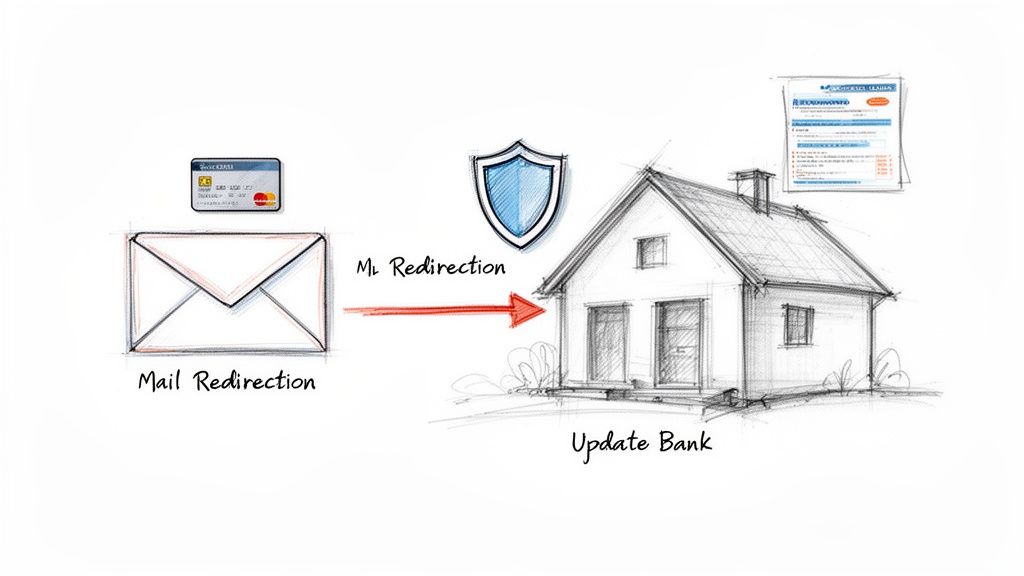
The Royal Mail Redirection Safety Net
Even if you have the most detailed checklist in the world, it’s incredibly easy to forget one or two organisations. A stray magazine subscription might not seem like a big deal, but what about a hospital appointment letter or a statement for a savings account you’d forgotten about?
This is where the Royal Mail Redirection service becomes an invaluable safety net.
For a fee, Royal Mail will forward any mail sent to your old address on to your new one for three, six, or twelve months. It’s the ultimate catch-all, giving you peace of mind and buying you time to update any remaining accounts as their mail trickles through.
Is Redirection Worth the Cost?
Moving is expensive. With the cost of moving home reaching record levels, some data shows removals costs in England have surged by 27% to an average of £17,831 for those buying and selling simultaneously. With figures like that, it's easy to see why you might want to skip the extra cost of mail redirection.
But it’s worth weighing that fee against the potential cost and stress of a missed bill, a lost legal document, or identity theft. For most people, it’s a small price to pay for security. In the wider world of mail management, formal processes like the USPS Form 1583 for mail receiving services show just how seriously mail handling is taken. Setting up a redirection is a simple, practical step that shields you from common moving mishaps and ensures nothing important gets left behind.
Final Steps for Settling Into Your New Home
With the last box finally over the threshold, it’s easy to breathe a sigh of relief and think the job is done. But a few crucial final tasks will make all the difference in truly settling in and tying off the loose ends of your move. Think of these post-move jobs as the ones that officially turn your new house into a home.
Right at the top of your list should be finalising your utility transfers. On moving day itself, take meter readings for gas, electricity, and water at both your old place and the new one. This simple five-minute job gives you concrete proof of usage, making sure your final bills are spot-on and you only pay for what you’ve actually used.
Finalising Utilities and Services
As soon as you have those meter readings, get them submitted to your suppliers. This is what formally closes down your old accounts and kicks off the new ones. It’s also the perfect time to give your services a quick review. As you settle in, it's worth taking a moment to compare home internet plans, as your new address might unlock access to faster fibre or better deals that weren’t available before.
Don't hang about when booking installations. The UK moving market can get incredibly busy, especially during peak season, which can lead to long waits for technician appointments. To give you an idea, one Friday in late August saw 22,000 relocations in a single day—that's about four times the daily average! Getting your broadband installation booked as soon as you have the keys is a very smart move.
Don't assume your suppliers will automatically close your old accounts. You must proactively provide final meter readings and confirm the accounts are settled to avoid being charged for the new occupant's usage.
Tying Up Loose Ends
As you start unpacking, you’ll almost certainly find items that just don't fit the new space or that you no longer need. This is your best opportunity to deal with that final wave of clutter before it takes root.
Here’s how you can clear the decks and make the space your own:
- Rubbish Clearance: Unpacking can leave you with a mountain of cardboard, old furniture, or general waste. A professional clearance service can take it all away responsibly, saving you countless trips to the tip.
- Handyman Support: That flat-pack wardrobe that seemed like a great idea in the shop? It can feel like an impossible puzzle after a long move. A handyman can assemble furniture, hang pictures, and put up shelves, making the house feel like home in no time.
These last few jobs are about more than just admin. They’re about creating a comfortable, organised living space right from the get-go, ensuring you have a smooth landing in your new home.
Got Questions About Changing Your Address? We've Got Answers
Even with the most organised checklist, it's natural for a few questions to crop up when you're wading through the admin of a house move. It's a process notorious for its tiny, easy-to-miss details. Let's tackle some of the things people ask us most often.
A big one is always about timing. People often wonder, "How long does the Royal Mail Redirection service actually take to set up?" From experience, it's best to apply at least three weeks before your move. You can sometimes get it sorted quicker, but giving it that three-week buffer is the safest bet to make sure it’s active from the day you get your new keys.
The Big Legal and Practical Questions
Another critical point that comes up is about official documents. What if you forget to update your driving licence? Honestly, this isn't one to put on the back burner. In the UK, you're legally required to tell the DVLA when you move, and not doing so can land you with a fine of up to £1,000. It’s completely free to do online, so it's a small task that saves a massive potential headache.
We're also frequently asked, "Do I really need to tell my employer?" The answer is a definite yes. Your employer uses your address for everything from your payslips and P60 to other important letters. Keeping it updated is crucial for your tax records and any benefits linked to your job.
Forgetting to update your address with just one key organisation can have significant financial or legal consequences. Prioritising official bodies like the DVLA and your employer is crucial for a smooth transition.
And finally, a common practical query is about dealing with Council Tax. Can you sort it all online? Absolutely. Nearly all UK councils, including Bristol City Council and Bath & North East Somerset Council, have simple online forms. Just remember you need to inform both your old council that you're leaving and your new one that you're arriving to avoid any billing mix-ups.
Juggling all the admin of a move is a job in itself. Let the experienced team at SimplyPro Removal & Storage Ltd take the heavy lifting off your hands so you can focus on ticking off your to-do list. For a seamless move in the Bristol or Bath area, get your free quote today.