


When you start planning a move, the first question on your mind is almost always, "How much is this going to cost?" In the UK, the cost to move can be anywhere from around £400 for a 1-bedroom flat to upwards of £1,100 for a 5-bedroom house if you're just moving locally.
Of course, these numbers are just a starting point. Your final quote will be shaped by a few key factors that are unique to your move, which we'll break down right here.
Your Quick Guide to UK Moving Costs
Getting a handle on the numbers is the first step to making your move feel less overwhelming. It's helpful to think of the cost not as a scary expense, but as a smart investment in getting your life from A to B smoothly. This guide will walk you through typical price ranges, explain what really goes into your quote, and show you how a professional moving partner makes all the difference.
The biggest factor that sets the initial price is the size of your property. It’s simple, really: the more stuff you have, the bigger the van and the more crew members we need to get the job done efficiently. This is the foundation of your quote.
This image gives you a great visual breakdown of what to expect for different property sizes across the UK.
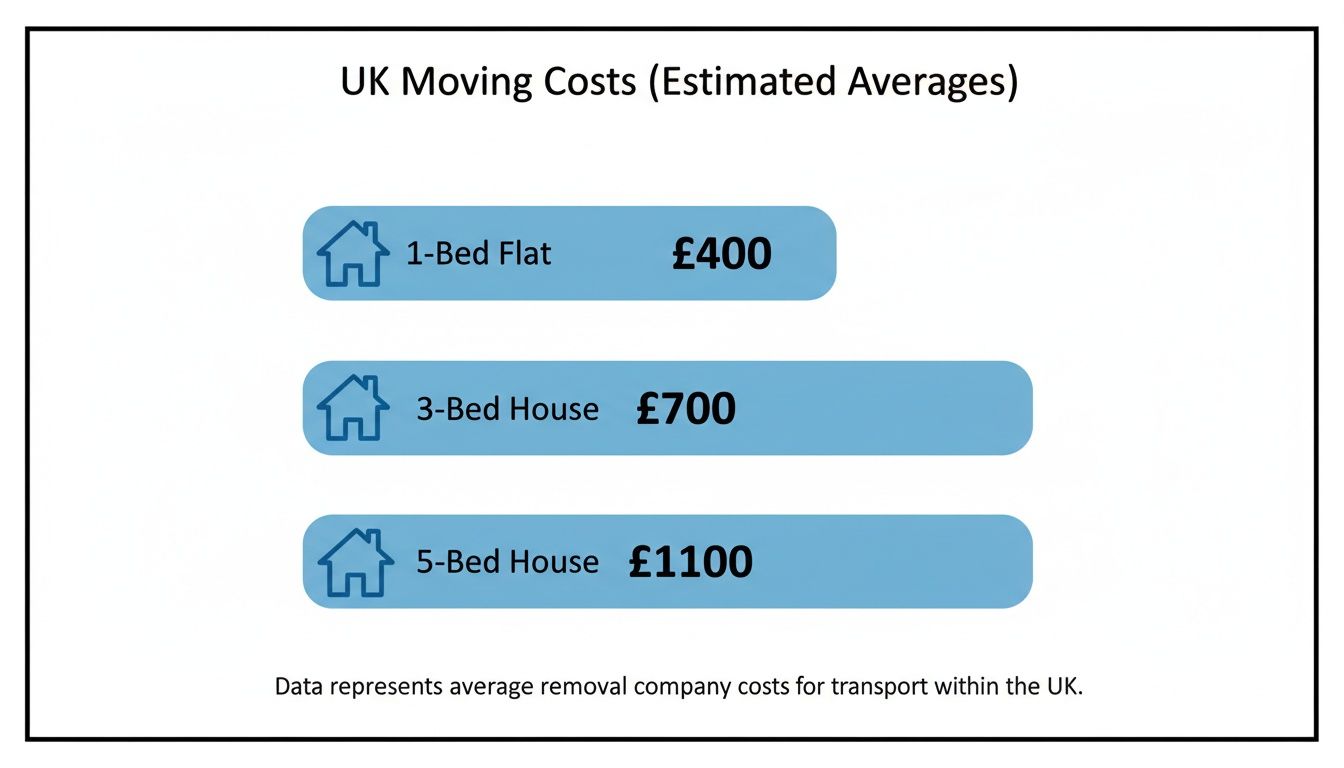
As you can see, the price scales up logically with the size of your home. It’s a reliable way to get an initial feel for your budget.
Estimated Average Removal Costs in the UK
To help you plan your budget with a bit more detail, here’s a snapshot of typical removal costs. This table provides a rough guide for both local moves (like staying within Bristol) and long-distance ones that take you across the country.
| Property Size | Average Cost (Local Move) | Average Cost (Long-Distance Move) |
|---|---|---|
| 1-Bedroom Flat | £400 – £600 | £650 – £950 |
| 2-Bedroom House | £550 – £800 | £850 – £1,200 |
| 3-Bedroom House | £700 – £1,000 | £1,100 – £1,500 |
| 4-Bedroom House | £900 – £1,250 | £1,400 – £2,000 |
| 5-Bedroom House | £1,100 – £1,500 | £1,800 – £2,500+ |
These ballpark figures typically include the cost of the crew to do the heavy lifting (loading and unloading), the removal van itself, and standard insurance to cover your belongings while they're on the road.
The Bottom Line: While the size of your home gives you a starting figure, things like the distance you're moving, tricky access to your property, and any extra services you need will shape the final price. A long-distance move will naturally cost more due to fuel and the team's time.
Think of these numbers as a solid guidepost. Now, let's dig into the details of what makes up these costs, so you can understand exactly what you’re paying for and find the best value for your move.
The Key Factors That Determine Your Moving Quote
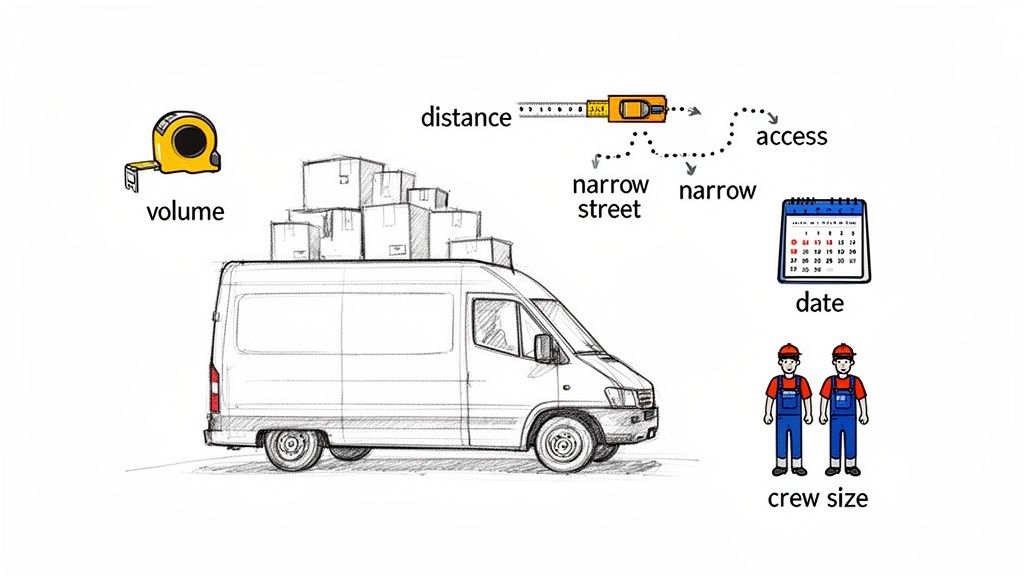
Trying to figure out a moving quote can feel a bit like guesswork, but it's actually a pretty logical process. Think of it less as a single, fixed number and more as a calculation based on a few core ingredients. Once you get a handle on what those are, you’re in a much better position to manage your budget and avoid any last-minute surprises.
By far the biggest driver of the final cost is the volume of your belongings. It’s the starting point for everything else.
Just imagine trying to squeeze the contents of a three-bedroom house into a little Transit van – it’s just not going to happen. How much stuff you have directly impacts the size of the lorry we need, how many crew members are required to lift and shift it all safely, and ultimately, how long the job is going to take. Moving a minimalist one-bed flat might only take a small team a few hours, whereas a large family home will likely need a 7.5-tonne lorry and a full day’s work from the crew.
Your Belongings and the Journey Ahead
After we’ve figured out what you're moving, the next big questions are where it’s going and how we’re going to get it in and out. The distance of the move and the access at both properties are huge factors in the logistical puzzle.
-
Distance Travelled: It stands to reason that a local move across Bristol will cost less than a long-distance relocation to the other end of the country. This comes down to the basics: fuel costs, the total hours the crew is on the clock, and general vehicle wear and tear. A 10-mile hop is a world away from a 200-mile journey.
-
Property Access: This is the one detail people nearly always forget to consider. Are you moving out of a top-floor flat with no lift? Do either of your properties have awkward, narrow staircases or tight corners? Is parking a nightmare? These challenges demand more time, more muscle, and sometimes specialised equipment, all of which gets factored into the quote. Navigating some of Bristol’s historic, narrow streets is a perfect example of where access becomes a really key consideration.
A professional removal survey isn't just about counting boxes. It's a full logistical assessment. We’re spotting potential headaches, like a grand piano that won’t fit through the door or a street with double yellow lines that needs careful planning. This kind of foresight is what prevents stressful, costly delays on moving day.
These physical elements—what you’re moving, how far it’s going, and how tricky the access is—form the bedrock of any quote.
Timing and Team Size
Finally, we have the "when" and "who" of your move, which can make the price swing quite a bit. The number of people on the job is a direct result of the volume and complexity, but the date you choose brings a bit of supply and demand into the mix.
The number of porters assigned to your move is all about efficiency and safety. Too small a team will struggle with heavy furniture, not only slowing things down but also increasing the risk of damage to your things or the property. On the other hand, having too many people is just inefficient. We aim for that sweet spot to get the move done smoothly and on schedule, which directly shapes the labour costs.
The date you pick for your move also plays a surprisingly big part. Just like booking a holiday, the removals industry has its peak and off-peak seasons.
Key Timing Considerations:
- Time of Year: The summer months (May to September) are our busiest season. With higher demand, prices are naturally firmer. Moving in the autumn or winter can often unlock better rates.
- Day of the Week: Everyone wants to move on a Friday or a weekend. If you have the flexibility, booking a move for mid-week (Tuesday to Thursday) can lead to some decent savings.
- Time of the Month: The end of the month is another crunch time, as that’s when most tenancy agreements end and property completions go through.
Once you understand how volume, distance, access, crew size, and timing all fit together, you can see that a quote isn't just a number plucked out of thin air. It’s a logical calculation, and having this knowledge empowers you to make smarter decisions and spot opportunities to reduce your overall moving costs.
A Detailed Breakdown of Removal Service Costs
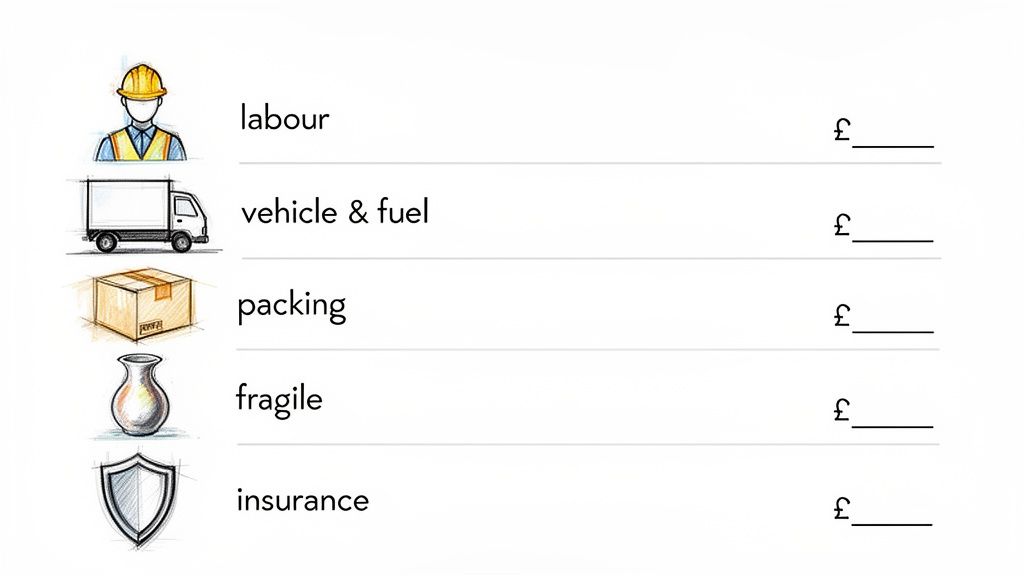
When you get a quote from a professional removals company, it's not just a single, random figure. It’s a carefully calculated breakdown of all the moving parts (pun intended!) needed to get your belongings safely from A to B. Getting to grips with what each line item means helps you see exactly where your money is going and the real value you're getting.
Think of it as a recipe for a successful move. Each ingredient, from the skilled team doing the heavy lifting to the right-sized lorry for the job, is essential for a smooth, efficient relocation.
Labour: The Heart of the Operation
By far, the biggest chunk of your cost to move will be the labour. And let's be clear, you’re not just paying for brute strength. You're investing in an experienced, trained, and uniformed crew who know the art of moving.
These are the people who can expertly pivot a sofa through a tight doorway, pack a lorry like a 3D Tetris champion, and stick to a tight schedule without breaking a sweat—or your grandmother’s china.
This cost typically covers:
- A team of trained porters (usually two or three for a standard house move).
- Their time for the entire day, from the moment they arrive to the moment the last box is placed in your new home.
- The expertise needed to handle everything without leaving a single scuff mark on your walls or furniture.
It's worth noting that labour costs have been on the rise across the UK, and the removals industry is no exception. In fact, over the last five years, the average cost for a three-bedroom house move in the UK has jumped by about 30%, from roughly £950 to over £1,300. This is largely down to rising fuel prices, higher wages, and increased insurance premiums for removal firms. Here in Bristol and Bath, our prices are pretty much in line with this national average, though tricky city logistics like parking can sometimes add a bit more.
Vehicle and Fuel Costs
Next up is the transport. A reputable company like SimplyPro will have its own fleet, ranging from nimble Transit vans perfect for flat moves to hefty 7.5-tonne lorries built for larger family homes. Your quote will factor in the specific vehicle needed to handle the volume of your belongings.
This cost isn't just for hiring the van for the day. It also covers fuel, ongoing maintenance, and all the essential gear kept on board, like protective blankets, straps, and sack trolleys.
Your quote essentially secures a dedicated, fully-equipped vehicle just for your move. This guarantees that your things won't get mixed up with anyone else's and that the crew has all the right tools for the job.
Professional Packing Services
Let's face it, packing is a marathon. It's easily the most time-consuming part of moving, which is why our professional packing services are such a popular add-on. They can dramatically cut down on your stress levels and free up your time. The cost just depends on how much you want us to do.
- Full Packing Service: This is the ultimate "sit back and relax" option. Our team comes in before move day and packs up your entire home, from the kitchen cutlery to the books in the study.
- Fragile-Only Packing: A brilliant middle ground. We’ll professionally pack all your delicate items—glassware, crockery, mirrors, and ornaments—while you handle the sturdier things like clothes and bedding.
- Materials Only: If you're a DIY packer, no problem. We can supply you with the same high-quality, professional-grade boxes and packing materials our own crews use.
If you're weighing up the options, our guide on the average cost of moving companies can give you a clearer picture of how these services slot into your overall budget.
Specialist Items and Dismantling
Some things just don't fit neatly into a box. Your quote might list separate items for tasks that need a bit more time, skill, or special equipment. We do this to be completely transparent, so you only ever pay for the specific services you actually need.
Common specialist tasks include:
- Dismantling and Reassembling Furniture: Think big items like beds, wardrobes, or dining tables that need to be taken apart to get out the door.
- Handling Bulky or Precious Items: Moving a piano, a priceless piece of art, or a grandfather clock takes specialist know-how and equipment to do it safely. We've got it covered.
Insurance: The Essential Safety Net
Finally, every professional quote will, and absolutely must, include insurance. This isn't just a box-ticking exercise; it's your peace of mind and protection against the unexpected. Standard goods-in-transit insurance covers your possessions while they're on our vehicle.
It’s always a good idea to check the level of cover you're getting. Honestly, it’s a tiny price to pay for the reassurance that your worldly goods are fully protected from start to finish.
Exploring Additional Services and Their Costs
Getting your belongings from A to B is just one part of the moving puzzle. A truly smooth move often involves a few extra helping hands to handle the details that can turn a stressful day into a seamless transition. Think of these services as the upgrades that take the weight off your shoulders.
Your standard quote covers the heavy lifting, but what about the rest? From stashing your stuff away when dates don't line up, to getting your old place professionally cleaned, these add-ons are designed to save you time and hassle, letting you focus on settling in.
Secure Storage Solutions
It’s a classic moving day problem: you have to be out of your old place, but the new one isn't quite ready. This is where secure storage becomes a lifesaver. Whether it's a short-term gap in the property chain or a longer-term need while you renovate, professional storage is a must.
Costs naturally depend on how much space you need and for how long.
-
Short-Term Storage: This is your go-to for bridging a gap of a few days or weeks. Expect to pay around £20-£30 per week for a typical 75 sq ft unit, which is usually enough for the contents of a one or two-bedroom flat.
-
Long-Term Storage: If you're moving into a smaller temporary home, going travelling, or just need to declutter, long-term options are ideal. You can often get a better rate for booking several months at a time.
The real advantage of using your removal company for storage is how streamlined it is. The crew loads everything directly into a storage container at your home, which is then sealed and taken to their secure facility. This minimises handling, which in turn reduces the risk of any damage.
Professional Packing and Materials
Let’s be honest, packing is a monumental task. It can easily eat up weeks of your evenings and weekends. This is why professional packing is one of the most popular add-on services. It's not just about saving time; it’s about peace of mind, knowing your fragile and valuable items are packed correctly by people who do it every day. You can learn more about the different options in this guide to packing services for moving house.
A full packing service for a 3-bedroom house typically costs somewhere between £250 and £500. If you're on a tighter budget, a 'fragile-only' pack is a great compromise, where the experts handle the kitchenware and delicate items while you box up the rest. Of course, you can also just buy professional-grade boxes and materials from them to ensure you’re not let down by flimsy cardboard.
Cleaning and Handyman Services
Once the van is loaded, your job isn't necessarily over. If you're renting, an end-of-tenancy clean is usually mandatory to get your deposit back. Even if you own the property, leaving it clean for the new arrivals is a nice touch.
Rather than juggling yet another company, many removal firms can arrange this for you. While it adds to the overall budget, it's one less thing to worry about. For more information, it's worth understanding typical move-out cleaning costs, but you can generally expect to pay £150-£300 for a thorough job, depending on the size of your home.
Handyman services are another game-changer, especially at the new place. Instead of spending your first night tripping over flat-pack boxes, a handyman can get you sorted.
- Furniture Assembly: Getting beds, wardrobes, and bookcases built so you can unpack.
- Appliance Installation: Hooking up the washing machine and dishwasher.
- Fixtures and Fittings: Putting up curtain rails, hanging mirrors, and mounting the TV.
Bundling these services with your removal company means you have a single point of contact and one clear invoice. It simplifies the whole process, letting you walk into your new house and start enjoying it right away.
How to Get an Accurate and Reliable Moving Quote
Getting a moving quote you can actually trust is probably the most important part of budgeting for your move. A vague estimate can lead to some really nasty surprises on the day, but a proper, professional survey gives you total clarity from the outset. This isn't just about a removal company counting your boxes; it's about them understanding the specific details of your move so they can give you a fixed, reliable price.
Think of it as the difference between a wild guess and a detailed blueprint. A thorough survey will spot potential headaches—like that narrow staircase or tricky parking on your new street—before they turn into expensive, last-minute problems. This is your guide to getting a quote that sticks, with no hidden costs ambushing you later.
Choosing the Right Survey Method
The days of having to book a day off work for a surveyor to visit are pretty much over. Modern technology now gives us a much more convenient, and just as accurate, way of doing things.
-
Video Surveys: This is by far the fastest and most flexible option. You simply use your smartphone or tablet to walk a surveyor through your home on a video call. It’s incredibly efficient, usually taking just 20-30 minutes. The expert on the other end can see everything they need to, ask you questions in real-time, and spot any access issues, all from the comfort of their office.
-
In-Person Surveys: For really large homes or moves with complex needs, like a valuable art collection or several specialist pieces of furniture, a traditional home visit might still be the best bet. It allows for a more hands-on assessment but does require a bit more coordination to schedule.
For the vast majority of moves, though, a video survey provides all the detail needed for a perfectly accurate quote. It’s the ideal mix of convenience and precision.
How to Prepare for Your Survey
A little bit of prep work goes a long way in ensuring your quote is spot on. Just 15 minutes of organising beforehand will help the surveyor see the complete picture.
Make sure you open all the cupboards, loft hatches, and garage doors so they can get a true sense of volume. It's really helpful to point out any items that aren't coming with you, and also mention anything new you're planning to buy before you move. This is also the perfect time to flag anything that needs special handling or requires dismantling.
If you’re just after a rough idea before the survey, our UK moving cost calculator can give you a pretty good ballpark figure.
Questions to Ask Your Removal Company
An accurate quote is essential, especially when you consider all the other costs that pile up. With UK house prices as they are, the removal bill is a significant chunk of the overall relocation budget, which can already include thousands in fees.
Before you commit to any company, make sure you get clear answers to a few key questions. This little checklist will help you book with confidence and avoid any confusion later on.
Your Essential Quote Checklist:
- Is this a fixed quote or an estimate?
- Is VAT included in the final price?
- What level of insurance is included, and what's the excess?
- Are packing materials included if I choose the packing service?
- What are your charges for potential delays, like waiting for keys?
- Is the dismantling and reassembling of furniture included?
- What is your cancellation policy?
Asking these questions up front means you can compare quotes on a like-for-like basis and know exactly what your cost to move actually covers. No guesswork needed.
Practical Tips to Reduce Your Moving Costs
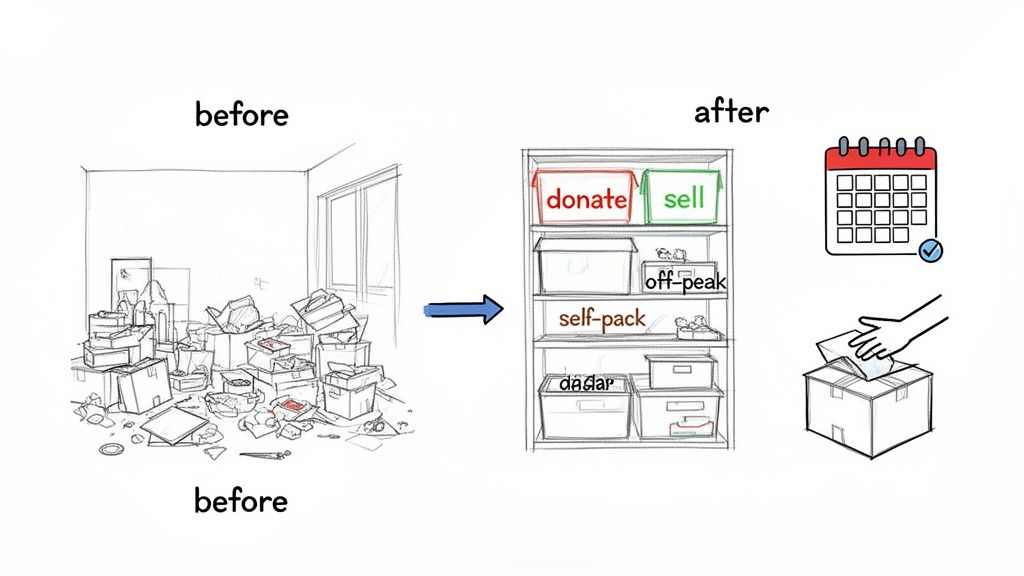
Knowing what drives up the cost to move is one thing, but actively bringing that price down is where you can make a real difference. With a bit of forward-thinking, you can make your relocation much more affordable without having to compromise on the security of a professional service. Think of it as trimming the fat from your quote, not cutting essential corners.
The single biggest thing you can do to lower your moving cost happens long before you even book a removals firm. It’s all about decluttering.
Since the final price is so heavily influenced by the sheer volume of your stuff, having fewer belongings means a smaller van, possibly a smaller crew, and less time on the clock. It's time to be ruthless—sell, donate, or recycle anything you haven’t touched in the last year. Every single item you get rid of is one less thing you have to pay to transport.
Be Smart About Packing
Your packing strategy is another golden opportunity to save some cash. While having the movers do a full packing service is a massive time-saver, you don't have to go all-or-nothing. A hybrid approach often works wonders.
Why not pack all the non-fragile items yourself? Things like clothes, books, and bedding are straightforward. You can then leave the delicate stuff—glassware, crockery, and artwork—to the pros. This move alone significantly reduces your labour costs while still giving you peace of mind that your most precious items are in safe hands.
You can also get creative with finding packing materials:
- Ask local shops: Supermarkets and off-licences are often happy to give away sturdy cardboard boxes for free.
- Use what you already own: Suitcases, laundry baskets, and storage boxes are perfect for moving soft items like towels and toys.
- Rent plastic crates: Many companies now rent out reusable plastic moving crates. This can be cheaper and far more eco-friendly than buying stacks of cardboard.
Timing and a Bit of DIY
A little flexibility can go a long way. If your schedule allows you to move outside of peak times—like Fridays, weekends, and the end of the month—you can often snag a much better rate. A mid-week, mid-month move is almost always the cheapest option on the calendar.
Pro Tip: Don't underestimate the savings from a little DIY. If you're handy with a screwdriver, dismantling large furniture like beds, wardrobes, and tables yourself before the crew arrives can shave a surprising amount of time off the job, which directly lowers the labour cost.
Just be sure to pop all the screws and fittings into a labelled bag so you’re not hunting for them during reassembly! To make sure everything fits and you get an accurate quote, it's always a good idea to consult a guide to measuring your furniture's dimensions.
Know Where Not to Cut Corners
While saving money is great, there are a couple of areas where scrimping is a bad idea. First and foremost, never skip on proper insurance. The small amount you might save simply isn't worth the immense risk to all your belongings.
Similarly, when it comes to extremely valuable, heavy, or sentimental items like a grand piano or antique furniture, let the professionals handle it. Trying to move these yourself to save a few quid can easily end in tears and costly damage. By being smart about where you save and where you invest, you can have a smooth, affordable move without the stress.
Your Moving Cost Questions Answered
Even with all the details, you probably still have a few questions buzzing around. It's completely normal. Let's tackle some of the most common queries we get from people just like you, giving you the straightforward answers you need to finalise your moving budget.
Is It Really Cheaper to Move on a Weekday?
Yes, it absolutely is. If you can swing it, booking your move between Tuesday and Thursday will almost always save you money compared to a Friday or weekend slot. Demand is simply lower mid-week, so removal companies often offer better rates.
Fridays are peak time because everyone wants that long weekend to settle in. The same goes for the beginning and end of the month when tenancy agreements typically start and finish. A mid-week move is one of the easiest, smartest ways to cut down your costs.
What Should I Expect to Budget for Packing Services?
The cost of professional packing really comes down to how much help you want. For a full-service pack on a standard 3-bedroom house, where we handle everything, you're typically looking at a range between £250 and £500. That price includes all the proper packing materials and the crew's time to get it all done right.
If you're watching the budget, you could opt for a 'fragiles only' service, which costs less. It might feel like an extra expense, but when you consider the dozens of hours you save and the peace of mind knowing your breakables are professionally protected, it’s often worth every penny.
Think of professional packing less as just "putting things in boxes" and more as a skilled craft. It’s about using the right materials and techniques to ensure your belongings survive the journey, saving you from the cost and heartache of breakages.
Are There Any Hidden Costs I Need to Worry About?
With a reputable, professional removal company, there shouldn't be any "hidden" costs. Your quote should be clear and transparent – the price you see is the price you pay. That said, extra charges can pop up if the job changes on the day.
Here are a few common reasons why you might see an additional cost:
- Waiting time fees: This happens if there's a long delay getting the keys for your new place.
- Access problems: Things you didn't mention in the survey, like a broken lift or newly blocked access road.
- Extra stuff: Deciding to add more boxes or a piece of furniture at the last minute.
The best way to avoid surprises is to ask upfront what the quote includes and what situations might lead to extra charges. A good company will be happy to explain everything.
Ready to get a clear, no-nonsense quote for your move? The team at SimplyPro Removal & Storage Ltd provides fast, accurate pricing without any hidden surprises. Plan your move with confidence by visiting https://www.simplyremovalsbristol.co.uk.