

Moving house is a massive undertaking, and the secret to keeping your sanity is a solid, step-by-step timeline. You'll want to kick things off at least eight weeks before moving day. This is the perfect time to start getting quotes from removal companies, mapping out a budget, and tackling the first wave of decluttering. Getting these big jobs sorted early on lays the groundwork for a much smoother experience.
Your Realistic House Moving Timeline
A successful move is all about preparation. The final weeks can feel like a mad dash, but with a good timeline, you can turn that chaos into a series of calm, manageable steps. Don't think of it as a rigid schedule, but more of a friendly guide to keep you on track and sidestep that last-minute panic we all dread.
Starting early is particularly wise here in the UK. Did you know that the UK has the slowest home-moving process out of 12 countries surveyed? It takes an average of 179 days from listing a property to getting the keys. Compare that to just 53 days in the US! This snail's pace, often bogged down by solicitors and communication gaps, is exactly why getting a head start on the physical move is a massive advantage.
Eight Weeks Before Your Move
With two months on the clock, it's time to focus on the big picture. This is your window for research, budgeting, and reaching out to the services you'll need. Rushing these initial steps is a recipe for expensive mistakes down the line.
Here’s what should be at the top of your to-do list:
- Request Removal Quotes: Don't just go with the first company you find. Get in touch with at least three professional removal firms to compare estimates. This gives you a realistic view of the costs and helps you find a team that feels like the right fit for your move.
- Set a Moving Budget: Think beyond the cost of the movers. Factor in everything from packing supplies and potential storage fees to the well-deserved takeaway you'll be ordering on that first night in your new place.
- Organise Your Paperwork: Get yourself a ‘moving folder’—physical or digital—and keep all your important documents in one place. This includes quotes, receipts, and any legal papers for your new home.
Six Weeks Before Your Move
Now for the fun part: sorting through everything you own. Decluttering before you even think about packing is probably the single best thing you can do to simplify a move. Less stuff means fewer boxes to pack and move, which often translates to lower removal costs and a much cleaner start in your new home.
I always recommend the simple four-box method. As you work through each room, sort every single item into one of four piles:
- Keep: Things you genuinely love, use, and want to take with you.
- Donate: Anything in good nick that you no longer need. Local charity shops will be grateful for it.
- Sell: Items that have some value could earn you a bit of extra cash on sites like Facebook Marketplace or Vinted.
- Discard: Anything that's broken, out of date, or past its best. Recycle what you can and bin the rest responsibly.
A proper declutter isn't just about throwing things away. It’s about being intentional about what you bring into the next chapter of your life. Honestly, this one step can have the biggest impact on reducing the stress of moving day.
This visual timeline breaks down those crucial early stages.
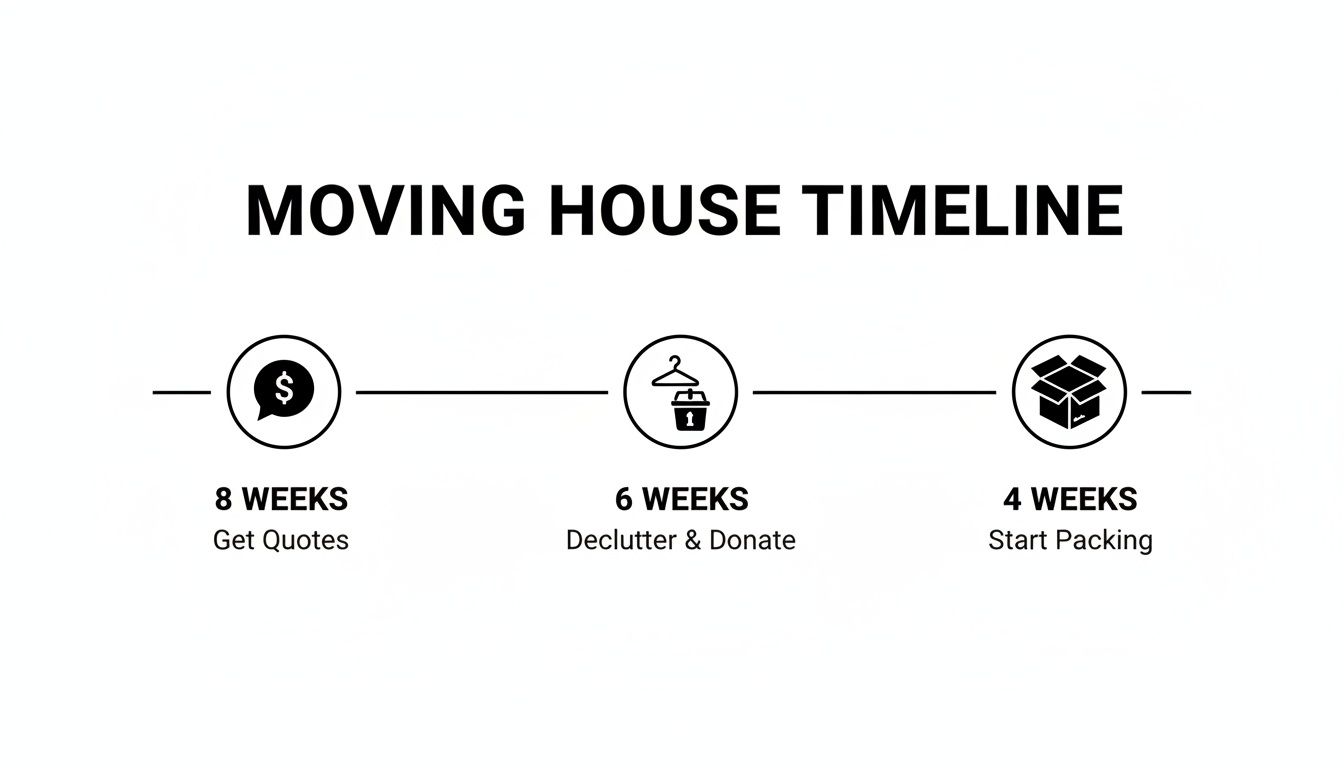
The main takeaway? Foundational tasks like getting quotes and decluttering need to happen long before you start taping up boxes.
Four Weeks Before Your Move
With just a month to go, things start to feel a lot more real. By this point, your plans should be taking shape, and you should aim to have your removal company officially booked and confirmed.
This is also the time to start notifying people and organisations about your change of address. Think about your bank, utility providers, the DVLA, your doctor, and any subscription services. For a complete list of who to contact, our complete moving house checklist has you covered. Ticking this off early means you won't miss any important mail after you've moved.
Finally, start gathering your packing supplies. You'll need more boxes, tape, and bubble wrap than you think, so it’s always a good idea to stock up now.
The Art of Smart Decluttering and Packing
Now that you have a timeline in place, it’s time to get hands-on. We’re talking about the big sort-out – the process of deciding what actually makes the journey to your new home. This isn’t just about fitting things into boxes; it’s a golden opportunity to be ruthless.
A proper declutter directly impacts your wallet. The less you have, the less you have to pack, move, and unpack. That translates to real savings on removal costs and a much less cluttered start in your new place.
If you’ve lived somewhere for a while, the thought of downsizing can be a bit much. The trick is to chip away at it. Don’t try to tackle the whole house in one weekend. Start with a single cupboard or one corner of a room to keep from feeling swamped. For instance, wardrobes are often a great place to start, and you can find some great tips on cleaning out your closet efficiently to make the job easier.
A Room by Room Packing Strategy
Once the clutter is gone, you can start packing with a clear head. Just throwing things into boxes randomly is a recipe for chaos when you arrive. A methodical, room-by-room approach is the secret to a sane and organised unpacking experience. The aim is simple: pack boxes so they can be carried straight to the right room.
Start with the rooms you use least – think spare bedrooms, the home office, or that collection of books you’ve been meaning to read. This way, you can pack a significant amount without disrupting your day-to-day life, leaving essentials like the kitchen and main bedroom for the final week.
And please, label everything. Grab a thick marker pen and label every box clearly on the top and at least one side.
Your labels should have three crucial bits of info:
- Which room it belongs in: (e.g., "Main Bedroom," "Kitchen," "Albie's Room")
- A general idea of the contents: (e.g., "Books and Files," "Winter Jumpers")
- A priority marker: Use a star or write "UNPACK FIRST" on boxes you’ll need immediately.
Protecting Your Fragile Items
There's nothing more soul-destroying than unpacking to find a cherished vase in pieces or a crack across your TV screen. Protecting your breakables takes a bit more effort than just crossing your fingers; it requires the right materials and techniques. This is not the place to cut corners.
For glassware and crockery, wrap every single item in packing paper before you even think about putting it in a box. It’s a good idea to use sturdy, double-walled boxes for these. Here’s a pro tip: pack plates vertically on their edges, like records in a crate. They are far stronger this way and much less likely to shatter. For wine glasses and mugs, cardboard dividers are your best friend.
When it comes to electronics like TVs and computers, their original boxes are the gold standard. If you’ve long since recycled them, wrap the items carefully in blankets or bubble wrap, paying extra attention to the corners. Mark these boxes clearly as "FRAGILE" and have a word with the removal crew to make sure they’re loaded safely where nothing heavy can be stacked on top.
Key Takeaway: The time you invest in properly packing fragile items is time saved from the frustration and cost of replacement. Always use more padding than you think you need—it's a small price to pay for peace of mind.
The All-Important Essentials Box
Think of your 'essentials box' as your first-night survival kit. This is the very last box you pack and the absolute first one you open. It should contain everything you need to function for the first 24-48 hours in your new home, saving you from desperately tearing open box after box looking for the kettle.
So, what goes in it? Basically, anything you’d pack for a weekend away.
- Kitchen Basics: Kettle, mugs, tea/coffee, sugar, a small pan, and a few bits of cutlery.
- Toiletries: Toothbrushes, toothpaste, soap, a couple of toilet rolls, and any daily medications.
- Comfort Items: A set of clean bedding for everyone, pyjamas, and a change of clothes.
- Practical Tools: A sharp knife for opening other boxes, phone chargers, and a basic toolkit.
This one box can be the difference between a stressful first night and a comfortable one. For a more detailed checklist, check out our comprehensive tips for packing when moving house to make sure nothing gets forgotten.
Finally, keep this box with you in your car, not on the removal lorry. That way, you know exactly where it is the moment you walk through the door. It’s a simple step that makes a world of difference.
Choosing The Right Professional Movers

Picking a removal company is easily one of the biggest decisions you'll make during your move. It’s not just about hiring people to lift heavy boxes; you’re literally handing over all your worldly possessions to a team of strangers. A great mover can make the day feel like a breeze, but a bad one can lead to damaged furniture, frustrating delays, and a whole lot of regret.
The best place to start is by gathering at least three detailed quotes. Be wary of any company that throws a price at you over the phone without seeing what you need to move. A reputable firm will always insist on a proper assessment, either by visiting your home or doing a quick video survey where you walk them through each room with your phone. This is the only way to get an accurate quote and avoid any nasty surprises on the day.
Getting And Comparing Accurate Quotes
When the quotes come in, resist the temptation to just pick the cheapest one. A suspiciously low offer often means hidden costs or corners being cut somewhere down the line. You need to compare them properly, line by line, to see exactly what you’re getting for your money.
Drill down into the details and ask the right questions:
- Insurance: What level of Goods in Transit insurance is included? Is there an excess if you need to claim, and what's the process if something gets damaged?
- Packing Materials: Are boxes, tape, and wrapping paper included in the price, or will you be charged extra for them?
- Dismantling/Reassembly: Will the crew handle taking apart big items like beds, wardrobes, or your dining table, and then put them back together in the new place? This is a massive timesaver.
- Waiting Time: What’s the policy if there’s a delay getting the keys? Many firms start charging by the hour after a certain point.
A truly professional company provides a comprehensive quote. It shows they've actually listened to your specific needs, which is always a good sign.
The Value Of Trade Associations
A brilliant way to vet a removal company is to check if they belong to a recognised trade body, like the British Association of Removers (BAR). Seeing that logo on their website isn't just for show—it's a genuine mark of quality and a safety net for you.
To become a BAR member, a company has to prove it meets high standards, uses fair contract terms, and provides access to a dispute resolution service. This gives you a crucial layer of protection if anything doesn't go to plan.
Choosing a BAR-accredited firm gives you real peace of mind that you're working with professionals who are regularly inspected and follow a strict code of practice. For a deeper dive, it's well worth reading up on what to look for in a removal company to make sure you've covered all the bases.
Service Levels And Strategic Booking
Not all removal services are created equal. They can range from a basic ‘man and van’ service, which is great for smaller moves where you’ve done all the packing yourself, to a full-service package where the team packs, moves, and unpacks everything for you. The right choice really comes down to your budget and how much time you can spare.
To help you decide, here’s a quick breakdown of the different service levels you'll come across.
Comparing Removal Service Levels
| Service Level | What It Includes | Best For | Average Cost Guide |
|---|---|---|---|
| Man & Van | A driver and a van. You are expected to do all the loading and unloading. | Small flats, student moves, or just a few large items. | £50 – £90 per hour |
| Self-Pack | The removal team loads the van, drives to your new home, and unloads. You do all the packing and unpacking. | People on a tighter budget who have time to pack themselves. | £450 – £1,500 |
| Part-Pack | You pack most items, but the removal company professionally packs fragile items like kitchenware and ornaments. | A good middle ground, offering peace of mind for delicate possessions. | £600 – £2,000 |
| Full Pack & Move | The team packs your entire house, moves it, and places furniture. Unpacking is usually extra. | Busy professionals, families, or anyone wanting to minimise stress. | £1,200 – £3,000+ |
Choosing the right service is the first step, but booking it at the right time is just as important, especially if you want to save a bit of cash.
Weekends, school holidays, and the end of the month are always the busiest—and therefore most expensive—times to move. For context, research from the HomeOwners Alliance predicts Friday, 29th August 2025, will be the UK's busiest moving day, with an estimated 22,000 household moves. On peak days like this, 85% of removal firms report a higher chance of delays.
Opting for a mid-week, mid-month move can often lead to a much smoother and more affordable experience. Think of your movers as partners in your relocation; taking the time to research, ask questions, and understand the service you’re paying for will set you up for a successful moving day.
Getting Through Moving Day and the First 48 Hours
So, the big day is finally here. After weeks of planning and packing, this is it. Moving day isn't about making big decisions anymore; it's all about calm, methodical execution. Your main job now is to oversee the process, keep the lines of communication open, and ensure everything runs like clockwork.
Before the removal team arrives, do one last sweep of your old place. I mean everywhere—every cupboard, the loft, the garden shed. It's amazing what can get overlooked. This is also your last chance to grab the final meter readings for gas, electricity, and water. A quick photo of each meter on your phone, capturing the reading and the meter number, is a lifesaver when it comes to settling your final bills.
When your movers arrive, take a moment to chat with the team leader. A quick walk-through of the house, pointing out any boxes that are particularly fragile or items that need special handling, can prevent a world of headaches later on.
Keeping Everyone Safe and Calm
Moving day can feel like organised chaos, and for the youngest members of your family, it can be pretty unsettling. The constant stream of people and the sight of their familiar world being packed into a lorry is a lot to take in.
The best strategy? Keep kids and pets well away from the main action.
- For Children: If you can, arrange for them to spend the day with grandparents or a friend. If they need to be with you, create a "safe room" kitted out with their favourite toys, snacks, and maybe a tablet. This keeps them happily occupied and safely away from open doors and heavy lifting.
- For Pets: All the noise and disruption can be incredibly stressful for animals. The safest spot for them is a secure room with their bed, food, and water. A clear "Do Not Open" sign on the door is a must. Alternatively, booking them into a cattery or kennels for the day is a great way to minimise their anxiety (and yours!).
Remember, the goal is to create pockets of calm amidst the organised chaos. A little forward-thinking for your kids and pets will make a massive difference to their wellbeing and your own stress levels.
Once the old house is empty and the keys have been handed over, it's time to head to your new home.
Arriving at Your New Place
That moment you get the keys is brilliant, but before you even think about putting the kettle on, there are a couple of quick jobs to do. As soon as you step inside, take meter readings for the new property. Just like before, a quick photo on your phone creates a clear starting point for your new utility accounts.
Next, have a quick walk-through to make sure everything is as you expected. This is also your chance to direct the removal team as they start unloading. Have a rough floor plan in your head and let the movers know which room each labelled box should go in. It'll save you a lot of heavy lifting later. To help everyone find the right place, you might want to consider some personalised house number signs to make your new home stand out.
Surviving The First 48 Hours
Your first couple of days are all about creating a functional, comfortable space as quickly as possible. Don't try to unpack everything at once—that's a recipe for burnout. Focus on the essentials.
The very first box to open should be your essentials box. This is your lifeline, containing the kettle, tea bags, mugs, phone chargers, and some basic toiletries. There's a reason making a brew is a time-honoured moving day tradition!
With tea in hand, your next priorities should be:
- Build the Beds: After a long, tiring day, you'll be so grateful for a proper place to sleep. Get all the beds assembled and put fresh linen on them before you tackle anything else.
- Find the Stopcock: Figure out where the main water stopcock is. Knowing this is vital if you have a leak or any plumbing issues in those first few days.
- Test the Alarms: Check that all the smoke and carbon monoxide alarms are in working order. Your safety comes first.
Once those key tasks are done, you can start unpacking more methodically, beginning with the kitchen and bathrooms. Get these core rooms functional, and you’ll feel much more settled. The rest of the house can wait. Moving house is a marathon, not a sprint, and these first few steps will get you started without feeling completely overwhelmed.
Local Insights for Moving to Bristol and Bath

Moving is always a big job, but heading to a new city brings its own unique set of challenges. And when that city is somewhere as popular as Bristol or Bath, you’re diving into a whole different league. Getting a feel for the local quirks—from the property market to the logistical headaches of the area—is the key to making your move exciting, not excruciating.
There's no denying the appeal of these cities. They're relocation hotspots for a reason, offering an incredible quality of life, rich history, and a vibrant cultural scene. The downside? Everyone else thinks so too. This popularity means properties fly off the market and the best removal firms get booked up solid, sometimes months in advance.
The numbers don't lie. While Bournemouth is currently the UK's top spot for moving interest, Bristol is nipping at its heels, ranking fourth with an average of 32,889 Google searches for moving-related terms every month. That level of competition tells you everything you need to know about how busy the market is. Planning early isn't just a good idea; it's essential. You can dig into more stats on the UK's keenest cities to understand the full picture of regional moving trends.
Navigating the Streets of Bristol and Bath
The first thing you’ll learn about these beautiful, historic cities is that their charm comes with a price: tricky layouts. Those quaint, narrow streets that give areas like Clifton in Bristol or the centre of Bath their character can become a proper nightmare on moving day.
Getting access is a huge deal. Many of the gorgeous period properties, whether it’s a Georgian townhouse in Bath or a Victorian terrace in Southville, simply weren't designed for modern removal lorries. This is something you absolutely must bring up during your removal survey.
A good local removals company will have seen it all before and knows how to get around it. They’ll have a plan that might involve:
- Using smaller vehicles: They might need to use a 'transshipment' service, where they park the big lorry on a main road and shuttle everything to your door with smaller vans.
- Checking for restrictions: Many central streets have strict weight or width limits for vehicles.
- Smart route planning: An experienced local driver knows the backstreets and which roads to avoid during the morning rush hour.
The Parking Permit Puzzle
Parking is the other major hurdle you'll face. In loads of residential zones across both cities, you can't just pull up and start unloading. You’ll need to sort out parking suspensions or visitor permits for the removal van. If you forget, you could be hit with a hefty fine and a massive delay while the crew circles the block looking for a space.
Get in touch with the local council—either Bristol City Council or Bath & North East Somerset Council—as early as you can to arrange a parking bay suspension. The process can take a few weeks, so get it on your to-do list the moment you have a moving date. Your removal company can usually point you in the right direction, but organising it is almost always your responsibility.
Don’t underestimate the logistics of a city-centre move. Talking about access and parking with your removal company isn't just a minor detail—it's one of the most important conversations you'll have to make sure the day runs smoothly.
Finding Local Trades and Settling In
Once all the boxes are inside, the real adventure of settling in begins. Getting your new place feeling like home often means finding reliable local tradespeople to help out. But trying to find a decent plumber, electrician, or decorator in a brand-new city can feel like a total lottery.
This is where local community groups, especially on Facebook, are worth their weight in gold. Look for neighbourhood groups for areas like Bedminster, Gloucester Road, or Widcombe. You’ll find that residents are incredibly helpful and will gladly share their recommendations for trusted local professionals. It’s the best way to avoid the cowboys and, even better, it's a fantastic way to start connecting with your new community and get insider tips on everything from the best local pubs to upcoming festivals.
Got A Question About Moving House? You’re Not Alone.
Even the most organised move can feel like a minefield of last-minute questions and worries. That’s perfectly normal. Getting straight answers to the common "what ifs" is the best way to stay calm and in control.
How Far Ahead Should I Book A Removal Company?
The golden rule is to start getting quotes about six to eight weeks before you plan to move. This gives you enough breathing room to vet a few firms, compare their services, and find someone you trust without making a panicked decision.
But a word of warning: if you’re moving on a Friday, during the summer, or in the school holidays, that timeline shrinks fast. Those slots get booked up months in advance. For these peak times, you’ll want to secure your removal company two to three months ahead. It’s not just about guaranteeing they're free; locking in your date early often means you get a better price. Leave it to the wire, and your choices will be limited and almost certainly more expensive.
What Is The Safest Way To Move Fragile Items?
When it comes to your breakables, this is one area where you absolutely shouldn't cut corners. Proper packing is everything.
- Wrap each item on its own. Don't just stuff things in a box. Use plenty of packing paper or bubble wrap for every single glass, plate, and ornament.
- Use the right boxes. Double-walled boxes are a must. Look for ones with cardboard dividers—they’re brilliant for keeping glassware from clinking together.
- Shout it from the rooftops (or the box). Mark every box containing fragile items with "FRAGILE" in big, bold letters on the top and all four sides.
If you have things that are truly irreplaceable—antiques, artwork, a grand piano—it’s well worth finding a removal company with specialist experience. Ask them about their enhanced insurance options and check your own home insurance policy to see what’s covered during transit.
Your most precious items deserve more than just a standard box. Investing in proper packing materials and considering specialist mover insurance is a small price to pay for the peace of mind that your belongings will arrive in one piece.
How Can I Manage All The Address Changes?
The secret here is a simple list. Sit down and make a master list of everyone who needs your new address. Think beyond the obvious ones like your bank and the DVLA. Include your doctor, dentist, online shopping accounts, magazine subscriptions, and even your loyalty cards.
Start ticking them off about two to four weeks before you move. For a fantastic safety net, I always recommend setting up the Royal Mail's Redirection service for at least a few months. It’s an absolute lifesaver for catching any mail from people you forgot to tell, giving you a chance to update them without missing anything important.
What Happens If My Moving Date Changes Suddenly?
This is the nightmare scenario for many people, especially when you're stuck in a property chain. If it happens, the very first thing you need to do is get on the phone with your removal company. Don't delay.
Any reputable firm has seen this a thousand times. They're usually as flexible as they can be, but it’s crucial to know their postponement policy before you book. Some might have a rescheduling fee, so it’s best to be aware of that from the start. A good company will always work with you to find a new date.
It also pays to have a plan B. If you suddenly find yourself with a gap between moving out of your old place and into the new one, a temporary self-storage unit can be a godsend. It takes all the pressure off, giving your belongings a secure home while the solicitors sort things out.
Navigating the questions and challenges of a house move is much easier with an experienced team on your side. For a seamless and stress-free move in the Bristol or Bath area, get a free, no-obligation quote from SimplyPro Removal & Storage Ltd. Let our professional crew handle the details, so you can focus on starting the next chapter in your new home. Find out more and get your quote today.