

So, you're trying to get a handle on storage costs in the UK. It’s a bit like asking "how much is a car?" – the answer really depends on what you need. That said, a good rule of thumb is that you can expect to pay anywhere from £50 a month for a small locker up to £300 or more for a large unit that could swallow the contents of a family home.
The final price tag hinges on a few key things, but let's start with the big two.
Your Quick Guide to UK Storage Prices
When you’re trying to budget for storage, two factors will always have the biggest impact on your quote: the size of the unit and its location. It just makes sense. A compact 25 sq ft unit, which is perfect for stashing a student's belongings over the summer, will obviously be much lighter on the wallet than a cavernous 150 sq ft space needed for a 3-bedroom house move.
Location is the other half of the puzzle. Just like with property, where you rent your storage unit makes a massive difference. Major cities, and London in particular, come with premium price tags because land is more expensive and running costs are higher. This chart really drives home the difference between the national average and what you'll pay in the capital.
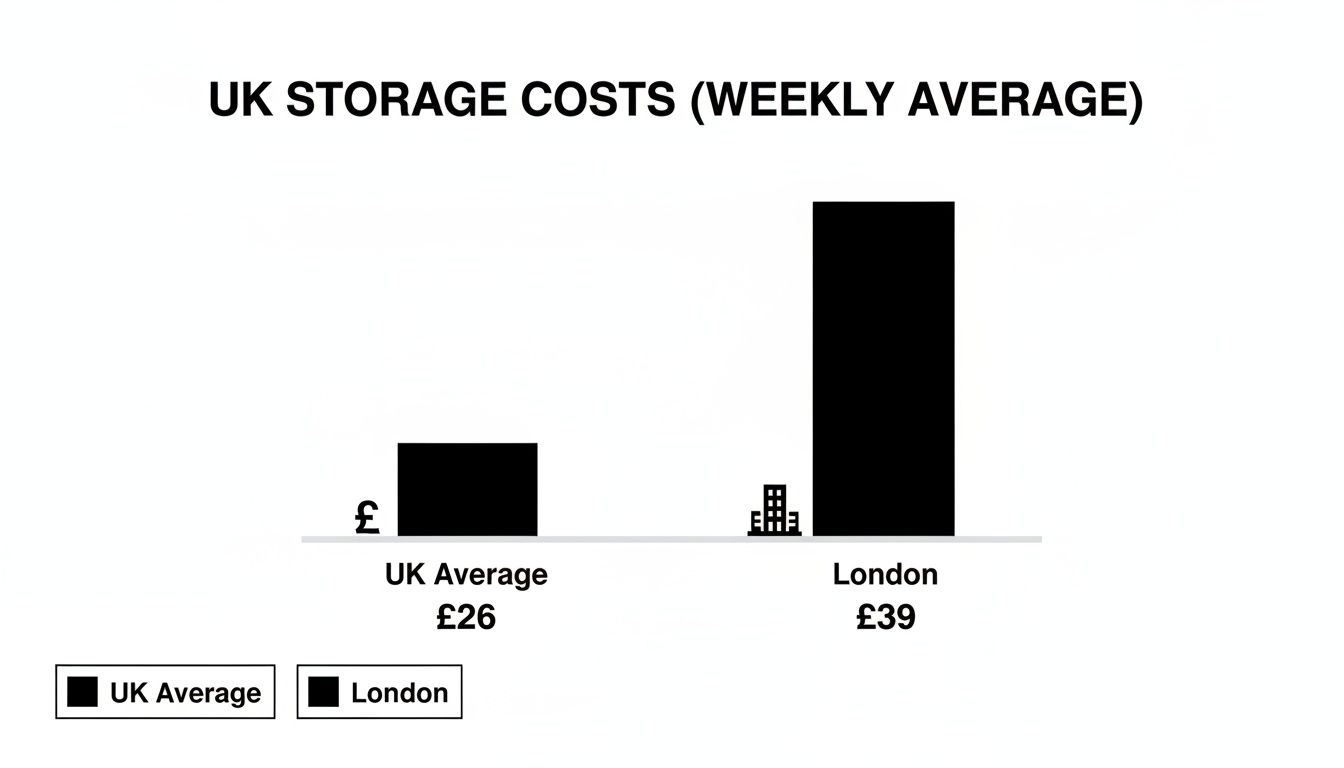
As you can see, storing your things in London is a whole different ball game, cost-wise. This is why getting local quotes is so important.
A Closer Look at Regional Costs
Digging into the numbers a bit more, the Self Storage Association UK's 2024 report shows the average rental income across the country is £26.23 per square foot. Unsurprisingly, London leads the pack at a hefty £38.80 per square foot, meaning a simple 25 sq ft unit there could cost you around £80.83 each month.
But head to other regions like the West Midlands or Wales, and the price drops to a much more manageable £20.34 per square foot. For our customers here in Bristol and Bath, the Southwest sits at a competitive average of £21.17 per square foot, offering much better value.
Key Takeaway: Your postcode is one of the biggest drivers of your final storage bill. Often, a short drive out of a city centre can unlock some serious savings.
Average Monthly Self-Storage Costs in the UK by Unit Size
To give you a clearer idea of how size translates into monthly cost, we've put together a quick reference table. It breaks down the typical prices for the most popular unit sizes, showing what you might pay on average versus the higher rates in London.
This table provides a snapshot of typical monthly rental costs for popular self-storage unit sizes across different UK regions, showing the price difference between high-cost and average-cost areas.
| Unit Size (sq ft) | Typical Use | Average UK Monthly Cost | London Monthly Cost |
|---|---|---|---|
| 25 sq ft | Small shed size; student items, boxes | £50 – £90 | £80 – £120 |
| 50 sq ft | Large walk-in wardrobe; studio flat contents | £90 – £140 | £130 – £180 |
| 100 sq ft | Single garage size; 1- or 2-bed flat | £160 – £220 | £220 – £280 |
| 150 sq ft | Large single garage; 3-bed house contents | £220 – £300+ | £280 – £400+ |
Think of these numbers as a solid starting point for your budget. And remember, picking the right-sized space is the easiest way to avoid overpaying. If you’re not sure what you need, our storage unit size guide is a great tool for figuring it out.
Of course, these aren't the only things that affect the price. In the next few sections, we'll get into how storage types, rental terms, and those pesky hidden fees can also change your final bill.
Why Is Everyone Suddenly Needing More Space?
To really get to grips with storage costs, it helps to understand why so many of us are suddenly looking for extra room. It’s not just about decluttering anymore. The demand is a direct result of big shifts in how we live and work, particularly in vibrant cities like Bristol and Bath.
Let's be honest, the modern housing market is the main culprit here. As property prices continue to climb, our living spaces seem to be shrinking. That dream of a spacious home with a garage and a roomy loft is, for many, becoming a bit of a fantasy. We're simply outgrowing our homes.
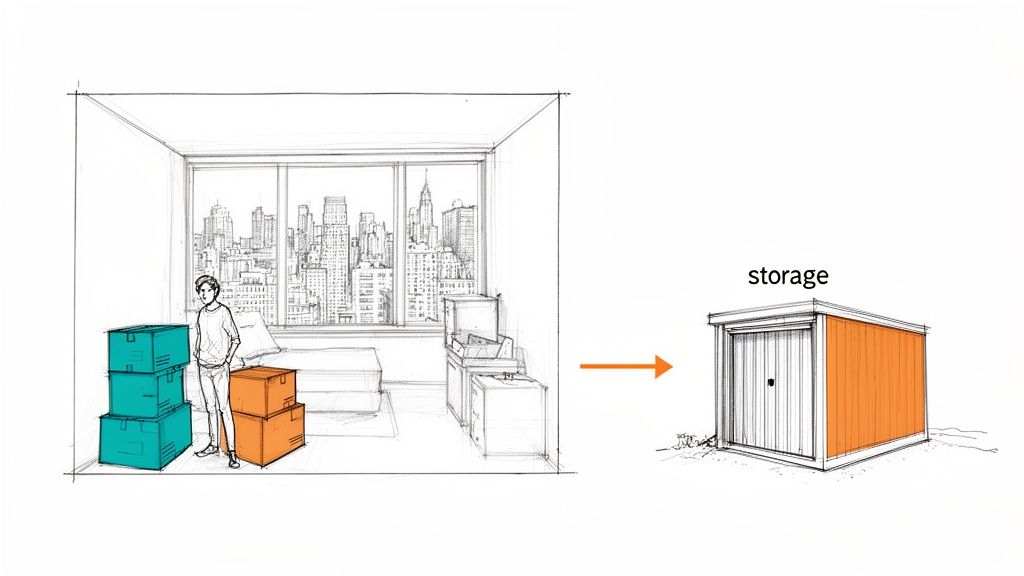
This isn't just a feeling—the numbers tell the same story. The UK self-storage market has ballooned into a £1.2 billion industry, now offering a staggering 64.3 million square feet of space. This explosion in demand is tied directly to the housing squeeze. The average owner-occupied home now provides just 61 square metres of space per person. For renters, it's even tighter, with the private sector averaging a mere 28 square metres per person. With rental prices jumping by 9.2% in the last year alone, more people are being pushed into smaller properties, making storage a necessity rather than a luxury. You can discover more insights about these industry trends and see how they’re shaping the demand.
Navigating Life's Big Changes
On top of the general space crunch, life itself has a habit of throwing curveballs that demand a bit of extra room. We’ve all been there.
- Moving Home: It’s rare for moving dates to line up perfectly. A storage unit is the perfect stop-gap, keeping your belongings safe between selling your old place and getting the keys to the new one.
- Renovating: The last thing you want is plaster dust all over your sofa or a stray paintbrush knocking over a family heirloom. Storage keeps everything out of harm's way.
- Downsizing: Moving somewhere smaller doesn't mean you have to part with things you love. Storage lets you keep those cherished items without them taking over your new, cosier space.
- Growing Families: When a new baby arrives, the spare room or home office often has to become a nursery overnight. A storage unit can be a lifesaver for everything that needs a new home.
In every one of these situations, self-storage offers a simple, flexible fix. It's like a pause button for your possessions, giving you breathing room while you navigate a period of change.
Self-storage has grown from a handy option into an essential service. It’s a practical solution to the modern problem of not having enough space, letting us live more freely in our homes without giving up the things we value.
Thinking Differently About the Cost
When you understand this context, the question "how much does storage cost in UK?" starts to look a bit different. It stops being just another bill and becomes a smart investment in a calmer, more organised life.
So, when you're looking at quotes, remember you’re not just paying for four walls and a door. You're buying flexibility during a chaotic move, peace of mind during a renovation, or simply the freedom to make your home work for you right now. For businesses in Bristol and Bath, it’s a savvy way to handle stock or archive documents without the hefty price tag of larger commercial premises.
Ultimately, the demand for storage comes from a very real need for a bit more elbow room in our lives. When you see the cost through that lens, you can make a much better call on what it’s really worth to you.
What Really Determines Your Final Storage Price
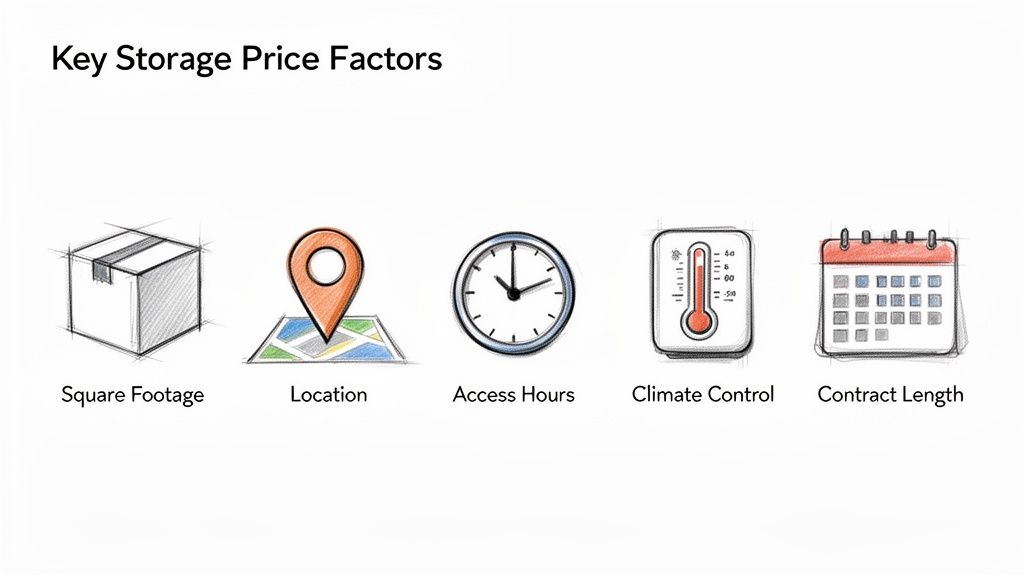
While the size of the unit and its location set a baseline for your costs, several other factors come into play that will shape your final quote. Think of it like booking a flight – the base fare is just the starting point. The choices you make about access, security, and how long you need the space will all tweak the total price you pay.
Getting your head around these variables is key. It helps you properly compare quotes and makes sure you’re only paying for the features you genuinely need, which is the fastest way to find the most cost-effective solution.
Self Storage vs Containerised Storage
One of the first big decisions is what type of storage you need. The two main players are self-storage and containerised storage, and they offer very different experiences at different price points.
- Self-Storage: This is what most people picture. You rent a private, secure room in a big facility, and you can pop in and out as you please during opening hours. It’s all about flexibility, which is perfect if you need regular access to your things. That convenience usually means it costs a bit more.
- Containerised Storage: With this option, your belongings are carefully loaded into large wooden or steel containers. These are then sealed and stacked securely inside a warehouse. It’s generally the cheaper route, especially for long-term needs, because it's a more space-efficient way to store things. The trade-off? Access is limited, and you’ll usually need to give some notice to get to your container.
If you're weighing up the options, learning more about renting storage in Bristol and what you need to consider can really help you decide which is right for you.
The Impact of Access Hours
How often you need to get to your stuff has a direct impact on the price. You’re essentially paying for convenience.
Most standard storage contracts give you access during normal business hours—say, 9 am to 5 pm on weekdays, with shorter hours on a Saturday. For the vast majority of people, this is perfectly fine and is the most budget-friendly option.
However, some modern facilities offer 24/7 access, and you’ll definitely pay a premium for it. It's a great feature for a business that needs to grab stock at odd hours, but for most household storage, it's an unnecessary expense. Be honest with yourself: will you really need to visit your unit at 2 am?
Smart Consumer Tip: Don't pay for what you won't use. Sticking with standard access hours instead of a 24/7 plan is one of the easiest ways to shave a good chunk off your monthly bill.
Climate Control and Specialised Units
Not everything can be chucked into a standard unit and forgotten about. Delicate items like antique wooden furniture, electronics, artwork, or important documents are vulnerable to the damp and extreme temperatures we get in the UK. That’s where climate-controlled storage comes in.
These units maintain a steady temperature and humidity level, protecting your valuables from mould, mildew, rust, and warping. This extra peace of mind comes at a cost, typically making the unit 25% to 50% more expensive than a standard one of the same size. It's absolutely vital for sensitive items, but a total waste of money for things like garden furniture or boxes of old toys.
Short Term vs Long Term Contracts
The length of time you commit to renting plays a big part in your monthly rate. Just like with many other services, storage companies reward loyalty.
A flexible, month-to-month contract gives you the freedom to leave at short notice, but you’ll be paying the full whack. If you know for sure you’ll need storage for six months, a year, or even longer, it’s always worth asking about long-term discounts.
Committing upfront can often lead to some decent savings. Some facilities will knock up to 15% or more off the price if you prepay or sign an extended contract. And don't forget to ask about introductory offers – a cheap first month is a very common tactic to get you in the door.
How to Spot and Avoid Hidden Storage Fees
When you’re hunting for a storage unit, it’s all too easy to get fixated on that big monthly rental price. But a bit like booking a budget flight, that initial number is often just the beginning of the story. To really get a handle on what storage costs in the UK, you need to dig a little deeper than the advertised rent.
Think of it this way: the monthly rate is the base price, but there are almost always a few extra costs that can creep in and bump up your final bill. Knowing what these are ahead of time is the secret to budgeting properly and dodging any nasty surprises when that first invoice lands. A cheap-looking quote can quickly become a lot less attractive once all the extras are piled on.
The Standard Add-Ons
Some fees are pretty much standard across the board and you should expect to see them. It's best to factor these into your budget from the get-go.
- Mandatory Insurance: This is the big one. You'll find that any reputable storage company will insist your belongings are insured. Some might let you use your existing home insurance (if it covers items in storage), but most will sell you their own policy. You can expect this to cost between £5 and £20 per month, depending on how much your stuff is worth.
- A Security Deposit: Just like renting a flat, a refundable security deposit is common practice. It's usually the same as one month's rent and you'll get it back in full, provided you leave the unit clean and undamaged when you move out.
- A Decent Padlock: You’re in charge of locking your own unit, but you can’t just use any old lock from the shed. Most places require a specific type of high-security, tamper-proof padlock, which they’re often happy to sell you for £10 to £25. You can bring your own, but it's a good idea to check it meets their standards first to avoid any hassle.
These three – insurance, a deposit, and a lock – are the most common costs you'll find added to your storage agreement. It’s always worth asking about them upfront so they don’t catch you by surprise.
Budgeting Reality Check: That advertised monthly rent is your starting point, not the final figure. Always add the cost of insurance and any one-off fees like a padlock to see what you'll actually be paying.
Other Potential Costs to Keep an Eye On
Beyond the usual suspects, there are a few other charges that might pop up, depending on the facility's policies and how you use the service. This is where reading the small print really pays off.
One to look out for is a one-time administration fee, which is typically around £10 to £30 for getting your account set up. Also, be mindful of late payment fees, which can be quite hefty, and potential charges for things like needing staff to help you outside of normal office hours.
Don't Forget About Getting Your Stuff There
Finally, remember the cost of storage doesn’t just stop at the facility’s front gate. You've also got to account for the logistics of actually getting your belongings into the unit in the first place.
This could include:
- Van Hire: If you’re planning a DIY move, you'll need to budget for the cost of hiring a van.
- Packing Materials: The price of good-quality boxes, bubble wrap, and tape can add up faster than you think, often running to £50 or more for a medium-sized move.
- Professional Movers: For bigger jobs or just for a bit less stress, hiring a removals team is a great option, but it will be your most significant extra expense.
By asking direct questions about all these potential costs, you can put together a budget that reflects the true price. A good, transparent storage company will be happy to walk you through everything, ensuring there are no hidden surprises later on.
Putting It All into Practice: Real-World Storage Cost Examples
Numbers on a page are one thing, but what does it all mean for you? The best way to get a feel for storage costs in the UK is to see how they play out in real-life situations. Let's walk through three common scenarios people face right here in the Bristol and Bath area, breaking down the likely costs from start to finish.
Think of these as mini case studies. By seeing how different needs affect the final price, you'll be in a much better position to estimate what your own storage journey might cost.
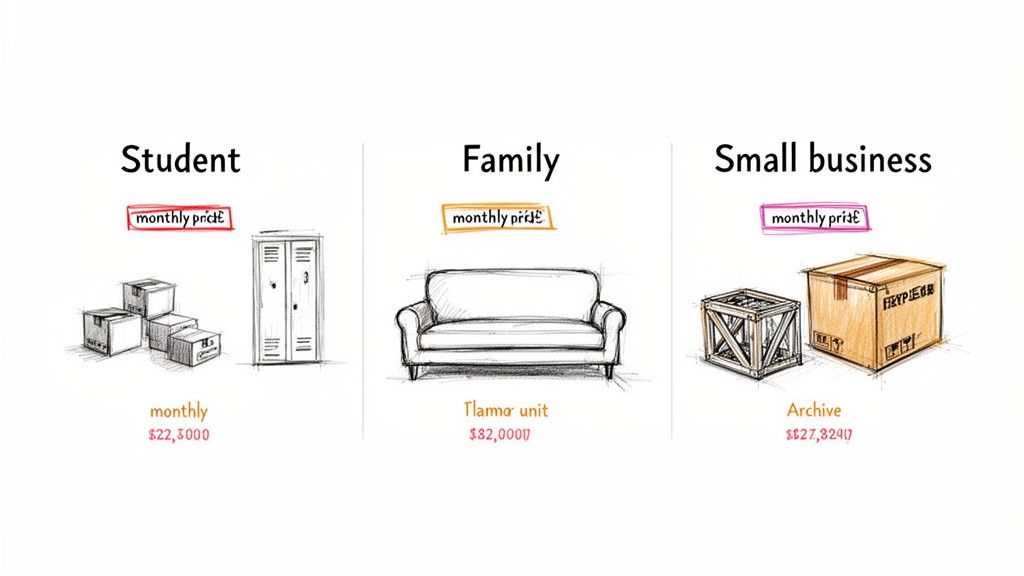
Scenario 1: The University Student
First up, let's meet Alex. He’s a student at the University of Bath heading home for the three-month summer holiday. The last thing he wants is to lug his desk, books, and other uni essentials all the way home, only to haul them back in September. He needs a simple, budget-friendly fix.
- Recommended Unit Size: Alex doesn't have a huge amount of stuff. A 25 sq ft unit – about the size of a small garden shed – is perfect. It'll easily swallow a dozen boxes, a desk, and a few other bits and bobs.
- Storage Type & Duration: He needs a flexible self-storage unit for a fixed three-month term. Easy access is a must, just in case he needs to grab a textbook he forgot.
- Cost Breakdown: In the Bristol/Bath area, a unit this size averages around £65 per month. That's £195 for the three months. On top of that, he'll need mandatory insurance (about £5/month, so £15 total) and a decent padlock for about £15. Alex is savvy, though – he packs everything himself and sources free boxes from a local supermarket, keeping his extra costs to a minimum.
Alex's Estimated Total Cost: All in, Alex is looking at a total bill of around £225. That breaks down to just £75 a month, which is a small price to pay to avoid the logistical nightmare of moving everything twice.
Scenario 2: The Renovating Family
Next, we have the Harris family from Bristol. They're embarking on a major two-month renovation of their kitchen and living room. To keep their furniture safe from the inevitable dust and chaos, they need to clear out the entire ground floor of their 3-bedroom house. We’re talking sofas, a dining set, and boxes upon boxes of kitchen gear.
- Recommended Unit Size: For bulky furniture and a whole lot of boxes, a 100 sq ft unit is the smart choice. It’s roughly the size of a single car garage, giving them plenty of room to manoeuvre without playing Tetris with their belongings.
- Storage Type & Duration: They'll need a standard self-storage unit for two months, with the option to pop in if they need something unexpectedly.
- Cost Breakdown: A 100 sq ft unit will run them about £180 per month, making the base rent £360. Because they're storing valuable furniture, their insurance will be a bit higher, maybe £15 per month (£30 total). They also wisely decide to hire a local removals team for about £300 to handle the heavy lifting safely. Add another £50 for good quality packing materials.
Example Storage Cost Breakdown for Different Needs
To make things even clearer, this table breaks down the estimated monthly costs for our three scenarios. It shows how the base rent is just one piece of the puzzle, with add-ons like insurance and moving help contributing to the final total.
| Scenario | Recommended Unit Size | Estimated Monthly Rent | Potential Add-on Costs | Estimated Total Monthly Cost |
|---|---|---|---|---|
| Student | 25 sq ft | £65 | £20 (padlock, insurance) | £85 |
| Family | 100 sq ft | £180 | £205 (movers, supplies, insurance) | £385 |
| Business | 75 sq ft | £130 | £25 (insurance, shelving) | £155 |
These figures give you a realistic snapshot of what to expect each month, helping you budget more effectively for your own storage needs.
Scenario 3: The Small Business Owner
Finally, let’s consider Sarah, who runs a flourishing e-commerce shop from her home in Keynsham. Her spare room has officially been taken over by stock, shipping supplies, and paperwork. She needs a professional, secure space to run her operations and get her home office back.
- Recommended Unit Size: A 75 sq ft unit hits the sweet spot. It's big enough for her inventory and gives her space to install shelving for proper organisation, making stock-taking a breeze.
- Storage Type & Duration: Sarah needs to be in and out all the time to ship orders, so a self-storage facility with generous access hours is critical. She’s starting on a rolling monthly contract but knows she might commit to a longer-term for a better rate down the line.
- Cost Breakdown: A 75 sq ft unit costs her around £130 per month. Her business insurance policy already covers goods in storage, which is a great saving. She invests £50 in some sturdy shelving to make the most of the unit’s height and another £15 on a high-security padlock. Her one-off setup cost is £65, followed by the ongoing £130 monthly fee.
As you can see from these stories, figuring out how much does storage cost in UK is never about a single sticker price. It’s a blend of the space you need, how long you need it for, and the extra services that make it work for you.
Actionable Ways to Reduce Your Storage Bill
So, you understand the numbers, but how do you actually bring that monthly cost down? This is where a bit of savvy planning can make a huge difference to your budget. With a few smart moves, you can slash your storage bill without skimping on security or service.
It’s not about cutting corners; it’s about being smart. A little forethought before you lock anything in can turn the answer to "how much does storage cost in the UK?" into a pleasant surprise, not a nasty shock.
Get an Accurate Quote the Modern Way
Those instant online calculators are fine for a rough idea, but they have one major flaw: they can't see your things. For a price you can actually rely on, you need a quote based on the real volume of your belongings. In the past, this meant booking a surveyor to visit your home, which was often a hassle to schedule.
Thankfully, there’s now a much easier way.
A mobile self-video survey is a total game-changer. You just use your smartphone to give a surveyor a virtual walkthrough of your rooms. They see exactly what you plan to store, which means they can calculate the precise unit size you need. No more guesswork, and no more paying for space you won't use.
The whole process takes just a few minutes, and you get a fixed, no-obligation quote you can trust. It’s the simplest way to make sure you’re not overpaying.
Smart Tips for a Smaller Bill
Once you know exactly how much stuff you have, you can start to shrink that pile. It’s a simple equation: the less you store, the less you pay.
- Declutter ruthlessly. Before a single box is packed, be brutally honest about what you truly need. Selling, donating, or recycling things you no longer use can make a massive dent in the volume you need to store. If you're stuck, our guide on how to dispose of unwanted furniture has some great practical tips.
- Pack like a pro. Think like a puzzle-master. Dismantle beds, tables, and any other furniture that can be stored flat. Use the empty space inside wardrobes and chests of drawers for smaller items. Stick to sturdy, uniform boxes that you can stack safely all the way to the ceiling to maximise every inch of vertical space.
- Share the space. Know a friend or family member who also needs a bit of extra room? Teaming up on a larger unit can be a brilliant move. Splitting the cost often works out much cheaper per person than each of you renting a smaller, separate space.
- Don't be shy—ask about deals. Always check for special offers. Many storage facilities have introductory deals, like getting the first month for just £1, or they might offer a discount if you commit to a longer-term rental of six months or more. Sometimes, paying for a few months upfront can unlock a better rate, too.
By getting a precise quote and using these simple cost-cutting tactics, you put yourself firmly in control. You’ll find the right storage solution and get it for the best possible price.
A Few Final Questions About Storage Costs
Even with a good grasp of the numbers, there are always a few lingering questions before you're ready to make a decision. Let's tackle those common head-scratchers so you can move forward with total confidence.
We've pulled together the most common queries we get from our customers across Bristol and Bath to give you some clear, no-nonsense answers.
Is Container Storage Cheaper Than Self-Storage?
Yes, nine times out of ten, container storage is the more wallet-friendly choice. The simple reason comes down to how it works: it's a "stack it and forget it" service. Since your container is stored efficiently in a secure warehouse with very little foot traffic, the facility's running costs are lower. Those savings get passed directly on to you.
Self-storage, on the other hand, is all about flexibility. You're paying a bit more for the freedom to pop in and out of your unit whenever you need to during opening hours. If you're pretty sure you won't need to get to your things regularly, container storage is a brilliant way to cut your monthly bill, especially if you're storing for the long haul.
How Much Insurance Do I Actually Need?
Any good storage company will insist on insurance, but how much cover you need boils down to one thing: the replacement value of your items. This isn't the time for guesswork. It’s worth spending ten minutes making a quick list and estimating what it would cost to buy everything again, brand new, today.
Most providers offer their own insurance policies, which are usually the easiest option as they're designed specifically for stored goods. Expect to pay somewhere between £5 and £20 per month, depending on the level of cover you choose. It's always worth checking if your home insurance extends to storage, but read the fine print carefully, as they often have strict limitations.
Are There Restrictions on When I Can Access My Unit?
This is one of the biggest differences between storage types. With containerised storage, access is almost always by appointment only. You’ll usually need to give 24 to 48 hours’ notice so they can get your container ready for you, and sometimes there's a small handling fee involved.
For traditional self-storage, most places let you visit during standard business hours (think 9 am to 5 pm on weekdays). Some newer facilities offer 24/7 access, but you'll definitely pay a premium for that. Be realistic about what you need—paying extra for round-the-clock access only makes sense if you genuinely think you’ll be visiting at 2 am.
Do I Need to Buy a Special Lock?
You do. Securing your unit is your responsibility, and that means getting a solid padlock. Most facilities will have minimum standards, often requiring a high-quality cylinder or disc lock, as these are much harder to tamper with than a cheap combination lock. When you're planning everything out, don't overlook this crucial detail; our guide on choosing the best padlocks for storage units is a great place to start.
Facilities often sell suitable locks on-site for around £15-£25, which is handy. Or, you can bring your own, just make sure it meets their security requirements first.
Ready to get a clear, accurate, and no-obligation quote for your storage needs? The team at SimplyPro Removal & Storage Ltd makes it easy with our fast mobile self-video surveys. Find out exactly how much space you need and what it will cost.