


Moving home anywhere in the UK can set you back from £300 up to around £800–£1,300, depending on how far you’re going and how much stuff you have. Local moves often kick off at the lower end, whereas a full-service three-bedroom relocation tends to sit towards the top of that bracket.
Removal Cost Snapshot
Here’s a quick glance at what you might expect before we dive into the finer details.
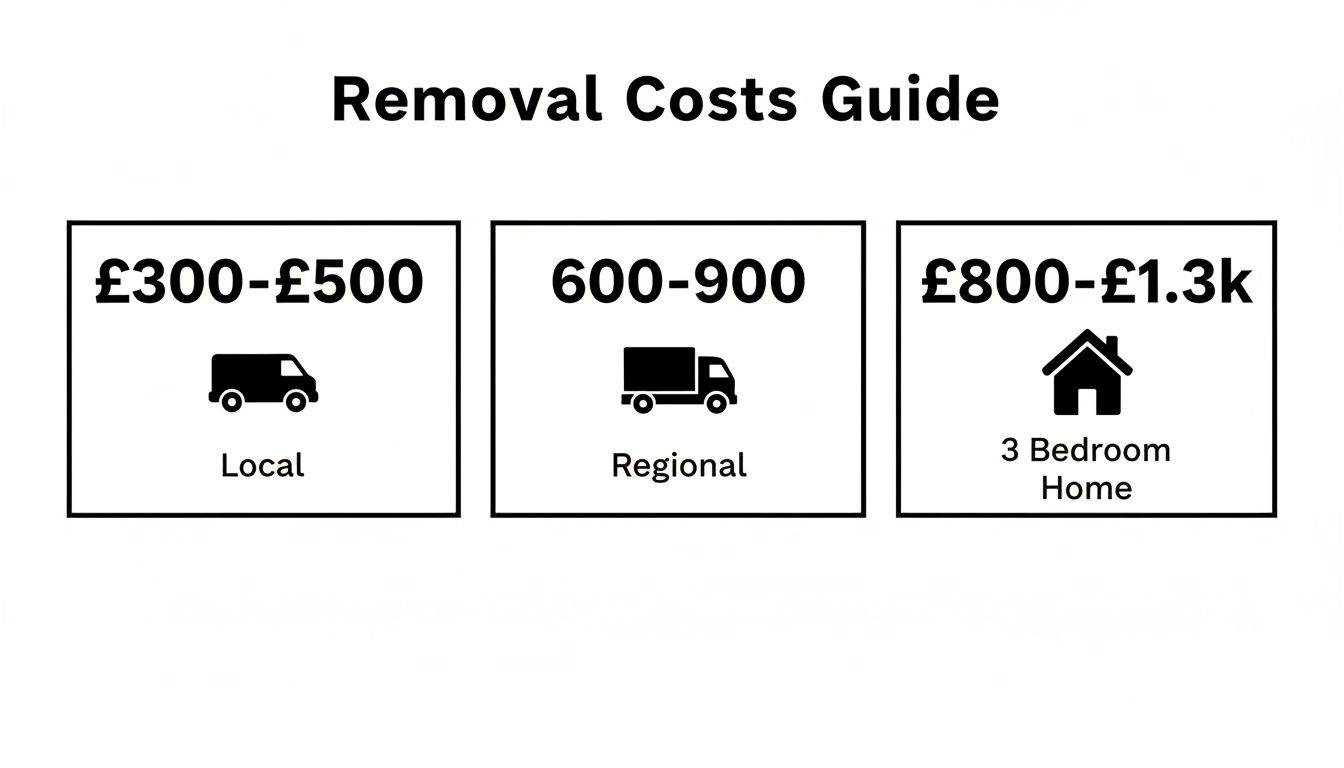
- Local Moves (up to 20 miles): £300–£500 with a small van
- Regional Shifts (20–100 miles): £600–£900 in a Luton van
- Full-Service Three-Bedroom Relocations: £800–£1,300 including packing and unpacking
Average Removal Cost Ranges
Below is a comparison of typical removal costs by move type and property size across the UK.
The table below compares typical removal costs across different move types and property sizes.
| Move Type | Property Size | Average Cost Range | Notes |
|---|---|---|---|
| Local move | Studio or 1-bed | £300–£500 | Van crew, no packing |
| Regional | 2-bedroom flat | £600–£900 | Weekend and one drop-off |
| Long-distance | 3-bedroom house | £800–£1.3k | Full packing and unpacking |
Use this overview to benchmark your own moving budget.
Key Cost Drivers
Several factors influence how that final figure comes together:
- Labour time and crew size, which determine hourly rates
- Distance travelled and associated fuel fees
- Packing services, materials and any specialist crating
- Handling for bulky or delicate items like pianos
- Insurance coverage levels and any storage requirements
For a tailored estimate, plug your details into our UK moving cost calculator 2025. It’s always wise to lock in a quote early to secure the best possible rate.
Understanding Key Pricing Drivers
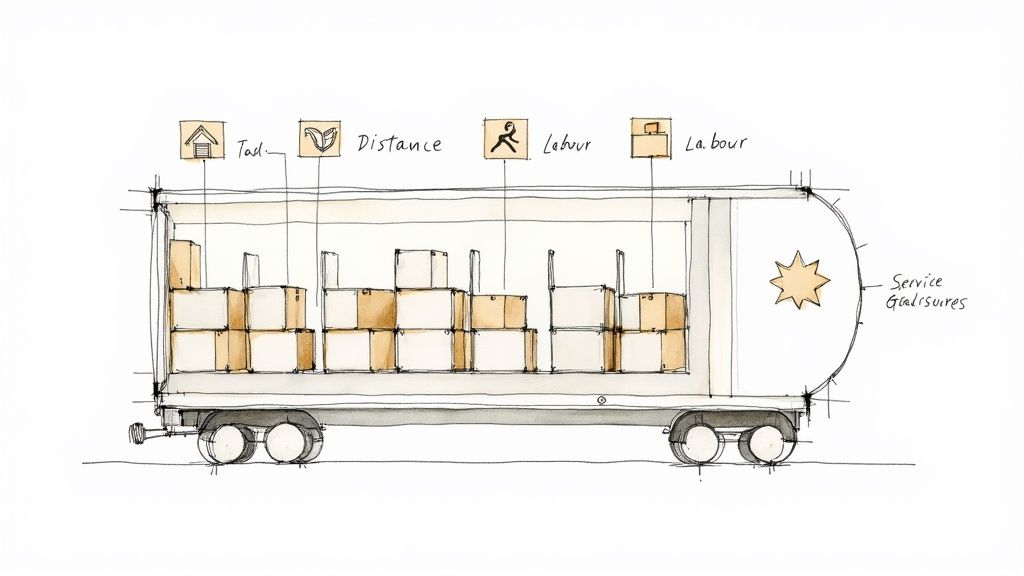
Every removal quote kicks off by sizing up a few key factors that ultimately shape the price. Picture your boxes as coach passengers: the more seats you fill, the larger the vehicle and crew you’ll need.
Main Drivers Of Removal Quotes
- Volume of Goods: How much space and weight you’re moving dictates van size, crew numbers and the possibility of extra trips.
- Distance Travelled: Fuel and wear-and-tear costs climb with every mile—moving 100 miles can end up costing roughly twice as much as 20 miles.
- Labour Hours: The time and number of movers account for around 40–60% of your total.
- Service Level: Extras like packing, unpacking or special handling add to the bill but save you stress and time.
For instance, shifting a two-bedroom flat in central Bristol might only need one mover, whereas a three-bedroom house could require a four-person crew and a larger lorry.
Key Insight: Labour and distance fees can swing your final bill by up to 30%, so clarify hourly rates and mileage allowances before you commit.
Why Quotes Differ Between Homes
Even properties with the same number of rooms can attract wildly different costs. A top-floor flat without a lift demands more hands and more time than a ground-floor garage entry.
The UK removals industry comprises around 3,249 businesses employing 16,680 professionals. These companies handle everything from local runs to international relocations, often using GPS-tracked fleets and inventory software to stay efficient. Discover more about how they work on SchottRemovals.
Ask your mover these questions to spot hidden fees:
- What’s included in your hourly rate and vehicle fee?
- Are fuel and parking charges billed separately?
- How do you price bulky items or stair carries?
- Which insurance levels do you offer, and what’s covered?
By understanding these core drivers, you’ll know how much is removals and feel confident negotiating your final quote.
Comparing Local And Long Moves
When you line up a local move against a long-distance one, the impact of those drivers becomes crystal clear.
| Driver | Local Move | Long-Distance Move |
|---|---|---|
| Volume (boxes) | 20 | 60 |
| Distance (miles) | 15 | 150 |
| Labour (hours) | 3 | 8 |
| Estimated Cost | £400 | £1,200 |
This simple comparison shows how tripling the distance can nearly triple labour time—and the final bill.
To trim costs:
- Pack items yourself to reduce labour hours.
- Pick off-peak days or times for lower rates.
- Bundle services (packing plus move) to unlock discounts.
- Always compare at least three quotes.
With these insights, you’ll be able to compare like-for-like estimates, spot where fees pop up and negotiate better terms with your removal team.
Breaking Down Removal Costs
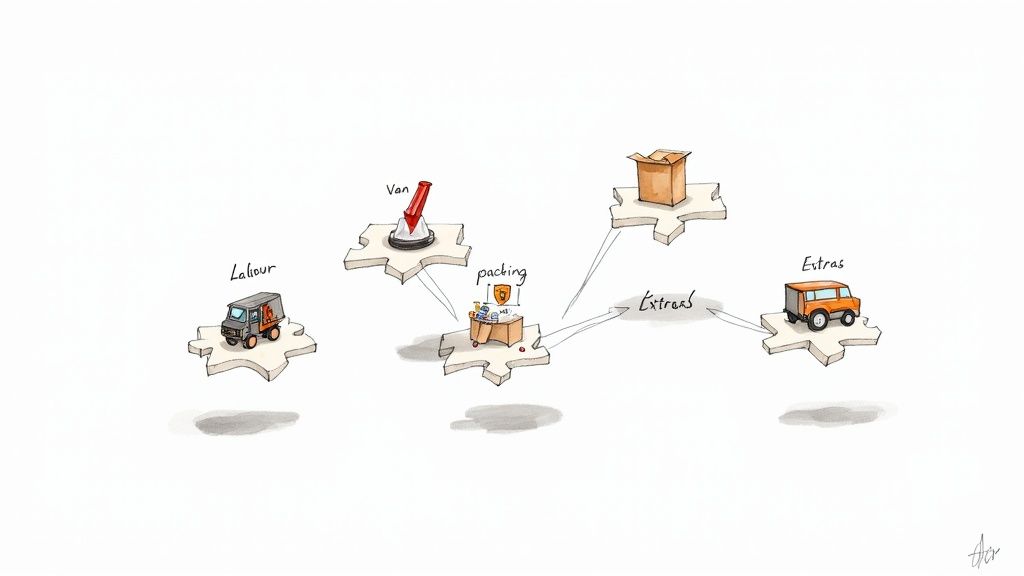
Moving quotes often feel like a jigsaw—each fee slots into the final total. By examining every piece, you’ll know exactly how much removals cost and spot where you might save.
Labour usually takes the largest slice of the bill. Removals crews charge £40–£60 per person, per hour, covering loading, driving and unloading.
Vehicle hire covers the van or lorry plus fuel charges. For instance, a 7.5-tonne lorry may tack on £0.50–£0.65 per mile. Peak season journeys can see costs rise by 10–15%.
Labour And Transport Fees
-
Labour Rates
• Single mover: £45/hour
• Two-person team: £85/hour -
Vehicle Hire
• Transit van: £75/day
• Luton lorry: £120/day -
Fuel
• Per mile: £0.55
• Peak surcharges: +15%
These figures reflect typical UK prices and will shift by region and season.
“Labour and mileage can account for up to 60% of your final removals quote,” notes a Bristol moving expert.
Packing Materials And Insurance
- Boxes (per unit): £2–£5
- Tape and Labels (bundle): £10–£15
- Protective Wrap: £1.50/metre
Insurance brings peace of mind. You can choose basic cover or full all-risks. Read also: Check out our guide on insurance for removals for details.
| Component | Cost Range | Notes |
|---|---|---|
| Labour | £40–£60 per hour | Depends on crew size |
| Vehicle & Fuel | £75–£120 per day + per mile | Fuel surcharges apply |
| Packing Supplies | £2–£5 per box | Bulk discounts possible |
| Insurance | £50–£200 flat fee | Based on declared value |
Specialist moves often have extra fees. Stair carries, piano relocations and flat-pack assembly need extra effort:
- Stair Carry Charges: £25–£50 per flight
- Piano Move: £80–£150 per item
- Furniture Assembly: £30–£60 per job
Extra Services And Tips
Extras such as unpacking, waste removal and furniture set-up can add time—and cost—to your move. An unpacking rate of £20/hour quickly stacks up if you’ve got dozens of boxes.
Keep expenses in check:
- Arrange a detailed pre-move survey to uncover any hidden fees
- Declutter well before moving day to cut down on volume
- Bundle packing and assembly services for a better overall rate
With each charge laid out, you’ll piece together an accurate removals total. Happy moving!
Timing Factors And Peak Pricing
Deciding when to move can swing your removals bill by a surprising margin. Peak seasons and busy days often carry extra charges, while quieter slots tend to be kinder on the wallet.
Summer weekends and month-end leases, for example, drive demand—and prices—sky-high.
A study of over 711,000 removal quotes reveals the UK’s busiest moving day sees 22,386 relocations—around four times the daily average—and can command up to 25% higher fees for last-minute requests. Check the National Housing Association site for full details.
Much like airlines, removal firms juggle fuel, labour and van availability when bookings pile up. That competition can translate into noticeable surcharges—sometimes adding a quarter on top of the base rate.
Peak Periods You Should Avoid
- Month Ends – The last week of each month sees heavy landlord turnovers
- Summer Weekends – Saturdays from June through August are in highest demand
- Bank Holidays – Public holidays often carry a 20% price uplift
- Friday Afternoons – Ideal for quick weekend shifts, less so for budgets
| Timing Slot | Demand Level | Typical Surcharge |
|---|---|---|
| Summer Saturday | High | +£100–£200 |
| Month-End Friday | Busy | +25% |
| Midweek Morning | Off-Peak | 0% |
How To Save With Timing
Booking 4–6 weeks in advance usually lands you the lowest rate bracket. Early reservations lock in prices before peak-pricing kicks in.
Try offering movers a range of dates so they can fill gaps at reduced cost. Shifting your move into autumn or early spring can also strike a balance between fair weather and lower demand.
Timing your move is like catching a train off-peak. Fares drop when demand is low.
- Book early to avoid last-minute premiums
- Pick weekdays over weekends
- Avoid month ends and bank holidays
- Consider seasonal dips in demand
Comparing Regional Removal Prices
Local moves in Bristol and Bath can feel like a moving target—your budget will flex with wage rates, parking rules and even traffic jams.
If you’re wondering “how much does removals cost” in these hotspots, this guide lays out real quotes so you know what to expect.
Sample Quotes Overview
- A £450 local two-bedroom flat move in Bristol Centre typically covers three miles door to door.
- In Bath Central, expect about £480 for a similar job, thanks to extra labour costs during busy tourist periods.
- For an intercity run from Bristol to Bath, the fee jumps to £600—distance plus permit and parking fees add up.
Below is a snapshot of these figures in a handy table.
Sample Removal Quotes For Bristol And Bath
| Location | Move Type | Distance | Estimated Cost |
|---|---|---|---|
| Bristol Centre | Local flat move | 3 miles | £450 |
| Bristol to Bath | Intercity move | 12 miles | £600 |
| Bath Central | Local flat move | 2 miles | £480 |
| Bath to Weston | Short trip | 15 miles | £650 |
These rates already factor in a parking permit fee of £50 plus busy-zone labour surcharges of £30 per hour.
Below, you’ll see how smaller items can still nudge your total higher.
Key Insight: Local permits and surcharges can tack on an extra £100–£200 to your overall bill.
Understanding Extra Charges
Beyond the haul itself, you’ll face line items like parking and permits. In Bristol, council parking can be up to £3 per hour in the city core.
In Bath’s narrow lanes, you may need a traffic marshal—typically £20 per visit—to keep things moving safely.
- City access suspension permit: £20 flat fee
- Busy-hour labour surcharge: raises hourly rates by about 15%
- Permit applications: allow at least 48 hours lead time
- Extra crew time: narrow streets and permit queues can add an hour or more
Planning these aspects in advance means fewer surprises when you get the final invoice.
City To Town Comparison
Heading out of the city alters the equation: distance is your biggest cost driver once you’re beyond the urban zone.
Take Bristol to Weston-Super-Mare—15 miles of motorway and you’re looking at roughly £650, not far off the Bristol-to-Bath run despite the extra mileage.
- Distance charges: about £2.50 per mile beyond your base zone
- Labour rates: start around £45 per hour, rising in busy zones
- Permits and parking: up to 20% of the total cost in tight city streets
Armed with these benchmarks, you can probe removal firms with confidence, manage your moving budget effectively and book at the right time to reduce penalties.
How To Get Accurate Quotes And Reduce Costs

When you book a mover, clear details help everyone stay on the same page. A thorough inventory, a quick site check and notes about tricky access points mean your quote will be spot-on.
That transparency also makes it easy to line up estimates and avoid unexpected extras later.
Provide Detailed Information
Start by listing every item in your move. Record furniture dimensions and flag up any delicate pieces you plan to pack yourself.
- Detailed inventory with room-by-room counts
- Photos of key areas (doorways, staircases, narrow corridors)
- Notes on parking restrictions and access hurdles
These details give movers the confidence to lock in an accurate rate. In turn, you sidestep last-minute surprises on moving day.
Compare Like-For-Like Quotes
Always double-check that each quote covers the same basics. Look for matching crew sizes, truck dimensions and insurance cover.
- Scope of service and number of movers
- Mileage allowances and fuel surcharges
- Packing/unpacking services included
- Insurance level and excess fees
“Hidden fees can add up to 15% of your quote.”
Keeping these factors uniform makes it easy to spot any outliers in price.
Smart Saving Strategies
Taking a few simple steps before moving day can trim your bill significantly. Declutter early to reduce both box count and labour hours.
- Pack fragile items yourself with sturdy materials
- Book off-peak slots (midweek or mid-month) for lower rates
- Negotiate labour hours to match your budget
You could also bundle packing and moving to unlock a discount. Avoid extras you don’t need – full unpack services or furniture reassembly can boost the total.
Finally, vet each company’s reputation, accreditations and contract terms. Booking 4–6 weeks ahead not only secures a spot but often means better pricing.
Check out our guide to free moving boxes for more cost-saving tips.
Choose Trustworthy Firms
A clear, written contract is your best defence against hidden costs. Make sure it outlines every service and fee.
- Current trading accreditations and proof of insurance
- Transparent terms on labour rates and deposit requirements
- Flexible change and cancellation policy
Collect quotes via email or text and keep them on record. That paper trail prevents miscommunications when moving day arrives.
Expert Tip
Always compare at least three quotes to find competitive pricing.
Double-check your booking details a week before the move. A quick confirmation stops any last-minute hiccups.
Summary Of Steps
- Provide a full inventory and site access details
- Match crew size, hours and insurance across quotes
- Use off-peak timing and service bundles
- Vet firms thoroughly and secure clear contracts
Ready to start planning? Book early for best rates.
Safe moving!
FAQ
Moving can feel overwhelming. You probably have questions about removal costs and what makes prices go up or down. This FAQ will walk you through the essentials so you can book with confidence.
What Drives My Quote Most
Labour time and the distance you’re travelling typically make up about 60% of your total bill. For instance, each extra hour on the clock can add £45–£60 per mover.
Vehicle charges per mile and any parking permits are the next big factors. A Bristol specialist points out that “hidden fees can creep in and tack on an extra 15% to your final invoice.”
Are Rates Hourly Or Fixed
Some companies stick to an hourly rate, which gives you flexibility. It’s a bit like having a taxi meter – useful if you’re happy to pack most items yourself.
Others prefer fixed quotes when the job’s scope is clear. That certainty can be reassuring for larger moves where your inventory and access requirements have already been detailed.
How To Avoid Hidden Charges
- Sketch out a full inventory and highlight any tight staircases or narrow lanes.
- Request an itemised split of labour, mileage and permit fees.
- Ask up front whether disassembly, packing materials and insurance are part of the deal.
Can I Negotiate A Better Deal
Many movers are open to tweaking minor fees or reducing labour hours. Booking midweek or outside peak times often unlocks better rates.
Bundling services – for example, packing and storage – could also win you a discount. Don’t forget to compare at least three quotes and let each company know you’re weighing options.
Book now with SimplyPro Removal & Storage Ltd at https://www.simplyremovalsbristol.co.uk