

It’s a classic moving day misconception, and a potentially costly one at that: assuming your standard home insurance has you covered. The reality is, the second your belongings cross the threshold of your old home, they often fall into a coverage black hole. This is precisely why dedicated insurance for removals exists. It’s not an upsell; it's an essential safeguard for your possessions when they're at their most vulnerable—on the move.
Why Standard Home Insurance Just Won't Cut It
Think of your home insurance policy as a fortress. It does a fantastic job of protecting everything inside its walls from risks like fire, burglary, or a burst pipe. But as soon as your favourite armchair is carried out the front door and onto the van, it has left the fortress. That protective bubble has burst.
Most home and contents policies simply aren't built for the unique risks that come with a house move. They don't account for a bumpy road, an accidental drop while loading the van, or any number of mishaps that can happen in transit. The move is seen as an external event, and the liability is pushed elsewhere, leaving you with a massive gap in your protection.
The Critical Role of Specialised Cover
This is where proper removals insurance comes into its own. It’s a temporary, specialised shield designed for one job and one job only: protecting your belongings on the journey from A to B. You wouldn't use a bicycle helmet in a Formula 1 race, and the same logic applies here. You need the right protection for the specific task.
So, what does this specialised cover actually give you?
- Protection in Transit: This is the big one. It covers your goods against damage or loss while on the road, from traffic accidents to theft from the vehicle.
- Handling Accidents: It protects against those heart-stopping moments when an item is dropped or damaged by the crew during packing, loading, or unloading.
- Peace of Mind: Honestly, this might be the most valuable part. Moving is stressful enough without having to worry about the financial fallout if the worst happens.
Who's Responsible for Arranging the Insurance?
This is often a point of confusion, but it’s quite straightforward. You generally have two paths to take.
First, any reputable removal company will offer insurance as part of their service. This is often the easiest option, as the policy is built into their process and designed to work seamlessly with their operations. If you're unsure how to spot a good firm, you can learn more about how to choose the right removal company that provides this.
Your second option is to buy a separate policy from a third-party insurer. This can be a good idea if you have particularly unusual or high-value items that might need specialist cover. When you're making a bigger life change like Moving Cities Or Countries, the stakes are higher, and a bespoke policy might be worth a closer look.
Ultimately, while the removal company shares some responsibility, the final decision on how your goods are protected rests with you.
Understanding the Different Layers of Removals Cover
Trying to get your head around removals insurance can feel a bit like learning a new language. You'll hear terms like 'public liability' and 'goods in transit' thrown around, and it's easy to feel a little lost. The trick is to stop thinking of it as one single policy. Instead, picture it as a set of different layers, with each one protecting you from a different kind of risk on moving day.
Once you understand what each layer does, you're in a much better position to ask the right questions and make sure you're properly covered. Let’s break down the main types you’re likely to come across.
This simple diagram shows the choice movers face: stick with your standard home insurance or get specific cover designed for the unique risks of a move.
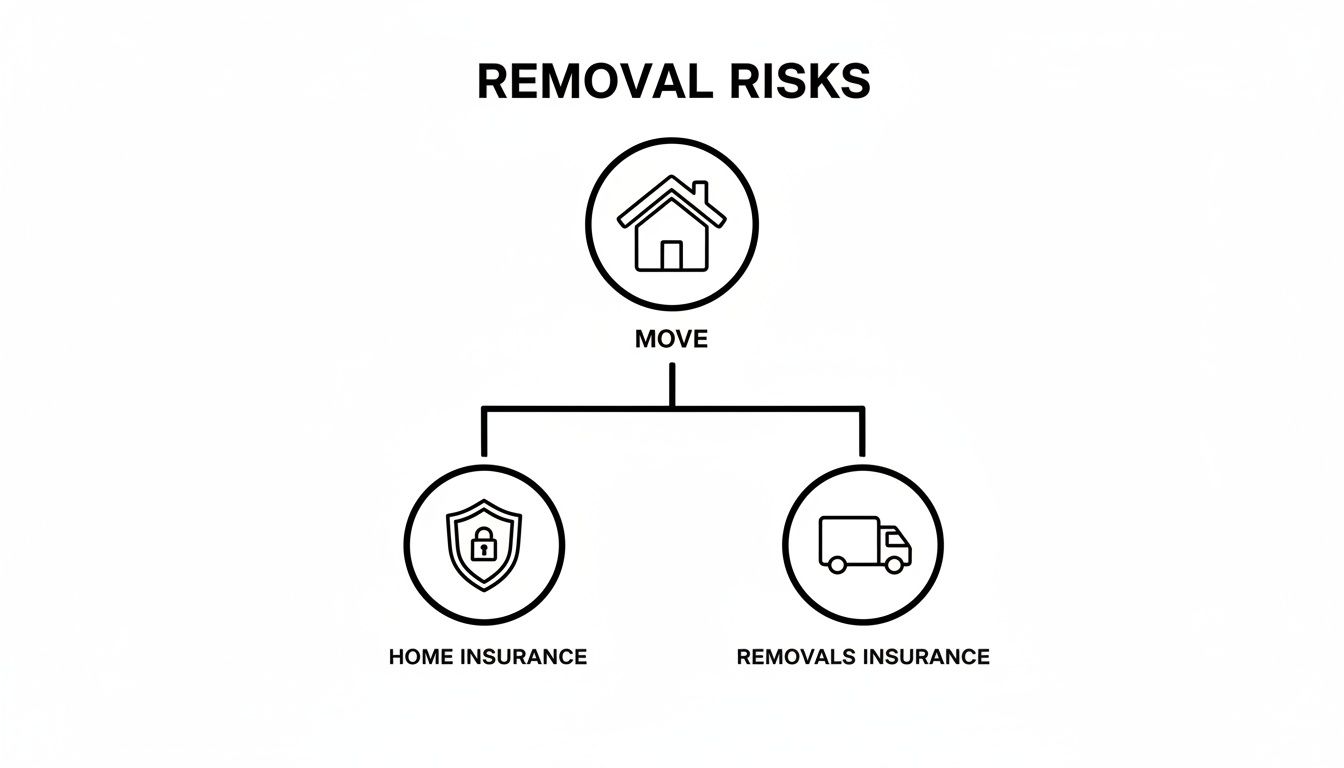
As you can see, while both are related to your home, they are built for completely different jobs. That's why dedicated removals insurance is so essential for a stress-free move.
Goods in Transit Insurance: The Foundation
First up is the absolute baseline: Goods in Transit insurance. Think of this as the bedrock of protection that any professional removals company worth its salt will have as part of its business insurance. It’s there to cover your possessions while they are physically on the move in the van.
This policy is designed to kick in for major incidents on the road.
- Vehicle Accidents: If the removal lorry is involved in a crash, this covers the damage to your things inside.
- Fire: Protects your belongings if a fire breaks out in the vehicle.
- Theft of the Vehicle: Covers the loss of your goods if the entire van is stolen.
It’s crucial to remember that this policy belongs to the removal company, not you. It covers their liability up to a certain financial limit, which may or may not be enough to cover the full value of your items. Always ask for proof of their cover.
Public Liability Insurance: Protecting Property and People
Next, we have Public Liability insurance. This layer isn't actually about protecting your belongings. It’s about protecting property—your new house, your old one, your neighbour’s fence, you name it. It also covers injury to people. It’s designed to handle the cost of accidental damage or injury caused by the removal team while they’re working.
Imagine one of the crew accidentally scrapes a freshly painted wall while squeezing a sofa through the door, or a trolley rolls into your neighbour's prized rose bushes. Public Liability is the policy that pays for those repairs.
Key Takeaway: Goods in Transit covers your items in the van, while Public Liability covers accidental damage to the property and people around the move. Any reputable firm must have both.
Without it, you or the company could be left with a hefty bill for those little mishaps that, unfortunately, can and do happen during a complex move. It's the safety net for those "oops" moments.
To make sense of these different policies at a glance, this table breaks down the essentials of what you're likely to be offered.
Quick Guide to Removals Insurance Policies
| Type of Cover | What It Typically Protects | Who Usually Holds the Policy |
|---|---|---|
| Goods in Transit | Your belongings against major events like fire, theft, or collision while in the van. | The Removals Company |
| Public Liability | Accidental damage to property (e.g., walls, floors) or injury to people. | The Removals Company |
| Declared Value / All-Risk | Your items up to their full replacement value, which you declare beforehand. | You (arranged via the remover) |
| Storage Insurance | Your goods against risks like fire, flood, or theft while in a storage facility. | You (arranged via the remover/storage firm) |
This is just a starting point, but it helps to clarify who is responsible for what, and which policies are essential versus optional extras for full peace of mind.
Declared Value and All-Risk Cover: The Gold Standard
Now we get to what is probably the most important layer of cover from your perspective as a customer. Declared Value (also known as 'All-Risk' or 'Full Value Protection') goes far beyond the basics and insures your belongings for what they would actually cost to replace.
Here’s a simple way to think about it. A basic liability policy might only pay out based on an item's weight—for instance, £40 per kilogram. If your 10kg television worth £1,000 gets smashed, that basic cover might only give you £400. Not ideal.
With Declared Value cover, you give the removal company an inventory listing the total replacement value of your goods. If that same TV gets broken, the policy is designed to cover the full £1,000 you’d need to buy a new one. This is the only way to be certain you’ll be properly compensated for the true value of your possessions. It’s the comprehensive protection you need for complete peace of mind.
Storage Insurance: The Temporary Safe House
Finally, let's talk about Storage Insurance. If your move isn't a straight A-to-B job and you need to store your belongings for a while, they enter a completely different risk environment. The insurance that covers them on the van probably won’t cover them while they’re sitting in a warehouse.
This is where dedicated storage insurance comes in. It’s tailored specifically for the risks of a storage facility, such as:
- Fire and flooding
- Theft from the storage unit
- Vermin or pest damage
Whether you’re storing things for a week between properties in Bristol or for a few months during a renovation in Bath, having the right storage cover is vital. Your items might be stationary, but they're still vulnerable, and this policy is the specialised shield they need.
What Your Removals Insurance Actually Covers
The real value of any insurance for removals isn't in the promises made when you sign up, but what’s actually written in the small print when you need to make a claim. Understanding what’s included—and perhaps more importantly, what’s not—is the key to a stress-free move. Let's peel back the layers and get into the practical details that make the difference between a paid claim and a denied one.
A good policy is there to catch the common mishaps that can happen on moving day. This isn’t just about the big disasters; it’s often about the smaller, frustrating incidents that are far more frequent.
At its core, you can expect removals insurance to cover damage or loss from clear, identifiable events. These are the fundamental protections that form the bedrock of almost every policy out there.

Common Inclusions in Your Policy
Most proper insurance policies will give you a safety net for a few key scenarios. While the specifics will vary from one insurer to the next, you’ll usually find these things covered:
- Accidental Breakage: This is your classic "oops" moment protection. It covers an item that gets dropped and broken by the crew while they're packing, loading, or bringing it into your new home.
- Transit Incidents: If the removal van gets into a road accident, catches fire, or is stolen, the policy should cover the contents up to the agreed limit.
- Water Damage: This protects you against things like a sudden downpour while your furniture is being carried into the van, as long as the crew took reasonable care.
These protections are all about the direct risks involved in the physical act of moving your stuff. It's quite different from a removal firm's general business policy. For a deeper dive into the kind of commercial cover that protects goods on the road, it can be really useful to read up on motor truck cargo insurance.
What Your Insurance Likely Excludes
Now for the important bit. Exclusions are where people often get caught out, and honestly, they're the most critical part of the policy to read and understand. Insurers are crystal clear about what they won't pay for, and these clauses are not up for negotiation later.
Crucial Insight: The single most common reason for a claim being denied is damage to items in boxes packed by the owner. If the removal company didn't pack the box themselves, their insurer will almost certainly refuse to accept liability for what’s inside.
Here are some of the most common exclusions you need to look out for:
- Owner-Packed Boxes ('PBO'): When you pack your own boxes, an insurer has no way of knowing if the contents were wrapped and secured properly. Because of this, any damage to items inside these boxes is nearly always excluded from cover.
- Pre-Existing Damage: Insurance is there to cover new damage that happens during the move itself, not scratches, dents, or a faulty leg on a table that was already there.
- Perishable Goods: Anything that can spoil, like food or plants, won't be covered.
- Valuables in Boxes: Never pack cash, jewellery, passports, or other important documents. These are always excluded and should be transported by you personally.
These exclusions are all about managing risk. An insurer simply can't take responsibility for a poorly packed box or a wobbly piece of furniture that was an accident waiting to happen. This is exactly why using a professional packing service often gives you access to a much better level of insurance cover.
Handling High-Value and Specialist Items
So, what about your most prized possessions? Things like antiques, a grand piano, expensive artwork, or sensitive IT equipment are rarely covered under a standard policy. These items don’t just need special handling—they need special insurance.
You absolutely must declare these high-value items separately before the move. Your removal company needs to know their full replacement value so they can be listed properly on the policy. If you don't, you might find they're only covered for a tiny, standard amount, which would be a disaster if anything went wrong.
- Pianos and Antiques: These are fragile and high-value, often needing a specific insurance add-on and specialist movers.
- IT Equipment: Servers, high-end computers, and other electronics might need their own dedicated transit cover.
- Collections: Things like a wine collection, stamps, or fine art must be professionally valued and declared item by item.
It's also worth remembering that if you need storage, this usually requires a separate insurance policy. You can find professional removals and storage services that include the right kind of cover for goods kept in a secure facility. By getting clear on what is and isn't covered from the start, you can pack and prepare smartly, protecting your right to a successful claim.
How Removals Insurance Costs Are Calculated
Trying to figure out the cost of removals insurance can sometimes feel a bit like guesswork. What actually goes into that final number on your quote? It's not just pulled out of thin air. Insurers and removal firms look at a handful of key factors, each one representing a different level of risk.
The final premium is a direct reflection of your specific move – its value, the distance involved, and any tricky elements. Once you understand these components, you're in a much better position to see exactly what you’re paying for and make sure you get the right cover without spending more than you need to.
Let’s break down what really drives the price.
The Declared Value of Your Belongings
This is, without a doubt, the biggest piece of the puzzle. The total declared value is the amount you tell the insurer it would cost to replace absolutely everything you’re moving, from your sofa and TV to the last teaspoon. Think of it as the maximum possible payout in a total disaster.
It makes sense, then, that a higher value means more risk for the insurer, and that translates to a higher premium. A move with contents valued at £20,000 will naturally cost less to insure than one worth £70,000. Getting this figure right is crucial. Under-insuring might save you a few quid now, but it could leave you seriously out of pocket if you need to make a big claim later.
The Journey and Its Risks
The move itself has its own set of risks that insurers have to consider. The longer your possessions are being handled and transported, the more opportunities there are for things to go wrong.
- Distance of the Move: A short hop across Bristol is far less risky than a long-haul move from Bath up to Scotland. Longer journeys simply mean more time on the road, increasing the chances of accidents or other mishaps.
- Storage Requirements: If your belongings need to be stored, even just for a few days, that introduces a whole new environment with its own risks like fire, flooding, or theft. This almost always requires a specific storage insurance add-on, which will bump up the total cost.
Your Chosen Policy and Excess Level
Not all insurance policies are the same, and the choices you make here have a direct impact on the price. A key detail to look at is the excess – that's the amount you agree to pay yourself towards a claim before the insurance kicks in.
For instance, say you have a £250 excess and a claim for a damaged table worth £1,000 is approved. You would pay the first £250, and the insurer would cover the remaining £750.
Pro Tip: Choosing a higher excess can often bring your premium down. But be honest with yourself – make sure it’s an amount you could comfortably afford to pay out if something happened. It's a trade-off between a lower upfront cost and a potentially higher one later.
The Removals Company's Track Record
Finally, the reputation of the removal company you hire can also play a part, especially if you're getting insurance through them. Insurers see a company with a long history of successful, claim-free moves as a much lower risk. It shows they have solid processes in place to keep your things safe.
On the flip side, a company that frequently has claims filed against it might face higher underlying insurance costs, which can get passed on to customers. This is yet another good reason to choose a reputable firm with great reviews. When you're budgeting, it's also helpful to understand the general cost to move house to get a sense of where insurance fits into the overall picture.
The UK removals industry is huge, with revenues expected to hit around £1.4 billion in 2025. With the average cost for moving a three-bedroom house sitting at about £867, it's clear why having solid insurance is non-negotiable for both customers and the companies they hire. You can discover more about the scale of the UK removals industry on ibisworld.com.
A Step-By-Step Guide to the Claims Process
Even with the most careful, professional crew on the job, accidents can sometimes happen. Discovering that a prized possession has been damaged during a move is always frustrating, but knowing exactly what to do next makes all the difference.
Having a clear plan of action helps you stay calm and ensures your insurance for removals actually does its job. This guide walks you through the process, turning a potentially stressful moment into a straightforward task. Think of it like following the instructions for flat-pack furniture – if you take it step-by-step, you’ll get the right result.
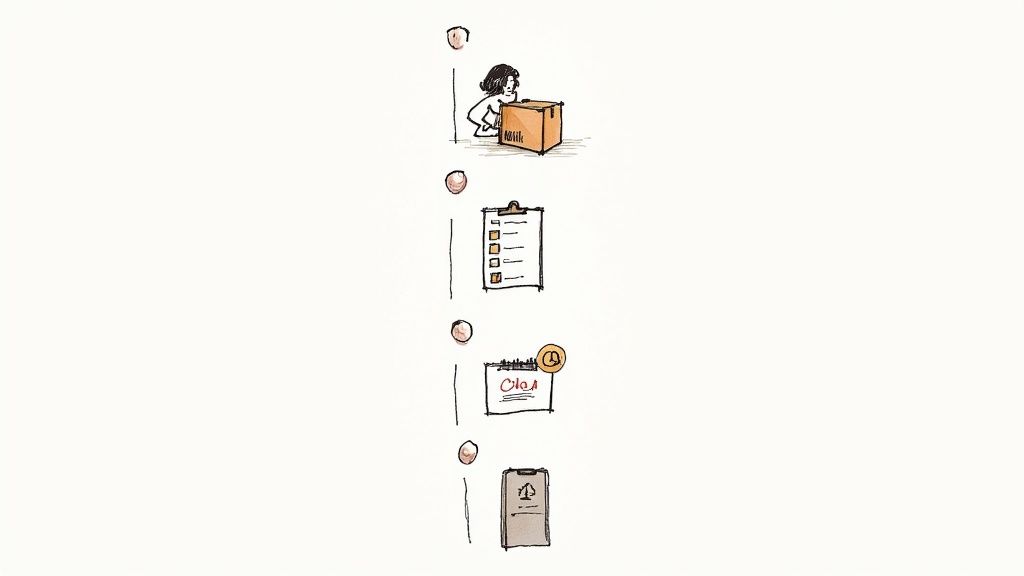
Before You Move: Preparation is Everything
The best way to guarantee a smooth claims process, should you need one, starts long before the moving van pulls up. A little organisation beforehand makes proving a claim much, much simpler.
- Create a Detailed Inventory: Jot down a list of your most important belongings, especially anything valuable like antiques, artwork, or high-end electronics. Make a quick note of their condition.
- Take 'Before' Photos: This is a game-changer. For your most valuable items, a quick snap on your phone is priceless. A clear photo of your solid oak dining table without a single scratch is undeniable proof.
- Hold Onto Receipts: If you have receipts or recent valuations for newer, high-value items, keep them handy. They make establishing the item's worth a simple, clear-cut affair.
On Delivery Day: What to Do as Your Items Arrive
The moment your belongings are carried into your new home is the best opportunity you'll have to spot any problems. I know you’ll be tired and just want to get everything unpacked, but don't rush this part.
As the crew brings in large pieces of furniture, give them a quick once-over for any new dents, scuffs, or obvious breakages. If you hear rattling or the tinkle of broken glass from a box marked "Fragile," set it aside to check immediately. A bit of vigilance here can save you a world of hassle.
Crucial Timing: Be aware that most removal companies specify a strict time limit for reporting damage. This is often just seven days from your delivery date. If you miss this window, your claim could be rejected, so don't delay.
How to Officially Start Your Claim
Found some damage? It's time to get the ball rolling. Clear communication and good evidence are your strongest assets now.
- Notify the Company Immediately: Your first step should be to call the removal firm. It's also vital to follow up with an email, so you have a written record of your conversation. Clearly state what was damaged and when you found it.
- Document Everything: Take plenty of clear photos of the damaged item from different angles. It’s also incredibly helpful to photograph the box it was in, especially if the packaging itself looks crushed or damaged.
- Don't Throw Anything Away: Keep the broken item and all its packaging. The insurer may want to send someone to inspect it, and you don’t want to discard the very evidence they need to see.
- Provide All Your Information: Pull everything together – your photos, the original inventory list, and any receipts or proof of value you have. The more information you can provide upfront, the faster your claim will be processed.
Following these practical steps gives the removals company and its insurer everything they need to assess your claim fairly and quickly. A methodical approach is the key to getting the compensation you're entitled to without any unnecessary stress.
Your Top Insurance Questions Answered
When you're wading through the details of a house move, insurance can feel like just another complicated thing on the list. It’s completely normal to have questions, and getting them sorted is the key to feeling confident on moving day. Let's clear up some of the most common queries we hear from our customers.
Will My Standard Home Insurance Cover Me?
It’s a great question, but the answer is almost always no. Your home insurance is designed to protect your things while they're safely inside your property. The moment they're carried over the threshold and loaded onto a moving van, that cover usually stops. This creates a big gap where your prized possessions are unprotected against bumps, drops, or road accidents during the journey.
How on Earth Do I Value Everything I Own?
Putting a price on a lifetime of belongings can feel daunting, but you don't need a perfect, itemised spreadsheet. A good approach is to go room by room and make a realistic estimate of what it would cost to replace the main items new today.
For special pieces like antiques, fine art, or jewellery, it’s worth getting a proper valuation. But for your everyday furniture, electronics, and other bits and bobs, a solid best guess is all that’s needed.
Just be careful not to deliberately undervalue your goods to shave a little off the premium. It might save you a few pounds now, but it could cost you dearly if you have to make a claim, as the payout will be capped at the value you declared.
What’s the Difference Between "Liability" and "Full Cover"?
This is probably the single most important thing to understand. Liability cover is the most basic protection, and honestly, it’s often not enough. It pays out a fixed amount based purely on an item's weight—for example, £40 per kilogram. Think about it: your lightweight laptop and a heavy box of old books might weigh the same, but their replacement costs are worlds apart.
Full insurance cover, often called 'Declared Value', is what you really want for proper peace of mind. With this, you're protecting your belongings for the full replacement value that you’ve calculated and declared beforehand. It’s a far more robust safety net.
Do I Need Separate Insurance if My Things Are Going into Storage?
Yes, absolutely. The insurance that covers your goods on the moving lorry—known as 'goods in transit' cover—typically ends the second they're unloaded. A storage unit faces completely different risks, like fire, damp, or theft, so you’ll need a specific storage insurance policy to keep them protected while they're tucked away.
When you think about the value being moved, it all starts to make sense. The average cost for a UK house move can be anywhere from £432 for a small flat to over £1,590 for a five-bedroom house, which gives you an idea of the sheer value of items rattling around in that van. You can read more about how UK moving costs reflect value at risk from shiply.com.
Ready to plan your move with complete confidence? SimplyPro Removal & Storage Ltd provides fully insured removal services across Bristol and Bath. Get your fast, no-fuss quote today at https://www.simplyremovalsbristol.co.uk.