


Moving house is often cited as one of life’s most stressful events, but meticulous planning can transform it into a smooth and exciting transition. This comprehensive moving in checklist uk is specifically designed to eliminate guesswork, providing a clear roadmap for anyone relocating within Bristol, Bath, or the wider UK. It’s more than just a list of reminders; it's a strategic guide to ensure no critical administrative task is overlooked, from the moment you get your keys to the first few weeks of settling in.
Before diving into the moving-in specifics, remember that securing your new home is the first major hurdle. If you're still in the searching phase, it's wise to register on rental property platforms to streamline your search and find suitable properties efficiently. Once you have your new address confirmed, this checklist becomes your essential companion.
We have organised the process into 10 crucial, actionable steps. Each point covers exactly what you need to do, who you need to contact, and when you should do it. Following this guide will help you avoid common pitfalls, such as unexpected bills, missed deliveries, or delays in accessing essential services like healthcare. Instead of feeling overwhelmed by a mountain of paperwork, you can methodically tick off each task, ensuring you can focus on what truly matters: making your new house feel like home. Let's get started on ensuring your move is seamless, organised, and stress-free from the very beginning.
1. Register with Your Local Council and Update Electoral Register
One of the most critical administrative tasks on your moving in checklist for the UK is to formally register your new address with the local authority. This single action is the gateway to accessing essential local services and fulfilling your civic duties. It ensures you are correctly billed for council tax, can participate in local elections, and are officially recognised as a resident of the area.
Delaying this step can lead to administrative headaches, such as backdated council tax bills or missing important communications about local services like bin collections and parking permits. It’s a foundational task that should be completed within the first week of moving into your new home to ensure a smooth transition.
How and Why to Register
Registering informs the council of your residency, allowing them to calculate and send your council tax bill. This tax funds crucial local services, including schools, social care, waste management, and road maintenance. Simultaneously, you should update your details on the electoral register, which confirms your right to vote in local and national elections and can also positively impact your credit score, as lenders use it to verify your address.
Most councils have streamlined this process, allowing you to complete it online.
- Bristol City Council: New residents can register for council tax directly via the bristol.gov.uk website.
- Bath & North East Somerset Council: Visit bathnes.gov.uk to access their online portal for new residents.
- Tower Hamlets Council: Offers a fast-track system to help new residents get set up quickly.
Top Tip: Do this on moving day or as soon as you have internet access. You'll need proof of your new address, such as your tenancy agreement or a mortgage completion letter, so have digital copies ready to upload.
When you register with the council, you can often update your electoral roll details at the same time. If not, you can do it separately and easily online at the official government portal. Keep any confirmation emails you receive as proof of registration until your first official bill arrives.
2. Notify Utility Providers (Gas, Electricity, Water) and Arrange Meter Readings
One of the most financially important tasks on your moving in checklist for the UK is managing the handover of utilities. Correctly notifying your gas, electricity, and water suppliers ensures you are only billed for the energy you use and avoids inheriting debts from previous occupants. This process involves taking accurate meter readings on the day you move out of your old property and the day you move into your new one.

Failing to do this can result in disputes with suppliers and significant financial stress. A clear, date-stamped record of your final and initial readings is your best defence against inaccurate billing. This simple step provides a clean break from your old property's accounts and establishes a precise starting point for your new home's bills, ensuring a smooth and fair transition.
How and Why to Notify Providers
Notifying your existing and new suppliers is crucial for closing your old accounts and setting up new ones. You should contact your providers at least two to three weeks before your move date to inform them of your plans. On moving day, you must take meter readings at both properties and submit them to the relevant companies. This action triggers your final bill from your old address and opens your account at the new one.
Many major UK suppliers offer online portals to manage your move, simplifying the process.
- Regional Water Suppliers: Your water company is fixed by location. In the Bristol and Bath area, this will be Wessex Water, while other regions are served by companies like Severn Trent or Thames Water.
- Gas & Electricity: You have a choice of suppliers like British Gas, Octopus Energy, and E.ON. Your new home will be on a "deemed" contract with the previous occupant's supplier until you switch or agree to a new tariff.
Top Tip: Take a clear, time-stamped photo of each meter reading on both moving-out and moving-in days. This provides indisputable evidence if a billing dispute arises. Keep these photos until your final and first bills have been settled.
Once you have your opening readings, you can either stick with the existing supplier or use a price comparison website to find a better deal. A comprehensive breakdown of who to notify when you move can help you organise this process effectively. Always request confirmation emails for your submitted readings and account closures.
3. Update Royal Mail Redirection (Mail Forwarding Service)
Even with the most organised address update plan, some letters will inevitably be sent to your old home. Setting up Royal Mail’s Redirection service is a crucial safety net on your moving in checklist for the UK, ensuring that any stray post from your old address is automatically forwarded to your new one. This prevents sensitive information from falling into the wrong hands and gives you peace of mind that you won't miss important bills, appointments, or personal correspondence.
Failing to redirect your mail can lead to missed payments, identity theft risks, and losing touch with organisations you forgot to update. It’s a small investment that protects you from significant stress and potential financial loss during the busy post-move period.
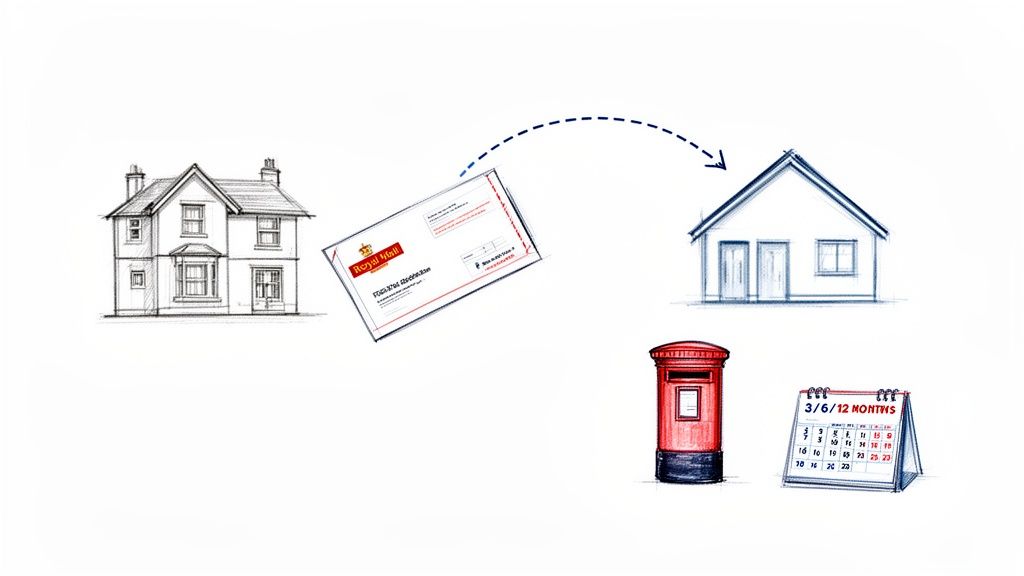
How and Why to Set Up Redirection
The service intercepts mail addressed to you at your previous property and forwards it to your current address. You can choose to have your mail redirected for three, six, or twelve months, giving you ample time to update all your records. It covers everyone listed on the application, so be sure to include the names of all adults moving with you.
Setting this up is straightforward and can be done online for maximum convenience.
- Standard Move: A six-month redirection is often sufficient for individuals and families, catching most annual renewals and infrequent correspondence.
- Complex Move: If you run a business from home or have numerous subscriptions and investments, a twelve-month service offers comprehensive coverage.
- International Moves: Royal Mail offers services to redirect your UK post to an overseas address, which is essential for anyone relocating abroad.
Top Tip: Apply for your redirection at least one week before your move date. The service needs a few working days to become active, so organising it in advance at the royalmail.com website ensures it starts exactly when you need it to.
Keep a running list of any mail that arrives via the redirection service. This acts as a handy, real-time checklist of organisations you still need to contact with your new address details, helping you plug any administrative gaps. This simple task is a cornerstone of a secure and organised move.
4. Change Address with HM Revenue & Customs (HMRC) and Update Tax Records
Just as you inform your local council, another government body you must notify of your move is His Majesty's Revenue and Customs (HMRC). This is a crucial step for anyone who is self-employed, a landlord, a company director, or receives tax credits or Child Benefit. Ensuring HMRC has your correct address is vital for receiving important correspondence, meeting tax deadlines, and avoiding potential penalties.
Failing to update your details can result in missed letters about tax returns, payment reminders, or changes to your tax code. This can lead to fines for late submissions or incorrect tax payments. Keeping your records current is a non-negotiable part of any comprehensive moving in checklist for the UK, protecting your financial and legal standing.
How and Why to Update Your Records
Updating your address with HMRC ensures all tax-related documents are sent to your new home. For those with a Self Assessment tax return, this is particularly important for receiving reminders and notices to file. For company directors, this update must often be synchronised with Companies House to maintain compliant records. The process is straightforward and is a key responsibility after you move.
HMRC provides online services to make this update simple and quick.
- Self Assessment: If you file a tax return, you can change your address through your Government Gateway account on the HMRC website.
- Tax Credits: Recipients can update their address using the online tax credits service or by calling the dedicated helpline.
- Company Directors: You must inform both HMRC (for your personal tax) and Companies House (for your directorship).
Top Tip: Have your National Insurance number and your new postcode ready before you start. If you are updating details for Self Assessment, your Unique Taxpayer Reference (UTR) will also be required. Aim to complete this within the first week of your move.
Once you have submitted the change, HMRC will usually send a confirmation letter to your new address within a few weeks. It's a good idea to keep this letter for your records. If you have also changed your bank details, you can often update these at the same time to ensure any tax refunds are paid correctly.
5. Update Address with Your Bank and Financial Institutions
Ensuring your financial institutions have your new address is a non-negotiable part of your moving in checklist for the UK. This crucial step protects you from fraud, prevents sensitive documents like new bank cards or PINs from going to your old address, and ensures you receive important correspondence without delay. It is a cornerstone of maintaining your financial security and integrity during the transition.
Failing to update your address promptly can have serious consequences. It could lead to missed payments if statements are sent to the wrong property, negative impacts on your credit file, and increased vulnerability to identity theft. Prioritising this task within the first few days of your move protects your assets and maintains continuity in your financial management.
How and Why to Update
Informing your financial providers is essential for security and regulatory compliance. Banks, building societies, and insurance companies use your address to verify your identity and send time-sensitive information. An up-to-date address also ensures your home and contents insurance policies are valid for your new property, which is often a condition of your mortgage or tenancy agreement.
Most major financial institutions in the UK allow you to update your details securely online or via their mobile banking apps.
- High Street Banks: Providers like Barclays, Lloyds, and HSBC have simple online portals where you can change your address in minutes.
- Insurance Providers: All insurers, from car to life and home insurance, require immediate notification of a move to ensure your cover remains valid.
- Pension and Investment Services: Don't forget to notify your pension providers and any investment platforms to receive annual statements and important updates.
Top Tip: Keep a log of every institution you have notified and the date you did it. Retain any confirmation emails or letters you receive as proof until you see the new address appear on your next statement. This helps track progress and ensures no provider is missed.
Start by updating your primary current account and your mortgage lender or landlord. Then, work through other accounts like credit cards, savings, ISAs, and any specialist services such as stockbrokers. Checking your credit file a month or two after moving is a good way to confirm that lenders have correctly registered your new address.
6. Tenancy and End-of-Tenancy Cleaning (Register Deposit & Deep Clean for Renters)
For renters, two of the most significant financial considerations are your security deposit and the condition of the property. Ensuring your deposit is legally protected and planning for a professional end-of-tenancy clean are crucial steps on your moving in checklist for the UK. These actions protect your money and help guarantee a smooth handover at the end of your tenancy, maximising the chance of a full deposit return.
Failing to verify deposit protection or neglecting the final clean can lead to disputes and significant financial loss. Addressing these points as you move in, and again as you prepare to move out, establishes a clear, documented standard from day one, which is vital for a stress-free rental experience.
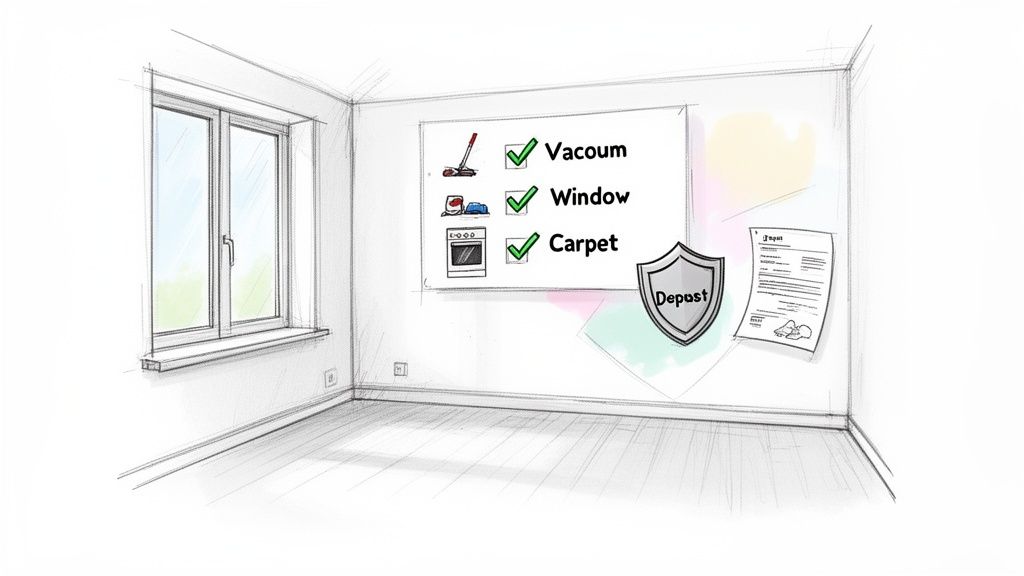
How and Why to Protect Your Deposit and Plan Your Clean
By law, landlords in England and Wales must place your tenancy deposit in a government-approved scheme within 30 days of receiving it. This protects your money and provides access to a free dispute resolution service if there are disagreements over deductions. When it's time to move out, most tenancy agreements require the property to be returned in the same condition it was found, minus fair wear and tear. A professional clean is often the best way to meet this standard.
Booking a professional clean removes the stress of this intensive task and provides documented proof that the property was cleaned to a high standard.
- Deposit Protection Service (DPS): One of the main government-backed schemes where landlords can register tenant deposits.
- The Dispute Service (TDS): Another approved custodial and insured scheme offering tenancy deposit protection.
- MyDeposits: Offers both insured and custodial options for landlords and letting agents across the UK.
Top Tip: On moving day, take detailed photos and videos of the entire property, including any existing scuffs, marks, or damage. Report these to your landlord or letting agent in writing within 48 hours to create a clear record of the property's initial condition.
When your tenancy ends, arrange for a professional cleaning service for the day after your belongings have been moved out. A comprehensive service, including specialist oven and carpet cleaning, can cost between £400-£600 for a three-bedroom house in the Bristol area. Keep the invoice and certificate of completion as evidence for your final inspection. For a detailed guide on what's required, you can explore this complete end-of-tenancy cleaning checklist.
7. Arrange Home and Contents Insurance Before Moving In
Securing the right insurance cover for your new property and belongings before you move is a non-negotiable part of any comprehensive moving in checklist for the UK. This crucial step protects you financially from day one against unforeseen events such as theft, fire, or accidental damage. For homeowners, buildings insurance is often a requirement of your mortgage lender, while contents insurance is essential for everyone to safeguard personal possessions.
Failing to arrange cover that starts on or before your completion or moving-in date creates a risky gap where you are uninsured. Imagine a leak or a break-in occurring just hours after you get the keys; without a policy in place, you would be fully liable for all repair or replacement costs. Getting this organised early provides immediate peace of mind and financial security.
How and Why to Arrange Insurance
Buildings insurance covers the structure of your home (walls, roof, fixtures), while contents insurance protects your movable belongings (furniture, electronics, clothing). It’s vital to ensure your policy begins on the day you legally take ownership or responsibility for the property, not just the day you physically move your items. For renters, ensuring the property is spotless before moving in or when leaving can help secure your deposit; you can find a useful guide on an end of tenancy cleaning checklist.
Start shopping for quotes at least two to three weeks before your move date using comparison sites or by contacting insurers directly.
- Major Providers: Well-known insurers like Aviva, Direct Line, and AXA offer comprehensive policies.
- Moving Day Cover: Some policies include cover for goods in transit as standard, while others offer it as an add-on. Always check this detail.
- Valuation: Accurately estimate the value of your contents. A typical three-bedroom family home in the UK often has contents valued between £50,000 and £100,000.
Top Tip: Take photos of high-value items before they are packed. This provides a clear record for any potential claims. Also, double-check your removals company’s insurance, but don't rely on it solely for your own protection.
Always read the policy exclusions carefully. Standard policies may not cover accidental damage, which is a valuable add-on, especially for families. If you have specific questions about what is covered during the move itself, you can learn more about removals insurance options.
8. Arrange for School Applications or Transfers (If Moving with Children)
For families, one of the most time-sensitive and crucial tasks on any moving in checklist for the UK is managing school placements. Securing a place for your child in a new school requires forward planning, as application processes vary significantly across different councils and nations within the UK, and popular schools often have long waiting lists.
Addressing this early prevents a stressful scramble to find a suitable school after you've moved. Delays can disrupt your child's education and add unnecessary anxiety to the moving process. Starting your research and applications as soon as your move is confirmed is essential for a smooth educational transition for your children.
How and Why to Arrange School Places
Arranging school transfers involves researching local schools, understanding the local authority's application process, and submitting all necessary paperwork within strict deadlines. This is vital because your child's right to education is paramount, and a good local school is often a key factor in choosing a new home. Whether you are applying for a new school year or a mid-year transfer, the process is formal and requires proof of your new address.
Most local authorities, including those in Bristol and Bath, have dedicated online portals to manage school admissions.
- Bristol City Council: Manages all school applications through its online education portal, providing clear guidance on catchment areas and application timelines.
- Bath & North East Somerset Council: Provides a similar online system for parents to apply for school places and view admission criteria for local schools.
- Mid-Year Transfers: If moving during the school year, you will likely need to contact the local authority and individual schools directly to enquire about available places.
Top Tip: Contact your preferred schools to arrange a visit before you move, if possible. This gives you and your child a feel for the environment and helps you make an informed decision. Have your new tenancy agreement or proof of purchase ready, as this is mandatory for applications.
Once you have accepted a place, ensure you request your child’s records from their previous school to be sent to the new one. Keeping your children involved and informed throughout this process can also help reduce their anxiety about the move and starting a new school.
9. Update GP Registration and Healthcare Records
Ensuring continuous access to healthcare is a non-negotiable part of any moving in checklist for the UK. Registering with a new local GP practice should be a high-priority task, completed within your first couple of weeks. This guarantees you can book appointments, receive prescriptions, and access NHS services without delay should you or a family member fall ill.
Failing to register promptly can leave you in a difficult position if you need urgent but non-emergency medical care. Your previous GP will eventually remove you from their list once you are outside their catchment area, so establishing a new local connection is vital for seamless healthcare and the smooth transfer of your medical records.
How and Why to Register
Registering with a new GP allows your medical records to be transferred electronically from your old practice, ensuring your new doctor has a complete history of your health. This is crucial for managing ongoing conditions, allergies, and repeat prescriptions. The process is free and straightforward, securing your access to primary care in your new community.
Most GP practices now support online registration, making the process more convenient than ever.
- NHS Service Finder: Use the official NHS.uk website to locate and compare GP practices in your new postcode. It provides details on services offered and patient reviews.
- Online Registration: Many practices in Bristol and Bath allow new patients to complete registration forms digitally, saving you a trip.
- Digital Health Services: Once registered, you can often use the NHS App or similar platforms to book appointments, order repeat prescriptions, and view your health record online.
Top Tip: Have your NHS number handy before you start; you can find it on old prescriptions, appointment letters, or by contacting your previous surgery. Also, register any dependent children at the same time to ensure the whole family is covered.
When you find a suitable practice, complete their registration form either online or in person. You may need to provide proof of your new address and a form of ID. Be sure to inform them of any urgent medication needs or ongoing treatments. Once registered, inform your old practice that you have moved so they can initiate the records transfer.
10. Update Address with Employer and Arrange Pension/Employee Benefits Changes
Amidst the chaos of utility bills and council tax, it's easy to overlook a crucial professional task: updating your address with your employer. This is a vital step on any UK moving in checklist, as it ensures your payroll records, tax information, and any correspondence related to your employment are sent to the correct address. Failure to do so can lead to delayed payslips, incorrect tax codes, or missed communications about your pension and benefits.
This task is not just about receiving post; it’s about maintaining accurate and legal employment records. Your employer uses your address for P60 and P45 forms, pension statements, and as your primary contact detail in an emergency. It’s a simple update that prevents significant financial and administrative problems down the line, so it should be completed within your first week.
How and Why to Update
Your address is a key piece of data for HMRC, your workplace pension provider, and your company's HR department. An incorrect address can cause your tax code to be miscalculated or important pension documents to go astray. For those who are self-employed, keeping your address current with your accountant and any professional bodies is equally important for tax returns and liability insurance.
Most large companies provide a straightforward way to make this change online.
- Online HR Portals: Many employers use self-service HR systems like Workday or PeopleHR where you can log in and update your personal details in minutes.
- Direct HR Contact: For smaller companies without a portal, a direct email or conversation with the HR manager or your line manager is usually sufficient.
- Self-Employed: You must inform your accountant, update your details on the HMRC portal, and notify any professional organisations you are a member of.
Top Tip: Once you've updated your details, request a confirmation email from HR. When your next payslip arrives, double-check that your new address is listed correctly to ensure the change has been processed successfully.
This is also a good opportunity to review and update your emergency contact information, as this may have changed with your move. Keeping your professional records accurate ensures you remain compliant and that your hard-earned salary and benefits are always managed correctly.
Top 10 UK Moving-In Checklist Comparison
| Task | Implementation Complexity 🔄 | Resources & Timing ⚡ | Expected Outcomes 📊 | Ideal Use Cases 💡 | Key Advantages ⭐ |
|---|---|---|---|---|---|
| Register with Your Local Council and Update Electoral Register | Low–Medium 🔄 — online but varies by council | ⚡ Proof of address; complete within 14 days; free; minutes–hours | Ensures legal residency, council tax & voting access — ⭐⭐⭐⭐ | New residents immediately after moving | Activates voting rights, ensures bills/mail reach you |
| Notify Utility Providers (Gas, Electricity, Water) and Arrange Meter Readings | Medium 🔄 — multiple suppliers and meters | ⚡ Meter readings on move-out/in; contact 2–3 weeks before; photos/docs recommended | Accurate final bills and clean handover — ⭐⭐⭐⭐ | Movers with separate supplier accounts or multi-meter properties | Prevents billing disputes; allows switching/providers setup |
| Update Royal Mail Redirection (Mail Forwarding Service) | Low 🔄 — simple online/phone/post setup | ⚡ Cost £40–£74; activate in 3–5 working days; choose 3/6/12 months | Catches post sent to old address — ⭐⭐⭐ | Those who cannot update all contacts before moving | Forwards missed mail, buys time to update organisations |
| Change Address with HMRC and Update Tax Records | Low 🔄 — online/phone for most users | ⚡ Free; usually updates within 24 hours; have postcode/NINO ready | Prevents missed tax correspondence and penalties — ⭐⭐⭐⭐ | Self-employed, landlords, tax credit recipients, company directors | Protects against penalties; updates Self Assessment/PAYE records |
| Update Address with Your Bank and Financial Institutions | Low–Medium 🔄 — multiple institutions to notify | ⚡ Online/phone/in-branch; ID may be required; 1–2 working days | Maintains account security and correct statements — ⭐⭐⭐⭐ | Anyone with bank accounts, mortgages, insurance or investments | Reduces fraud risk; ensures important financial documents delivered |
| Tenancy and End-of-Tenancy Cleaning (Register Deposit & Deep Clean for Renters) | Medium 🔄 — legal deposit registration + arranged cleaning | ⚡ Deposit must be registered within 30 days; cleaning booked 2–3 days before move; costs vary (£400–£600 typical) | Better chance of full deposit return and legal protection — ⭐⭐⭐⭐ | Renters ending tenancy | Legal deposit protection and evidence; improves deposit return prospects |
| Arrange Home and Contents Insurance Before Moving In | Low–Medium 🔄 — compare policies and set start date | ⚡ Get quotes 2–3 weeks prior; policies start on/before moving day; cost varies | Financial protection against theft/damage — ⭐⭐⭐⭐ | Homeowners (buildings) and all occupants (contents) | Covers loss/damage, can include transit and emergency cover |
| Arrange for School Applications or Transfers (If Moving with Children) | Medium–High 🔄 — regional windows and waiting lists | ⚡ Varies by region; apply as early as possible; may require visits/records | Secures school place where available; may face waitlists — ⭐⭐⭐⭐ (depends on area) | Families with school-age children | Ensures education continuity; supports admission planning |
| Update GP Registration and Healthcare Records | Low 🔄 — usually straightforward but practices may be full | ⚡ Free; online in many areas; records transfer in 1–2 weeks | Restores local NHS access and prescriptions — ⭐⭐⭐⭐ | Those needing regular healthcare, families, elderly | Ensures continuity of care and access to services |
| Update Address with Employer and Arrange Pension/Employee Benefits Changes | Low 🔄 — HR or online portal update | ⚡ Free; processed in 1–2 working days; request confirmation | Accurate payroll, tax coding and benefits records — ⭐⭐⭐ | Employed people and workplace pension members | Prevents payroll errors and ensures correct benefit delivery |
Making Your Move Simple and Seamless
Navigating the complexities of a house move can feel overwhelming, but a systematic approach transforms a potentially stressful event into a manageable, even exciting, transition. This comprehensive moving in checklist uk has been designed to be your definitive guide, breaking down the entire process into clear, actionable stages. From the initial planning months before the move to the final box being unpacked, each step is crucial for establishing a smooth and organised start in your new home.
By following this checklist, you’ve moved beyond generic advice and delved into the specifics that truly matter. We haven't just told you to "inform utilities"; we've detailed the importance of taking meter readings on day one to avoid inheriting previous occupants' bills and ensuring a seamless service transfer. We’ve highlighted why updating your address with HMRC and your bank isn’t just good practice but a vital step in protecting your financial identity and ensuring you receive important correspondence without delay.
Key Takeaways for a Successful Move
The true value of this checklist lies in its proactive approach. Mastering these tasks isn't just about ticking boxes; it's about safeguarding your finances, security, and well-being.
- Administrative Diligence is Non-Negotiable: Tasks like registering with the local council, updating your GP, and sorting your TV Licence are the bedrock of a successful move. Neglecting them can lead to administrative headaches, missed appointments, or even fines. Think of these as the foundational pillars of your new life.
- Timing is Everything: Certain actions have a critical window. Arranging home and contents insurance before you move in is a prime example. This ensures your belongings are protected from the moment they cross the threshold, not just after you've settled. Likewise, setting up Royal Mail redirection in advance prevents a gap in receiving important documents.
- Document and Photograph Everything: From the state of the property on arrival (especially for renters needing their deposit back) to meter readings and the condition of high-value items before transit, a photographic record is your best evidence against any future disputes. It's a simple, five-minute task that can save you significant time and money later.
Ultimately, the goal of a robust moving in checklist uk is to empower you. It provides a framework that frees up your mental energy to focus on what truly matters: turning your new house or flat into a home. By methodically addressing the logistical and administrative hurdles, you create the space to enjoy the experience of settling into a new community, especially in vibrant areas like Bristol and Bath. You can explore your local park, find your new favourite coffee shop, and meet your neighbours, all with the peace of mind that comes from knowing the essential tasks are handled.
Moving house marks a significant chapter in your life. By embracing a structured and detailed plan, you are not just moving your possessions; you are laying the groundwork for a secure, comfortable, and happy future in your new space. You are taking control of the chaos and steering your transition towards a positive and seamless conclusion.
Ready to turn your checklist into a reality with professional, stress-free support? For those moving in Bristol, Bath, and the surrounding areas, SimplyPro Removal & Storage Ltd offers a complete suite of services tailored to your needs, from secure packing and specialist transport to post-move cleaning. Let our two decades of experience make your next move your best one by visiting SimplyPro Removal & Storage Ltd to get a fast, no-obligation quote today.