

Let’s be honest, moving house can feel like a mammoth task. But the secret to a smooth, stress-free move isn't magic—it all starts with having the right tools for the job. Your success really hinges on choosing the best packing materials for moving, from solid boxes and dependable tape to the right kind of padding that keeps your most precious items safe. Think of this guide as your complete blueprint for getting all your supplies in order.
Your Essential Packing Materials Checklist
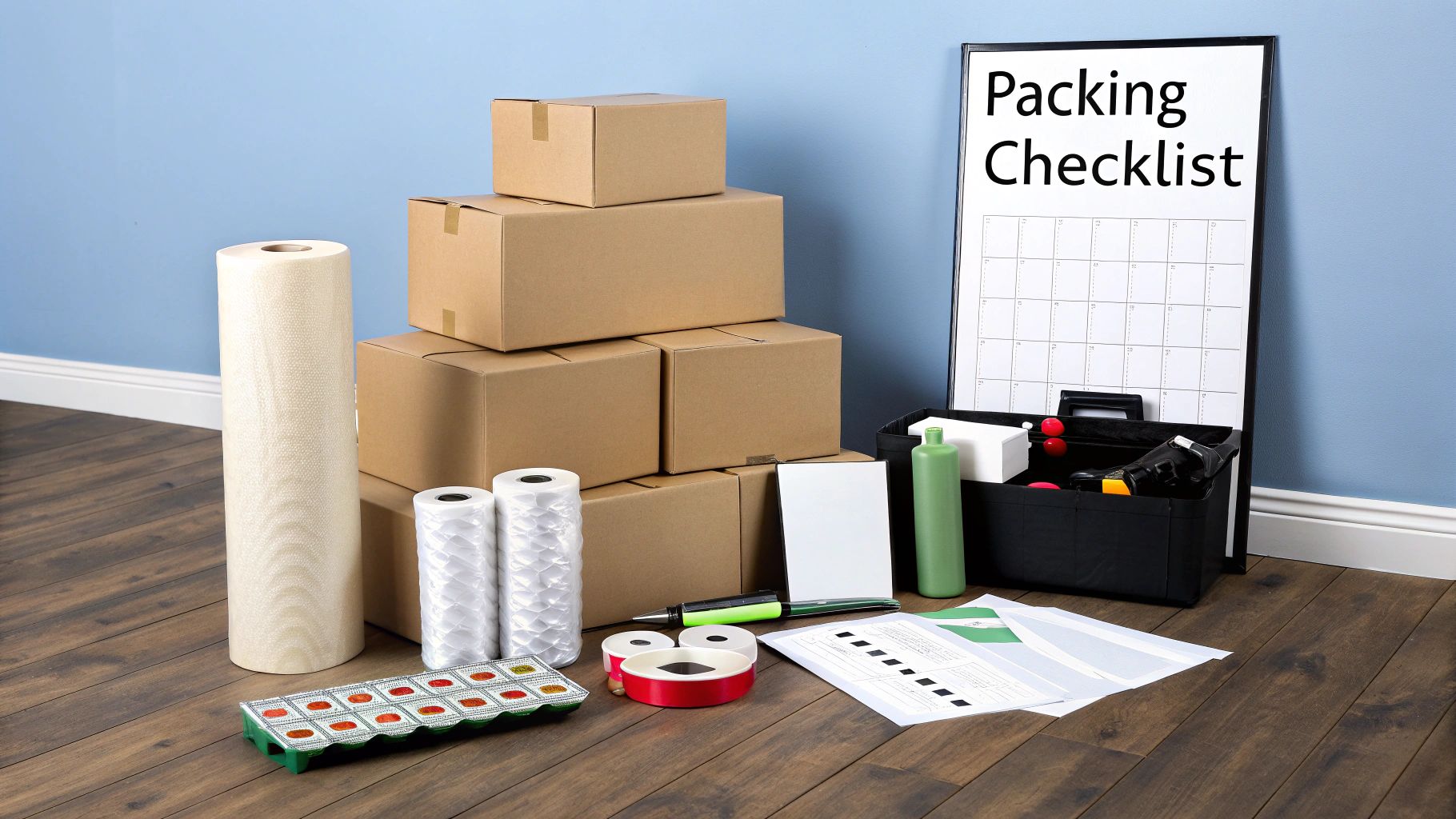
Before we even get into the nitty-gritty of how to pack, it's vital to figure out what you actually need. Imagine your packing materials are a team of specialists, each with a very specific role in protecting your belongings on their journey.
Using the wrong tool for the job is a recipe for disaster. A flimsy box for heavy books? Weak tape on a box full of kitchenware? You're just asking for trouble.
This initial checklist gives you a solid overview of the absolute must-haves. It’s designed to provide a clear, practical foundation before you even think about taping up that first box. Getting this stage right saves you from those last-minute, panicked dashes to the shop and ensures everything—from your bulky sofa to your most delicate wine glasses—is properly prepped for the move.
Essential Packing Supplies at a Glance
To get your planning off to a flying start, here's a quick summary of the most critical items you'll need. Think of it as your essential shopping list for a successful move. We'll dive deeper into each of these later, but this table gives you an immediate, practical framework to work from.
| Material | Primary Use | Pro Tip |
|---|---|---|
| Cardboard Boxes | Containing and organising all household items. | Use small boxes for heavy items like books and large boxes for light items like bedding to keep them manageable. |
| Packing Tape | Securely sealing boxes to prevent them from opening. | Always choose strong, wide packing tape. Avoid masking or cellophane tape, which can't handle the strain. |
| Bubble Wrap | Cushioning and protecting fragile or delicate items. | Use small bubbles for glassware and larger bubbles for bigger items like lamps or electronics. |
| Packing Paper | Wrapping individual items and filling empty spaces in boxes. | Use unprinted newsprint to avoid ink stains on your belongings. It's perfect for wrapping plates and glasses. |
| Permanent Markers | Labelling boxes with their contents and destination room. | A clear labelling system is your best friend during unpacking. Label at least two sides of every box. |
This table gives you the basics, but remember, there’s a bit of an art to using them correctly.
Having the right supplies is only half the battle. The way you use them determines whether your belongings arrive in one piece. Proper technique transforms a simple box and wrap into a secure vessel for your valuables.
It's not just about what you buy; how you use it makes all the difference. To really get it right, it pays to learn about proper packing techniques for secure transit to ensure everything is fully protected. This solid foundation is what sets you up for an organised, efficient, and damage-free move.
Choosing the Right Boxes for Your Move
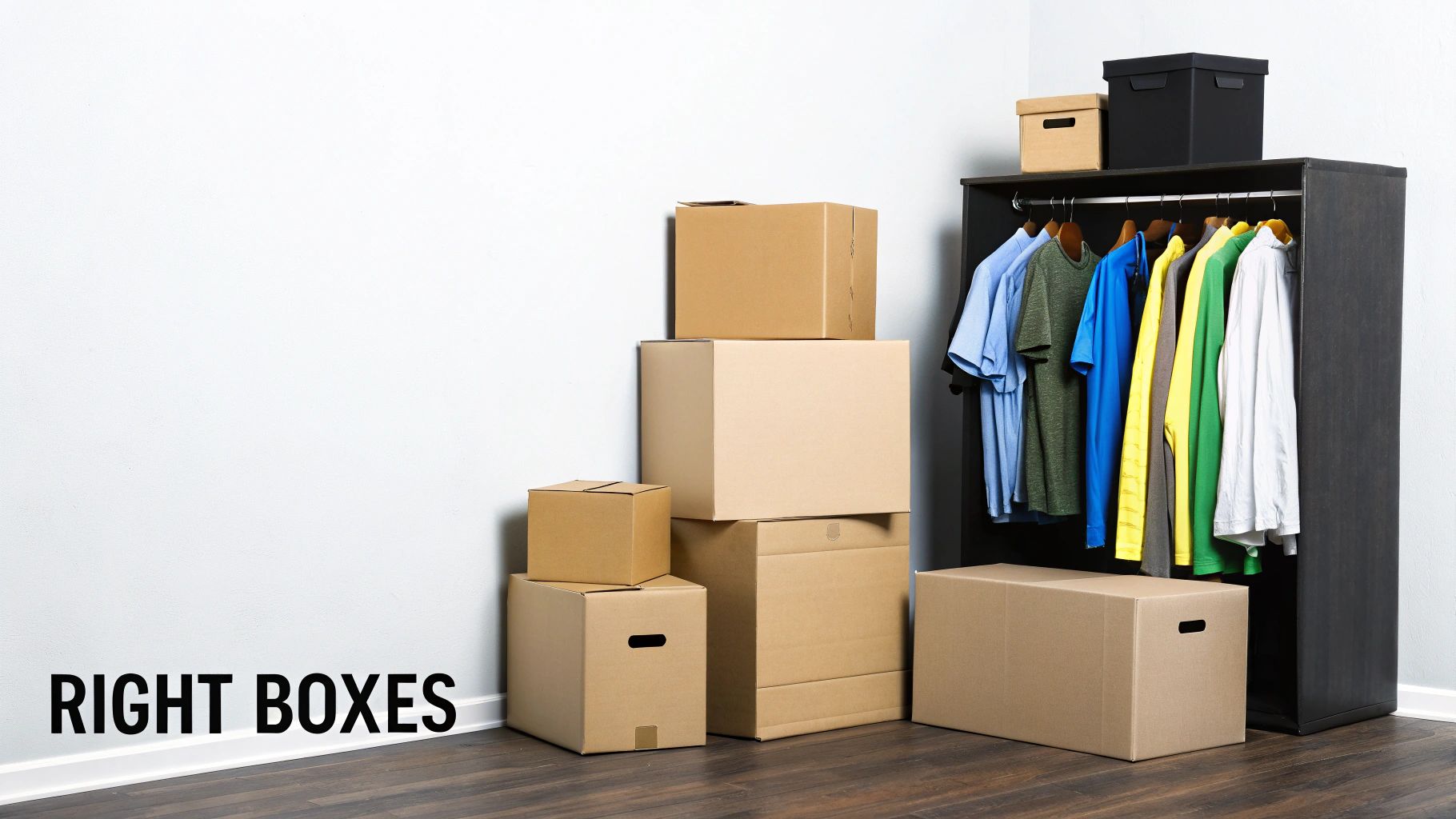
When you start pulling together packing materials for moving, it's tempting to think a box is just a box. But in reality, picking the right type and size is the absolute bedrock of a successful, damage-free move. Grabbing a box that’s too flimsy for your fragile items or too big for your heavy ones is a classic mistake, and one that almost always ends in broken belongings and a whole lot of stress.
Think of moving boxes like specialised tools – each one is built for a particular job. You wouldn't use a dinner plate to hammer in a nail, and you definitely shouldn't try to cram your entire book collection into one giant box. Matching the box to the items inside not only keeps them safe but also makes the whole job of lifting, loading, and unpacking so much easier.
The Strategy of Size and Strength
There's one golden rule in packing that you should never forget: the heavier the stuff, the smaller the box. It sounds a bit backwards, but it's the key to avoiding injuries and watching the bottom of a box give way at the worst possible moment. Shoving dense items into a large box makes it a nightmare to lift and puts way too much strain on the cardboard.
A smart packing strategy always follows this simple logic:
- Small Boxes: These are your workhorses for anything dense and heavy. Think books, tins of food, tools, or your vinyl record collection. Keeping these items in small boxes ensures each one stays at a manageable weight, ideally under 15 kg.
- Medium Boxes: The jack-of-all-trades. These are your go-to for most general household items – pots and pans from the kitchen, small appliances, toys, and folded clothes. They strike the perfect balance between space and strength.
- Large Boxes: Save these for things that are big but light. They’re perfect for duvets, pillows, cushions, lampshades, and bulky winter coats. Filling them with light items means they won't become impossibly heavy.
The single biggest factor in how well a box performs is its structural integrity. For anything fragile or heavy, always go for double-walled cardboard. That extra corrugated layer gives it far more strength and crush resistance, acting as a vital buffer against the inevitable bumps and knocks of the move.
While tracking down free boxes is always tempting, you need to be a bit picky. Our guide on finding free boxes for moving has some great tips, but always give any secondhand box a thorough check for damp spots, pests, or general weakness before you trust it with your possessions.
Speciality Boxes That Save Time and Stress
Beyond the standard small, medium, and large, there's a whole world of speciality boxes designed to tackle specific packing headaches. They might cost a little more, but the convenience and protection they offer are often well worth the investment.
Wardrobe Boxes
A total game-changer. These tall boxes have a sturdy metal bar across the top, turning them into mini portable closets. You can move suits, dresses, and shirts straight from your wardrobe to the box without any folding. It not only saves you from hours of ironing at the other end but also keeps your clothes in perfect condition.
Dish Pack Boxes (Dish Barrels)
Built specifically for fragile kitchenware, these boxes are made with extra-tough, double-walled cardboard. They often include cardboard dividers that create separate cells for plates, glasses, and bowls. This clever setup stops everything from rattling against each other, dramatically cutting the risk of chips and cracks.
Picture and Mirror Boxes
Protecting framed artwork, mirrors, or even a flat-screen TV can be a real worry. These clever telescopic boxes are designed to slide and adjust to fit different sizes perfectly. Their rigid structure gives fantastic corner protection and stops any pressure from being put on the glass or screen – which is where things most often go wrong. It’s a far safer bet than just wrapping them in a blanket and hoping for the best.
Mastering Protective Wraps and Cushioning
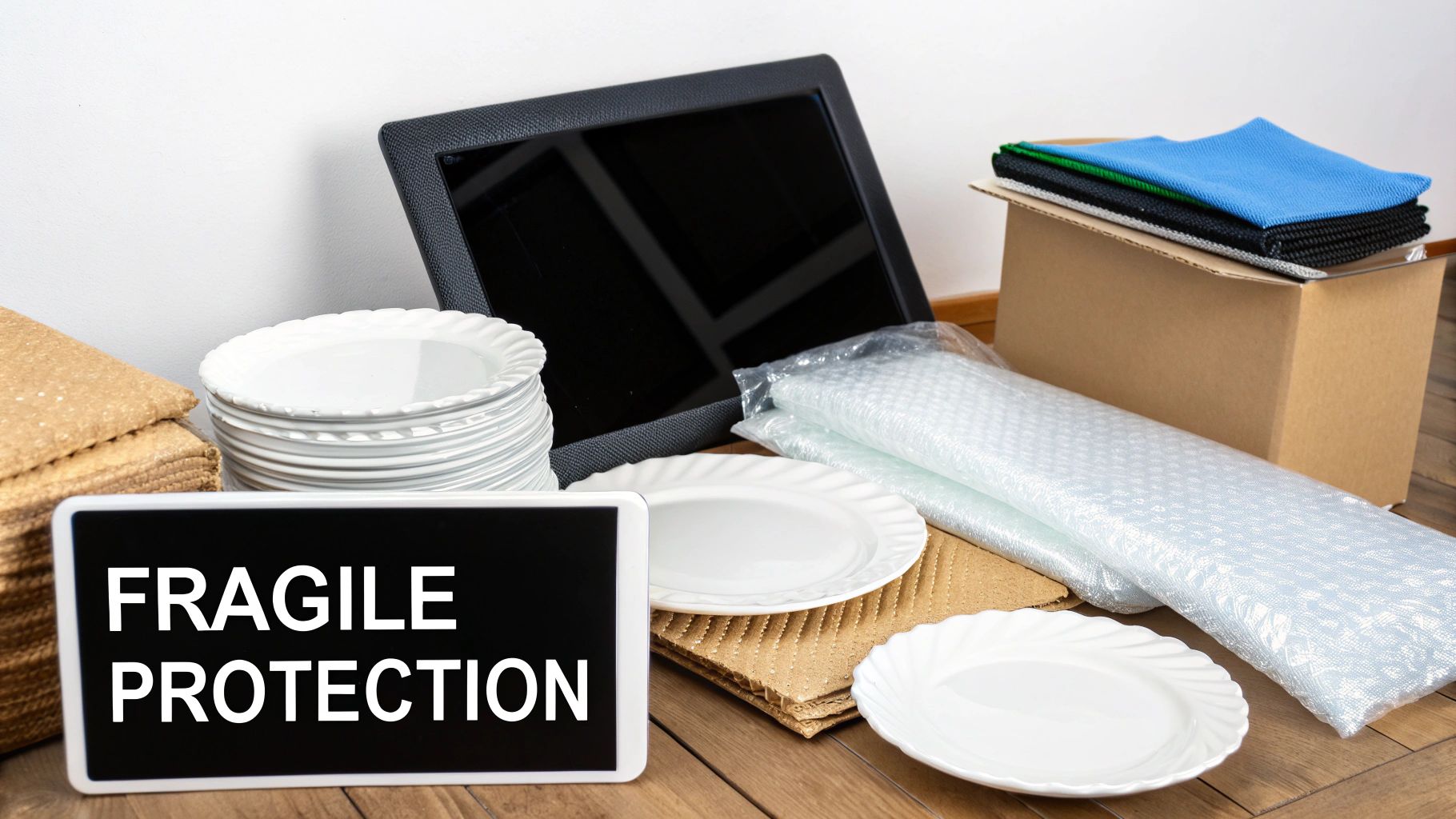
While strong boxes provide the skeleton for a successful move, the real magic happens in the space between your belongings and the box wall. This is where protective wraps and cushioning come into play – the unsung heroes of packing. Without them, even the sturdiest box is just an echo chamber where your valuables can rattle, chip, and break.
Think of it like this: your items are the passengers, and the protective wrap is their seatbelt and airbag. It’s the material that absorbs the shocks from all the bumps, vibrations, and sudden stops that are inevitable on moving day. Choosing the right cushioning is just as important as picking the right box; it’s what turns a risky journey into a secure passage for your most delicate items.
The Versatility of Bubble Wrap
Bubble wrap is the go-to for a reason. Those little air-filled pockets offer brilliant protection against knocks and drops. But not all bubble wrap is created equal, and using the right size for the job is what separates the amateurs from the pros.
Here’s a simple breakdown of how to match the bubble size to your needs:
- Small Bubbles (1/8" to 3/16"): These are perfect for your smaller, more delicate possessions. Use this size to wrap individual glasses, mugs, small picture frames, and collectibles. The smaller bubbles conform tightly to an item's shape without adding too much bulk.
- Large Bubbles (1/2" or larger): Save this for the big, heavy stuff. The larger bubbles provide more substantial cushioning and are fantastic for filling any empty voids inside your boxes. It’s ideal for protecting electronics, lamps, or large, fragile vases.
A quick pro tip: always wrap with the bubble side facing inwards, touching the item. This ensures the bubbles can do their job properly by absorbing direct impact. One layer is good, but for anything truly precious, two layers give you real peace of mind.
Packing Paper: The Multipurpose Essential
Packing paper is one of the most versatile packing materials for moving you can get your hands on. It’s cheap, effective, and can be used in a few different ways. Crucially, professional packing paper (newsprint) is completely ink-free, so you won’t be left scrubbing black smudges off your best dinner plates like you would with old newspapers.
Think of packing paper as your go-to for three key tasks: wrapping, filling, and layering. A great technique for plates is to swaddle each one individually. Place a plate in the centre of a sheet, fold one corner over it, then place another plate on top and repeat the process. This creates a beautifully cushioned stack that stops the plates from chipping against each other.
You can also crumple packing paper up to create the perfect void fill. Any empty space inside a box is a weak point, allowing items to shift and break. By stuffing those gaps with balled-up paper, you create a firm, secure environment that holds everything tightly in place.
Don’t underestimate the power of a tightly packed box. If you can hear items shifting when you gently shake a sealed box, it needs more cushioning. Silence is the sound of a well-packed box.
Beyond the Basics: Specialist Cushioning
While bubble wrap and paper will get you through most of your packing, some items demand a bit of extra, specialised protection. Adding these materials to your toolkit can prevent costly damage to your most valuable or awkwardly shaped possessions.
Furniture Blankets
These thick, padded blankets are non-negotiable for protecting your largest investments. They’re the best way to shield wooden tables, sofas, and cabinets from the inevitable scratches, dents, and scrapes during loading and transit. Use packing tape to hold them in place, but make sure the tape only sticks to the blanket itself, never directly on the furniture’s surface.
Foam Pouches and Sheets
This thin foam offers fantastic protection against surface scratches and is far less bulky than bubble wrap. Foam pouches are brilliant for quickly sliding over delicate items like plates or small electronic screens. Sheets of foam are perfect for placing between stacked items, such as picture frames or mirrors.
Corrugated Cardboard Sheets
These are simply flat sheets of cardboard that act as fantastic dividers. You can place them between layers of fragile items in a box to distribute weight more evenly and add extra structural support. They’re particularly useful when packing framed art or mirrors inside picture boxes.
Sourcing all these different materials can feel like a job in itself. For a convenient, all-in-one solution, you can find a complete range of high-quality packing materials near me in our packaging shop, ensuring you have exactly the right protection for every item in your home.
Sealing the Deal: Tapes and Labels Make All the Difference
You can pack a box perfectly, but if the bottom gives out while it's being carried, all that hard work is for nothing. On the other side of the move, facing a mountain of identical brown boxes is enough to make anyone want to give up. This is where the final touches—good tape and clear labels—turn a potential disaster into an organised, manageable process.
Don't underestimate these two items. They’re the unsung heroes of any successful move, providing the security that holds everything together and the simple roadmap that tells you where it all goes.
Choosing the Right Tape
Trust me on this: not all tape is created equal. One of the most common mistakes people make is grabbing whatever they have in their desk drawer. That everyday cellophane or masking tape just won’t cut it. It simply doesn't have the strength to hold the weight of a packed box and will peel off at the first sign of pressure.
When you're buying packing materials for moving, you need tape designed for the job. Here's what to look for:
- Material: Go for polypropylene or vinyl tape. Both are strong, durable, and won't split or tear easily.
- Width: Wider is always better. You'll want a roll that’s at least 48mm (about 2 inches) wide to get a really secure seal over the seams of your boxes.
- Adhesive: Look for a strong acrylic or hot melt adhesive. This is what gives the tape its staying power, ensuring it sticks firmly to the cardboard through all the bumps and temperature changes of the move.
A little pro tip: invest in a handheld tape gun. It makes sealing boxes so much faster and easier. You can apply, cut, and press the tape down in one fluid movement, which saves a surprising amount of time and hassle.
Your Labelling System: The Key to a Calm Unpack
Once a box is sealed, it needs an identity. A clear, consistent labelling system is your best friend when it comes to unpacking. It’s what stops you from frantically ripping open box after box labelled "Kitchen" when all you want is the kettle. The best systems aren't complicated; they're just clear.
Think of each label as a clear instruction for your movers and for your future, tired self. A good label should instantly tell you three things:
- Which Room: Where does this box go in the new place? (e.g., "Kitchen," "Master Bedroom," "Lounge").
- What's Inside: A quick summary is all you need. "Pots & Pans" or "Bedside Lamps" is perfect.
- How to Handle It: Is it fragile? Is it heavy? Mark it clearly with "FRAGILE" or "HEAVY" so it gets the care it needs.
One of the smartest and simplest tricks in the book is colour-coding. Just assign a different coloured marker or sticker to each room. It’s a brilliant visual shortcut that lets movers see where a box goes at a glance, making the whole unloading process move much, much faster.
For instance, you could use blue for the kitchen, green for the main bedroom, and red for the living room. Then, make sure you mark at least two sides of every box (and the top!) with both the colour and the written label. That way, the info is visible no matter how the boxes are stacked. Always use a bold, permanent marker so your carefully planned system doesn't smudge or fade away in transit.
How to Budget for Your Packing Supplies
Trying to nail down the cost of a move can feel like guesswork, and the budget for your packing materials is one of the biggest question marks. If you don't plan ahead, it's all too easy to overspend on things you don't need or, worse, run out of boxes halfway through and have to make a mad dash to the shops.
A little financial planning upfront does more than just save you money—it massively cuts down on the stress. When you know what you need, you can get it all in one go. No last-minute panic buys, just the right gear to protect your stuff properly.
Estimating Your Supply Needs
So, where do you start? The first step is figuring out just how much stuff you actually have. The number of boxes you'll need is tied directly to the size of your home and, crucially, how long you've been living there. The longer you're in one place, the more things you naturally accumulate.
As a rough guide, you can work with these general figures:
- 1-Bedroom Flat: You'll probably need around 20-30 boxes of various sizes.
- 2-Bedroom House: This usually calls for about 40-60 boxes.
- 3-Bedroom Family Home: Plan for at least 60-80 boxes, maybe more.
- 4+ Bedroom House: You’re likely looking at over 80 boxes.
Of course, these numbers are just a starting point. If you’re a minimalist, you’ll be on the lower end of that scale. But if you’ve got a garage full of treasures, a library of books, or extensive collections, you’ll want to aim for the higher end. For a much more accurate figure, our handy removal packaging calculator can give you a personalised estimate.
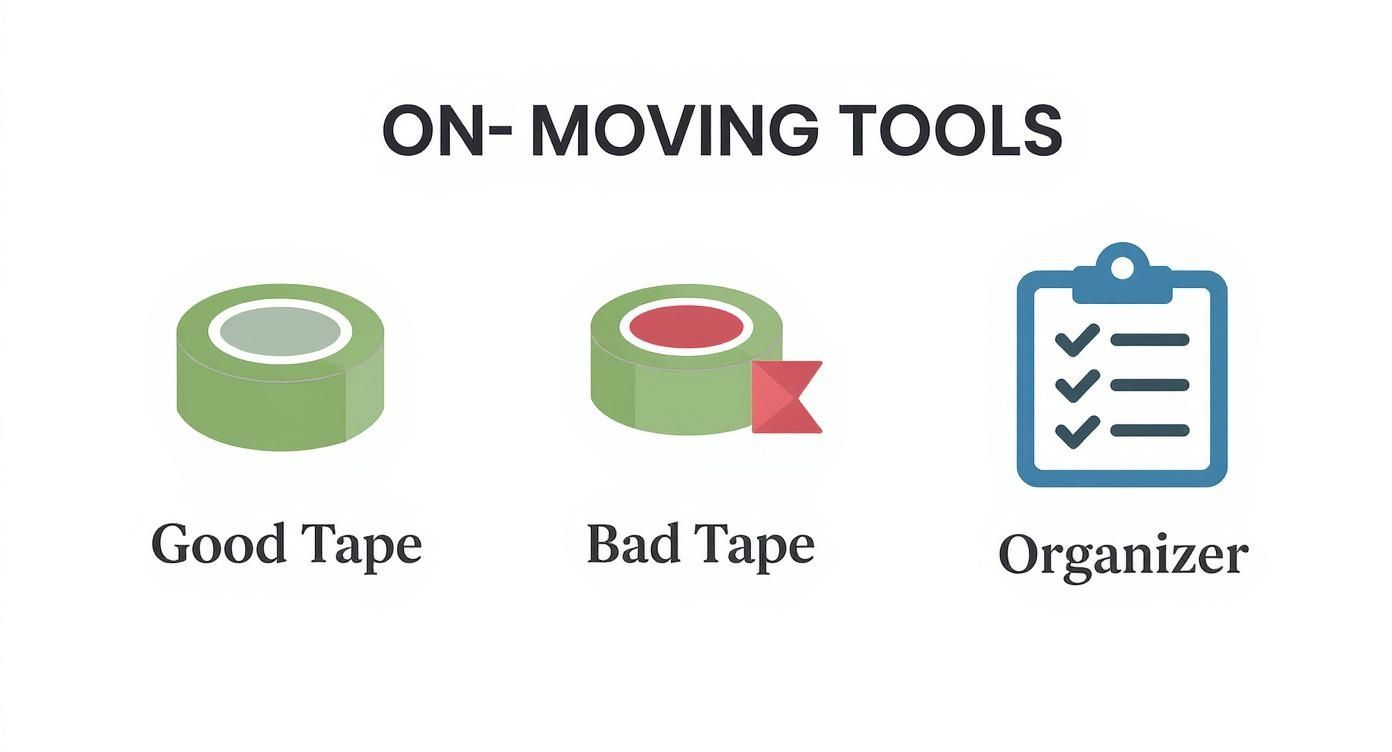
Getting the right tools for the job makes all the difference. Good quality tape and a solid plan are non-negotiable.
Estimated Packing Materials Needed Per Room
To help you get a bit more granular, here’s a breakdown of what you might need for different rooms in a typical home.
| Room Type | Small Boxes | Medium Boxes | Large Boxes | Rolls of Tape |
|---|---|---|---|---|
| Kitchen | 5-7 | 6-8 | 2-3 | 1 |
| Living Room | 4-6 | 5-7 | 3-4 | 1 |
| Bedroom (Adult) | 3-5 | 4-6 | 2-4 | 1 |
| Bedroom (Child) | 2-4 | 3-5 | 1-2 | 0.5 |
| Bathroom | 2-3 | 1-2 | 0-1 | 0.5 |
| Office/Study | 3-4 | 4-5 | 1-2 | 0.5 |
Remember, this is just an estimate! A home office packed with files will need more boxes than one with just a laptop. Use this table as a starting point and adjust based on what you own.
Calculating the Costs in the UK
Once you have a rough idea of quantity, you can put a budget together. It’s worth knowing that the cost of packing materials in the UK has been on the rise, mirroring wider industry trends. The average UK household now spends around £50 on packing supplies, a noticeable jump from £35 just a few years back.
This increase comes from the rising cost of raw materials like cardboard and plastic. For instance, a standard moving box that used to be £1.20 now often costs closer to £1.80, and a roll of bubble wrap has gone from about £2.50 to £3.80. It all adds up.
Don't forget that your budget needs to cover more than just boxes. You’ll need several rolls of strong packing tape, permanent markers, bubble wrap or packing paper, and maybe some special containers like wardrobe boxes or dish packs.
Where to Get Your Supplies
With a budget in hand, you have a couple of choices. You could try hunting down free boxes from local shops or on community groups. This is obviously great for the wallet, but it can be time-consuming, and you never really know what you’re getting in terms of quality or cleanliness.
A far more reliable option is to buy them from a professional supplier. Yes, there's an upfront cost, but you're guaranteed to get clean, sturdy, and uniformly sized boxes that are actually designed for moving. Buying a full packing kit can also be more cost-effective than getting everything separately. It really just gives you peace of mind, knowing your supplies are up to the task.
Professional Packing Services vs DIY Packing
So, you’re staring at a house full of stuff and wondering: do I pack all this myself, or do I call in the professionals? It’s one of the biggest decisions you'll face during your move, and honestly, there's no single right answer. It all boils down to a classic trade-off: money versus time and convenience.
Choosing the DIY route means you're in the driver's seat. You know exactly what’s going into every box and can keep things organised precisely to your liking. The biggest win here, of course, is the savings. By putting in the sweat equity yourself, you can dramatically cut down on the overall cost of moving, which leaves more cash for other things.
But that control and saving comes at a cost of its own. Packing an entire home is a mammoth task, both physically and mentally. It's easy to underestimate just how many evenings and weekends it can swallow up, piling a whole new layer of stress onto what is already a pretty full-on time.
The Case for Hiring Professionals
This is where professional packing services come in. Think of it as an investment in your sanity and your schedule. A skilled crew can swoop in and pack an entire house in just a few hours—a job that might take you the better part of a month. They turn up with all the right packing materials for moving, from heavy-duty boxes to the perfect cushioning, and they know exactly how to use them.
Their expertise really shines when it comes to your fragile or awkwardly shaped possessions. These guys have seen it all. They know the right techniques for wrapping delicate china, protecting the corners of antique furniture, and making sure your electronics are snug and secure for the journey. This massively reduces the risk of heartbreaking breakages.
Here's something crucial to remember: insurance. Most movers' liability won't cover items you've packed yourself if they get damaged. But when the pros do the packing, their work is insured. That gives you a vital safety net for your most treasured belongings.
When you're weighing up your options, it's also worth thinking about other tasks you can delegate. For instance, understanding how professional cleaning services can reduce relocation stress can open your eyes to the benefits of getting expert help with other parts of the move.
Making the Right Choice for You
Ultimately, the best decision is personal. You just need to weigh up what matters most to you right now.
- Choose DIY Packing if: Your budget is tight, you’ve got plenty of time on your hands, and you feel confident you can wrap and box everything securely. It's perfect for anyone who wants total, hands-on control.
- Choose Professional Packing if: You're short on time, you're worried about fragile or valuable items, or you just want to avoid the physical and mental exhaustion of it all. The extra cost is buying you priceless time, expert skill, and peace of mind.
Don't forget there's a middle ground, too. Many removal companies, including us here at SimplyPro, offer partial packing services. You could pack the easy stuff, like clothes and books, and leave the tricky bits, like the kitchen or your collection of glass ornaments, to the experts. This hybrid approach can be the perfect balance between saving money and getting professional help where it counts.
Your Moving Supply Questions, Answered
As moving day gets closer, you're bound to have a few nagging questions about packing. Getting these sorted can be the difference between a smooth, organised move and a last-minute panic. Here are some straightforward answers to the questions we hear most often.
Where Can I Get Free or Cheap Moving Boxes in the UK?
You can often find free boxes by asking at local supermarkets or big retail shops. Keep an eye on community-sharing sites like Freegle or local groups on Facebook Marketplace, too. It’s a fantastic way to cut costs, but always give secondhand boxes a good once-over. Make sure they’re clean, completely dry, and sturdy enough for your belongings.
If you want peace of mind, especially for heavy or fragile items, buying new boxes from a removal company is the safest bet. There's nothing worse than the bottom falling out of a box filled with your favourite china because it was a bit damp or flimsy.
What’s the Most Eco-Friendly Way to Pack?
Thinking green for your move? Consider renting reusable plastic moving crates instead of buying mountains of cardboard. For protecting delicate items, get creative with what you already have – towels, duvets, and even jumpers make excellent padding and it means you're packing them at the same time!
If you do buy new, look for boxes made from a high percentage of recycled material. Once you're all moved in, pay it forward. Offer your used boxes to someone else in your community to keep them out of the landfill and give them another life.
A green move is an organised move. By planning ahead, you can often find sustainable alternatives to single-use plastics and new cardboard, reducing your environmental footprint one box at a time.
How Far in Advance Should I Get My Packing Materials?
Don't leave it to the last minute. We recommend getting all your packing materials for moving sorted at least 4-6 weeks before you move. This gives you a comfortable buffer to find everything you need without the stress of a looming deadline.
You can then start packing things you won't need right away, like out-of-season clothes, books, or ornaments. This staggered approach makes the whole process feel much less overwhelming and keeps your essentials handy until the final push.
Are Speciality Boxes for Dishes and Wardrobes Actually Worth It?
Absolutely. For most people, they’re a game-changer. Dish pack boxes with their cardboard dividers are brilliant for protecting fragile kitchenware. They drastically cut the risk of your plates, glasses, and bowls rattling around and getting chipped or smashed in transit.
Wardrobe boxes are a massive time-saver. You just move your clothes straight from your wardrobe to the box, hangers and all. This keeps everything from getting creased and makes unpacking as easy as lifting the rail and hanging them up in your new home. The convenience and protection they provide are well worth the small extra cost.
Ready to get all the high-quality packing materials for moving you need in one place? The SimplyPro Removal & Storage Ltd packaging shop has everything from sturdy boxes and protective wrap to strong tape, ensuring your belongings are safe and secure. Visit our shop online and get prepared for a smooth move. https://www.simplyremovalsbristol.co.uk