

Getting ready to move is a massive task, and the last thing you need is the added stress of hunting down the right packing supplies. If you've been searching for "packing materials near me," this guide is for you. We'll map out all your options across the Bristol and Bath area, covering everything from the best boxes to protective wrap, so you can get the tools you need for a smooth, successful move.
Your Roadmap To a Well-Organised Bristol Move
Think of this as your personal checklist for moving house the smart way. Nailing down the right materials from the very start is the secret to a hassle-free transition. It saves you from those last-minute panics and, most importantly, keeps your belongings safe and sound. A well-packed home isn't just about putting things in boxes; it's about buying yourself some peace of mind.
We're going to break down the whole process into simple, manageable steps. You’ll learn how to pick the perfect materials for everything you own, figure out exactly how much you need, and discover the best local places to get it all. This is more than just a shopping list—it's a proper strategy to help you pack with confidence.
Understanding Your Local Options
When you look for packing materials in Bristol and Bath, you'll find a few different routes you can take. Each has its own benefits, and your main choices usually boil down to one of these three:
- DIY Shops: The big-name stores have a huge range of supplies, but you might find yourself making multiple trips and guessing how much to buy.
- Eco-friendly Alternatives: You can cut down on waste and cost by tracking down second-hand boxes or even renting sturdy, reusable crates.
- Professional Removals Companies: Ordering a pre-made kit means you get top-quality, uniform boxes and materials delivered right to your door.
One of the biggest mistakes people make is underestimating the strength of their boxes. Professional-grade materials are built to be stacked high and tight in a moving lorry. They offer far better protection than the free boxes you might get from a supermarket, which can easily collapse under pressure.
Ultimately, the right choice comes down to your budget, your timeline, and how hands-on you want to be. We'll dive into the pros and cons of each option, helping you strike the perfect balance between convenience and cost.
For anyone looking for a completely streamlined experience, professional removals and storage services can handle both the packing and the moving. Our aim here is to take the mystery out of it all, so you can get your move started on the right foot.
Choosing the Right Supplies for Every Item
Using the right packing material for each item isn’t just a good idea—it’s the secret to a damage-free move. It's easy to think "a box is a box," but knowing the difference between your options will have you packing like a pro. Think of your packing supplies as a toolkit; you wouldn't use a hammer to turn a screw, and the same logic applies here.
The Foundation: Single-Wall vs. Double-Wall Boxes
The humble cardboard box is the cornerstone of any move, but they come in two main flavours. Single-wall boxes are your everyday workhorses. They're perfect for lighter, less fragile things like clothes, bedding, toys, and cushions. They get the job done without adding unnecessary weight or cost.
Then you have the heavy-duty option: double-wall boxes. These are the armoured guards of your moving toolkit. With two layers of corrugated cardboard, they offer far greater strength and rigidity. You’ll want these for anything heavy or delicate—think books, kitchen appliances, ornaments, and anything you’d be gutted to see broken.
Cushioning: Your First Line of Defence
Once you've picked your boxes, the real art is in protecting what's inside. Cushioning materials are your shock absorbers, shielding your belongings from the inevitable bumps and rattles of the journey.
Here are your main players:
- Bubble Wrap: An old favourite for a reason. It creates a protective, air-filled cushion around fragile items like glassware, mirrors, picture frames, and electronics. Nothing beats it for guarding against direct impact.
- Packing Paper: This is probably the most versatile and affordable material you can buy. It's brilliant for wrapping individual items like plates and mugs to stop them from chipping. You can also crumple it up to fill any gaps in your boxes, which is crucial for stopping things from shifting around.
- Speciality Materials: Some items just need a bit of extra TLC. Wardrobe boxes are a game-changer, letting you move clothes straight from your closet on their hangers. Specially designed TV boxes offer a snug, custom fit to protect delicate screens from pressure and knocks.
When you're dealing with truly precious items, standard protection might not cut it. The process for shipping antique furniture, for instance, requires a whole different level of care and planning.
Here’s a simple test every professional packer uses: once a box is sealed, give it a gentle shake. If you can hear or feel anything moving inside, you need to open it back up and add more crumpled paper to fill those empty voids. That little bit of extra effort can save you a lot of heartache later.
Matching Packing Materials to Household Items
To make it even easier, here’s a quick-reference guide. Think of this as your cheat sheet for matching the right material to the right job, ensuring everything from your teacups to your telly gets the protection it deserves.
| Item Category | Primary Material | Secondary Material | Pro Tip |
|---|---|---|---|
| Kitchenware (Plates, Mugs) | Double-Wall Box | Packing Paper | Wrap each item individually and stack plates vertically like records. |
| Glassware & Ornaments | Double-Wall Box | Bubble Wrap & Paper | Use cell divider inserts inside the box for extra protection for glasses. |
| Books & Heavy Items | Small Double-Wall Box | Packing Paper (void fill) | Use small boxes to keep the weight manageable—books get heavy fast! |
| Clothes & Linens | Single-Wall Box / Wardrobe Box | None | Wardrobe boxes save a huge amount of time on ironing later. |
| Electronics (TVs, Monitors) | Speciality TV Box | Bubble Wrap | Always pack screens vertically, never flat. Keep cables in a labelled bag. |
| Mirrors & Artwork | Picture/Mirror Box | Bubble Wrap & Corner Protectors | Tape a large 'X' on the glass with masking tape to absorb shock. |
Taking a moment to match your supplies correctly is the single best investment you can make for a smooth, breakage-free move.
Making Smart, Sustainable Choices
Understanding what’s available is the first step, but it’s also worth knowing what you’re buying into. In the UK, plastic-based materials account for 53% of all packaged goods, with paper coming in second at 25%. While bubble wrap is incredibly effective, there’s a welcome and growing shift towards more sustainable paper-based alternatives.
Choosing materials that are both effective and align with your environmental values is easier than ever. For a deeper dive into everything you might need, check out our comprehensive guide on packing materials for moving house. By taking the time to match the right supplies to your possessions, you’re not just packing boxes—you’re making sure everything arrives at your new home in one piece.
How to Estimate Your Packing Supply Needs
One of the first questions we always get asked is, "How many boxes will I actually need?" It's a classic moving dilemma. Running out of supplies halfway through packing is a nightmare, but ending up with a mountain of unused boxes feels like a waste of money.
The secret isn't guesswork; it's about having a simple, reliable framework to get you started.
A Simple Room-By-Room Guide
The easiest way to get a handle on things is to break it down room by room. Every home is unique, of course, but this approach gives you a solid baseline that you can tweak to fit your own space.
Think of it like a recipe – you can always add a bit more here or a little less there.
- Kitchen: This is almost always the most box-heavy room. You’ll be dealing with everything from fragile glassware to heavy pots and pans. Plan for 15-20 boxes, and make sure you’ve got plenty of sturdy, double-wall boxes in the mix.
- Bedrooms: For a typical adult bedroom, you're probably looking at 10-15 boxes. A child's room or a spare guest room will likely need fewer, maybe around 5-10.
- Living Room: This one can vary quite a bit. Depending on your collection of books, vinyl, ornaments, and electronics, you’ll usually need somewhere between 10-20 boxes.
- Bathroom: A nice, simple one! This small space typically only needs 3-5 small boxes for toiletries, towels, and medicines.
This is just a starting point, remember. If you’re a minimalist, you can probably knock 25% off these numbers. On the other hand, if you're a keen collector or have been in your home for years, it’s a good idea to add an extra 25-30% to be safe.
Fine-Tuning Your Numbers
Once you have that rough estimate, take a quick mental inventory of your belongings. Do you have a floor-to-ceiling bookshelf? An extensive wardrobe? A garage that’s a DIY enthusiast's dream? Each of these areas will demand more specialised boxes – think small, heavy-duty boxes for books and tall wardrobe boxes for clothing.
If you’d rather skip the mental maths, an online tool can do the heavy lifting for you. For a quick and surprisingly accurate estimate designed for your home, give our handy removal packaging calculator a try. It’s a great way to visualise the exact quantity and types of materials you'll need without any guesswork.
Good packing is all about layers of protection, from the moving lorry itself right down to the cushioning inside the box.
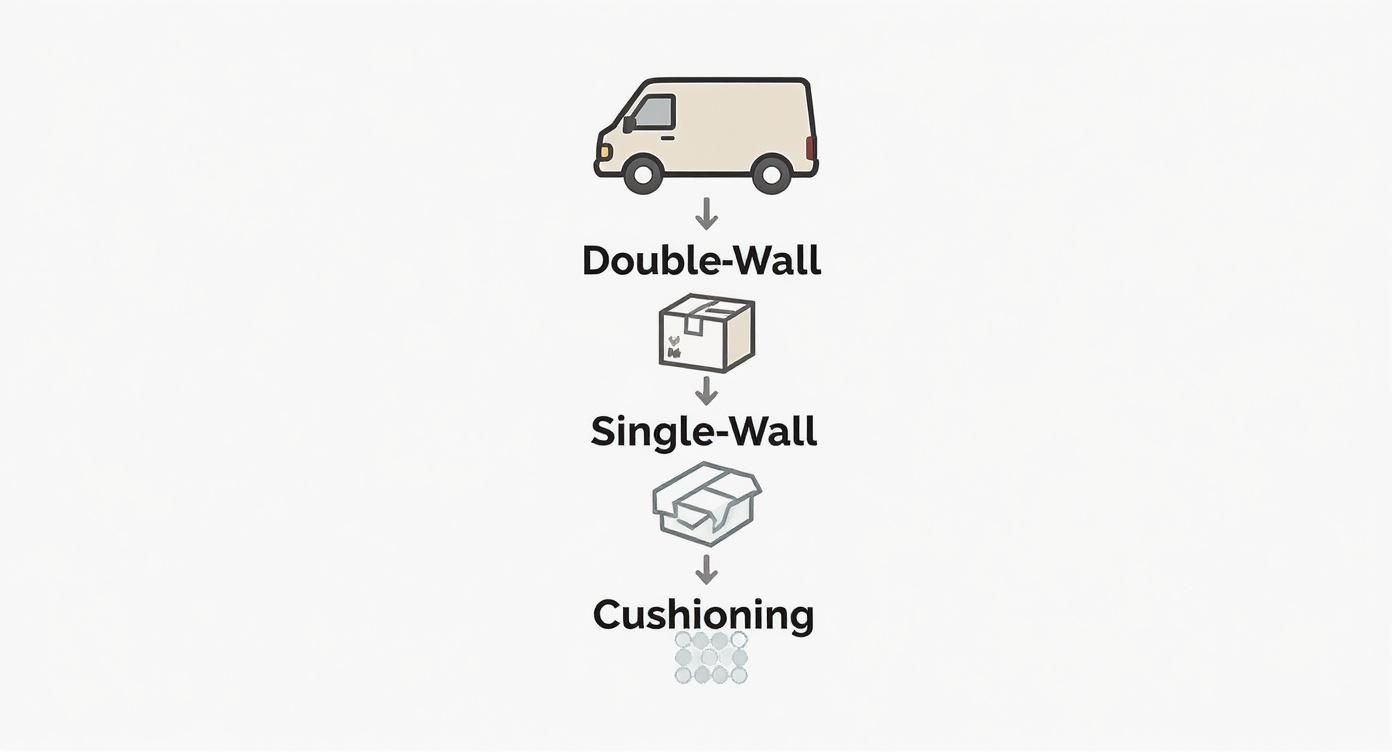
This just shows how it all works together – a strong outer container combined with soft inner protection is what keeps your belongings safe on the move.
Budgeting for Your Supplies
With your numbers sorted, you can start thinking about the budget. Sourcing second-hand boxes from friends or online marketplaces can definitely lower your costs, but it often takes a lot more time and effort to gather everything you need.
Buying new from a DIY shop gives you more control, but it can also mean multiple trips back and forth when you inevitably underestimate something.
For the best balance of cost, quality, and convenience, ordering a complete kit from your removals company is often the smartest move. You get professional-grade, uniform supplies delivered right to your door. This means everything is designed to be stacked safely and efficiently in the removals lorry, helping you avoid that last-minute panic.
Making Your Move a Bit Greener
Let's be honest, a house move can generate a staggering amount of waste. But it doesn't have to be that way. As more of us look for ways to be kinder to the planet, the options for sustainable moving supplies have grown massively. It’s now easier than ever to find eco-friendly "packing materials near me" that actually work.
Getting away from the old routine of single-use cardboard and endless plastic wrap is simpler than you think. From renting super-sturdy crates to getting creative with things you already have at home, you can significantly shrink your move's environmental footprint. Best of all, many of these green choices are surprisingly friendly on your wallet, too.
Rent Reusable Crates for a Zero-Waste Move
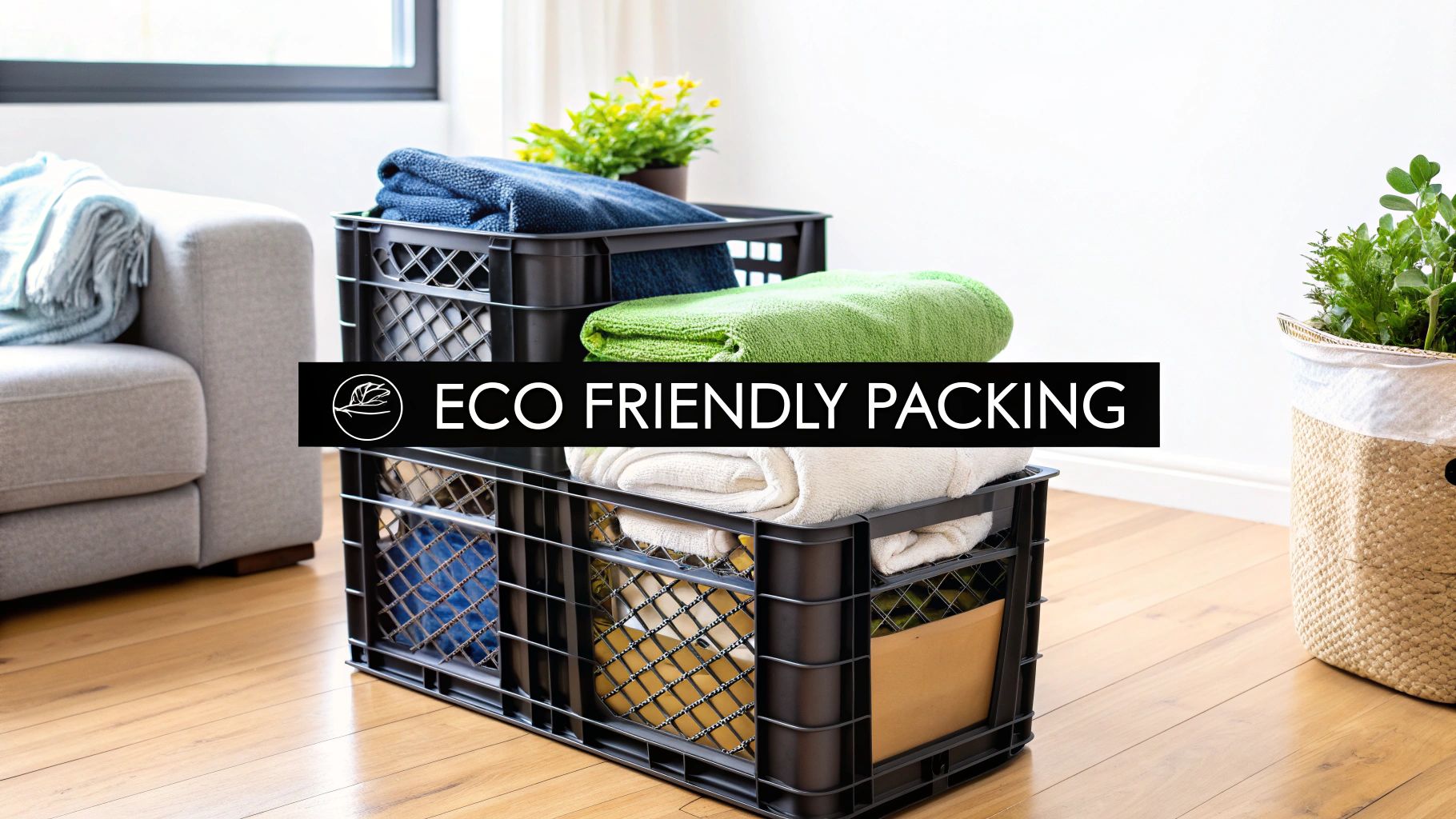
If you want to make one big change, this is it: rent reusable plastic packing crates. It’s a bit like borrowing a book from the library instead of buying it; you get them delivered, use them for your move, and then the company picks them up for the next person. Simple.
This system completely cuts out cardboard waste from your move. The crates are incredibly tough and crush-proof, giving your fragile items far better protection than a standard box. Plus, they can be used hundreds of times before being recycled, making them a brilliant sustainable choice.
Get Creative with What You Already Own
You probably have a treasure trove of packing materials scattered around your house right now. Before you buy anything new, take a look at what everyday items can be used for cushioning and protecting your belongings.
- Towels, Bedding, and Linens: Bath towels and duvets are perfect for wrapping up picture frames, dishes, and other delicate bits. Tea towels work wonders for glasses.
- Clothing: Soft clothes like jumpers, hoodies, and t-shirts are fantastic for stuffing into gaps in boxes to stop things from rattling around and breaking in transit.
- Secondhand Boxes: Hop on local community groups on Facebook or just ask a neighbour who has recently moved. They'll likely be thrilled to get rid of their leftover boxes.
This approach isn’t just about being resourceful—it saves you a decent amount of money. And for managing any rubbish you do create, you can even find options like certified 13-gallon compostable trash bags with handle ties to keep things responsible.
The Bigger Picture: A Shift to Greener Packaging
This isn't just a trend for movers; the entire UK packaging industry is heading in a greener direction. Big changes, like the Plastic Packaging Tax, have seriously boosted the demand for recycled materials—by around 35%, in fact. This, along with new rules for producers, is pushing companies towards paper and other bio-based packaging solutions.
This industry-wide shift makes it much easier for you to find genuinely sustainable packing supplies locally. By opting for eco-friendly materials, you're playing a part in a much larger circular economy that prioritises reuse and recycling. It's a great way to ensure your move is as smooth for the planet as it is for you.
Where to Find Packing Materials in Bristol
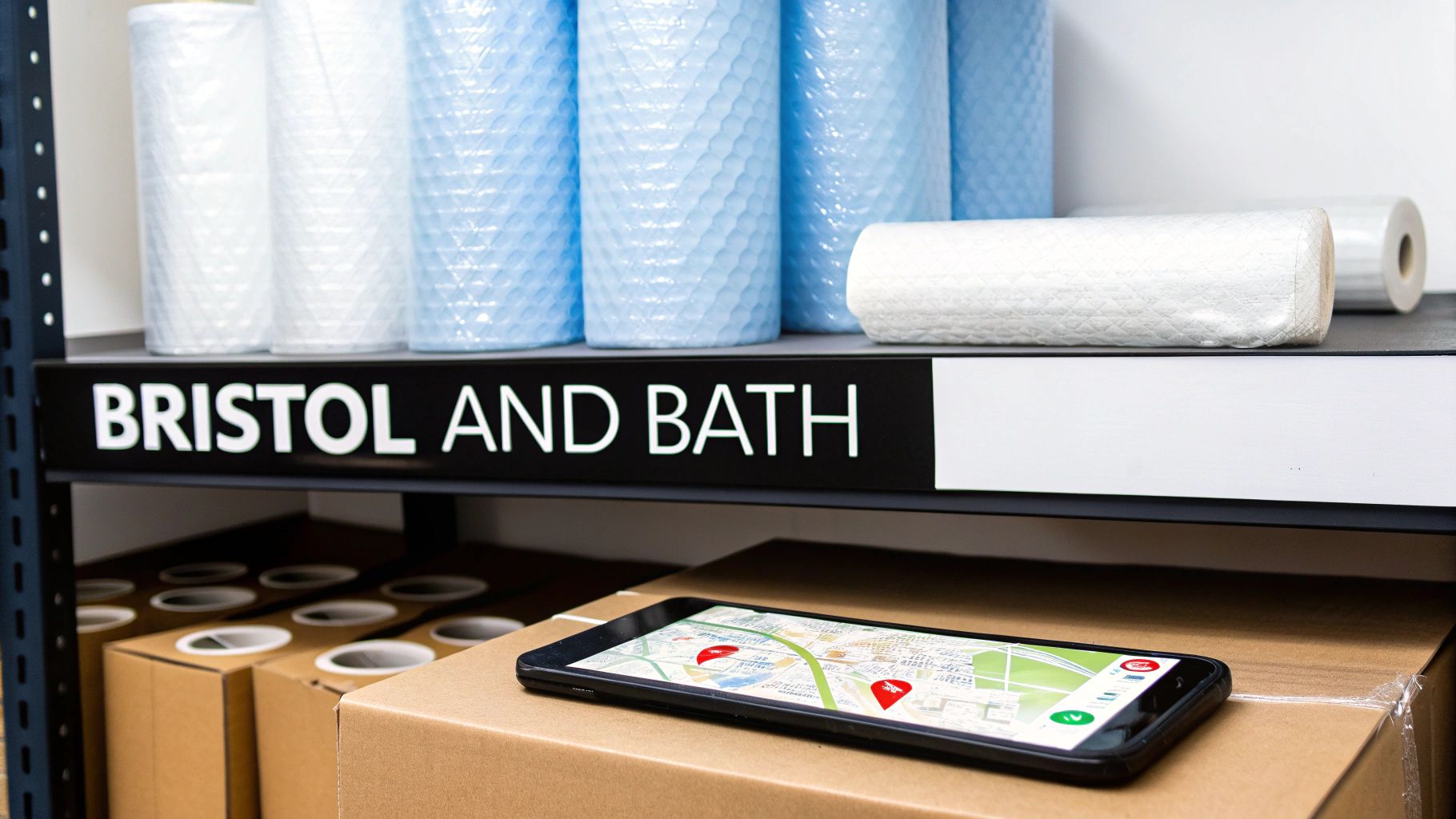
Alright, you've got your list and you know what you need. So, where do you actually get it? A quick search for "packing materials near me" around Bristol or Bath will throw up plenty of options, each with its own trade-offs between cost, quality, and convenience.
You've really got three main places people turn to. There are the big DIY superstores, the self-storage facilities, and of course, a whole world of online retailers. Each works, but they all fit different needs.
But there's a fourth option that most people don't think of straight away, and it’s often the smartest one: getting your materials directly from your removals company.
The Big DIY and Self-Storage Route
Heading to a major retailer or storage centre is a common first step. It makes sense – you can see and feel the boxes before you buy them and grab exactly what you need right there and then. It's perfect if you just need a few extra bits at the last minute or simply prefer to handle things yourself.
The flip side is that the whole job lands squarely on your shoulders. You have to guess the right quantities, wrestle bulky packs of flat-pack boxes into your car, and probably make a return trip when you inevitably run out. For a small flat, it's manageable. For a full family home? It can become a real headache.
The Professional Removals Company Advantage
For a move that feels less chaotic, getting your packing materials from a professional removals company like SimplyPro is the way to go. This isn't just about buying boxes; it's about tapping into a tried-and-tested system that the pros use every single day.
Ordering a curated packing kit from your moving company guarantees you receive professional-grade, uniform materials. Every box is designed to be strong, stackable, and the correct size for its intended contents, which makes loading the removals van safer and more space-efficient.
Think about the benefits this brings:
- Quality You Can Trust: You’re not getting flimsy, single-use boxes. These are the same durable materials the moving crews rely on.
- Time-Saving Convenience: No more trips to the shop. Everything you need is delivered right to your doorstep.
- Expertly Curated Kits: Take the guesswork out of it. You can order a complete kit designed for the size of your home.
- Efficiency on Moving Day: Uniform boxes are a dream to stack. They fit together securely in the van, which means less movement and a much lower risk of anything getting broken.
In the end, it’s about weighing your time and effort against convenience. While a trip to the DIY shop is fine for topping up, a professional kit gives you the quality and organisation you need for a genuinely smooth move.
Your Packing Questions, Answered
Even the most organised mover has questions when it comes to packing supplies. It’s totally normal. Getting the right answers can be the difference between a smooth, stress-free pack and a last-minute panic. Let's tackle some of the most common queries we hear from people in Bristol and Bath, so you can avoid the usual pitfalls.
Is It Cheaper to Buy My Own Supplies or Use My Removals Company?
This is a classic dilemma. On the surface, hunting down your own boxes from various shops seems like the budget-friendly option. But when you factor in the hidden costs – your time, the fuel driving around, the questionable quality of cheap boxes – the savings often vanish. Imagine the real cost when a flimsy, over-packed box gives way, and your favourite set of dishes smashes on the pavement.
Professional movers, on the other hand, offer kits with high-quality, uniform boxes designed specifically for the job. They’re built to be stacked perfectly in a removals lorry, which not only maximises space but drastically cuts down the risk of anything getting crushed. Plus, having everything delivered to your door is a massive time-saver, freeing you up to focus on everything else. For most people, the superior protection and sheer convenience are well worth it.
How Should I Pack Fragile Items Like Glasses and Plates?
The key to protecting your delicate items is simple: you need to build a protective cocoon and stop them from moving. It’s all about cushioning each piece individually so they can't knock against each other during the journey.
Here’s the method we professionals swear by:
- For Glasses: Your best friend here is a box with cardboard cell dividers. These create little compartments that keep glasses from clinking together. Before you place each one in its cell, wrap it in a sheet of packing paper for an extra layer of protection.
- For Plates: The biggest mistake people make is stacking them flat. Don't do it! Instead, wrap each plate in packing paper and stand them on their edge inside a sturdy, double-wall box. Think of it like loading vinyl records into a crate—this vertical position distributes pressure much more safely.
- Fill Every Gap: Once your box is packed, stuff any and all empty spaces with crumpled packing paper. You want everything to be snug. The goal is zero movement inside the box.
- Label Like You Mean It: Grab a thick marker and write 'FRAGILE' and 'THIS WAY UP' in big, bold letters on every side of the box. This tells your movers (and you!) to handle it with extra care.
Here's a golden rule from the pros: give every sealed box a gentle shake. If you can hear or feel anything shifting around, it’s not ready. Open it back up and add more cushioning until everything is held firmly in place.
What Is the Best Tape for Sealing Moving Boxes?
Step away from the sellotape! That little roll you use for wrapping birthday presents just isn't up to the task of a house move. You need a proper, strong packing tape, usually made from PVC or polypropylene, that’s at least 48mm wide. This kind of tape has a powerful adhesive that’s specifically made to keep the flaps of a heavy box sealed shut.
For the really heavy boxes – the ones filled with books, records, or tools – it’s worth getting reinforced tape. This stuff has fibreglass strands running through it, which makes it nearly impossible to tear. A tape dispenser will also be a lifesaver; it makes the job faster and helps you get a really tight, secure seal. A well-taped box is a box that won't burst open at the worst possible moment.
Can I Use Old Supermarket Boxes for My Move?
Ah, the lure of free boxes from the local supermarket. It's a tempting shortcut, but honestly, it’s a risky move that we always advise against. These boxes come with a few major problems that can put your belongings in jeopardy.
First off, they’re all different shapes and sizes, which makes stacking them securely in the removals lorry a nightmare. An unstable stack is a recipe for disaster. Second, you have no idea what their history is. They might have been weakened by moisture from chilled goods or damaged during their first life. They can even carry lingering food smells or spills, which you definitely don't want to invite into your new home.
While they might be okay for soft, non-breakable things like cushions or duvets, it’s always a safer bet to use proper, sturdy moving boxes for anything heavy, valuable, or fragile.
Ready to get the right supplies without all the running around? SimplyPro Removal & Storage Ltd offers complete, professional-grade packing kits delivered right to your door in the Bristol and Bath area. Get your packing materials here.