


Moving house is often cited as one of life's most stressful events, but with a strategic approach, it can be a seamless transition. For residents and businesses in Bristol and Bath, the key to a stress-free relocation lies in efficient, organised packing. This is where mastering a few key packing tips for moving can completely change the experience, turning potential chaos into a structured, manageable process.
This guide goes beyond generic advice, offering a comprehensive roundup of detailed, actionable strategies designed to save you time, protect your belongings, and set you up for immediate success in your new space. Whether you are moving a small flat in Clifton, relocating a large office in central Bath, or preparing items for secure storage, these proven methods will transform your move from a daunting chore into a well-managed project.
We will cover everything from intelligent decluttering and systematic labelling to specialised techniques for handling fragile items and creating a moving day survival kit. You will learn the correct way to pack different items, how to create a simple yet effective inventory, and why the right materials make all the difference. This isn't just about putting things in boxes; it’s about implementing a system that ensures every item-from your finest china to critical office IT equipment-arrives safely and can be unpacked with ease. Let’s get started.
1. Use the KonMari Method for Decluttering Before Packing
Moving house is the perfect opportunity to reassess what you own, and the KonMari Method offers a structured, mindful approach to do just that. Popularised by Marie Kondo, this decluttering philosophy isn't about getting rid of things; it's about intentionally choosing what to keep based on a single criterion: does it "spark joy"? Applying this method before you pack can dramatically reduce the volume of belongings you need to move, saving you time, money, and effort.
This approach transforms packing from a purely logistical chore into a positive act of curating the life you want in your new Bristol or Bath home. Families have reported reducing their household contents by up to 40% before a move, significantly simplifying the entire process.
How to Implement the KonMari Method
To effectively use this technique as one of your core packing tips for moving, follow these steps:
- Sort by Category, Not by Room: Instead of tackling the living room, tackle all your books at once. Gather every book from every room into one pile. This helps you grasp the true volume of what you own. The main categories are clothing, books, papers, komono (miscellaneous items), and sentimental items.
- Handle Every Item: The method insists you physically hold each object. This tactile connection helps you tune into your feelings about it. Ask yourself if it brings you joy or serves a vital purpose in your life.
- Start Early: Begin the process at least 4-6 weeks before your moving day. This gives you ample time to sort through your possessions without feeling rushed. A detailed moving timeline, like the one in our moving house checklist, can help you schedule this effectively.
- Thank Your Items: Before letting an item go, Kondo suggests thanking it for its service. This small ritual fosters gratitude and can make parting with sentimental possessions easier.
As you declutter, you'll inevitably find old electronics. Instead of just binning them, it's worth researching how to responsibly dispose of or donate old cell phones and other devices. This ensures your move is as sustainable as it is organised.
2. Pack Room by Room with Colour-Coded Labels
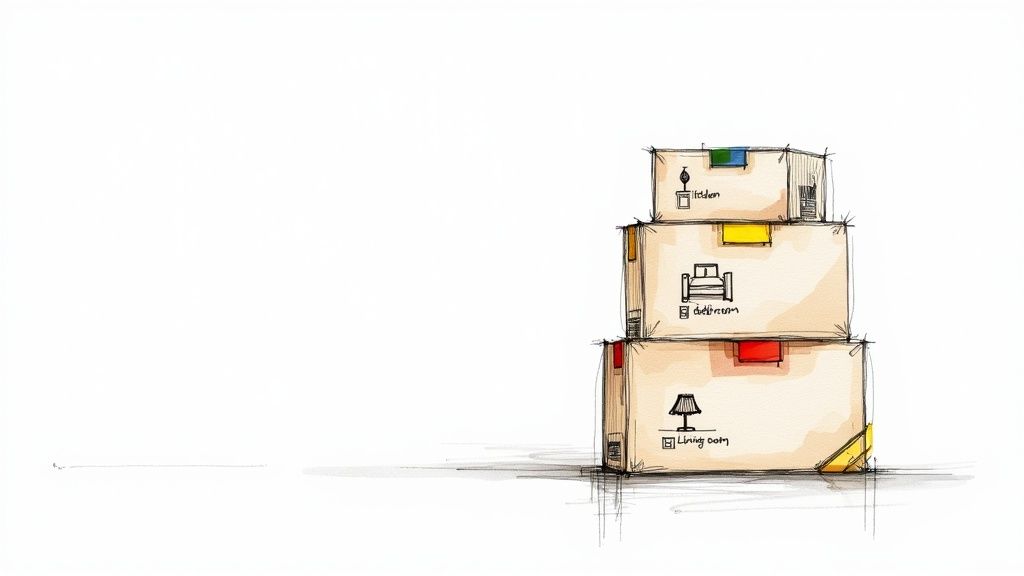
A disorganised move often leads to a chaotic unpacking experience, with essential items lost amongst a sea of identical brown boxes. Adopting a systematic room-by-room packing strategy with colour-coded labels is one of the most effective packing tips for moving because it brings immediate order to the entire process. This method assigns a unique colour to each room in your new home, ensuring every box is instantly identifiable and can be placed in its correct destination without any guesswork.
This simple visual system dramatically speeds up the unloading process, allowing your removal team-or your helpful friends-to work efficiently. It transforms unpacking from a daunting treasure hunt into a streamlined, organised task, letting you settle into your new Bristol or Bath property far more quickly.
How to Implement Colour-Coded Packing
To integrate this professional-grade system into your move, follow these straightforward steps:
- Assign Colours and Create a Legend: Before you pack a single box, assign a distinct colour to each room in your new home (e.g., blue for the master bedroom, yellow for the kitchen, green for the living room). Create a simple chart or "legend" with this key and stick copies on the front door of your new home and give one to your movers.
- Label Boxes on Multiple Sides: Use coloured tape, large coloured stickers, or markers to label each box. Crucially, apply the label or tape to at least three sides of the box (top and two sides). This ensures the colour is visible no matter how the boxes are stacked in the van or a room.
- Add Essential Details: While the colour tells movers where the box goes, add a brief written description of the contents (e.g., "Kitchen – Mugs & Glasses") and the box number (e.g., "Box 3 of 15"). This helps you prioritise unpacking later.
- Maintain a Master Inventory: For added organisation, keep a notebook or spreadsheet that lists each numbered box, its corresponding room (and colour), and a more detailed summary of its contents. This is invaluable for locating specific items quickly or for insurance purposes.
3. Use Vacuum-Sealed Bags for Clothing and Soft Items
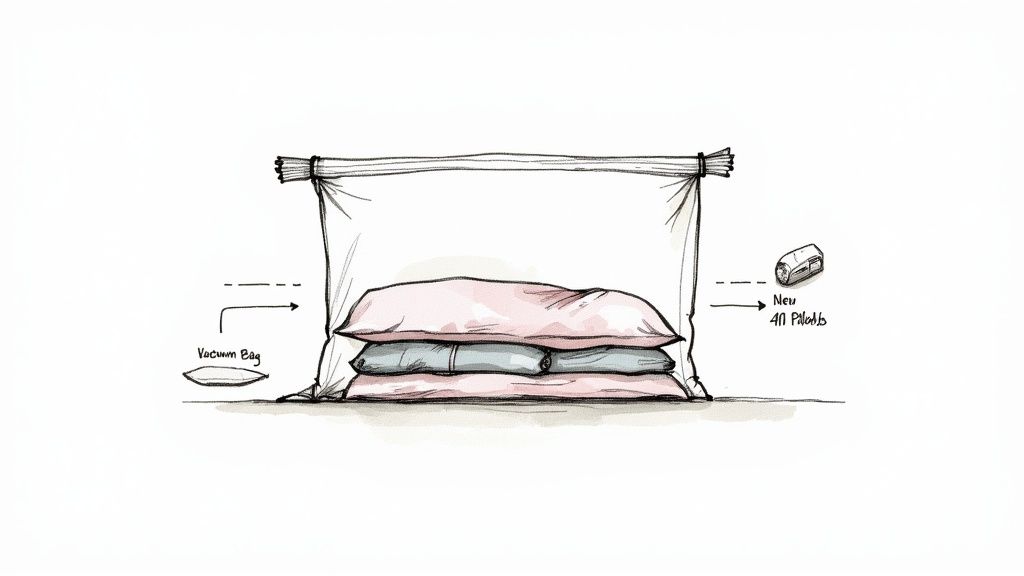
When it comes to bulky but lightweight belongings like duvets, pillows, winter coats, and bedding, vacuum-sealed bags are a game-changer. These bags, popularised by brands like Ziploc and SpaceSaver, allow you to remove all the air, compressing soft items to a fraction of their original size. This simple innovation can free up an astonishing amount of space in moving boxes and on the removal lorry.
This technique is especially valuable for maximising every square inch of your moving transport, potentially reducing the size of the vehicle needed or avoiding a second trip. For those moving into a smaller Bristol flat or putting items into storage, the space saved is significant, and the bags provide an airtight seal against dust, moisture, and pests.
How to Implement Vacuum-Sealed Packing
To make this one of your most effective packing tips for moving, follow these practical steps:
- Group Similar Items: Pack seasonal clothing or specific bedding sets together. For example, create a bag for "Master Bedroom – Winter Duvet & Pillows" or "Children's Out-of-Season Coats". This keeps things organised for unpacking.
- Don't Overfill the Bag: Leave a few inches of space from the seal. Overstuffing can compromise the airtight lock and prevent the bag from compressing evenly, making it difficult to pack into a box.
- Lay Bags Flat: Once sealed and compressed, lay the bags flat at the bottom of a moving box. Stacking them this way maximises the space inside the box and creates a stable base for other items.
- Label Clearly: Use a permanent marker to label the outside of each bag with its contents and the room it belongs to. This saves you from having to open every sealed bag to find the spare room bedding.
- Keep an 'Essentials' Bag Unsealed: For the first night in your new Bath home, you'll need bedding and towels. Keep one bag of essentials unsealed or pack it last for immediate access without needing to unpack everything.
4. Pack Heavy Items in Small Boxes and Light Items in Large Boxes
This is a foundational rule of professional packing that safeguards both your belongings and your back. The logic is simple yet crucial: distributing weight proportionally across your boxes prevents them from becoming dangerously heavy or structurally unsound. By placing dense, heavy items like books or tools into small boxes, and bulky, lightweight items like duvets and cushions into large boxes, you create manageable, easy-to-handle packages.
This principle is non-negotiable for professional removers, who often adhere to strict weight limits per box (typically around 20-22kg or 45-50lbs) to comply with health and safety standards. Adopting this professional approach is one of the most effective packing tips for moving you can implement, dramatically reducing the risk of personal injury, dropped boxes, and damaged possessions during your move.
How to Implement Proportional Weight Distribution
Follow these steps to ensure every box is packed for optimal safety and efficiency:
- Select the Right Box for the Job: Use small boxes (e.g., 1.5 cubic feet) for heavy items like books, tinned goods, records, or tool sets. Reserve your large boxes (e.g., 4.5 cubic feet or larger) for light and bulky items such as bedding, towels, soft toys, and lampshades.
- Test the Weight as You Go: Before sealing a box, give it a quick test lift. If you struggle to lift it comfortably, it’s too heavy. Remove some items and redistribute them into another box. This simple check can prevent serious strain or accidents on moving day.
- Reinforce for Extra Security: For boxes containing particularly heavy items like kitchen dishes or a collection of hardback books, add an extra layer of packing tape along the bottom seam to create a stronger base and prevent it from giving way.
- Mark Clearly: Always label boxes containing heavy items with a clear, bold "HEAVY" on the top and sides. This alerts everyone handling the box, whether it’s you, your family, or your professional Bristol moving team, to lift with appropriate care.
5. Create an Essentials Box or 'First Night' Kit
After a long moving day, the last thing anyone wants is to frantically search through dozens of boxes for a toothbrush or phone charger. An 'Essentials Box' or 'First Night Kit' is a non-negotiable part of a well-organised move. This single, strategically packed box contains all the immediate necessities you'll need for the first 24 hours in your new home, ensuring a smooth and comfortable transition without the stress of a full-scale unboxing mission.
This simple but effective strategy provides immediate relief and a sense of control amidst the chaos. For a family moving into a new Bristol property, this box might contain snacks, pyjamas, and a favourite teddy bear to help children settle in quickly. For businesses, a similar box would hold critical IT hardware, router cables, and key documents needed to get operational on day one.
How to Implement Your First Night Kit
To ensure this box serves its purpose, a thoughtful approach is one of the most crucial packing tips for moving:
- Designate a Unique Container: Use a brightly coloured or clear plastic tub instead of a standard cardboard box. This makes it instantly recognisable among a sea of brown boxes, preventing it from being misplaced or loaded deep within the removal van.
- Pack it Last, Unload it First: This box should be the very last thing you pack. Instruct your moving team to load it last onto the van so it’s the first item off at your new address. Alternatively, keep it in your personal vehicle for guaranteed access.
- Label it Clearly: Use a thick marker to label all sides of the box with "ESSENTIALS," "OPEN FIRST," or "FIRST NIGHT KIT." This ensures everyone involved in the move understands its importance.
- Customise Your Contents: Your kit should be tailored to your specific needs. Key items include toiletries, essential medications, a change of clothes, phone chargers, kettle, mugs, tea/coffee, important documents like passports and contracts, a basic toolkit, and a torch.
6. Wrap Fragile Items Properly with Layered Protection
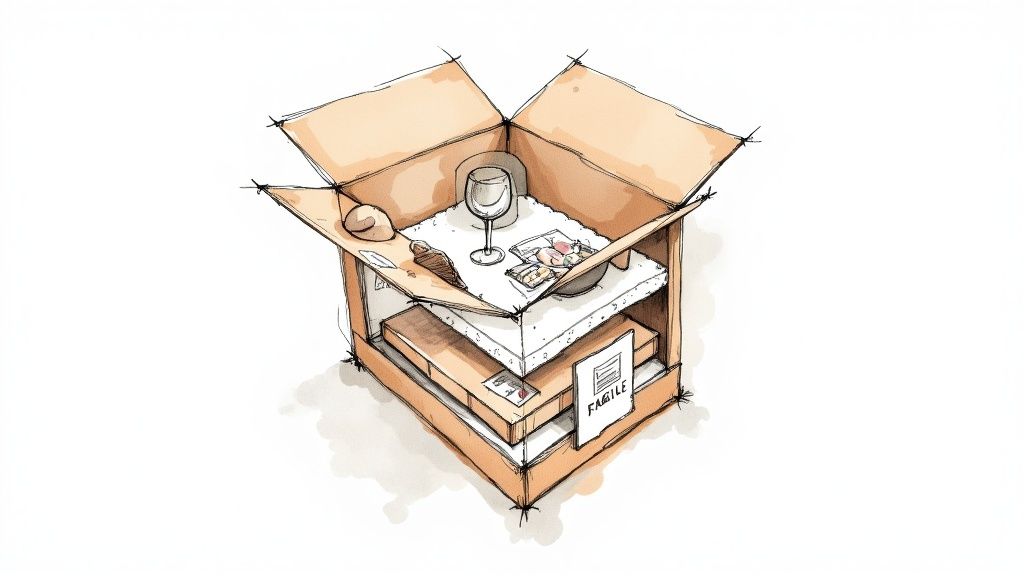
Properly protecting your fragile belongings is one of the most critical aspects of a successful move. The layered protection method is a professional technique that creates a multi-barrier shield around your most delicate items, such as glassware, china, artwork, and electronics. It involves using a combination of materials to absorb shock, prevent scratches, and immobilise items within their box, drastically reducing the risk of damage during transit.
This meticulous approach is standard practice for professional movers handling antique collections or fine art relocations, ensuring that irreplaceable items arrive at their new home in perfect condition. For anyone moving a household in Bristol or Bath with cherished heirlooms or expensive tech, mastering this technique provides invaluable peace of mind.
How to Implement Layered Protection
Applying this method correctly is a key part of our essential packing tips for moving. Follow this systematic process for maximum protection:
- Create a Cushioned Base: Before placing any items inside, create a soft foundation. Add a 2-3 inch layer of scrunched packing paper or bubble wrap at the bottom of a sturdy, smaller box.
- Wrap Items Individually: Each fragile item must be wrapped on its own. Start with a layer of packing paper, then add a layer of bubble wrap (bubbles facing inward for better cushioning). Secure with packing tape.
- Fill All Voids: Once your wrapped items are placed inside the box, fill every empty space with packing peanuts, more scrunched paper, or air pillows. This prevents items from shifting and colliding during the move.
- Add a Top Layer: Finish by adding another 2-3 inch layer of cushioning material on top before sealing the box. This protects the contents from pressure if another box is stacked on top.
- Label Clearly: Use a bold marker to write ‘FRAGILE’ and ‘THIS WAY UP’ on the top and all four sides of the box.
For a comprehensive guide on what to use, you can find more information about the best packing materials for moving house to ensure you have the right supplies for the job.
7. Keep a Moving Inventory Spreadsheet or App
Creating a detailed moving inventory is one of the most powerful organisational tools you can use. This digital or physical record documents every box, its contents, its destination room, and its status throughout the move. Using a simple spreadsheet or a dedicated app transforms chaos into a controlled, trackable process, ensuring you know exactly where everything is at all times.
This systematic approach is invaluable for both accountability and peace of mind. It allows you to verify that nothing was lost or left behind, simplifies damage assessment, and makes unpacking in your new Bristol property far more efficient. For large-scale moves, such as a corporate relocation with hundreds of boxes or an international shipment requiring customs documentation, an inventory isn't just a good idea; it's an absolute necessity.
How to Implement a Moving Inventory
To create a system that works for you, and to truly master one of the most effective packing tips for moving, follow these steps:
- Set Up Before You Start: Create your spreadsheet or download an inventory app before you pack a single box. Create columns for Box Number, Contents (a brief summary), Destination Room (e.g., Kitchen, Master Bedroom), and Status (e.g., Packed, Loaded, Unpacked).
- Be Consistent and Detailed: Assign each box a unique number. Write this number clearly on at least two sides of the box and log it in your inventory. For high-value items, note their pre-move condition and even take a quick photo to document it. This is crucial for any potential insurance claims.
- Update in Real-Time: The key to a useful inventory is keeping it current. As you pack and seal each box, immediately update your spreadsheet or app. This prevents you from falling behind and ensures the information is accurate when you need it most.
- Keep Multiple Copies: Share a digital version of the inventory with your moving company if they support it. Always keep a printed copy in your “essentials box” in case your phone battery dies or your laptop is inaccessible on moving day.
8. Use Dish Pack Boxes with Cell Dividers for Dishes
Protecting your fragile kitchenware is one of the most critical aspects of packing, and standard boxes often fall short. Specialised dish pack boxes, also known as dish barrels, are heavy-duty cartons designed specifically for this task. They feature a robust, double-walled construction and come with a set of interlocking cardboard dividers that create individual cells, cradling each plate, bowl, and glass securely.
Using these boxes is a non-negotiable packing tip for moving if you own delicate china, valuable dinnerware, or even everyday plates you want to keep intact. This targeted approach prevents items from clashing against each other during transit, dramatically reducing the risk of chips and breakages. For businesses like catering companies or restaurants relocating in Bristol, this method is standard practice to protect essential assets.
How to Implement Dish Pack Boxes Effectively
To maximise the protection offered by these specialised boxes, follow these best practices:
- Wrap Items Individually: Before placing any item into a cell, wrap it in a layer of packing paper or a foam pouch. This provides an essential cushion and prevents surface scratches.
- Load Strategically: Place the heaviest items, like large dinner plates, at the bottom of the box. Lighter items, such as saucers or small bowls, should be placed in the upper layers. Stack 2-3 same-sized plates together within a single cell after wrapping.
- Fill All Gaps: Once the cells are filled, use scrunched-up packing paper to fill any remaining voids inside the box. This ensures nothing can shift or jiggle during the move. A tightly packed box is a safe box.
- Label Clearly and Correctly: Mark the box clearly with "FRAGILE – DISHES" on the top and all four sides. Add arrows indicating which way up it should be kept. When stacking, never place heavier boxes on top of your dish packs.
9. Pack Books Flat in Small Boxes to Prevent Damage
Books are surprisingly heavy and deceptively fragile, and improper packing can lead to bent covers, damaged spines, and warped pages. The correct technique involves packing books horizontally in small, sturdy boxes, a method that protects their structural integrity and keeps the boxes light enough to lift safely. This approach prevents the downward pressure that causes bindings to break when books are stood on their ends.
This professional technique is standard practice for sensitive relocations, such as moving academic libraries in Bristol or relocating an antiquarian bookshop in Bath. By laying books flat, you distribute their weight evenly, ensuring your treasured collection arrives at your new home in the same condition it left. It’s a simple switch in method that makes a huge difference.
How to Implement Correct Book Packing
To safeguard your collection, follow these essential packing tips for moving books specifically:
- Choose Small Boxes: This is the most critical step. Books are dense, and a large box quickly becomes unmanageable and unsafe to lift. Aim for small, double-walled boxes to keep the weight below 20 kg (around 45 pounds).
- Lay Books Flat: Place your heaviest books at the bottom of the box first. Stack them horizontally, alternating the direction of the spines with each layer. This creates a level, stable stack that prevents warping.
- Never Pack Vertically: Avoid the temptation to stand books on their paper edges as you would on a shelf. This puts immense stress on the spine and can cause the glue to crack and pages to detach.
- Fill the Gaps: Use crumpled packing paper or bubble wrap to fill any empty spaces in the box. This prevents the books from shifting during transit, which can cause scuffing and corner damage.
- Label Clearly: Mark the box clearly with "BOOKS" and "HEAVY" on the top and sides. Also, note the destination room (e.g., "STUDY" or "LIVING ROOM") to make unpacking organised and efficient.
10. Use Plastic Bins for Long-Term Storage or Frequent Access
While cardboard boxes are the standard for most moves, stackable plastic bins offer superior protection and longevity, making them an ideal choice for specific situations. For items heading into long-term storage, belongings you need to access frequently, or if you anticipate another move soon, plastic containers are a worthwhile investment. They provide a robust defence against moisture, pests, and crushing, ensuring your possessions remain in pristine condition.
This strategy is particularly beneficial for those undertaking a move in Bristol that involves a period of storage, such as during a home renovation or a gap between tenancies. Unlike cardboard, which can degrade and weaken over time, especially in damp conditions like a garage or loft, plastic bins provide a permanent, reusable, and highly organised solution.
How to Implement Plastic Bins Effectively
To make the most of this durable option, consider these practical packing tips for moving:
- Choose Standard Sizes: Opt for common sizes like 18-gallon or 27-gallon bins. This standardisation makes them easy to stack securely and efficiently, maximising space in a storage unit or on a removal van.
- Label Comprehensively: Use a permanent marker or adhesive labels on multiple sides of the bin. This ensures you can identify the contents no matter how the bins are stacked. For extra detail, tape a full inventory list to the inside of the lid.
- Colour-Code Your System: Many plastic bins come with different coloured lids. Assign a colour to each room or category (e.g., blue for bathrooms, green for kitchen). This visual system dramatically speeds up identification during and after the move.
- Be Mindful of Stacking: To prevent the weight from cracking the lower containers, avoid stacking heavy bins more than three or four high. Always place the heaviest bins at the bottom of the stack.
- Manage Weight Distribution: Plastic bins can become extremely heavy very quickly. Pack heavy items like books in smaller bins and lighter items like linens in larger ones. Always test the weight and ensure you can lift the bin safely before sealing it.
Top 10 Packing Tips Comparison
| Method | 🔄 Complexity | ⚡ Resources required | 📊 Expected outcomes | 💡 Ideal use cases | ⭐ Key advantages |
|---|---|---|---|---|---|
| Use the KonMari Method for Decluttering Before Packing | High — hands-on, time-intensive | Low monetary cost; high time & emotional effort | Fewer items to move; lower transport costs; clearer space | Long lead-time moves, downsizing, fresh-start relocations | ⭐ Reduces volume & unpacking time; improves mental clarity |
| Pack Room by Room with Color-Coded Labels | Medium — requires coordination and discipline | Labels/tape, markers, inventory list; possible QR setup | Faster, organized unpacking; fewer misplaced boxes | Multi-person packs, large household or corporate moves | ⭐ Speeds placement; reduces confusion for movers |
| Use Vacuum-Sealed Bags for Clothing and Soft Items | Low — simple technique but needs a vacuum | Vacuum bags + vacuum cleaner; reusable bags (low cost) | Major space savings; moisture/dust protection; possible wrinkles | Long-distance moves, seasonal storage, students | ⚡ High space efficiency (up to ~80%); protects from moisture |
| Pack Heavy Items in Small Boxes and Light Items in Large Boxes | Low — planning-focused, straightforward | Multiple box sizes, labels; moderate supply needs | Safer handling; fewer injuries; stable stacks | Moves with many books, tools, kitchenware, professional movers | ⭐ Safer lifts; preserves box integrity; efficient loading |
| Create an Essentials Box or 'First Night' Kit | Low — simple planning and packing | One clearly labeled box or bag; curated essentials | Immediate access to necessities; reduced first-night stress | All moves, especially families, medical needs, international moves | ⭐ Ensures comfort & immediate accessibility upon arrival |
| Wrap Fragile Items Properly with Layered Protection | High — meticulous, time- and material-intensive | Bubble wrap, packing paper, foam, sturdy boxes; higher cost | Dramatically reduced breakage (up to ~95% with proper technique) | Fine art, antiques, china, electronics, high-value moves | ⭐ Maximum protection; lower insurance risk; peace of mind |
| Keep a Moving Inventory Spreadsheet or App | Medium — requires ongoing updates and discipline | Device/app or printed spreadsheet; time to document | Improved accountability; easier claims and item recovery | Large/corporate moves, international moves, high-value items | ⭐ Detailed tracking for loss prevention & insurance claims |
| Use Dish Pack Boxes with Cell Dividers for Dishes | Low–Medium — needs sourcing and correct use | Specialty dish packs ($3–8/box); packing paper | Significantly reduced dish breakage (<5% when used properly) | Fine china, restaurants, catering, antiques | ⭐ Superior protection for dishware; professional organization |
| Pack Books Flat in Small Boxes to Prevent Damage | Medium — labor-intensive packing choice | Many small boxes; padding materials | Preserved bindings; manageable box weights | Libraries, collectors, academic moves | ⭐ Protects book spines and maintains condition |
| Use Plastic Bins for Long-Term Storage or Frequent Access | Low — purchase and pack; heavier to move | Plastic bins ($3–10 each), labels; higher upfront cost | Durable, moisture-resistant storage; reusable long-term | Long-term storage, frequent-access items, climate-sensitive goods | ⭐ Durable, reusable, visible contents; long-term cost savings |
Ready to Move? Let SimplyPro Handle the Heavy Lifting
The journey from a cluttered, lived-in space to a perfectly organised new home or office in Bristol or Bath begins long before the moving lorry arrives. It starts with a single box. Throughout this guide, we've explored a comprehensive suite of packing tips for moving, designed to transform what is often a chaotic process into a structured, manageable, and even cathartic experience. From the mindful decluttering of the KonMari method to the strategic logic of packing heavy items in small boxes, each tip serves a distinct purpose: to save you time, protect your belongings, and reduce stress.
We've covered the practical genius of creating a 'First Night' essentials box, ensuring comfort and convenience from the moment you step into your new property. We’ve delved into the specifics of using colour-coded labels for immediate room recognition and the space-saving magic of vacuum-sealed bags for linens and clothing. These aren't just abstract ideas; they are actionable strategies that build upon one another to create a powerful system for an efficient move. Mastering these techniques means you are not just moving items, you are orchestrating a smooth transition, setting the stage for a positive new chapter.
From Proactive Packing to a Flawless Move-In
The real value of implementing these packing tips for moving extends far beyond simply getting items from A to B.
- Financial Savings: Proper packing minimises the risk of damage to fragile or valuable items, saving you from costly repairs or replacements. Using the right materials, like dish pack boxes with cell dividers, is a small investment that protects a much larger one.
- Time Efficiency: A meticulous inventory system, whether a simple spreadsheet or a dedicated app, makes unpacking exponentially faster. Imagine knowing exactly where your kettle or critical office files are without having to open a dozen random boxes. That is the power of organisation.
- Mental Well-being: Moving is consistently ranked as one of life's most stressful events. By taking control of the packing process with a clear plan, you eliminate the frantic last-minute rush and the anxiety of the unknown, fostering a sense of calm and preparedness.
Remember, the goal is not just to move, but to move well. Each correctly packed box is a victory, a step towards a seamless move-in day where you can focus on settling in, not searching and sorting. Once your items are packed, you might also consider professional moving services for other aspects of your relocation to ensure every detail is covered.
When Expertise Makes All the Difference
While mastering these packing strategies empowers you to handle your move with confidence, there are times when professional expertise is invaluable. For specialist items like grand pianos, sensitive IT equipment, or priceless artwork, the risks associated with a DIY approach are significant. Similarly, for large-scale office relocations or complex home moves in the bustling centres of Bristol and Bath, the sheer volume of work can be overwhelming.
This is where turning to a professional team becomes a strategic decision, not a luxury. Professional packers bring not only the right materials but also years of experience in handling every conceivable item with precision and care. They understand the unique challenges of navigating historic properties in Bath or tight city streets in Bristol. By entrusting the physical labour and logistical planning to experts, you free up your own time and energy to focus on the more personal aspects of your move, ensuring a truly stress-free transition from start to finish.
Ready to put these packing tips into action with professional support? SimplyPro Removal & Storage Ltd has over 22 years of experience providing bespoke packing and moving solutions across Bristol and Bath. Let our expert team handle the details, from supplying premium materials to packing your entire home or office with meticulous care, so you can enjoy a seamless and stress-free move.