

Moving house is often cited as one of life's most stressful events, but with a solid strategy, it doesn’t have to be. The key to a seamless transition lies in the preparation, and that starts long before the moving lorry arrives. Mastering the art of packing can transform a chaotic experience into a well-organised project, saving you time, money, and considerable stress.
This guide provides a definitive list of expert-approved packing tips for moving house, covering everything from strategic decluttering and smart labelling to protecting your most treasured possessions. By implementing these actionable strategies, you can take control of your move, ensuring everything arrives at your new home safely and that unpacking is as simple as possible. Whether you're moving across Bristol or to a new city, these insights will help you pack like a professional. For those undertaking a major move with pets, understanding the smart ways for transporting pets across the country is an essential part of a smoother relocation.
From selecting the correct box sizes and creating a detailed inventory to packing an essentials box for your first night, each tip is designed to be practical and easy to follow. We’ll break down how to handle everything room by room, making the entire process feel more manageable and less overwhelming. Let's get started.
1. Declutter Before Packing
Moving house offers a rare opportunity for a complete reset, making decluttering one of the most effective packing tips you can implement. The logic is simple: why spend time, energy, and money moving items you no longer need, use, or love? By sorting through your belongings before you pack a single box, you significantly reduce the volume you have to move, which can lower removal costs and simplify the entire process. It also ensures you start life in your new home surrounded only by things that add value.
This approach, popularised by figures like Marie Kondo, focuses on intentionality. It’s not just about getting rid of things; it’s about consciously choosing what to bring into your new space. For many, this leads to a more organised and less stressful environment from day one.
How to Implement It
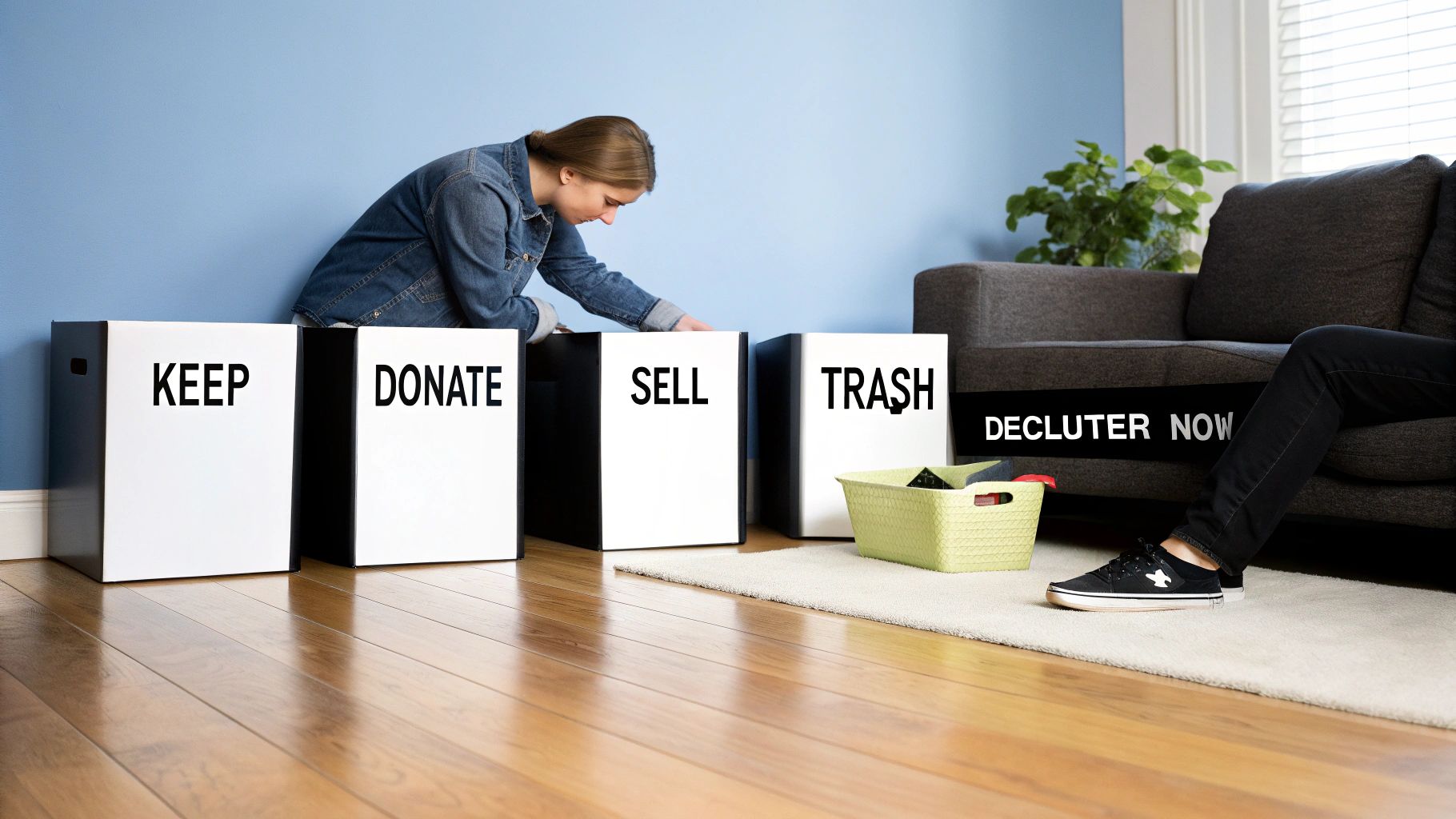
Start this process at least six to eight weeks before your moving day to avoid feeling rushed. A highly effective technique is the four-box method. As you tackle each room, or even just one cupboard, sort every item into one of four designated boxes or areas:
- Keep: Items you use, love, and definitely want in your new home.
- Donate: Goods in good condition that could benefit others. Schedule a collection with a local Bristol or Bath charity well in advance.
- Sell: Valuables you no longer need. Photograph them in good light for online marketplaces like Facebook Marketplace or Vinted.
- Dispose: Items that are broken, expired, or not suitable for donation.
Being ruthless is key. Ask yourself honestly, "Have I used this in the last year?" or "Would I buy this today?" If the answer is no, it's time to let it go.
2. Use the Right Box Sizes
One of the most fundamental yet overlooked packing tips for moving house is selecting the correct box size for your items. It might seem intuitive, but this strategy, long perfected by professional moving companies, dramatically improves efficiency and safety. The core principle is simple: pack heavy items in small boxes and light, bulky items in large boxes. This prevents boxes from becoming dangerously heavy, reduces the risk of them breaking, and makes them far easier to lift, carry, and stack.
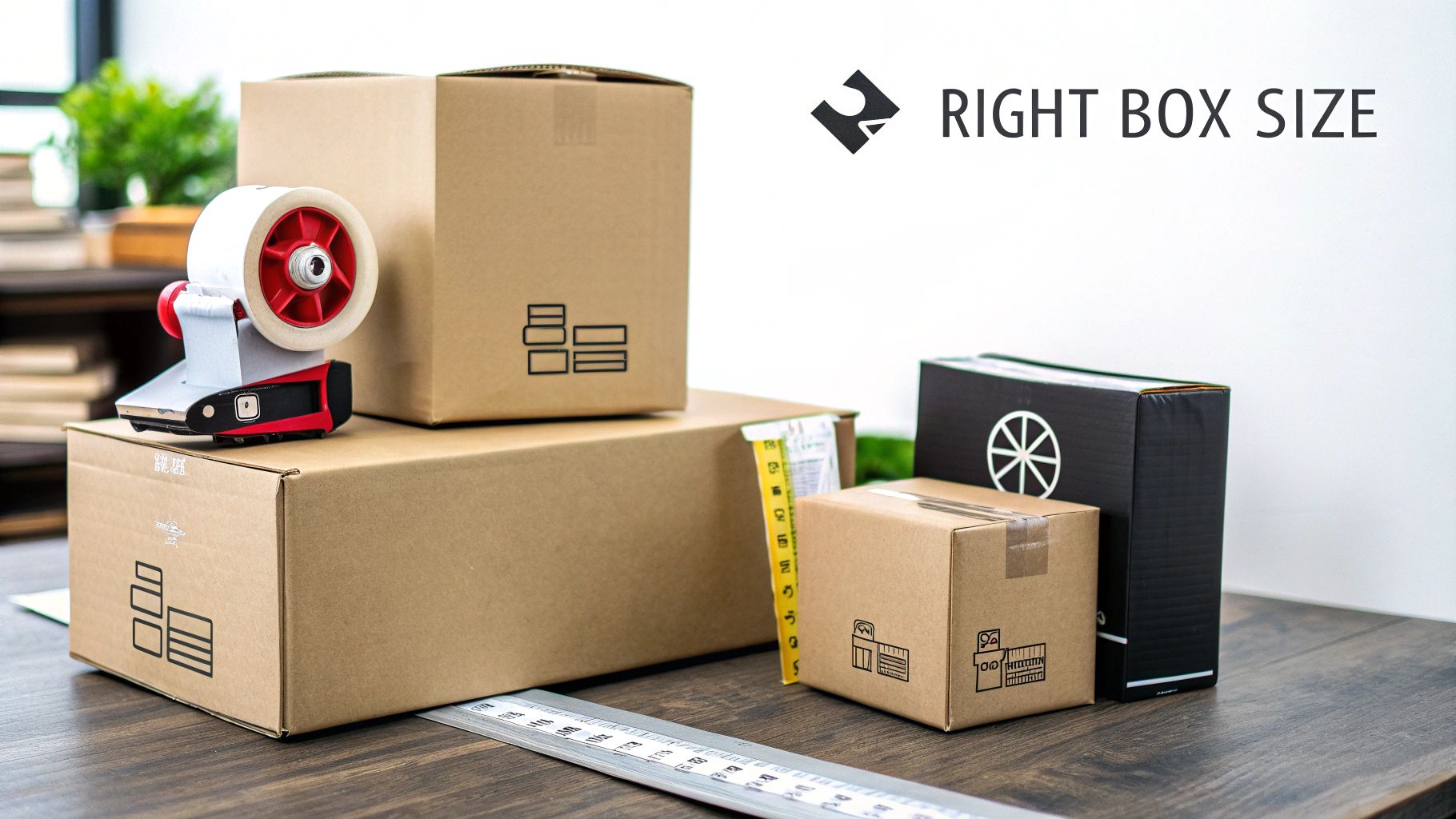
This methodical approach ensures that the weight is distributed evenly, protecting both your belongings and the people moving them. Using uniform, high-quality boxes also allows for a more stable and secure stack in the removal van, maximising space and minimising the chance of items shifting and breaking during transit.
How to Implement It
As you begin sourcing your moving supplies, think strategically about what you'll be packing. A common mistake is buying too many large boxes, only to find they become unmanageable once filled. To avoid this, follow these simple guidelines:
- Small Boxes (e.g., Book Boxes): Reserve these for heavy, dense items. Think books, canned goods, tools, small kitchen appliances, and vinyl records.
- Medium Boxes: Ideal for a mix of items that aren't excessively heavy, such as toys, pots and pans, and electronics.
- Large Boxes: Use these exclusively for light but bulky possessions. Examples include linens, duvets, pillows, towels, and clothing.
- Keep it Safe: As a rule of thumb, never let a box weigh more than 20kg (approx. 45-50 lbs). If you can't lift it easily, it's too heavy.
Ordering a standardised set of packing materials for moving house ensures your boxes will be sturdy and consistent in size, making the job of loading the van much simpler.
3. Label Everything Clearly
Proper labelling is one of the most crucial yet often rushed packing tips for moving house. It transforms the chaotic unpacking process into a streamlined, logical system. Clear labels ensure that boxes arrive in the correct rooms, delicate items are handled with care, and you can find essentials like the kettle or bedding without having to open every single container. This simple step saves immense time and reduces stress on moving day and during the first few days in your new home.
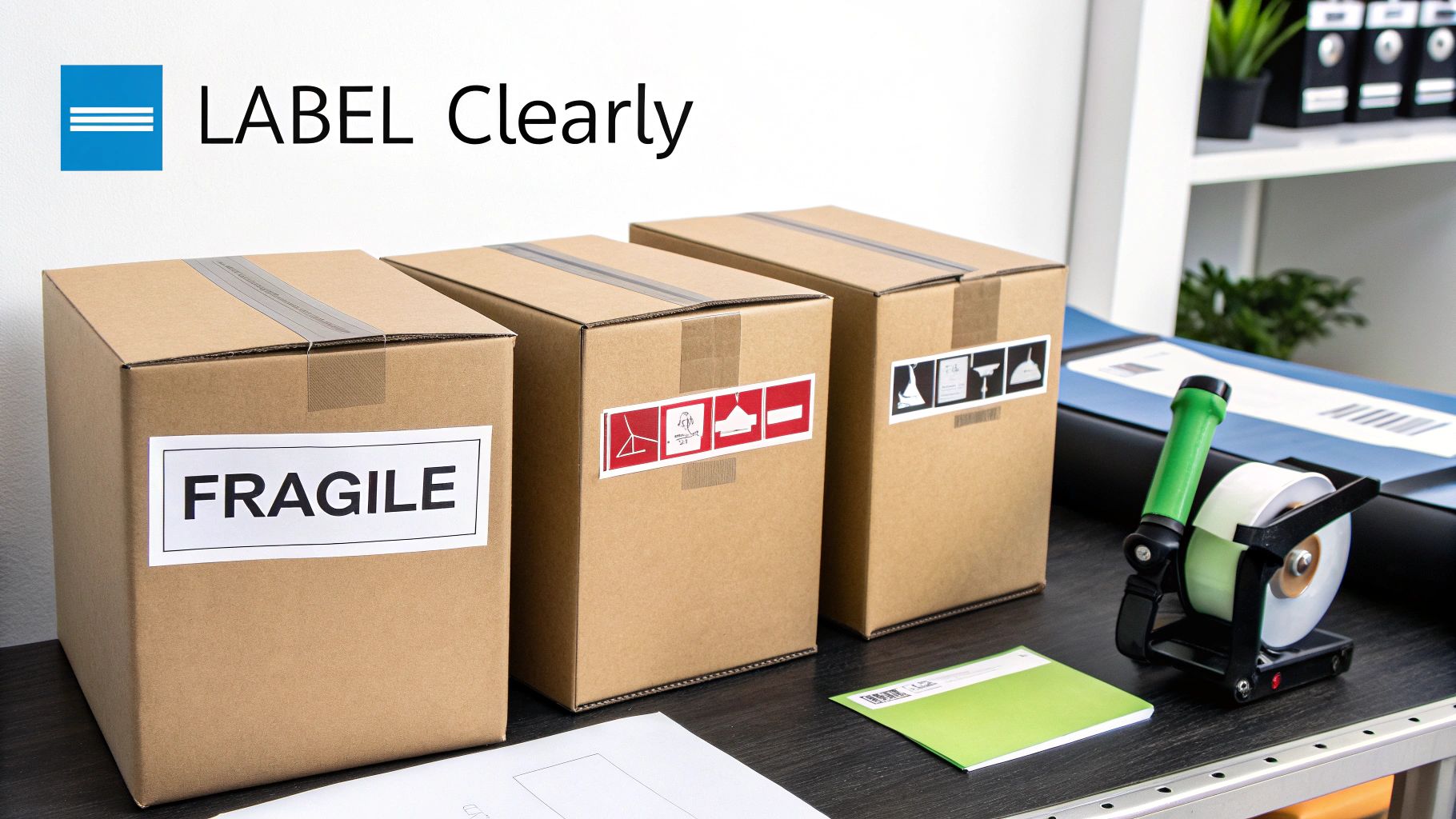
This methodical approach is standard practice for professional moving companies and organisation experts like The Home Edit for a reason: it works. By treating each box as a piece of an inventory, you create a map that guides you and your movers, preventing loss and ensuring a smooth, efficient transition from one property to another.
How to Implement It
Adopt a systematic labelling strategy from the moment you pack your first box. A popular and highly effective method involves using a combination of detailed text and visual cues, such as a colour-coded system. This makes identifying a box’s destination instantaneous.
- Be Specific: Instead of just "Kitchen," write "Kitchen – Mugs & Glasses" or "Kitchen – Small Appliances."
- Assign Colours: Use a different coloured marker or sticker for each room. For example, blue for the master bedroom, green for the kitchen, and yellow for the living room.
- Mark Multiple Sides: Label the top and at least two sides of every box. This ensures you can identify it even when stacked.
- Indicate Fragility: Write "FRAGILE" and "THIS WAY UP" in large, bold letters on boxes containing breakables.
- Number Your Boxes: Note the box number and the total count (e.g., "Box 3 of 15 – Living Room"). This helps you quickly confirm everything has arrived.
- Create an Inventory: For added security, keep a master list on a spreadsheet or in a moving app, noting the contents of each numbered box.
4. Wrap and Protect Fragile Items
One of the most crucial packing tips for moving house is to properly protect your fragile belongings. Taking extra time to wrap delicate items like glassware, electronics, and artwork with the right materials prevents costly and heartbreaking damage. Proper cushioning with bubble wrap, packing paper, and blankets ensures that your valuables can withstand the bumps and shifts of transit, arriving at your new home in one piece.
This methodical approach is standard practice for professional movers and art handlers, who understand that prevention is far better than replacement. It ensures that everything from your dinner plates to your computer monitor receives the specific protection it needs to survive the journey.
How to Implement It
Mastering the art of wrapping is simpler than it seems. The key is using the right materials and techniques for each type of item. Start by gathering plenty of packing paper, bubble wrap, and sturdy boxes designed for fragile goods, like dish packs.
- Wrap Individually: Every fragile item, especially glassware and dishes, should be wrapped separately in packing paper. For extremely delicate pieces, use a layer of bubble wrap over the paper.
- Fill All Gaps: Empty space in a box allows items to shift and break. Fill any voids with crumpled packing paper, soft linens, or foam peanuts to create a snug fit.
- Stack Vertically: Pack plates and platters on their sides, like records in a crate. They are much stronger this way and less likely to crack under pressure than when stacked flat.
- Use Specialised Boxes: Invest in dish pack boxes with cardboard dividers. These cells provide individual protection for glasses, mugs, and stemware, preventing them from clattering together.
- Protect Furniture: Use moving blankets or bubble wrap to cover the corners and edges of furniture, picture frames, and mirrors to guard against scratches and dents.
For high-value items like fine art or antiques, consider professional packing services. Their expertise ensures your most precious belongings are handled with the care they deserve.
5. Pack Room by Room
Approaching the task of packing an entire house can feel overwhelming, but focusing on one room at a time transforms it into a series of manageable projects. This systematic approach is one of the most effective packing tips for moving house as it prevents chaos and ensures nothing is missed. By containing the packing process to a single space, you maintain order in the rest of your home, making day-to-day life much easier during the moving period.
This method simplifies both packing and unpacking. When you arrive at your new home, you can place all the boxes for a specific room directly where they belong, allowing you to set up essential areas like the bedroom and kitchen quickly. It’s a strategy used by professional organisers to create a clear sense of progress and reduce stress.
How to Implement It
To start, create a packing schedule that prioritises rooms based on their daily use. The key is to fully complete one room before even thinking about the next, which builds momentum and prevents you from feeling like you're getting nowhere. A detailed guide on how to pack for moving can offer more in-depth strategies for each space.
- Start with the least-used rooms: Begin with guest bedrooms, the loft, or storage areas. Packing these spaces first gets a significant volume of items boxed up without disrupting your daily routines.
- Save essential areas for last: The kitchen, main bedroom, and bathroom should be the final rooms you tackle, ideally in the last week before the move.
- Move completed boxes out: Once a box is sealed and labelled, move it out of the room and stack it against a wall in a designated area. This clears your workspace and gives you a visual measure of your progress.
- Pack off-season items first: Within each room, start by packing items you won't need before the move, such as seasonal clothing, decorative items, or books you've already read.
6. Maximize Box Space Efficiently
One of the most impactful packing tips for moving house is to treat each box like a game of Tetris. Efficiently maximising your box space means you use fewer boxes, which can directly translate into lower removal costs and an easier, quicker move. It’s not just about cramming things in; it’s a strategic approach to ensure items are secure, protected, and easy to unpack at the other end.
This method prevents items from shifting and breaking during transit and reduces the number of trips needed to load the van. By making every box count, you streamline the entire moving process, saving time, money, and physical effort.
How to Implement It
Start by selecting the right size box for the items you're packing. From there, focus on a systematic layering and filling technique that leaves no space wasted.
- Heaviest at the Bottom: Always place the heaviest, sturdiest items at the base of the box. This creates a stable foundation and prevents lighter, more delicate items from being crushed.
- Nest and Stack: Group similar items together. Nest bowls inside each other, stack plates vertically (they are stronger this way), and place smaller containers inside larger ones.
- Fill Every Gap: This is the most crucial step. Use soft items like socks, tea towels, scarves, or packing paper to fill any empty space. This prevents contents from moving around and provides extra cushioning.
- Roll, Don't Fold: When packing clothing or linens, rolling them tightly saves a surprising amount of space compared to folding. For bulky bedding and towels, consider using vacuum-seal bags to compress them significantly.
- Utilise Vertical Space: Pack items like books, files, or picture frames vertically, as you would on a shelf. This often allows you to fit more in and makes them easier to handle.
7. Create an Essentials Box
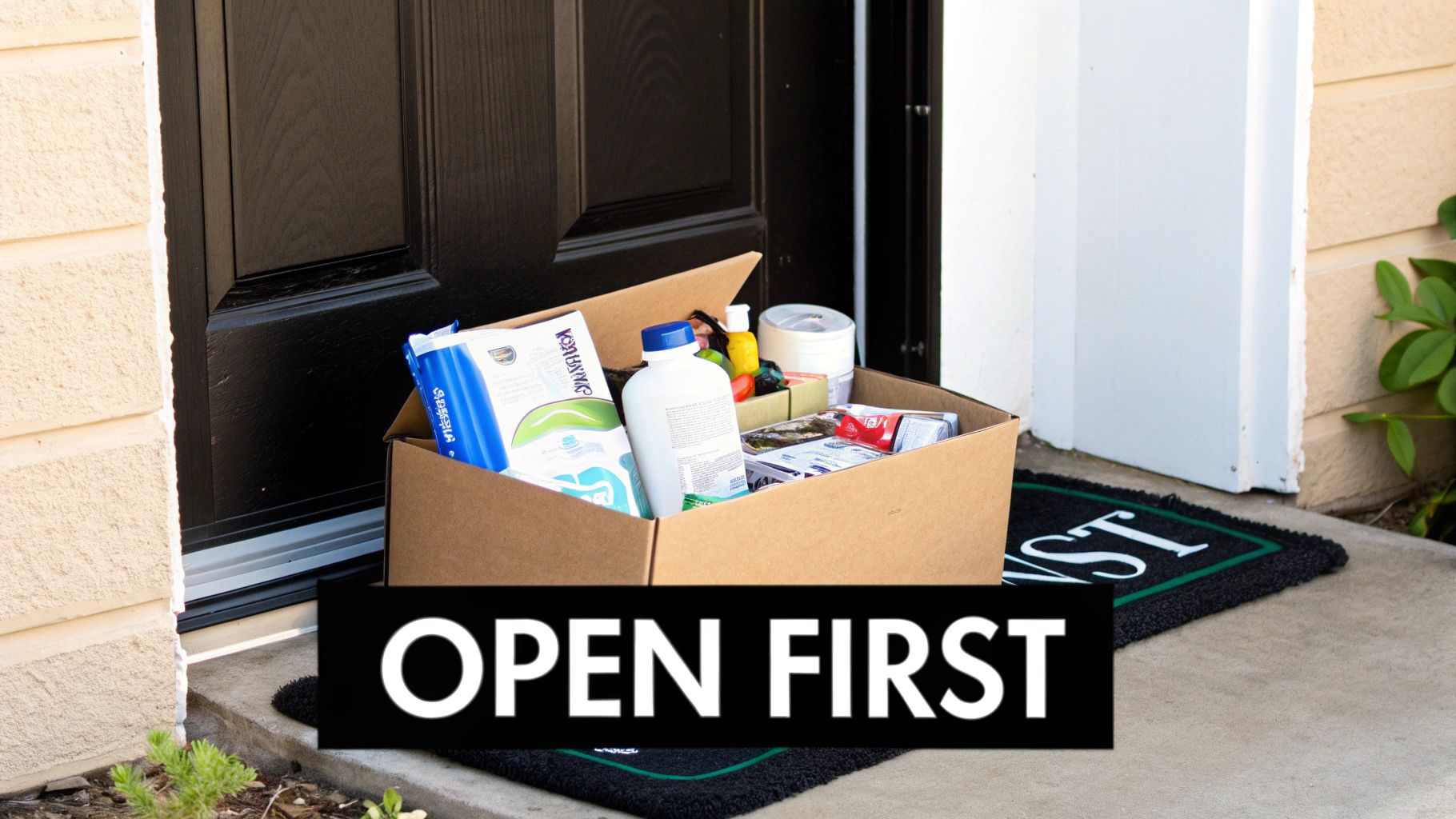
Amid the chaos of moving day, the last thing you want is to frantically search through dozens of boxes for a phone charger or a toothbrush. This is where an essentials box, often called an ‘open first’ box, becomes one of the most vital packing tips for moving house. The logic is simple: this single, clearly marked container holds everything you’ll need for the first 24 hours in your new home, ensuring a smooth and stress-free transition without having to unpack everything immediately.
This strategy is inspired by the meticulous preparation seen in disaster relief kits or hospitality welcome packages. It focuses on immediate needs and comfort, allowing you to settle in, have a cup of tea, and face the unpacking process feeling refreshed and organised rather than overwhelmed.
How to Implement It
Your essentials box should be one of the very last things you pack. Use a distinct box, a suitcase, or even a large, clear plastic tub so it’s easy to spot. Crucially, this box should travel with you in your car, not in the back of the removal van.
- Label Clearly: Mark the box on all sides with "ESSENTIALS – OPEN FIRST" in large, bold letters.
- Household Basics: Include a kettle, tea bags or coffee, mugs, a small UHT milk, and some snacks. Also pack a roll of toilet paper, hand soap, and a tea towel.
- Essential Tools: A small toolkit with a screwdriver, Allen keys, a utility knife for opening other boxes, and bin bags will be invaluable.
- Personal Items: Pack a change of clothes and pyjamas for everyone in the household, along with essential toiletries and any necessary medications. Don't forget phone chargers and important documents like your moving contract.
8. Use Clothing and Linens for Padding
One of the most resourceful packing tips for moving house is to look beyond traditional packing materials. Instead of buying endless rolls of bubble wrap, you can repurpose soft items you already own, such as clothing, towels, and bedding. This clever dual-purpose strategy not only protects your fragile belongings but also packs your textiles at the same time, saving money, reducing waste, and making the most of every box. It’s an efficient, sustainable, and cost-effective approach.
This method is particularly favoured by those aiming for a minimalist or eco-friendly move, as it significantly cuts down on single-use plastics and paper. By using items you have to pack anyway, you maximise space and minimise your environmental footprint, all while ensuring your delicate goods arrive safely at your new home. For a complete guide on this, you can learn more about how to pack clothes for moving.
How to Implement It
As you pack fragile items like kitchenware or decorative pieces, integrate your clothing and linens as protective layers. The key is to choose soft, clean items that won’t scratch or damage surfaces. Start by setting aside items like old t-shirts, towels, socks, and bedding specifically for this purpose.
- Wrap Individual Items: Use t-shirts or tea towels to wrap individual plates, bowls, or picture frames. Socks are perfect for slotting over glasses or protecting small, delicate ornaments.
- Create Cushioning Layers: Place a folded towel or a thick jumper at the bottom of a box before adding fragile items. You can also use another layer on top before sealing the box.
- Fill Gaps and Voids: Instead of using packing peanuts, stuff balled-up socks, scarves, or other small garments into any empty spaces. This prevents items from shifting and colliding during transit.
- Protect Furniture: Drape large blankets or duvets over wooden furniture, mirrors, or artwork to prevent scuffs and scratches while in the moving van.
9. Number Your Boxes and Keep Inventory
Creating a simple inventory system is one of the most powerful packing tips for moving house, transforming a potentially chaotic process into an organised, manageable project. The concept is straightforward: assign a unique number to every box and keep a master list detailing its contents and destination room. This method provides complete oversight, making it easy to track your belongings, prioritise unpacking, and quickly identify if anything is missing upon arrival.
This professional-grade technique, similar to systems used in warehouse management, eliminates guesswork and stress. Instead of searching through dozens of boxes labelled "Kitchen," you can simply consult your inventory, find that box #27 contains the kettle and mugs, and locate it instantly. It provides peace of mind and makes settling into your new home significantly faster.
How to Implement It
As you seal each box, use a thick marker to write a large, clear number on the top and at least two sides. Then, immediately update your master inventory list, which can be a physical notebook or a digital spreadsheet on your phone or computer. For maximum efficiency, structure your inventory like this:
- Box Number: A unique number for each box (e.g., 1, 2, 3…).
- Destination Room: Where the box should go in the new house (e.g., Main Bedroom, Kitchen).
- Contents: A brief but specific summary (e.g., "Dinner plates, bowls, cutlery," not just "Kitchen stuff").
- Notes: Add important details like "FRAGILE," "HEAVY," or "Open First."
Always back up a digital inventory to a cloud service like Google Drive or Dropbox. This ensures you can access it from any device, even if your phone or laptop is packed away. On moving day, you can check off each number as it's unloaded, confirming everything has arrived safely.
10. Pack Heavy Items in Small Boxes, Light Items in Large Boxes
This fundamental rule of packing is a non-negotiable for professional movers and one of the most crucial packing tips for moving house safely and efficiently. The logic is based on simple physics and ergonomics: distributing weight correctly makes boxes manageable, prevents them from breaking, and significantly reduces the risk of back strain or injury during the move. It’s an easy principle to forget when you’re in a rush, but ignoring it can lead to dangerously heavy boxes that are impossible to lift.
Adhering to this guideline ensures that no single box exceeds a safe lifting limit, generally considered to be around 20-22 kg (45-50 lbs). This practice protects not only your belongings but, more importantly, your physical well-being and that of anyone helping you move.
How to Implement It
As you pack, consciously separate items by weight, not just by category. Keep a stack of small book boxes and large linen boxes on hand in each room to make the sorting process intuitive.
- Small Boxes for Heavy Items: Dedicate your smallest, sturdiest boxes exclusively for dense objects. This includes books, canned goods, crockery, small appliances, tools, and wine bottles.
- Large Boxes for Light Items: Use your largest boxes for bulky but lightweight belongings. Think duvets, pillows, cushions, towels, bulky clothing, and lamp shades.
- Test as You Go: Don't wait until a box is sealed to realise it's too heavy. Periodically try to lift it as you pack. If it feels like a struggle, it’s time to stop adding items.
- Use a Dolly or Hand Truck: Even when packed correctly, some boxes can be awkward. Always use a dolly for stacks of boxes or heavier individual items to minimise physical strain.
- Distribute Weight Evenly: When packing a mixed box, place the heaviest items at the bottom to create a stable base and prevent lighter items from being crushed.
10-Point Packing Tips Comparison
| Item | Implementation complexity 🔄 | Resource requirements ⚡ | Expected outcomes 📊 | Ideal use cases 💡 | Key advantages ⭐ |
|---|---|---|---|---|---|
| Declutter Before Packing | Medium 🔄 — time‑intensive decision process | Low ⚡ — mainly time & coordination; possible donation logistics | High 📊 — fewer boxes, lower moving cost, cleaner space | Downsizing, long‑distance moves, fresh‑start relocations | ⭐ Cuts costs/time; reduces clutter; enables donations |
| Use the Right Box Sizes | Low 🔄 — requires sorting and buying various sizes | Medium ⚡ — multiple box types; modest purchase cost | High 📊 — safer handling, efficient stacking and truck use | Moves with varied item sizes; books, dishes, mixed loads | ⭐ Prevents overloading; eases unpacking; optimizes stacking |
| Label Everything Clearly | Medium 🔄 — consistent labeling and tracking effort | Low ⚡ — markers, stickers, optional app or label maker | High 📊 — faster unpacking, fewer misplaced boxes, better routing | Large households, storage moves, professional moves | ⭐ Speeds unpacking; improves accountability; reduces loss |
| Wrap and Protect Fragile Items | Medium‑High 🔄 — careful, item‑by‑item wrapping | High ⚡ — bubble wrap, foam, blankets; possible pro packing | Very High 📊 — minimizes breakage and insurance claims | High‑value items, art, electronics, long transports | ⭐ Prevents costly damage; provides peace of mind; insurance savings |
| Pack Room by Room | Low 🔄 — sequential, disciplined approach | Low ⚡ — minimal supplies; mainly scheduling/time | High 📊 — organized unpacking; clear progress tracking | DIY moves, families, staged or phased moves | ⭐ Maintains organization; simplifies unpacking; reduces chaos |
| Maximize Box Space Efficiently | Medium‑High 🔄 — requires planning and visualization | Medium ⚡ — time and some supplies (vacuum bags, fillers) | High 📊 — fewer boxes, lower moving costs (~15–25%) | Cost‑conscious moves, limited truck space, downsizing | ⭐ Lowers costs; eco‑friendly; better truck utilization |
| Create an Essentials Box | Low 🔄 — focused, simple packing task | Low ⚡ — one bag/box per person; minimal cost | High 📊 — immediate access to necessities; reduced first‑night stress | First night at new home, long moves, families with kids/pets | ⭐ Ensures essentials are accessible; reduces panic |
| Use Clothing and Linens for Padding | Low 🔄 — repurposing existing items | Very Low ⚡ — uses existing linens/clothes; saves money | Moderate 📊 — cost savings; moderate protection for most items | Budget moves, sustainable packing, limited supplies | ⭐ Saves money; reduces waste; dual‑purpose packing |
| Number Your Boxes and Keep Inventory | Medium 🔄 — consistent record‑keeping required | Medium ⚡ — time, spreadsheet/app, photos | High 📊 — quick locating, accountability, easier claims | Large inventories, long‑distance moves, insured items | ⭐ Prevents loss; simplifies claims; speeds locating items |
| Pack Heavy Items in Small Boxes, Light Items in Large Boxes | Low 🔄 — simple sorting guideline | Low ⚡ — requires appropriate box sizes on hand | High 📊 — prevents overweight boxes; safer handling | Moves with books, dishes, dense items | ⭐ Reduces injury risk; prevents box collapse; improves handling |
Bringing It All Together: Your Next Steps to a Successful Move
Moving house is undeniably a major life event, but it doesn’t have to be a source of overwhelming stress. The journey from a cluttered, lived-in space to a neatly organised new home begins long before the moving van arrives. By implementing the detailed packing tips for moving house we’ve explored, you are not just packing boxes; you are building a strategic system for a seamless transition. This system is founded on the principles of preparation, organisation, and efficiency.
The process starts with the liberating act of decluttering, ensuring you only move what you truly need and love. From there, a cascade of smart decisions follows: selecting the right sized boxes for the right items, wrapping fragile belongings with care, and packing on a logical room-by-room basis. These steps prevent breakage, save time, and dramatically reduce the chaos on both ends of your move. Remember, small actions, when done consistently, lead to big results.
Key Takeaways for a Stress-Free Move
Mastering a few core concepts will transform your moving experience:
- Systematic Labelling is Non-Negotiable: A detailed labelling and inventory system is your roadmap. It tells you exactly what is in each box and where it needs to go, saving hours of guesswork and frustration during the unpacking phase. Numbering your boxes and cross-referencing them with a digital or physical list provides an extra layer of control.
- The Essentials Box is Your Lifeline: Do not underestimate the power of having immediate access to toiletries, medications, chargers, basic tools, and a change of clothes. This single, well-packed box is the key to a comfortable first 24 hours in your new home, allowing you to settle in without frantically searching for necessities.
- Protection is Paramount: Utilising soft items like towels, bedding, and clothing as padding is both cost-effective and practical. This dual-purpose approach not only protects your delicate possessions but also efficiently packs your linens, maximising space and minimising waste.
Ultimately, these packing tips for moving house are designed to empower you. They shift the narrative from a frantic, last-minute scramble to a controlled, methodical project. The time and effort you invest in careful packing will pay dividends, resulting in a quicker, more organised, and far less stressful moving day. You are setting the stage for a positive new beginning, turning the page to the next chapter of your life with confidence and calm.
Ready to make your move even simpler? For residents and businesses in Bristol, Bath, and the surrounding areas, SimplyPro Removal & Storage Ltd offers professional packing services that take the entire task off your hands. Visit SimplyPro Removal & Storage Ltd to get a fast, accurate quote and let our expert team ensure your belongings are packed securely and efficiently for a truly stress-free move.