


Key Takeaways
- Regency homes are tall, not wide: many Cheltenham townhouses spread over four or five floors, with front steps, lower ground floors and narrow upper staircases. Measure the tightest turn on the stairs before moving day, not just the front door.
- Check your permit zone first: central Cheltenham is split into numbered residents’ permit zones (Lansdown, Pittville, St Pauls, Imperial Square and more), and Gloucestershire County Council, not the borough, runs on-street parking.
- Suspensions need a week: Gloucestershire charges £25 per bay per day, applications go through its enforcement contractor NSL, and less than 7 days’ notice adds a £20 short-notice fee. Bristol charges £38 a day and asks for 3 working days.
- Avoid race week if you can: the 2027 Cheltenham Festival runs from Tuesday 16 to Friday 19 March 2027, and roads around Prestbury and the north of the town get very busy on race days.
- Tell the right council: Cheltenham Borough Council handles council tax and bins inside the borough, but some addresses with a Cheltenham postcode, such as Bishop’s Cleeve, come under Tewkesbury Borough.
Cheltenham is a lovely town to move to, but its best-loved houses weren’t designed with removal vans in mind. Tall Regency terraces, steep front steps, basement flats and crescents with permit-only parking all need a bit of planning. Get the parking and the stairs sorted early, keep an eye on the racing calendar, and the move itself is usually straightforward.
This guide is for anyone moving from Bristol to Cheltenham, or moving within the town. It covers the route up the M5, what to expect in Montpellier, Lansdown and Pittville townhouses, how permit zones and parking bay suspensions work under Gloucestershire County Council, how to plan around race week, and the paperwork afterwards. We’ve been moving homes across Bristol and the surrounding area for more than 22 years, and Cheltenham is one of the towns we cover regularly, so this is written from the point of view of the people carrying the furniture up the stairs.
Why Moving in Cheltenham Is Different
On paper, a move to Cheltenham is simple. It’s a short run up the M5 from Bristol, and most moves between the two can be done in a single day. The differences show up when you arrive.
A town built upwards
Much of central Cheltenham was laid out in the late Georgian and Regency period, when the town grew as a spa resort. The houses that came out of that boom are elegant but vertical. A typical townhouse has a flight of stone steps to the front door, a lower ground floor below street level, two or three main floors and a smaller top floor that was once servants’ rooms. Staircases often get narrower as you go up. That matters far more on moving day than the total size of the house.
Lots of homes split into flats
Plenty of those big houses have been converted into flats. That’s great for buyers and renters, but it means a shared hallway, a shared front door and sometimes a top-floor flat with no lift at all. A two-bedroom flat on the third floor of a Lansdown terrace can take longer to move than a three-bedroom semi in Up Hatherley, simply because of the carrying distance and the number of stairs.
Two councils, not one
Bristol is a unitary authority, so one council handles almost everything. Cheltenham works on two tiers. Gloucestershire County Council is responsible for highways and on-street parking, including permit zones and parking bay suspensions. Cheltenham Borough Council handles council tax, bins and other local services. Knowing who to contact for what saves a lot of time in the run-up to the move.

Getting From Bristol to Cheltenham
The drive is the easy part, but a couple of choices make a difference when you’re in a loaded van.
Joining the M5
From central and east Bristol, most journeys go up the M32 to the M4 and join the M5 at the Almondsbury Interchange. From north Bristol, Bradley Stoke or Filton, you can usually pick up the M5 directly. From south Bristol, many drivers head across to the M5 at Avonmouth or go via the city centre, depending on traffic at the time. We plan the route on the morning, because the quickest way out of Bristol changes with the time of day.
Leaving the motorway
Junction 11 is the main signed exit for Cheltenham, taking you east along the A40 Golden Valley bypass towards the town. It’s also the junction many people use for north and east Gloucester, which we cover in our Gloucester moving guide. It’s a good route for the west and south of Cheltenham, including Benhall, Hatherley, Up Hatherley and Lansdown. For homes on the north side of town, such as Swindon Village or Prestbury, the best approach can be different, and we’ll pick it on the day based on the address and any roadworks. If you’re driving your own car ahead of the van, a satnav set to the exact postcode is the safest bet.
Checking for closures
Overnight closures and roadworks on the M5 and its junctions are common, particularly through the winter. National Highways publishes planned closures, and it’s worth checking them the evening before if you’re driving yourself. Allow a margin for traffic on the M5 near the M4 junction at the start and end of the working day.
Good to know: Bristol to Cheltenham is close enough that the van is often unloading before lunch, even on a full house move. The time you save on the road can easily be lost on a long carry from a crescent where the van can’t stop outside, so it’s worth spending as much effort on parking as on the route.
Regency Townhouses: Steps, Stairs and Lower Ground Floors
This is where most of the planning for a Cheltenham move goes. Montpellier, Lansdown, Pittville, Bayshill and the streets around Imperial Square are full of beautiful houses that can be awkward to move in and out of.
Front steps and railings
Many townhouses have stone steps up to the front door, with iron railings on either side and a drop to the lower ground floor below. Steps like these are fine for boxes but slow for heavy items such as American fridge freezers, wardrobes and solid oak dressers, which need two people and sometimes a third to guide them. Old stone can be uneven and slippery in the wet, so we take our time, use straps and sack trucks where they help, and keep heavy items close to the railings rather than balancing them on the edge of a step.
Narrow staircases and tight turns
The main staircase in a Regency house is often generous on the lower floors and much tighter at the top. The most common problem isn’t the width of the stairs but the turn on the landing. A sofa that came through the front door easily can get stuck on a half-landing with a low ceiling. Before you book, measure:
- the width of the narrowest part of the staircase
- the height of the ceiling above the tightest turn
- the width of each door the item has to pass through
- the length, depth and height of your largest pieces of furniture
If something won’t fit, it may need to come apart. Beds, wardrobes and many modern sofas are designed to be dismantled, and our crews dismantle and reassemble furniture as part of the move. Antique pieces that can’t be taken apart need a different plan, which we’d rather discuss at the quote stage than on the landing.
Lower ground floor flats
Lower ground floor flats usually have their own entrance down a separate flight of steps from the pavement. These steps are often steep and narrow, sometimes with a turn at the bottom. Bulky items are generally easier to bring in through the main house if you have access, but many flats don’t. Let us know which entrance we’ll be using, and send a photo of the steps if you can.
Top-floor flats
Top-floor flats in converted houses rarely have a lift. The carrying distance is the stairs themselves, so the number of floors affects how long the job takes and how many people we send. Packing into boxes that one person can lift comfortably makes a real difference here. Heavy book boxes and overfilled crates slow everyone down on the third flight of stairs.
Protecting period features
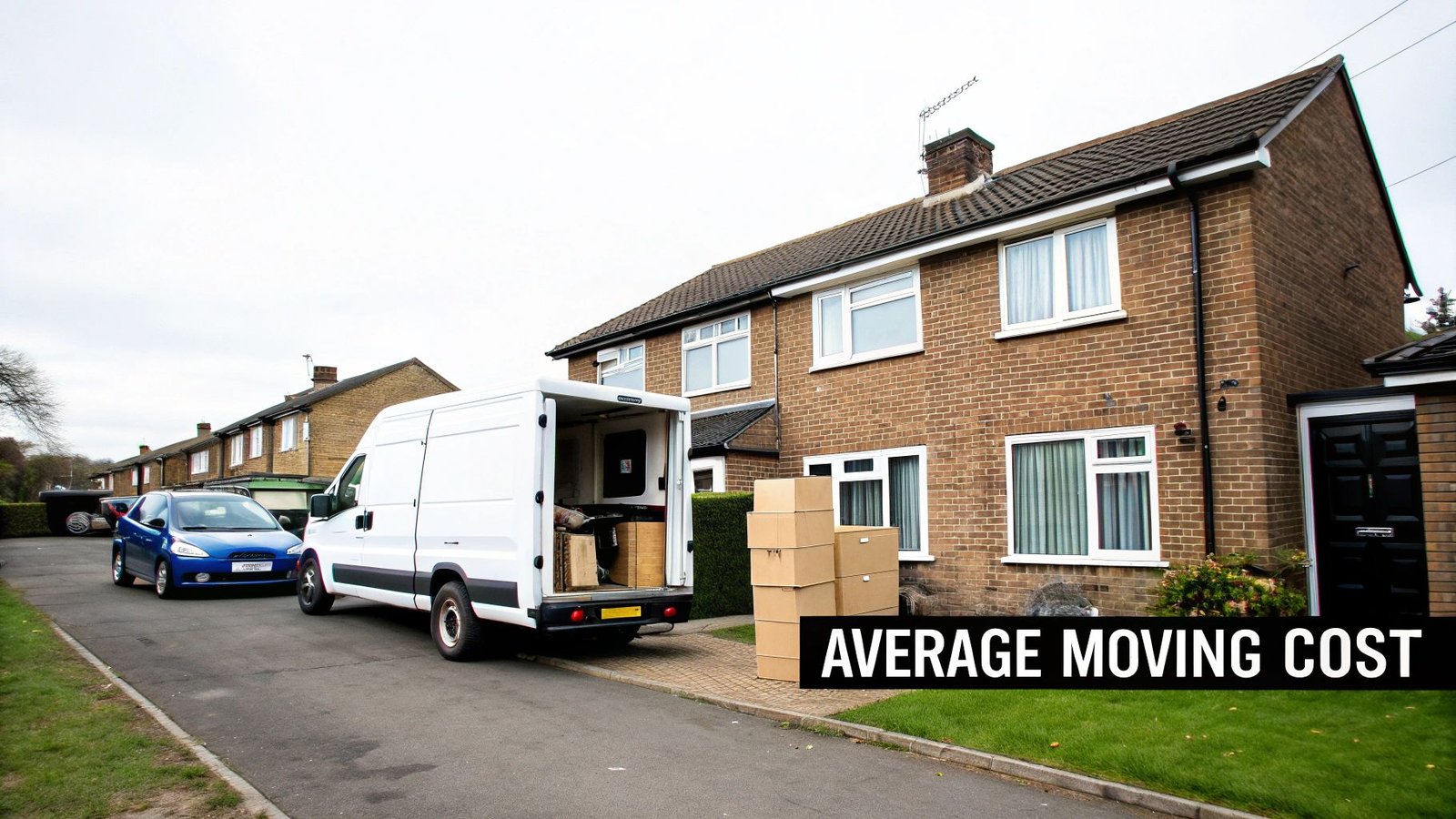
Original cornicing, panelled doors, old banisters and polished floorboards are part of what people love about these houses. We wrap furniture in blankets before it leaves the room, which protects the walls and door frames as much as the furniture. If your home is listed or has fragile original features, point them out during the survey so the crew knows where to take extra care. Don’t remove doors, banisters or fixtures to get furniture in without checking with your landlord, freeholder or the council first.
Permit Zones, Parking and Bay Suspensions
Parking is the other big factor on a Cheltenham move. In the outer suburbs it’s usually easy. In the centre, much of the on-street parking is controlled.
The Cheltenham permit zones
Gloucestershire County Council runs residents’ parking zones across central Cheltenham. Its Cheltenham permit zone maps list zones including Cambray and St Lukes, Keynsham and Sandford Mill, Town Hall, Imperial Square, Suffolks, Pittville, St Pauls, Westend, Lansdown, Railway and East Approach Drive, along with a separate racecourse zone. If your new street is in one of these, a removal van can’t simply park in a residents’ bay for the day.
Crescents, squares and one-way streets
Some of the most attractive parts of the town are also the most awkward for a large vehicle. Crescents and squares often have parking on both sides, and narrow side streets around Montpellier and the Suffolks can be one-way with limited room to pull in. A Luton van is often a better fit than a 7.5 tonne lorry on these streets, even if it means an extra trip. We’ll recommend the vehicle size after seeing the property and the street.
The suburbs
Areas such as Hatherley, Up Hatherley, Warden Hill, Benhall and Charlton Kings are mostly suburban, with driveways and wider roads. Parking is usually much simpler. Even so, it’s worth checking whether your new home is on a bus route or near a school, because parking outside at 8.30am on a weekday can be harder than it looks on a map.
Suspensions in Cheltenham
If the van needs to park in a controlled bay, you’ll need to book a parking bay suspension, and the rules are different at each end of the move. Because highways are a county matter, parking bay suspensions in Cheltenham are handled by Gloucestershire County Council through its enforcement contractor, NSL. The council’s page sets the cost at £25 per bay, per day, and says applications should be made by phoning NSL. It can suspend residents’ permit bays, shared-use bays, pay and display bays and limited waiting bays, but it won’t normally suspend disabled bays, taxi ranks, bus stops or loading bays. Unrestricted parking can’t be suspended at all.
The council’s current permit terms and conditions add some detail that matters for movers:
- applications should be received at least 7 days before the suspension date
- applications with less than 7 calendar days’ notice carry an extra £20 short-notice fee per application, and aren’t guaranteed
- a parking space means one marked bay, or a 5 metre length of a longer bay where spaces aren’t marked
- cancelling with less than 3 days’ notice costs £10 per bay
- there are no refunds for unused bays
A Luton van usually needs more than one 5 metre space, so most house moves need two bays suspended. Ask NSL to confirm the number when you apply.
Suspensions in Bristol
At the Bristol end, Bristol City Council’s parking suspension page says it costs £38 per day to suspend a designated bay for one vehicle up to 5 metres long, and you need to allow 3 working days for the application. Domestic removals are one of the listed reasons for a suspension. The council doesn’t confirm approval; it only gets in touch if it needs more information. Our guide to removal van parking in Bristol walks through that process in detail.
Bristol and Cheltenham compared
| Moving-day question | Cheltenham | Bristol |
|---|---|---|
| Who runs on-street parking? | Gloucestershire County Council, via NSL | Bristol City Council |
| How do you apply? | By phone to NSL | Online form |
| Cost of a bay suspension | £25 per bay, per day | £38 per day, per bay (vehicle up to 5 m) |
| Notice needed | At least 7 days; £20 extra for shorter notice | Allow 3 working days |
| Who handles council tax? | Cheltenham Borough Council (inside the borough) | Bristol City Council |
| Typical access challenge | Front steps, tall staircases, permit zones | Terraced streets, hills, residents’ parking |
Fees and rules change, so check both council pages when you book. The figures above are taken from the councils’ own pages as they stood when this guide was written.
When you might not need one
If the property has a driveway, off-street parking or a private car park, or the street has unrestricted parking with space outside, you may not need a suspension. If you have your own off-street space, keep your car somewhere else on the day so the van can use it. If neighbours are friendly, asking them to leave a space free for the morning can help too, though it’s no substitute for a suspension in a controlled bay.
Tip: Book the suspension as soon as your completion date is confirmed. In Cheltenham, the 7-day notice period is counted in calendar days, so a suspension for a Friday move should really be in by the Friday before. Leaving it until the week of the move costs more and might not be granted.
Planning Around Race Week and Busy Days
Cheltenham Racecourse at Prestbury Park is one of the town’s biggest draws, and it has a real effect on traffic.
The 2027 Cheltenham Festival
According to the Jockey Club’s Cheltenham Festival page, the 2027 Festival runs from Tuesday 16 March to Friday 19 March 2027, with Gold Cup Day on the Friday. Those four days bring large crowds into the town, and the roads to the north of the centre, around Prestbury and the Evesham Road, get particularly busy before and after racing. Hotels, taxis and car parks fill up too.
Should you avoid that week?
If you have a choice, avoid moving on a Festival day, especially if either property is on the north side of town. If your completion date falls in that week, it isn’t a disaster. A morning start, an agreed parking plan and a bit of flexibility usually see you through. We’d rather know early so we can plan the route and the timing.
Other racedays and events
The Festival is the biggest meeting, but the racecourse hosts other fixtures through the jumps season, and the town runs events throughout the year. Check the racecourse fixture list and the council’s events news before you settle on a date, particularly if you’re moving to Prestbury, Pittville or Whaddon.
Weekdays, weekends and school runs
Like anywhere, Fridays and month-ends are popular for completions, so book early if you need one. School run times can make streets near schools hard to park on first thing in the morning. Weekend moves are possible, subject to availability, and can be quieter on residential streets, although town-centre streets can be busy with shoppers on Saturdays.
Moving Big, Heavy and Valuable Items
Cheltenham homes often hold heavy, older furniture that has been in the family for years, and moving it through a tall house needs care.
Pianos
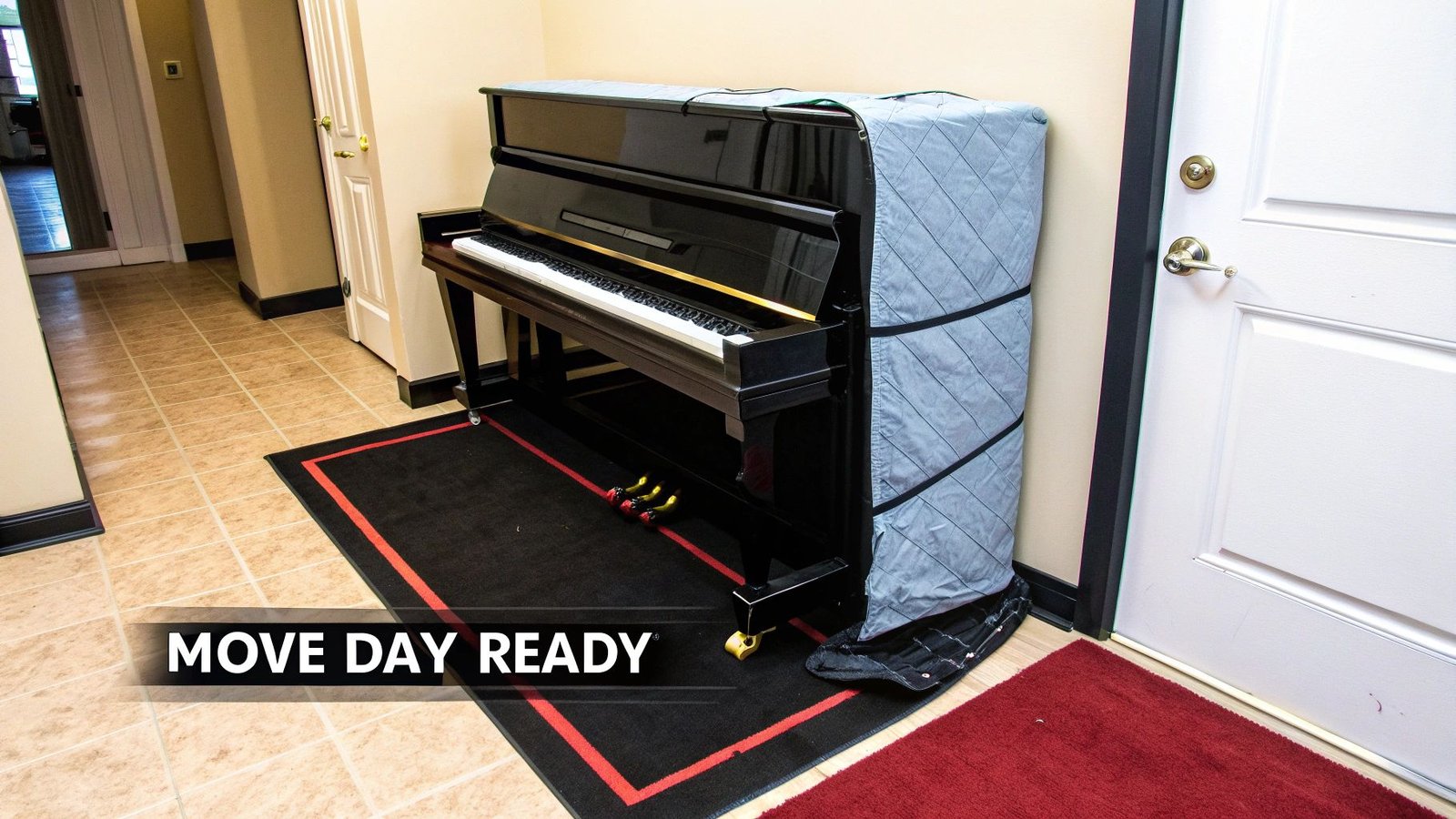
Upright pianos turn up in a surprising number of Cheltenham townhouses, and getting one up or down front steps is a job for a trained team with the right equipment. Tell us at the quote stage if you have a piano, which floor it’s on and whether there are any steps. Our piano moving service covers how we plan those moves.
Antiques, mirrors and artwork
Large gilt mirrors, framed paintings and antique furniture need proper wrapping and careful loading. Pack small, fragile items in sturdy boxes with plenty of padding and label them clearly. For larger pieces, we use blankets and straps in the van so nothing shifts on the M5. If you’d like help with materials, our removal packaging page shows what we supply.
Garden furniture and outbuildings
Many Cheltenham terraces have long, narrow gardens behind them, and the only access is through the house. If you have a heavy stone planter, a garden bench or a shed full of tools to bring, mention it in advance. Items that have to come through the house need to be clean and dry so they don’t mark floors and carpets on the way.
What to leave behind
A move is a good time to have a clear-out, especially if you’re moving into a flat with less storage. Sorting things out before the move means fewer boxes to carry up the stairs at the other end. If you need somewhere to keep things while you decide, our storage in Bristol is monitored by 24/7 CCTV and can be used for a few weeks or longer.
Councils, Council Tax and the Paperwork
Once the furniture is in, there are a few admin jobs to do.
Telling Bristol you’re leaving
If you’re moving out of Bristol, tell Bristol City Council the date you’re leaving so your council tax account can be closed and a final bill worked out. Do the same with your energy and water suppliers, and take meter readings on the day you leave.
Registering in Cheltenham
Cheltenham Borough Council asks new residents to set up a council tax account, and its page on how to register for council tax or tell the council you’ve moved house has separate options for moving into the borough, moving within it and moving out. It also lists other changes to report, such as someone moving in or out of the property or a household member turning 18.
Check which council you’re in
Not every address with a Cheltenham postcode is inside Cheltenham Borough. Bishop’s Cleeve, for example, comes under Tewkesbury Borough Council, so council tax and bins are handled there instead. If you’re not sure, check your address on the council’s website before you register.
Bins and recycling
Cheltenham Borough Council’s bins and recycling pages let you check your collection day and request new bins or recycling containers if you’ve recently moved into the area. Garden waste collection is a separate service that you sign up for. It’s worth checking your collection day in the first week, before the boxes and packaging start piling up.
Other things to update
- your doctor and dentist, and register with a new GP if you’re moving out of your current practice area
- your driving licence and vehicle log book with the DVLA
- the electoral register
- banks, insurance, pensions and subscriptions
- Royal Mail redirection if you want post forwarded
A Simple Timeline for a Cheltenham Move
Every move is different, but this order works well for most moves between Bristol and Cheltenham.
Four to six weeks before
Get a quote, ideally with a video survey so we can see the stairs, the steps and the furniture. Check whether either property is in a permit zone. Start clearing out things you don’t want to take.
Two to three weeks before
Book the move once you have a likely completion date. Order boxes and packing materials. Check the date against the racing calendar and any local events. If you’re moving into a flat, ask the managing agent or freeholder about access, keys and any rules for removals.
The week before
Make sure parking suspensions are booked at both ends, keeping in mind Cheltenham’s 7-day notice period. Pack everything except the essentials. Label boxes with the room and the floor they’re going to. That small detail saves a lot of time in a four-storey house.
On the day
Keep a box of essentials with you: kettle, mugs, phone chargers, medicines, toilet roll, basic tools and bedding for the first night. Be at the new property in time to open up and show the crew where things go. Take meter readings and photos at both properties.
If the dates don’t line up
Chains often slip. If you have to leave your Bristol home before you can get into the Cheltenham one, we can store your furniture in between and deliver it when you’re ready. It’s a common arrangement and avoids a rushed second move.
Tip: On a tall house, put a sign on each door at the new property saying which room it is. Movers on their fifth trip up the stairs don’t want to guess whether “Bedroom 2” is the front room on the second floor or the back room on the third.
Frequently Asked Questions
How long does a move from Bristol to Cheltenham take?
Most moves between Bristol and Cheltenham can be done in a single day, because the drive is short. The total time depends far more on the size of the home, the number of stairs and how far the van can park from the door than on the journey itself.
Do I need a parking suspension in Cheltenham?
Only if the van needs to park in a controlled bay, such as a residents’ permit bay or a pay and display bay. Suspensions are booked through Gloucestershire County Council’s contractor NSL, cost £25 per bay per day, and should be requested at least 7 days in advance to avoid a £20 short-notice fee.
Can a removal van get to a Regency townhouse in Montpellier or Lansdown?
Usually yes, but the van may have to park a little way along the street, and there are often steps up to the front door or down to a lower ground floor flat. We’ll recommend a vehicle size and crew size after seeing the property, which is why a video survey is so useful for these homes.
What if my sofa won’t fit up the stairs?
Measure the narrowest part of the stairs and the tightest turn before the move. Many sofas, beds and wardrobes can be dismantled and rebuilt, and our crews dismantle and reassemble furniture as part of the job. If something can’t come apart, tell us early so we can plan another way in.
Should I avoid moving during the Cheltenham Festival?
If you can, yes. The 2027 Festival runs from 16 to 19 March, and the roads around the racecourse and the north of the town are much busier on those days. If your completion falls that week, an early start and a clear parking plan help a lot.
Is Bishop’s Cleeve part of Cheltenham for council tax?
No. Bishop’s Cleeve is in Tewkesbury Borough, so you register for council tax and bins with Tewkesbury Borough Council, even though it’s close to Cheltenham. Always check which council covers your exact address.
Can you move me at the weekend or at short notice?
Weekend and last-minute moves are possible, subject to availability. Bear in mind that a short-notice move may also mean paying Gloucestershire’s short-notice fee for a parking suspension, or finding an alternative place to park.
How do I get a quote for a move to Cheltenham?
The quickest way is a video survey over WhatsApp. You walk us round the property on your phone, and we can see the furniture, the stairs and the street outside. You can also find more about the area on our removals in Cheltenham page.
Get a Clear Quote for Your Move to Cheltenham
Whether you’re moving from a Bristol terrace to a Pittville townhouse, from a flat in Lansdown to a semi in Charlton Kings, or the other way round, we’ll plan the move around your stairs, your street and your dates. We’re fully insured, we bring blankets, straps and sack trucks as standard, and we can supply long-wheelbase vans, Luton vans or 7.5 tonne lorries depending on the job. Our house removals service covers everything from a single flat to a full family home.
The easiest way to start is a video quote over WhatsApp. Show us round, tell us your dates, and we’ll come back with a clear quote for your move to Cheltenham.