

Moving a fridge isn't just about raw strength. It’s a job that needs a bit of planning to make sure you don't damage the appliance, your house, or your back. Getting the prep work right is key to preventing damage and making the whole process go smoothly.
Your Pre-Move Checklist for Fridge Removal
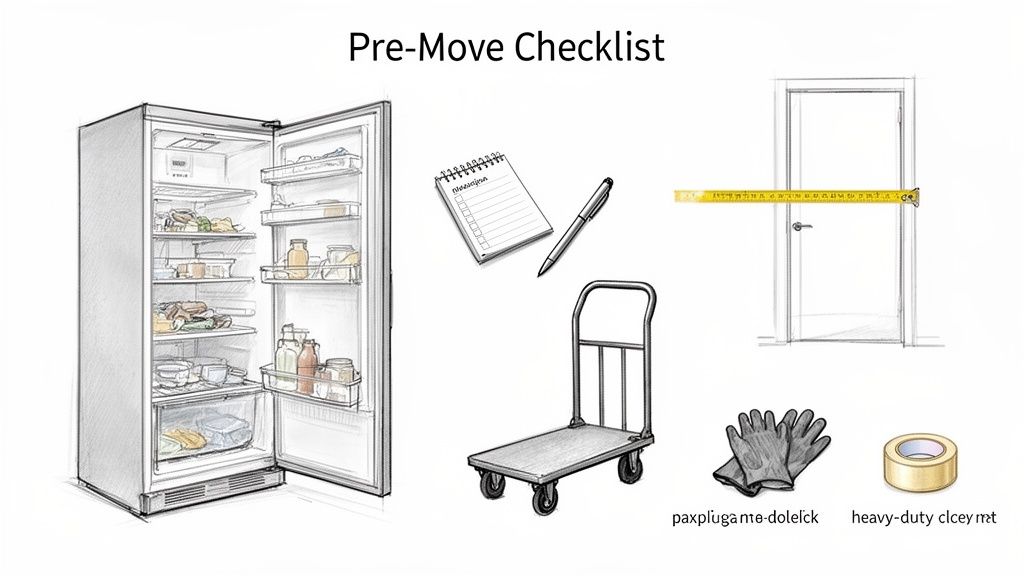
Before you even dream of pulling the plug, a little forward thinking will save you a world of headaches. One of the biggest mistakes people make is jumping straight into the heavy lifting. That's a surefire way to end up with scuffed floors, dented door frames, and a fridge that’s seen better days.
Think of this preparation stage as your game plan. It’s just as vital as the move itself. From clearing out the last of the leftovers to making sure you have the proper gear, what you do now sets you up for success. It’s a crucial part of any move, which is why having a solid guide like our complete moving house checklist can make all the difference.
Empty and Clean Everything Thoroughly
First things first: get everything out of the fridge and freezer. This is the perfect excuse to bin that jar of mystery chutney and those freezer-burnt peas. Try to plan your meals in the week leading up to the move to eat through as much of your perishable food as possible.
Once it's empty, it's time for a proper clean. If you don't, you're inviting unpleasant smells and mould to set up camp, especially if the fridge is going into storage for a while.
- Cleaning Solution: A simple mix of baking soda and warm water works wonders. Mild washing-up liquid is also fine, but steer clear of harsh chemicals that could damage the plastic interior.
- Remove All Parts: Pull out all the shelves, drawers, and door compartments. Give them a good wash separately and make sure they're bone dry before packing them away.
- Wipe Down and Dry: Give every surface inside a thorough wipe-down, getting right into the corners and seals. Then, prop the doors open for a few hours to let it air out completely.
A clean, dry fridge is non-negotiable. Skip this, and the first thing that will greet you at your new home is a foul smell that's incredibly tough to get rid of.
Measure Twice, Move Once
Ah, the classic moving day disaster: the "it won't fit" moment. To avoid getting your fridge wedged in a doorway, grab a tape measure and a notepad before you lift a finger.
Start by measuring the fridge itself—height, width, and depth. Don't forget to factor in anything that sticks out, like handles or the hinges on top.
Next up, measure the entire escape route. This means checking:
- Every single doorway it needs to pass through.
- The width of any narrow hallways or tight corners.
- The clearance on staircases, including any landings.
Now, compare the fridge's dimensions with the tightest spot on your route. If it looks like it’ll be a squeeze, you might have to take the fridge doors off, or even a door off its hinges in your house. It's much better to figure this out now than when you're halfway down the hall.
Gather Your Tools and Safety Gear
You wouldn't try to move a fridge with your bare hands, so getting the right kit together is a must. It’s all about protecting yourself and your property. Make sure you have everything lined up and ready to go before you start.
Here's your essential shopping list:
- Appliance Dolly: This is your best friend for this job. A proper appliance dolly has straps to hold the fridge securely and makes wheeling a heavy, awkward beast across the floor surprisingly manageable.
- Moving Blankets: These thick, padded blankets are brilliant for protecting the fridge's finish from scratches. They’ll also save your walls and door frames from getting bashed about.
- Strong Packing Tape or Straps: You'll need these to wrap the blankets tightly around the fridge and to keep the doors securely shut.
- Heavy-Duty Gloves: A decent pair of gloves will give you a much better grip and save your hands from getting scraped.
- Basic Toolkit: Keep a screwdriver or a socket set nearby. You'll be glad you have it if you end up needing to remove the fridge doors.
How to Safely Disconnect Power and Water Lines

Alright, with the fridge empty and wiped down, it's time to get into the more technical side of things. This is where you disconnect the power and water, and where you really need to focus on safety. It might seem simple, but rushing this part can lead to anything from a nasty electric shock to a flooded kitchen floor.
The aim here is to shut everything down methodically so the appliance is completely inert before you even think about moving it. This also starts the clock on the defrosting process—a step you absolutely cannot skip for a safe, mess-free move.
Handling the Power Cord Correctly
First things first: unplug the refrigerator. Simple, right? But there’s a proper way to do it. Never, ever yank the cord from across the room. That's a surefire way to damage the plug, the cord, or even the wall socket itself.
Instead, get a good grip on the plug head and pull it straight out from the socket. Once it’s free, don’t leave it dangling. Coil it up neatly and use a cable tie or strong tape to secure it to the back of the unit. It’s a small detail, but a loose cord is a major tripping hazard when you and your helpers are manoeuvring a heavy appliance.
Safety First Takeaway: Always secure the power cord to the back of the unit after unplugging. An unsecured cord is one of the most common causes of trips and falls when removing a refrigerator.
Understanding the basics of why this matters is always a good idea. For a deeper dive into the principles behind safe electrical work, guides on essential electrical wiring standards can be quite enlightening. While regulations vary by location, the core safety principles are universal.
Tackling the Water Line for Ice Makers and Dispensers
If your fridge has an ice maker or a water dispenser, you’ve got one extra, crucial job: disconnecting the water line. If you forget this, you're guaranteed a massive puddle the moment you start pulling the fridge away from the wall.
Your first move is to find the shut-off valve. It's usually a small valve on the wall behind the fridge, or sometimes under the kitchen sink, attached to a thin copper or plastic tube. Turn this valve clockwise all the way to shut off the water supply.
Now, you need to disconnect that line from the back of the fridge. Before you do, grab a bucket and some old towels—there’s always some water left in the pipe. Put a towel on the floor and hold the bucket right under the connection as you use a spanner to loosen the compression nut. Let all the remaining water drain out before you remove the line completely.
The Importance of a Full Defrost
As soon as the power is off, the defrosting begins. I can't stress this enough: you must let the fridge and freezer defrost completely before moving them. Trying to move a freezer that's still full of ice is just asking for trouble.
As that ice melts, it creates pools of water. Move the fridge too early, and that water will spill everywhere, making your floors dangerously slippery and potentially damaging your home or the moving van. A complete defrost usually takes between 8 to 24 hours, so you need to factor this into your moving timeline.
Here’s how to manage the process:
- Lay Down Towels: Place old towels or absorbent sheets inside the freezer compartments and on the floor in front of the unit to soak up the water.
- Prop the Doors Open: Keep the doors ajar to let air circulate, which speeds up the melting. A small box or chair can work well.
- Wipe Everything Dry: Once all the ice has melted, give the entire interior a thorough wipe-down with a dry cloth. This prevents any leftover moisture from causing mould or mildew during transit.
This step is about more than just a clean move. Proper appliance care helps prevent the kind of failures that lead to food waste. A 2023 Samsung study revealed that British households estimate they waste £88 annually on spoiled vegetables alone due to storage confusion. That problem only gets worse if a fridge gives up the ghost during a move. Ensuring your appliance is moved correctly helps keep it reliable for years to come.
Protecting Your Fridge and Home During the Move
With the power and water out of the picture, it's time to focus on brute force protection. This is where a little bit of foresight prevents a lot of heartache later on. Trust me, one clumsy pivot with a 150-kilo fridge can leave a permanent, ugly reminder on your appliance, your floors, or your walls.
First things first: lock those doors down. You’d be surprised how easily a fridge door can swing open at the worst possible moment, throwing off your balance or catching a doorframe. A few strips of strong packing tape or a good moving strap will do the trick. Just wrap it horizontally around the body to keep everything clamped shut.
Prepare the Interior for Transit
Before you wrap the outside, you need to sort out the inside. Anything left loose in there—shelves, drawers, you name it—is going to turn into a battering ram the second you tilt that fridge.
Pull out every single shelf, drawer, and any other bit that isn't bolted down, like ice trays or butter dishes. These are usually made of glass or hard plastic and are just begging to crack under pressure.
- Wrap everything separately: Give each piece a good wrapping in bubble wrap or packing paper.
- Box it up and label it: Pop all the wrapped bits into a sturdy box. Be sure to label it clearly—something like "FRIDGE PARTS – FRAGILE"—so you can find it easily at the other end.
- Seal the box well: You don't want those glass shelves sliding around and smashing against each other inside the box.
Taking five minutes to do this properly can save you a huge headache trying to find a replacement shelf for a ten-year-old fridge model.
The aim here is simple: turn the fridge into one solid block. No moving parts, inside or out. It’s a small step that makes a massive difference to the risk of something getting broken.
Wrapping the Exterior Like a Professional
Now, let's protect that finish. Stainless steel, in particular, scratches if you so much as look at it the wrong way. A casual brush against a brick wall or even a belt buckle can leave a mark that will annoy you forever.
This is a job for proper moving blankets. They are your absolute best friend for preventing scratches and dents. Drape one or two thick blankets over the entire fridge, making sure you cover every surface—top, sides, and front. Don't leave any part exposed.
Once it's covered, use packing tape or stretch wrap to hold the blankets on tight. You want them snug, so they won't slip and bunch up as you're wrestling the fridge through a doorway. This cocoon acts as a buffer between the appliance and your home, which is especially important when you’re navigating the tight corners and narrow stairways you often find in Bristol and Bath properties. For a full rundown of the best gear for the job, have a look at our guide on choosing the right packing materials for moving.
Clearing and Protecting Your Exit Route
Your final bit of prep work is all about the path you'll take out of the house. Before you even think about lifting anything, walk the entire route from the kitchen to the front door and clear it completely.
That means shifting sofas, rolling up rugs, and even taking pictures off the walls in tight corridors. It's also smart to put some protection down on the vulnerable spots along the way.
- Protect Your Floors: Lay down sheets of cardboard, old blankets, or proper floor runners. This is non-negotiable for wood, tile, or laminate flooring.
- Pad Your Doorways: Tape some old towels or a bit of bubble wrap onto door frames and any sharp corners. It’s a simple trick that prevents chipped paint and dented woodwork.
- Communicate, Communicate, Communicate: Honestly, the most crucial tool you have is teamwork. Before you move, agree on a plan with your helper. Decide who’s walking backwards, who's calling the shots, and what your key commands will be ("stop," "lift," "left a bit"). Clear communication is what stops a heavy, awkward job from turning into a disaster.
With the fridge wrapped and your home protected, you’re finally ready for the physical lift, knowing you’ve done everything you can to prevent any damage.
The Right Way to Move a Refrigerator
Okay, your fridge is prepped and protected. Now for the heavy lifting. This is where brute force takes a backseat to smart technique. Moving a hulking, awkward appliance like a fridge is all about using the right gear and a solid plan to avoid injury and damage.
Let's be clear: the absolute cornerstone of this job is a proper appliance dolly. This isn't a suggestion; it's a must-have. These aren't your standard hand trucks; they're built specifically for the weight and shape of appliances, and crucially, they have straps to lock everything in place. Trying to 'walk' a fridge or heave it with a basic dolly is just asking for trouble.
Getting the Fridge onto the Dolly
The first real test is loading the refrigerator onto the dolly. Have your helper gently tilt the fridge back just enough for you to slide the dolly’s base plate completely underneath it. Make sure the fridge is sitting square in the centre before you ease it back down.
Now, cinch it down. Loop the dolly straps around the main body of the fridge—never the doors—and tighten the ratchet until it’s rock solid. The fridge and dolly should feel like a single unit. If it wobbles, it’s a hazard. A shifting appliance can throw you off balance in an instant.
This diagram breaks down the key prep stages—securing, emptying, and wrapping—that turn your fridge into a stable, moveable object.
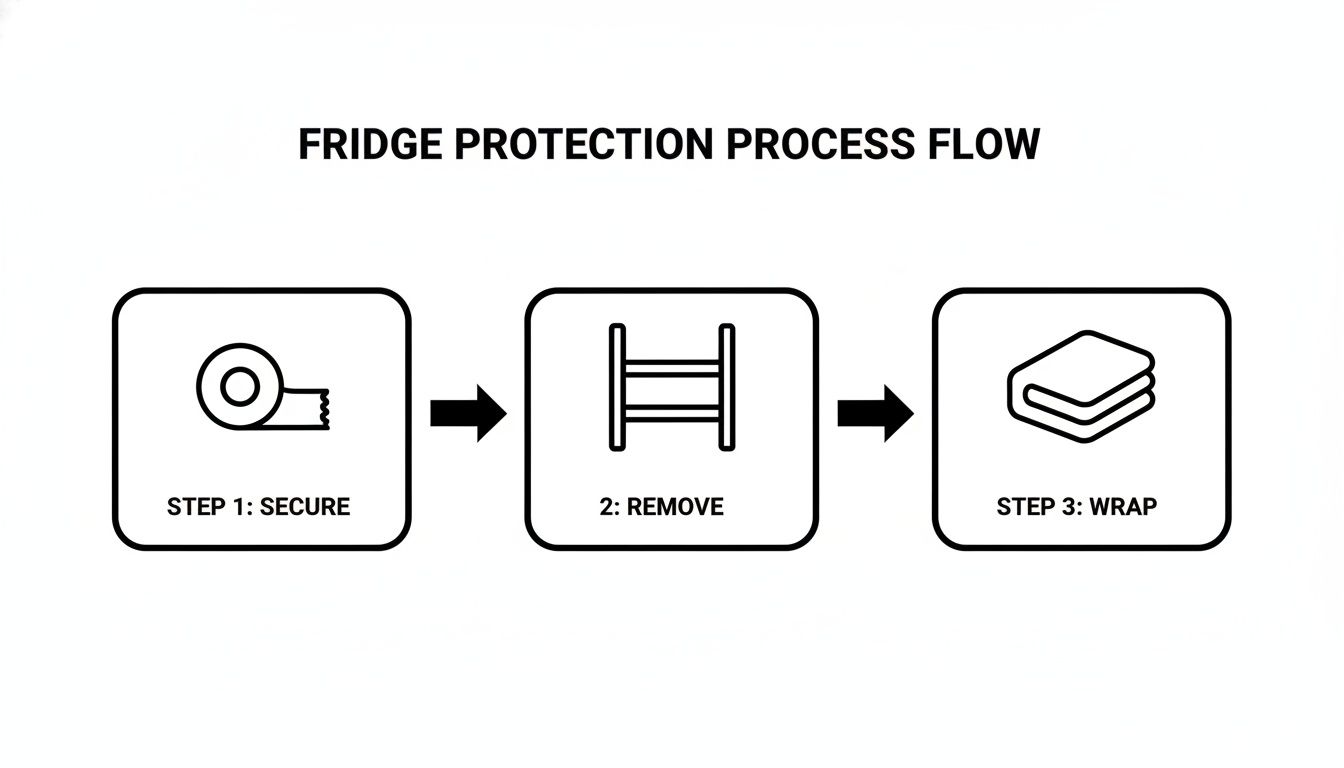
Following this process ensures the doors stay shut, nothing rattles around inside, and the exterior is protected from scuffs and scrapes.
The Golden Rule: Keep It Upright
If you remember one thing, make it this: keep the refrigerator upright at all times. Seriously. Inside your fridge’s compressor is oil that keeps the cooling system lubricated. If you lay the fridge on its side, that oil can seep into the cooling lines where it doesn't belong.
Turn it on too soon after setting it upright again, and you risk running the compressor without proper lubrication, which can cause catastrophic, permanent damage. The safest approach by far is to keep it vertical for the entire journey. If you absolutely have to tilt it for a low doorway, make it quick and keep the angle as shallow as possible.
An Expert's Two Cents: This is a two-person job, no exceptions. One person handles pushing and steering the dolly. The other acts as a spotter, guiding them through tight spots, calling out obstacles, and generally being a second set of eyes and hands.
Here in busy areas like Bristol and Bath, moving bulky white goods safely is a huge part of any house move. A standard UK fridge can weigh anywhere from 80-120kg, and I’ve seen enough back injuries to know that mishandling them is a common culprit. When you consider that household waste generation hit 25.9 million tonnes in 2023, moving these appliances safely for reuse or responsible disposal is more important than ever. You can read more in the government's latest statistics on waste.
Choosing the right equipment is fundamental to a safe move. This table breaks down the essentials.
Comparing Essential Fridge Moving Equipment
| Equipment | Primary Use | Key Benefit | Consideration |
|---|---|---|---|
| Appliance Dolly | Transporting the fridge | Built-in straps and a tall frame provide stability for heavy appliances. | Essential for safety and preventing damage. Rent one if you don't own one. |
| Ratchet Straps | Securing the fridge to the dolly and in the van | Provides a tight, unshakeable hold, preventing any shifting during transport. | Ensure straps are rated for the weight of your appliance. |
| Moving Blankets | Protecting the fridge exterior and your home | Thick padding prevents scratches, dents, and scuffs on the fridge and walls. | Use them generously, especially around corners and in the moving van. |
| Floor Protection | Shielding floors from scratches and gouges | Cardboard, old blankets, or floor runners prevent damage from the dolly wheels. | Hardwood, laminate, and vinyl floors are particularly vulnerable. |
Having these items on hand isn't just about making the job easier—it's about doing it safely and professionally, without leaving a trail of destruction behind you.
Navigating Tricky Surfaces and Obstacles
It’s rare to have a perfectly smooth path from the kitchen to the van. You need a game plan for whatever the house throws at you.
- Thick Carpets: The dolly wheels can sink in. Use slow, steady momentum and good communication with your partner. It’s a real workout.
- Hardwood or Tiled Floors: Don't even think about rolling across them without protection. Lay down thick cardboard or old blankets to create a safe path.
- Uneven Paving Outside: Slow is smooth, and smooth is fast. The spotter should walk ahead and call out any dips or bumps that could jolt the dolly and upset the balance.
And then there are the stairs—the final boss of fridge moving. Control is everything. The stronger person should be at the bottom, guiding the dolly down one step at a time. The person at the top acts as the brake, managing the descent. Never, ever let gravity take over.
Loading into the Moving Van
Once you're safely outside, the last hurdle is getting the fridge into the van. If you have a ramp, use it. Always push the fridge up the ramp; never try to pull it.
Inside the van, secure the fridge against one of the side walls. Use more ratchet straps to lash it tightly to the van's anchor points so it's completely immobile. A fridge that tips over in transit is almost guaranteed to be a write-off. For good measure, wedge moving blankets between the fridge, the van wall, and any nearby furniture to stop things from rubbing and scraping on the journey.
How to Get Rid of Your Old Fridge the Right Way
So, you've wrestled the old fridge out of the house. Job done? Not quite. In the UK, you can't just stick it on the pavement and hope for the best. Refrigerators are classed as Waste Electrical and Electronic Equipment (WEEE), meaning they need specialist handling.
These units contain refrigerant gases and insulating foam with substances like ozone-depleting substances (ODS) and F-gases. If they leak, the environmental damage can be serious. That’s why UK law is so strict about their disposal – it’s all about preventing pollution and recovering valuable materials safely.
Why You Can’t Just Dump It
Ditching a fridge improperly isn't just bad for the planet; it’s a quick way to land a heavy fine. Fly-tipping a fridge is a criminal offence. The responsibility is on you to make sure the unit goes to a facility that can carry out the proper 'depollution' process.
This process is a vital part of the UK's green strategy. England’s household recycling rate was 44.0% in 2023, and the amount of waste sent for recycling grew by 3.6% to 10.4 million tonnes in 2023/24. Fridges contain hazardous refrigerants, and getting rid of them the wrong way can lead to fines of up to £5,000.
Your Best Disposal Options in Bristol and Bath
Thankfully, there are several easy and legal ways to offload your old fridge. The best route for you will likely depend on its condition and what your local council offers.
- Council Bulky Waste Collection: Most local authorities, including Bristol City Council and Bath & North East Somerset Council, provide a collection service for large items like fridges. It usually comes with a small fee, but it’s a hassle-free way to ensure it’s recycled correctly.
- Retailer Take-Back Schemes: Buying a new fridge? Many retailers are legally obligated to take your old one away, sometimes for free. It's always worth asking when you're making the purchase.
- Donate to Charity: If the fridge is still in good working condition, why not give it a second life? Some charities will even collect it from you, which is a fantastic way to help someone out.
- Drop it at a Recycling Centre: You can always take the fridge to your local Household Waste Recycling Centre (HWRC) yourself. Just check their website first, as some sites have specific rules and drop-off points for white goods.
Understanding the environmental impact of electronic waste really puts into perspective why these careful steps are so crucial.
Key Takeaway: Never, ever fly-tip a refrigerator. Always go through an official channel, whether it's the council, a retailer, or a registered waste carrier. This ensures it's handled legally, safely, and responsibly.
If you’re having a bigger clear-out, you’ll find that similar rules apply to other large items. For more advice, take a look at our guide on how to dispose of unwanted furniture.
Your Refrigerator Removal Questions, Answered
Even with the best-laid plans, moving a fridge can throw up a few last-minute questions. It’s a big job, after all. Let’s walk through some of the most common queries we get from clients, so you can tackle the move with confidence.
How Long Does a Fridge Need to Be Off Before I Move It?
This is a big one, and the timing is crucial. You’ll want to unplug your refrigerator at least 24 hours before you even think about moving it. This isn't just a friendly suggestion—it's essential.
For starters, this gives the appliance plenty of time to fully defrost. The last thing you want is a trail of water leaking across your floors, inside the removal van, or worse, into the fridge's own electronics. It also allows the oil and other fluids inside the compressor to settle down, which dramatically cuts the risk of damaging the internal mechanics when you start tilting and rolling it out.
Can I Transport a Refrigerator on Its Side?
Honestly, we really advise against this. The golden rule of moving a fridge is to keep it upright at all times. When you lay a fridge on its side, the compressor oil can easily run into the cooling tubes, and that’s a place it should never be.
If you plug it in too soon after standing it back up, you could permanently kill the cooling system. That’s a very expensive mistake to make. If you’re in a real bind and have absolutely no other choice, lay it on the side opposite the compressor lines. Then, at its new home, you absolutely must leave it standing upright for at least 24 hours before plugging it in. This gives the oil a fighting chance to drain back where it belongs.
A Word of Warning: Laying a fridge down is always a gamble. The risk of causing irreversible damage is very real, and it’s a quick way to void your warranty. The safest move is always to keep it vertical.
Do I Really Need to Take the Doors Off to Move a Fridge?
This all comes down to the layout of your home. It’s something we see a lot in older properties, especially around Bristol and Bath where charming period features often mean narrower doorways and tight hallways. The only way to know for sure is to get the tape measure out.
Measure the width of your fridge (with the doors on, of course) and then measure every doorway and tight corner on its path out of the house. If it looks like it’ll be a tight squeeze, taking the doors off can give you those precious few centimetres you need to get it through without damaging your walls or scratching the appliance.
When Should I Just Call in the Professionals?
Doing it yourself is certainly possible, but there are definitely times when calling in the experts is the smarter, safer move. You should give it some serious thought if you find yourself in any of these situations:
- You're moving a heavy, bulky American-style fridge-freezer.
- Your exit route involves navigating one or more flights of stairs.
- You’re faced with very narrow hallways or awkward, sharp corners.
Professional movers have the right gear for the job, like proper appliance dollies and securing straps, not to mention the experience to navigate those tricky spots. Most importantly, they are fully insured. That peace of mind is invaluable—if any accidental damage happens to your home or the fridge itself, you're covered.
For a safe, efficient, and fully insured fridge removal in Bristol, Bath, or the surrounding areas, trust the experts at SimplyPro Removal & Storage Ltd. Let our experienced team handle the heavy lifting so you don't have to. Get your fast, no-obligation quote by visiting https://www.simplyremovalsbristol.co.uk today.