

Picking the right storage unit shouldn't be a shot in the dark. It’s all about finding that sweet spot—enough room for your things without wasting money on space you don't need. This storage unit size guide is designed to cut through the confusion, helping you match your belongings to the perfect unit with confidence.
Finding Your Perfect Storage Unit Size Instantly
Let's forget about square feet and cubic metres for a second. The most straightforward way to get started is to picture the storage units as rooms you already know. Think of a small unit as a large walk-in wardrobe, a medium one as your average garden shed, and a large unit as a standard single-car garage. It’s a simple comparison, but it immediately gives you a feel for the volume you're dealing with.
Starting with these real-world analogies helps you quickly rule out sizes that are obviously wrong for you. It puts the focus squarely on what matters most: what will actually fit inside. You wouldn't try to squeeze a sofa into a wardrobe, and you certainly don't need a garage-sized space for a few boxes of winter clothes.
This simple idea of scaling up is shown perfectly in the image below, using common household spaces to illustrate the different sizes.
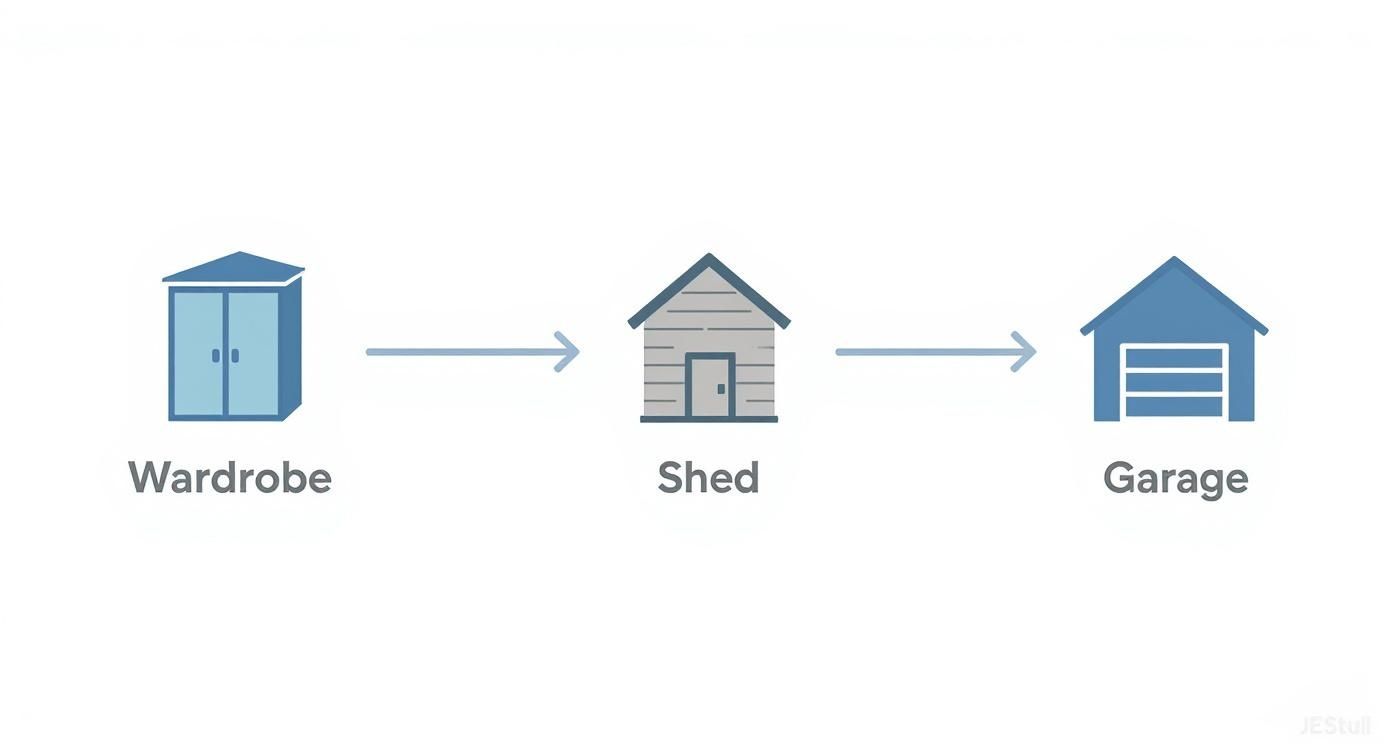
As you can see, each step up in size can handle a much greater volume of items, taking you from a few personal bits and bobs right up to the contents of an entire flat.
Making an Informed Decision
Getting this initial visualisation right is your first step. When you start looking at the different storage solutions near me, having a solid estimate of the size you need will save you both time and money. It’s the best way to avoid paying for a half-empty unit or, even worse, finding out on moving day that you’ve run out of room.
Thinking about the space you need isn't so different from other home planning tasks that require careful measurement. You can find similar detailed advice in all sorts of areas, like these UK sizing guides for various home aspects. In both cases, a little bit of assessment upfront leads to a much better result.
Key Takeaway: The aim is simple: pay only for the space you actually use. By using these easy analogies and taking a moment to list your items, you can find a unit that gives you the best possible value.
Now, let's dive into the specifics. This guide will break down each of the common unit sizes, giving you detailed lists of what you can expect to fit inside and turning your rough estimate into a solid, confident choice.
What Fits Inside Small Storage Units
Don't let the word "small" fool you. Small storage units are the unsung heroes of decluttering and navigating life's big changes. They're far more than just tiny boxes; when you know how to use them, they offer a surprising amount of room. They are also the most budget-friendly option, perfect for anyone needing to clear out a spare room, store seasonal gear, or stash their things during a university break.
Let's take a closer look at the two most popular small sizes you'll find: the 5×5 ft unit and the 5×10 ft unit. Getting a real feel for what fits inside each will help you make a smart, cost-effective choice.
The 5×5 Foot Unit: Think Walk-In Wardrobe
A 5×5 ft storage unit gives you 25 square feet of floor space. The easiest way to picture this is to think of a large walk-in wardrobe or a small garden shed. With a standard ceiling height of about 8 feet, you’ve actually got 200 cubic feet of packing volume to play with. This makes it an ideal spot for all those things that clutter up your home but aren't needed all year round.
This size is a real favourite among students needing a place for their belongings over the summer holidays. It's also a go-to for homeowners looking to reclaim a spare room or garage from seasonal overflow.
So, what can you realistically get in a 5×5 unit?
- For Homeowners: It’s just right for all your seasonal decorations (Christmas trees, lights, the lot), a small chest of drawers, several large suitcases, and bulky sports gear like skis or a set of golf clubs.
- For Students: You can comfortably fit a single mattress and base, a small desk and chair, a mini-fridge, and about 10-15 medium-sized boxes of books, clothes, and kitchen stuff.
- For Small Businesses: This unit is brilliant for archiving. You can stack dozens of archive boxes, freeing up precious office space without a hefty price tag.
Expert Tip: The secret is to think vertically! To get the most out of a 5×5 unit, stack your boxes high using sturdy, uniform containers. Always place heavier, less-needed items at the bottom, with lighter, more accessible things on top.
The 5×10 Foot Unit: A Large Garden Shed
Stepping up to a 5×10 ft unit doubles your floor space to 50 square feet. Now we're talking about the size of a large garden shed or a generous walk-in pantry. This gives you much more flexibility for only a small jump in price, making it one of the most sought-after sizes for a whole range of personal storage needs.
Its rectangular shape makes it a brilliant choice if you're clearing out a studio flat or emptying a single bedroom. It’s also perfect for those longer items that just won’t squeeze into a square unit.
Here’s a practical look at what a 5×10 unit can handle:
- Studio Flat Contents: This unit can take the key furniture from a typical studio flat. Think a double bed and mattress, a sofa, a chest of drawers, a small dining set, and a television.
- Bedroom Furniture: It’s ideal for the entire contents of a master bedroom, including a king-size bed, two bedside tables, a large wardrobe (if you can dismantle it), and plenty of boxes.
- Outdoor and Hobby Gear: The extra length is a game-changer for things like motorbikes, bicycles, kayaks, surfboards, or large pieces of garden furniture you want to protect over winter.
A 5×10 unit will typically hold the contents of one full room plus around 15-20 medium boxes. If you plan your layout carefully, you can leave a little aisle down the middle. Trust me, this is a lifesaver if you think you'll need to grab something later on – it saves you from having to unpack the whole unit just to find one box at the back.
Stepping Up to Mid-Sized Storage Options
When you've outgrown the need for just a few boxes and some seasonal gear, mid-sized units are the perfect sweet spot, offering a fantastic blend of space and value. Think of these as the workhorses of the self-storage world. They're versatile enough to handle bigger life events, whether you're moving house, diving into a major renovation, or even storing stock for your growing business.
Let's dive into the two most popular mid-sized choices: the 10×10 ft and the 10×15 ft units. Getting to grips with what they can hold will show you exactly why they're such a common pick for people and businesses across the UK.
The 10×10 Foot Unit: A Versatile Powerhouse
A 10×10 ft unit gives you a solid 100 square feet of floor space. To picture it, think of about half of a standard single-car garage. With the usual 8-foot ceiling, you're looking at a generous 800 cubic feet of volume to play with. This size really hits the mark for flexibility, which explains why it's so incredibly popular.
This much space is easily capable of holding all the belongings from a typical two-bedroom flat. It's an absolute lifesaver for families caught between homes or for anyone needing to clear a good chunk of their house for a remodel.
So, what can you actually get in there?
- Major Appliances: A washing machine, tumble dryer, dishwasher, and a standard fridge-freezer should fit comfortably.
- Living Room Furniture: Think one or two large sofas, an armchair, a coffee table, an entertainment unit, and a TV.
- Bedroom Furniture: Two double beds and mattresses, plus a few chests of drawers and bedside tables.
- Boxes and Extras: You'll still have room for 30-40 medium to large boxes filled with kitchen gear, clothes, books, and other household bits.
Real-World Scenario: A Small Business Hub
Picture running an online craft shop from home. A 10×10 ft unit can become your mini-warehouse. You could put up some freestanding shelves to organise your inventory, keep all your packing materials handy, and still have a clear space to prep orders for shipping—all without your home being overrun by stock.
The 10×15 Foot Unit: For When You Need More Breathing Room
When you know you need that extra bit of room, the 10×15 ft unit is the next logical step. It provides 150 square feet of floor area, which feels like a large master bedroom or a small single-car garage. That extra 50 square feet makes all the difference when you’re storing the contents of a two or three-bedroom house.
This size is a go-to for families tackling a full-scale home renovation or for those with larger, bulkier furniture that just won’t squeeze into a smaller space. It’s the kind of unit that offers real peace of mind, so you're not left worrying if everything will fit on moving day.
What does a 10×15 ft unit typically hold?
- An Entire Household: It can handle the contents of a two or three-bedroom house, including all major appliances and furniture sets from the living room, dining room, and bedrooms.
- Bulky Gear: There’s plenty of room for large patio furniture, a ride-on lawnmower, a few bikes, or even a jet ski.
- Commercial Storage: Businesses often grab this size to store surplus stock, trade show displays, or archived documents that need to be kept securely for years.
This versatility is a big part of why medium-to-large units are becoming more common. While many UK units are between 25 and 100 square feet, the demand for larger spaces from 100 to 500 square feet is definitely on the rise. You can find more insights like this in the latest UK self-storage industry report on januseurope.com.
The extra depth of a 10×15 ft unit is also a game-changer for organisation. It allows you to leave a clear walkway down the middle, making it far easier to get to items stored at the back without having to unpack the whole unit. That simple trick can turn a storage space from a packed-in box into a truly functional and accessible room.
When You Need the Biggest Space You Can Get
Sometimes, you're not just clearing out a cupboard; you're tackling a major life event. This is when you need to think big. We're talking about moving the contents of an entire family home, storing a business's stock, or safeguarding everything you own during a long-term move abroad.
Let’s look at the two heavyweights of the storage world: the 10×20 ft and the 10×30 ft units. Getting to grips with just how much these can hold will save you the headache and expense of realising you’ve run out of room mid-move.
The 10×20 Foot Unit: Think of a Single-Car Garage
A 10×20 ft storage unit gives you a roomy 200 square feet to play with. The easiest way to picture it? A standard single-car garage. It’s a seriously practical space, ideal for storing everything from a three or even four-bedroom house.
And we really do mean everything. A 10×20 unit is built to handle those awkward, bulky items that just don't fit anywhere else.
- Your Whole House in One Place: Comfortably fits large sofas, dining room tables, multiple bed frames, and major appliances like washing machines and fridge-freezers.
- Bulky and Outdoor Gear: There’s plenty of room left for garden furniture, a ride-on mower, the family’s bikes, and maybe even a small car or van.
- The Go-To for a Full Move: This is the most popular choice for families moving out of a three or four-bedroom home, keeping all their belongings together in one secure spot.
Picture This: The Year-Long Work Assignment
Imagine you've been offered a fantastic job overseas for a year. A 10×20 ft unit lets you lock away your entire household—from the antique grandfather clock to the tools in the garden shed. You can leave with complete peace of mind, knowing it's all safe and sound for your return.
The 10×30 Foot Unit: Your Own Mini-Warehouse
For the absolute biggest jobs, the colossal 10×30 ft unit delivers a massive 300 square feet of floor space. We've moved beyond a garage now; this is more like having your own small warehouse. It's the ultimate choice for huge house moves or for businesses with serious storage needs.
This much room can easily swallow the contents of a five-bedroom home, with all the furniture, appliances, outdoor equipment, and stacks of boxes you can throw at it. Its sheer size makes it indispensable for large-scale projects.
So, Who Needs a 10×30 Ft Unit?
- Large Families on the Move: Perfect when packing up a five-bedroom (or larger) house, especially during a major renovation or an international relocation.
- Businesses Needing Room to Grow: Ideal for storing large amounts of stock, company archives, bulky trade show displays, or even a contractor's tools and materials.
- Serious Vehicle Storage: It offers enough space to store a car, a small boat, or a classic vehicle with plenty of room to spare for household goods.
The popularity of these larger units is no surprise. The UK storage industry is booming, with turnover expected to hit £1.2 billion in 2025 and a consistently high occupancy rate of 75.1%. It’s clear people are relying on storage for more than just a quick fix. You can dive deeper into these trends by reading this comprehensive industry report on clevelandcontainers.co.uk.
Choosing between these giants really comes down to a bit of forward planning. Take a careful inventory of your biggest items and make a rough estimate of how many boxes you'll have. That way, you can confidently book the right-sized space for the job.
How to Measure and Pack Your Belongings Like a Pro
Picking the right size unit is a great start, but knowing how to measure your belongings and pack them efficiently is where you’ll really save time, money, and hassle. A well-packed unit uses every inch of space you're paying for, keeps your items safe, and makes finding things later a walk in the park. Think of this as your practical playbook for getting it spot on.
Before you can even think about packing, you need a clear idea of what’s going into storage. Guessing is a recipe for disaster—you either end up with a unit that’s far too big or one that’s frustratingly small. The best way to avoid this is to create a simple inventory list.
Start by walking through your home, room by room, and listing all the big, bulky items. We're talking sofas, beds, wardrobes, and any major appliances. Grab a tape measure and jot down the dimensions (length, width, height) for each. This isn't just busywork; it's essential for picturing how these core pieces will slot together inside the unit.
Estimating Your Box Count
With the big stuff sorted, it’s time to figure out your boxes. This can feel a bit overwhelming, but a good rule of thumb makes it much simpler.
For every fully furnished room in your house, plan on needing roughly 10 to 15 medium-sized boxes. So, for a three-bedroom house, you’d likely be looking at somewhere between 30 and 45 boxes for all the smaller personal belongings, on top of the space needed for furniture.
Don't forget to include items from the shed, loft, or garage! These spaces often hide awkwardly shaped tools and bulky equipment. This simple bit of maths gives you a much more realistic picture of the total volume you need, helping you avoid any last-minute panics on moving day.
Smart Packing Strategies for Maximum Space
Good packing is a bit of an art form. It turns a chaotic pile of stuff into an organised, secure, and accessible space. The aim is to build a stable, logical structure that protects your belongings while using every cubic foot available.
Follow these tried-and-tested strategies to pack like a seasoned pro:
- Uniform Box Sizes Are Your Friend: Using boxes of a similar size makes stacking so much safer and more stable. It lets you build solid walls of boxes that won't wobble or collapse, unlike a precarious tower of mismatched containers.
- Leave a Central Aisle: If there’s any chance you'll need to get to your things while they’re in storage, booking a slightly larger unit is a brilliant investment. It allows you to leave a narrow walkway down the middle, saving you from having to empty the entire unit just to find that one box at the back.
- Disassemble Everything You Can: Don't try to cram furniture in whole. Take the legs off tables, dismantle bed frames, and remove shelves from bookcases. Keep all the screws and small parts together in a labelled bag and tape it securely to the main piece of furniture.
Pro Tip: Always label your boxes clearly on at least two sides. Note the room they came from and a quick summary of what’s inside. For ultimate organisation, create a master inventory list that corresponds to numbered boxes—it’ll make finding anything later incredibly straightforward.
The Foundation of a Well-Packed Unit
How you load everything into the unit is just as important as how you pack the boxes. You need to build a solid foundation.
Start by placing your largest and heaviest items at the very back and along the sides. This means things like washing machines, fridge-freezers, and sofas go in first. They create a solid base to build upon.
Stand long items like mattresses, headboards, or large mirrors upright against the walls to save precious floor space, and always use protective covers to keep them safe. Any gaps or empty spaces can be filled with softer items, like bags of bedding or cushions, which stops things from shifting around in transit or storage.
Using high-quality boxes and wraps is non-negotiable for keeping your belongings in top condition. You can explore a whole range of options with our guide to packing materials for moving. By following this structured approach, you’ll be amazed at how much you can fit into your chosen space, turning a potentially stressful task into a smooth, organised success.
Got Questions About Storage? We’ve Got Answers
Picking the right storage unit is about more than just the dimensions. Once you start getting into the details, the practical questions pop up. We get it. To make sure you feel completely confident when you rent your space, we've put together some straightforward answers to the questions we hear most often.
Let's clear up everything from whether you need climate control in the unpredictable UK weather to what happens if you accidentally book the wrong size. These are the little details that can make a world of difference.
Do I Really Need a Climate-Controlled Unit in the UK?
While we don't often get extreme heatwaves or deep freezes, the one thing you can count on in the UK is damp. That persistent humidity can quietly wreak havoc on your belongings over time. This is where a climate-controlled unit becomes your best friend, keeping both temperature and humidity at a constant, safe level all year round.
Think of it as an insurance policy for your stuff. It's an absolute must for sensitive items like wooden furniture that can warp, electronics that hate condensation, important documents that can yellow, or fabrics that might develop mildew. If you're storing anything valuable or sentimental for more than a couple of months, climate control is a very wise investment.
For a deeper look into all the things you should weigh up, check out our guide on https://www.simplyremovalsbristol.co.uk/renting-storage-in-bristol-what-do-you-need-to-consider/ – the advice is valuable no matter where you are.
What Is the Difference Between Square Feet and Cubic Feet?
This is a big one, and it's where people often get caught out. Getting your head around this is the key to truly making the most of the space you’re paying for.
- Square Feet (sq ft): This is just the floor area – the unit's length multiplied by its width. It tells you how much ground space you have to work with.
- Cubic Feet (cu ft): This is the total volume of the unit – length times width, times height. This number represents every bit of usable space, right up to the ceiling.
Most storage units in the UK have a ceiling height of about 8 feet. So, that 10×10 ft unit (100 sq ft) actually offers a massive 800 cubic feet of packing space. When you start thinking in three dimensions, you unlock a whole new level of storage potential.
Key Insight: Don't just plan your floor layout; plan vertically! By stacking sturdy boxes and standing furniture on its end, you can use the full height of the unit. You'll be amazed at how much more you can fit in, and you might even be able to get away with a smaller, cheaper unit.
Can I Change My Storage Unit Size Later On?
Of course. Life happens, and storage needs aren't always set in stone. Any good storage facility knows this and will offer flexible agreements that can adapt along with you.
If you realise you've rented a unit that’s far too big, you can nearly always downsize to a smaller, more cost-effective option. On the flip side, if you've underestimated how much stuff you have, you can upgrade to a larger space (as long as one is available). It's always a good idea to chat with the facility manager about their specific transfer policy when you sign up, but this kind of flexibility is pretty standard these days.
What Items Are Prohibited From Being Stored?
For everyone's safety and security, there are some hard and fast rules about what can't go into a self-storage unit. These are in place for very important insurance and liability reasons, protecting not just your belongings but everyone else’s too.
While you should always check the specific list for your facility, these items are universally banned:
- Perishables: Any food or organic matter that can spoil, rot, or attract pests.
- Hazardous Materials: Anything flammable, toxic, or combustible. This means no petrol, paint, harsh chemicals, fertilisers, or gas canisters.
- Living Things: This one’s a no-brainer – no plants or animals.
- Illegal Items: Anything that is illegal to own, such as drugs or stolen property.
- Weapons and Explosives: Firearms, ammunition, and fireworks are never allowed on the premises.
As you get ready to book, it’s also a great idea to familiarise yourself with the basics of understanding the rental agreement so you’re clear on all the terms. Always double-check your contract for the complete list of prohibited items to ensure you’re fully compliant.
At SimplyPro Removal & Storage Ltd, our goal is to make your storage experience completely hassle-free. Whether you need help finding the perfect size or want to know more about our flexible terms, our team is here to help. Discover our secure and affordable storage solutions by visiting us at https://www.simplyremovalsbristol.co.uk.