
Office storage units aren't just a place to stash old filing cabinets anymore. They’ve become a genuinely smart solution for any business navigating a change, whether that's a downsize, a big renovation, or the now-common shift to a hybrid work model. Think of them as a secure, off-site extension of your workspace, perfect for holding everything from spare desks and chairs to archived documents and crucial IT gear. It’s a simple idea that’s become a strategic tool for keeping a business agile.
Why Smart Businesses Use Office Storage Units
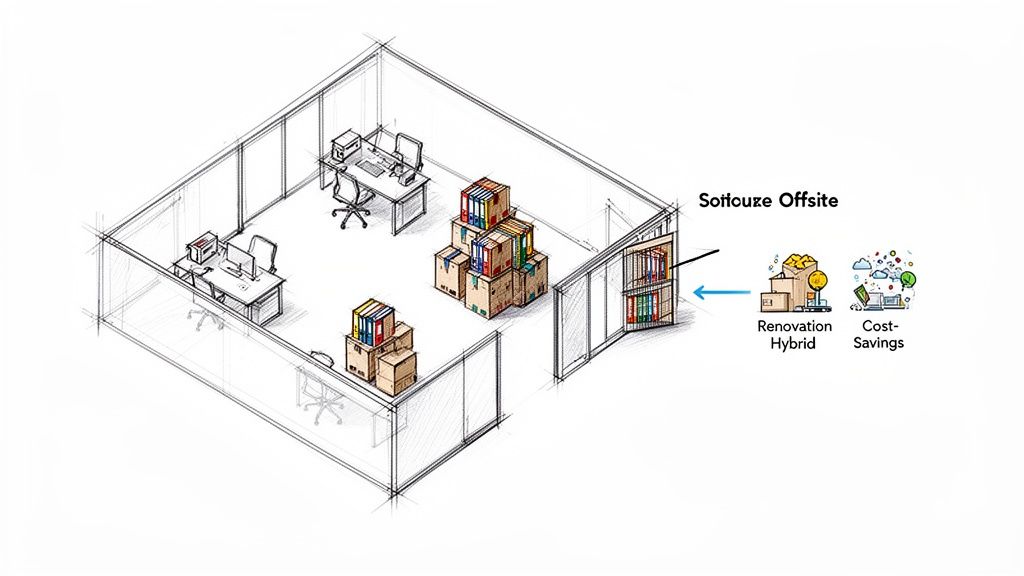
The idea of a fixed, permanent office space feels a bit old-fashioned now, doesn't it? Businesses today need to be able to pivot—reacting to market changes, new team structures, and different ways of working. This need for flexibility has completely changed the game for professional storage. It’s no longer just a quick fix for clutter; it's a core part of a lean, effective business strategy.
So, when does it make sense? Let's look at a few common situations:
-
Office Downsizing or Relocation: With hybrid work being the new norm, many companies are shrinking their physical footprint. A storage unit acts as the perfect middle ground, letting you hold onto quality furniture and equipment for the future without cramming it into a smaller office. When you’re moving, understanding the common pitfalls of office relocation makes the case for temporary storage crystal clear.
-
Renovations and Refurbishments: Giving the office a facelift is great for morale, but it’s also incredibly disruptive. Off-site storage is a lifesaver, keeping your expensive assets safe from construction dust, paint splatters, and accidental damage.
-
Secure Document Archiving: Paperwork hasn't disappeared, but it certainly takes up prime real estate. A secure, climate-controlled unit is an ideal, compliant solution for holding onto important records long-term.
-
Inventory and Equipment Management: If your business deals with seasonal stock or uses specialised equipment only occasionally, storing it off-site frees up valuable floor space for your day-to-day operations.
A Strategic Response to Market Shifts
The move towards flexible working is the real catalyst here. We've seen it in the UK office market analysis firsthand. While the overall demand in major cities is levelling out, there's been a significant 20% increase in enquiries for smaller office spaces. This is a direct result of businesses adapting to a hybrid workforce, which in turn creates a pressing need for a place to put all the stuff that no longer fits.
By separating asset management from your daily office life, you give your business the freedom to change its workspace on the fly. You can adapt to what you need right now without having to ditch your long-term investments in furniture, tech, and records.
It’s Less About Space, More About Agility
At the end of the day, using an office storage unit is a proactive business decision. It keeps you nimble, allowing you to jump on growth opportunities or scale back without being trapped by the four walls of your office. That kind of flexibility is a real competitive edge. It leads to smarter spending and, just as importantly, a more focused and productive environment for your team.
Of course, the next step is figuring out which type of unit is right for you.
Choosing the Right Office Storage Unit Size
Picking the right size for your office storage unit can feel like a high-stakes game of Tetris. Go too small, and you're left scrambling with an overflow of items on moving day. Go too big, and you're literally paying for empty space—a classic case of throwing money down the drain.
The trick is to stop thinking in abstract square feet and start visualising the space in real-world terms. It’s much easier to picture a 25 sq ft unit when you think of it as a large walk-in wardrobe, or a 150 sq ft space as a single-car garage. This simple mental shift makes it far easier to match your business's assets to the right unit, ensuring a perfect, cost-effective fit.
Common Office Storage Unit Dimensions
To make a confident decision, you need a solid idea of what fits where. While exact dimensions can differ slightly between facilities, most storage providers stick to a fairly standard set of sizes. This lets you do a rough mental inventory and match it to a specific unit, taking most of the guesswork out of the process.
Here’s a practical breakdown of what you can generally expect to store in the most popular unit sizes:
-
25-50 sq ft (approx. 2.3-4.6 sq m): Imagine a generous walk-in wardrobe. This size is perfect for archiving, easily holding between 50 and 100 standard archive boxes. You could also fit a single office desk, a chair, and smaller IT gear like monitors and printers.
-
75-100 sq ft (approx. 7-9.3 sq m): Now we're talking about the size of a small bedroom or a large garden shed. It’s generally big enough for the entire contents of a one or two-person office—think a couple of desks, chairs, filing cabinets, and up to 200 archive boxes.
-
150-200 sq ft (approx. 14-18.6 sq m): This is your single-car garage equivalent. It's a substantial space that can comfortably handle everything from a medium-sized office of four to five people. That means multiple workstations, conference room furniture, servers, and a serious volume of boxed-up files.
A common pitfall is underestimating just how much room office furniture takes up, even when it’s been dismantled. Always measure your largest items first—like that boardroom table or bulky shelving unit—and use them as the starting point for your calculations.
Office Storage Unit Size Guide
Sometimes, a direct comparison is the best way to see what you really need. To make this process even clearer, we've put together the quick reference table below to help you map common office items to standard unit sizes.
| Unit Size (sq ft) | Equivalent To | What It Typically Holds | Ideal For |
|---|---|---|---|
| 50 sq ft | Large Walk-in Wardrobe | 100 archive boxes, 1-2 desks, chairs, and small IT equipment. | Document archiving or storing the contents of a 1-person office. |
| 100 sq ft | Small Bedroom | The contents of a 2-3 person office, including desks and filing cabinets. | Small office moves or storing surplus furniture and equipment. |
| 150 sq ft | Single-Car Garage | The contents of a 4-5 person office, including larger items like a boardroom table. | Medium office relocations or storing stock alongside furniture. |
For a more detailed breakdown with visuals and calculators, our complete storage unit size guide is a great resource.
Practical Tips for an Accurate Estimate
Before you sign any agreements, a little bit of prep work goes a long way in getting your estimate right.
First, create a detailed inventory. Don't just jot down "chairs"—be specific and write "10 ergonomic office chairs" and "4 meeting room chairs." The details matter.
Next, think about how you'll pack. Stacking uniform, clearly labelled boxes is by far the most space-efficient way to use a unit. Remember that awkwardly shaped items, like floor lamps or designer reception furniture, create dead space around them and take up more room than you'd think. A bit of planning upfront will ensure you choose the most economical unit for your office needs.
Climate Control and Security: The Non-Negotiables
It’s easy to get bogged down in size and price when you’re looking for an office storage unit. But if you overlook two crucial features—climate control and robust security—you risk turning a smart business decision into a costly disaster. These are the things that separate a basic lock-up from a genuine solution for managing your company’s assets.
Think of a standard storage unit like a garage. It’ll keep the rain off, sure, but that’s about it. A climate-controlled unit, on the other hand, is a proper extension of your office environment. It maintains a steady temperature, usually somewhere between 13°C and 18°C, and controls humidity, creating the perfect conditions to preserve your most valuable items.
Believe me, that consistency isn't just a luxury; it's a necessity.
Why You Can't Skimp on Climate Control
Wild temperature swings and damp air are the silent killers of office equipment and documents. That beautiful boardroom table or those expensive executive desks? The wood can warp, crack, or even split when it’s exposed to fluctuating conditions. This kind of damage creeps up on you and is often impossible to fix by the time you spot it.
And your sensitive electronics are especially at risk.
The delicate internal components in servers, computers, and printers can easily corrode from moisture in the air. That leads to equipment failure, lost data, and a hefty replacement bill—a cost that will dwarf what you would have paid for a climate-controlled unit.
It’s not just the tech, either. A whole range of common office items need a stable environment to survive long-term storage:
- Paper Documents & Archives: High humidity makes paper turn yellow and brittle. Worse, it’s a breeding ground for mildew and mould that can destroy irreplaceable records.
- Office Artwork & Decor: The canvases in your reception area can go slack and paint can start to flake in an unstable environment, ruining the pieces that give your office its character.
- Leather Furniture: Those smart leather sofas and chairs can dry out and crack if it’s too dry, or grow mould if it’s too damp.
Choosing climate control isn't being overly cautious. It's an insurance policy against the elements, a proactive step to protect the value and usability of everything you store.
This flowchart gives you a good idea of what kinds of office assets benefit most from a properly managed storage environment.
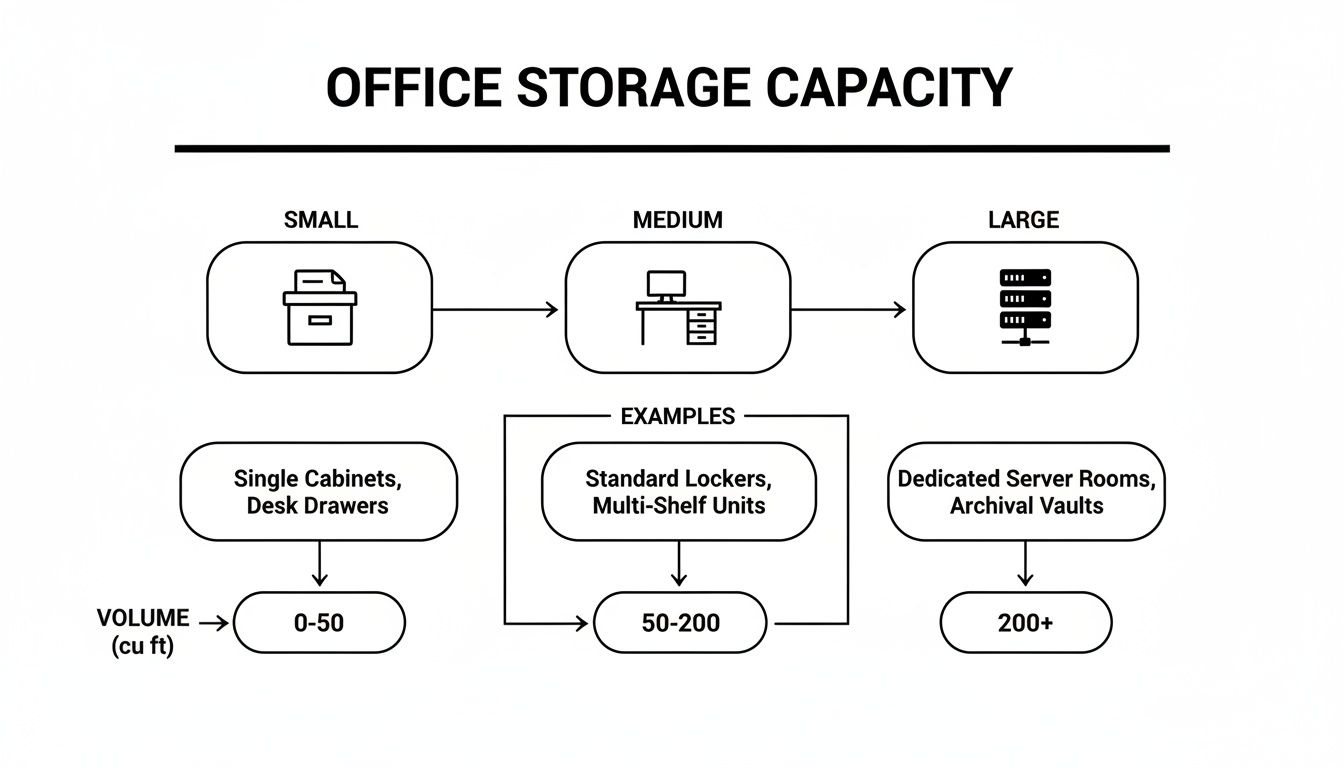
As you can see, whether it's small but vital archive boxes or large, sensitive server racks, the need for proper protection scales right alongside the value of the asset.
Moving Beyond a Simple Padlock
When it comes to security, a padlock on the door is just the first step. For your business assets, you need a multi-layered approach that protects your property 24/7. Your company’s equipment, furniture, and records are far too valuable to be left in a facility with minimal oversight.
A truly secure storage partner will have a comprehensive system in place—one designed to deter thieves, detect any breaches, and respond immediately. That's what gives you the peace of mind to focus on running your business, knowing your stored items are in safe hands.
So, what does real security actually look like for an office storage unit?
-
24/7 CCTV Surveillance: You need high-definition cameras covering all the key spots—entrances, exits, corridors, and loading bays. This isn't just for show; it’s a powerful deterrent and gives you a clear record of every single person who comes and goes.
-
Controlled Gate Access: Getting into the facility should be strictly managed. Look for electronic gates that require a unique PIN code, a key fob, or even a mobile app. This system ensures only authorised people can get on-site and creates a digital log of all activity.
-
Perimeter Fencing and Lighting: A solid, well-maintained fence is your first line of defence. It needs to be backed up with bright, motion-activated lighting across the entire property to leave no dark corners for anyone to hide in.
-
On-Site Staff: Never underestimate the value of having people on the ground. Professional staff present during business hours provide an extra layer of security, keeping an eye on things and ready to respond instantly if something seems off.
Insisting on a provider that invests heavily in both climate control and top-tier security isn't going overboard; it's just responsible asset management. These features guarantee that when you need your items back—whether it’s in six months or six years—they’ll be in the exact same condition as the day you stored them.
How to Pack Office and IT Equipment Like a Pro
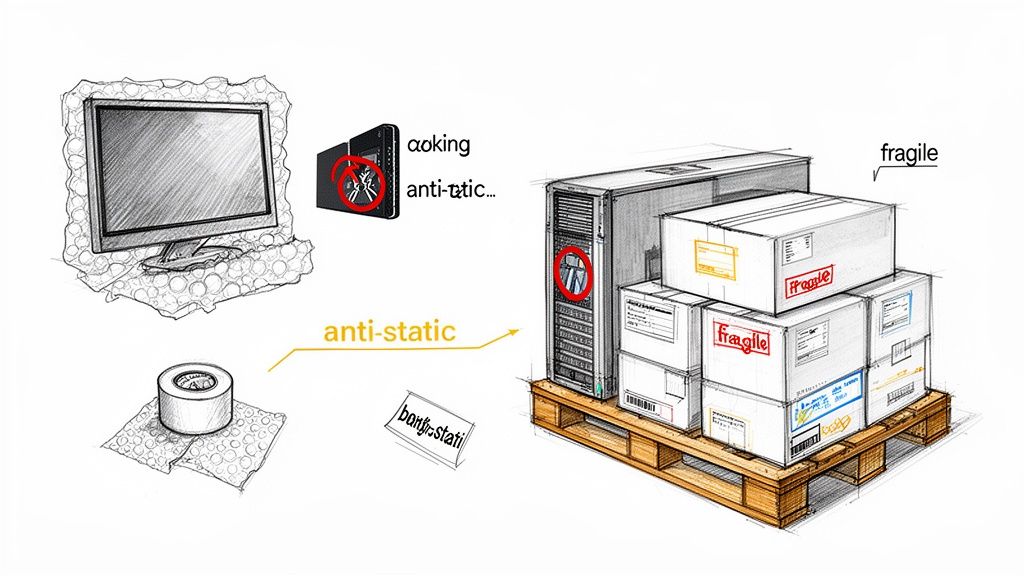
When you’re putting valuable office assets into storage, it’s about more than just finding a few cardboard boxes and a roll of tape. Simply chucking sensitive equipment into a box is a fast track to costly damage and a major headache when you need it back. Think of professional packing as a direct investment in your business’s continuity.
It all comes down to treating your IT gear with the respect it deserves and having a clear system for your documents and furniture. Get this right, and everything will come out of storage in the same pristine condition it went in.
Protecting Your Sensitive IT Gear
Your IT infrastructure is the nerve centre of your business, and it’s surprisingly fragile. Servers, computers, and monitors are all vulnerable to static electricity, knocks, and damp. Just wrapping a server in standard bubble wrap simply won't do the job.
The biggest unseen threat to electronics is electrostatic discharge (ESD) – that tiny spark that can completely fry delicate internal circuits. To avoid this, you absolutely must use anti-static materials.
- Anti-Static Bags: Essential for smaller components. Pop your hard drives, graphics cards, and memory sticks into these specialised bags before they go anywhere near a box.
- Anti-Static Bubble Wrap: This is what you need for the big stuff. Use it to cushion servers, PC towers, and monitors without generating a dangerous static charge.
- Original Packaging: Still got the original boxes with their moulded foam inserts? Perfect. They were literally made to protect that specific piece of equipment during transit.
Packing up your tech is also a great opportunity to assess what you actually need to keep. This guide on decommissioning office equipment is brilliant for helping you sort what to store from what to recycle or retire, making the whole job much slicker.
Creating a System for Documents and Furniture
There’s nothing worse than facing a wall of identical, unmarked boxes. A bit of systematic thinking when packing documents and dismantling furniture will save you a world of pain later, transforming your storage unit into a well-organised extension of your office.
First things first, create an inventory. Give every single box a unique number and log it on a spreadsheet with a brief description of what’s inside. This simple act turns the nightmare of finding a specific file into a two-minute job.
Labelling is your best friend. Be consistent and be clear. Mark at least two sides of every box with its number, its contents (e.g., "Box 14 – Q2 Financial Records"), and where it's eventually heading.
When it comes to your furniture, take apart anything you can. Removing the legs from desks and tables makes them much easier and safer to stack. Keep all the screws, bolts, and small fittings together in a labelled plastic bag and tape it securely to the main furniture piece it belongs to. No more mystery hardware when it’s time to reassemble!
If you're looking for the right supplies, you can explore our guide to find the best packing materials for moving to get you started.
By taking the time to pack properly, you’re not just storing things – you’re actively protecting your business’s ability to function and safeguarding your investments for the future.
Breaking Down the Costs of Business Storage
Figuring out the true cost of a storage unit for your office is key to making a smart financial decision. It’s a bit like booking a flight – the price you see at first is just the starting point, not the final amount you'll actually pay. Several factors come into play that can bump up your monthly bill.
The most obvious things that affect the price are the unit size and how long you need it for. A bigger space will naturally cost more, and you’ll often find that committing to a longer-term contract can bring the monthly rate down compared to a flexible rolling agreement. But a couple of other crucial elements will really shape the final quote.
Key Factors That Shape Your Quote
Where the facility is located makes a huge difference. A storage unit in a prime city-centre spot will always be pricier than one on the outskirts of town, simply because of the cost of real estate. This is a standard part of the UK self-storage sector, which has seen incredible growth lately.
In 2024, the industry generated a whopping £1.2 billion in turnover, and the total rentable space has shot up to over 64.3 million square feet. This boom shows just how much businesses need secure, flexible storage as they adapt to new ways of working. You can discover more about the growing UK storage market to understand how this trend affects what you’ll pay.
Special features also add to the bill. As we’ve mentioned, a climate-controlled unit is a must-have for sensitive electronics and important documents, but this comes at a premium. The same goes for facilities with top-tier, multi-layered security systems; you're paying for that extra protection and the peace of mind it brings.
Uncovering Potential Hidden Fees
Beyond the advertised monthly rate, a few extra charges can easily catch you out. Knowing what these are ahead of time means you can budget properly and ask the right questions when you’re comparing different providers.
A transparent quote should clearly itemise every single cost. If a provider is vague about additional fees, treat it as a red flag. A reputable partner will be upfront about the total investment required to protect your assets properly.
Keep an eye out for these common extras:
- Administrative Fees: Lots of facilities charge a one-off setup fee for processing your paperwork and getting your account sorted.
- Mandatory Insurance: While some providers might include very basic cover, most will require you to buy a separate insurance policy. It's an essential expense, but it needs to be factored into your total budget from the get-go.
- Security Deposits: A refundable deposit is standard practice, but it's still an upfront cost you need to be ready for.
- Locks and Supplies: You’ll often need to buy a specific type of high-security lock directly from the facility itself.
Modernising the Quoting Process
To get rid of any nasty surprises and make sure you get a fair, accurate price, some forward-thinking companies are now using technology to make quoting much simpler. Things like mobile video surveys let a professional assessor see your items remotely. This means they can give you a precise recommendation on unit size and a detailed, transparent quote. This whole approach takes the guesswork out of the equation, ensuring you only pay for the space you really need and understand every cost before you sign on the dotted line.
Your Checklist for Selecting a Storage Partner
Choosing a storage unit for your office isn't just about finding an empty space; it's about finding a partner you can trust with your business assets. The right provider doesn't just hand you a key—they offer a complete solution that fits neatly into your operations. A bit of due diligence now can save you a world of headaches later on.
Think of it like hiring any other key supplier. Your first step should be to draw up a shortlist of potential facilities and then put them through their paces, checking them against your list of absolute must-haves. This methodical approach is the best way to find a provider that truly understands your needs for security, access, and service.
Evaluating Security and Access
Solid security is the bedrock of any good storage partnership. Don't just rely on a glossy brochure; go and see the facility for yourself. A secure site should have layers of protection working around the clock to keep your equipment and sensitive documents safe.
Look for these non-negotiables:
- 24/7 CCTV Surveillance: Make sure high-definition cameras are covering all the crucial spots, like entrances, hallways, and loading bays.
- Controlled Access: A modern facility should use electronic gates that require a unique PIN or key fob. This creates a clear digital trail of everyone who comes and goes.
- Perimeter and Lighting: A high, sturdy fence and bright, motion-activated lighting are your first line of defence, deterring anyone who shouldn't be there.
- On-Site Staff: Having professional staff present during business hours adds a vital layer of human oversight and accountability.
Beyond security, think about pure, practical access. Your business doesn't stop at 5 p.m., and your storage shouldn't either. Check their access hours to make sure you can get to your things when you actually need them, whether that’s first thing in the morning or over a busy weekend.
Scrutinising Contracts and Coverage
Once you’re happy with the physical setup, it’s time to look at the small print. A storage agreement can be riddled with clauses that affect your flexibility and bottom line, so reading it carefully is time well spent. For a deeper dive, our guide on renting storage in Bristol and what you need to consider is a great resource.
A provider’s contract tells you a lot about how they do business. You’re looking for transparency and flexibility, not restrictive terms and hidden fees designed to catch you out.
Pay special attention to the lease terms. Are they offering a flexible month-to-month agreement, or are you about to be locked into a long-term commitment you might not need? You’ll also need to get clear on their insurance policy. Most facilities insist on it, but the level of cover required can vary. Check if your existing business insurance covers items stored off-site, or if you'll need to purchase a separate policy through the provider.
The Value of Integrated Services
Finally, look past the four walls of the unit itself and see what other services are on the table. A genuine storage partner can simplify your logistics from start to finish, saving you a huge amount of time and effort. Services like professional packing, for example, ensure your delicate IT equipment and office furniture are properly protected for storage.
It’s also worth asking if they can handle the transport to and from the facility. Some providers even offer inventory management systems, which can be an absolute game-changer if you’re storing large amounts of stock or archived files. These kinds of integrated solutions turn a simple storage space into an extension of your business, helping you minimise downtime and protect your investments.
Got Questions About Office Storage? We’ve Got Answers
If you're new to the world of commercial storage, you've probably got a few questions. That's completely normal. Getting clear answers is the first step to making a smart decision for your business. Let's tackle some of the most common things we get asked about using storage units for office equipment and furniture.
What Can I Actually Put in a Business Storage Unit?
For the most part, you can store anything you'd typically find in an office. Think of it as your company's own secure lock-up, just off-site. Desks, chairs, filing cabinets, old computer towers, servers, boxes of archived documents, and even excess stock or marketing banners are all fair game.
But there are some common-sense restrictions for safety. You can't store:
- Hazardous or Flammable Materials: Things like chemicals, solvents, or paint are a definite no-go.
- Perishables: No food, drinks, or plants. They attract pests and create a real mess.
- Illegal Items or Weapons: This one's a given for legal and security reasons.
These rules are there to keep everyone's belongings safe. If you're ever unsure about a specific item, just ask the storage provider. They'll tell you straight away.
How Much Notice Do I Have to Give to Move Out?
This is where self-storage really shines compared to a traditional commercial lease. You aren't locked into a rigid, multi-year contract. Business needs change, and storage solutions are built to change with you.
You'll usually find the standard notice period is between 14 and 30 days. This gives you incredible agility, allowing you to upsize, downsize, or move out completely without being hit by huge penalties. It’s a level of flexibility that traditional property leases just can’t offer.
This makes it perfect for temporary situations like an office fit-out, or for longer-term storage where you're not quite sure what the future holds.
Is My Equipment Insured While It's in Storage?
This is a big one, and you can't afford to get it wrong. While good storage facilities have top-notch security, their basic agreement doesn't cover the value of your items. Insuring your goods is your responsibility.
Most reputable providers will actually ask for proof of insurance before you can even move in. You generally have two routes you can take:
- Check your current business policy: Your existing commercial insurance might already cover goods stored off-site. It’s worth a quick call to your provider to find out.
- Take out specialist storage insurance: The facility itself will almost certainly offer an insurance policy designed specifically for stored items. It's often the easiest option.
Whatever you do, don't just assume you're covered. Taking a few minutes to confirm your insurance is sorted is a crucial step in protecting your business assets.
Ready to simplify your office storage and minimise business disruption? SimplyPro Removal & Storage Ltd offers secure, flexible solutions with expert packing, transport, and comprehensive insurance to protect your assets. Get a free, no-obligation quote today!