


Using storage when moving house can be a real game-changer. It gives you a crucial buffer, turning what could be a rigid and stressful timeline into something much more flexible and manageable. Think of it as a temporary home for your belongings when there's a gap between leaving your old place and getting the keys to the new one, or even if you're downsizing or just need to clear some space to sell your home.
Why You Might Need Storage When Moving
Let’s be honest, moving is rarely a simple one-day affair. It’s usually a messy overlap of different stages, often complicated by last-minute delays and logistical hiccups. This is where professional storage becomes your secret weapon against the chaos. It gives you some much-needed breathing room when things don't go exactly to plan.
You'd be surprised how often storage becomes essential. It's not just for big, complicated international moves; it's a lifesaver for everyday local ones too.
Let's look at a few common situations where having a storage unit can make all the difference.
Common Scenarios for Using Storage During a Move
Here's a quick look at situations where storage becomes a crucial part of the moving process.
| Moving Challenge | How Storage Provides a Solution | Example Application |
|---|---|---|
| Gaps in the Property Chain | Offers a secure, temporary home for your belongings between move-out and move-in dates. | You've sold your house and must be out by the 15th, but your new home isn't ready until the 30th. |
| Downsizing Your Home | Gives you time to sort through possessions you want to keep, sell, or donate without cluttering your new, smaller space. | Moving from a 4-bedroom family house to a 2-bedroom flat and needing to decide what to do with extra furniture. |
| Decluttering for a Sale | Allows you to stage your home effectively by removing personal items and excess furniture to make rooms feel bigger. | Clearing out bulky furniture and personal collections to help potential buyers see the property's full potential. |
| Renovating a New Property | Keeps your furniture and belongings safe from dust, damage, and paint while you carry out work before moving in. | You want to repaint and install new flooring in your new house before all your things arrive. |
Having a solid storage plan helps you navigate these bumps in the road without the last-minute panic.
Bridging Gaps in the Property Chain
This is easily one of the most common reasons people need storage. Picture this: you've sold your home and the new owners are moving in on the 15th, but you can't get into your new place until the 30th. That two-week gap can feel like an eternity.
Without a plan, you might find yourself frantically calling friends to borrow garage space or paying for expensive, last-minute fixes. Using storage when moving house provides a secure, professional spot for your things, meaning you can stay in a hotel or with family without bringing your entire life with you.
Decluttering to Attract Buyers
When you're selling, first impressions are everything. You want buyers to walk in and immediately picture themselves living there, and that's hard to do when a room is filled to the brim. Estate agents will almost always tell you to declutter. This isn't just about being tidy; it's a strategy called home staging, and it can seriously boost your final sale price.
A temporary storage unit is perfect for this. It lets you:
- Move out bulky or extra furniture to make rooms look and feel more spacious.
- Pack away personal things like family photos, collections, and keepsakes.
- Clear out cupboards and lofts to show off how much storage space the house has.
This simple step helps you present your home at its absolute best, without having to get rid of items you love. You can explore how removals and storage fit together seamlessly in our complete removals and storage services guide.
According to a study from the Home Staging Association UK & Ireland, a massive 94% of estate agents said that staging a property leads to more viewings. Even better, staged homes can sell up to three times faster than those left as-is.
While we're talking about planning, it's a skill that applies to any move, big or small. If you're undertaking a larger relocation, understanding key considerations when moving cities or countries can help you anticipate challenges before they arise. A bit of forward-thinking makes any transition feel a whole lot smoother.
Choosing Between Self-Storage and Managed Storage
When you find yourself needing storage during a house move, you’ll quickly come across two main options: self-storage and managed storage. Getting your head around the basic difference between them is the first real step to making the right call. The easiest way to think about it is choosing between a DIY project and a full-service, hands-off solution.
Self-storage is a bit like hiring your own personal garage or lock-up. You rent a unit of a certain size at a facility, get your things there yourself, and pack it all in. You're the one with the key, so you can usually pop in and out whenever you need to during their opening hours.
Managed storage, on the other hand, is much more of a valet service, often offered by removal companies like us. Your movers professionally pack your belongings into large, sealed wooden containers right at your home. These are then whisked away to a secure warehouse for safekeeping. Access is typically more limited and needs to be arranged in advance, simply because the company is looking after everything for you.
What Is Self-Storage?
Self-storage is all about flexibility and control. It’s the perfect choice if you think you’ll need to get to your things fairly often. For example, if you're in the middle of a renovation and need to grab tools, or you’ve stored seasonal clothes you might need unexpectedly, a local self-storage unit with easy access is a lifesaver.
The process itself is quite straightforward:
- You pick the unit: You decide on the size you need, anything from a small locker to a space the size of a double garage.
- You do the legwork: It's down to you to pack everything up, hire a van, drive to the facility, and load the unit.
- You hold the key: This means you can visit as often as you like to add or take things out.
This hands-on approach puts you completely in charge. It’s a brilliant option for shorter-term storage where being able to access your stuff is the most important thing.
What Is Managed Storage?
Managed storage is designed from the ground up for convenience and maximum security. It prioritises the protection of your belongings over the need for frequent access. This makes it ideal for situations where you know you won't need to touch your things for a while, like bridging a gap between moving dates or storing items for the long haul.
With this 'valet' approach, your removal company does all the heavy lifting. They’ll expertly load your possessions into purpose-built containers at your home, create an inventory list, and then seal them right in front of you. From there, the containers are taken to a secure, often climate-controlled, warehouse.
Because your items are only handled twice—once when they're loaded and once when they're unloaded at your new home—managed storage dramatically cuts down the risk of damage. It’s a huge improvement on the multiple trips and self-packing that come with a DIY storage approach.
For valuable or delicate items, this service offers a level of peace of mind that’s hard to beat.
This flowchart can help you visualise how different moving scenarios might point you toward one solution or the other.
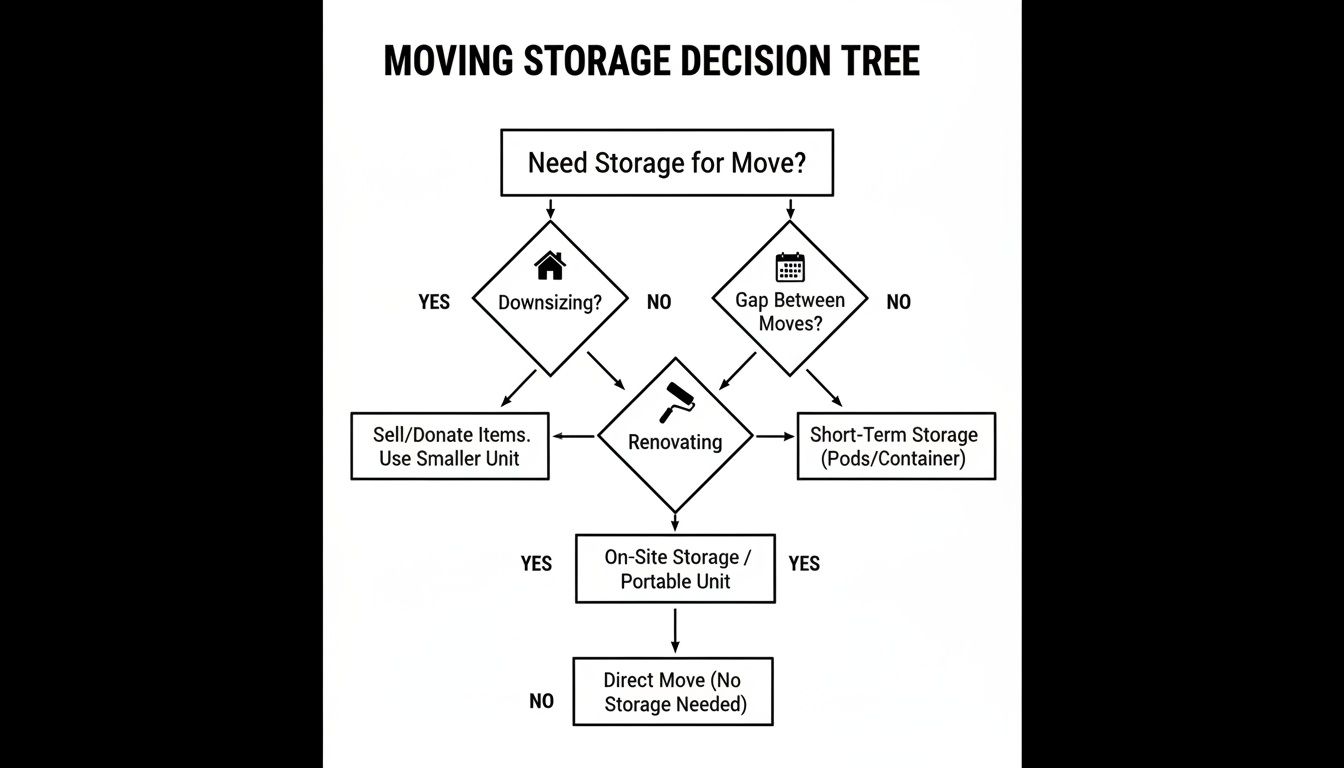
Ultimately, the biggest factors in your decision will be your moving timeline and how often you'll need to get to your belongings.
A Head-to-Head Comparison
To make the choice even clearer, let's put them side-by-side. Your decision on storage when moving house will probably come down to which of these factors you care about most.
| Feature | Self-Storage (The DIY Locker) | Managed Storage (The Valet Service) |
|---|---|---|
| Accessibility | High; often 24/7 access | Low; requires an appointment |
| Convenience | Low; you handle all transport and labour | High; professionals handle everything |
| Security | Good, but relies on your own padlock | Excellent; stored in secure, alarmed warehouses |
| Cost Structure | Pay-per-unit, often weekly or monthly | Often bundled with removal services; can be more cost-effective |
| Best For | Short-term needs, frequent access, renovations | Bridging moving gaps, long-term storage, downsizing |
At the end of the day, self-storage is for people who value hands-on control and easy access above all else. Managed storage, in contrast, is the perfect fit for those who prioritise convenience, top-tier security, and want a smooth, all-in-one solution that’s part of their house move.
Understanding the True Cost of Moving Storage
Budgeting for a house move can feel a bit like trying to hit a moving target. With so many different things to think about, the costs can pile up quickly. A big piece of that puzzle, and one that often gets overlooked, is the price of storage when moving house. The final bill isn't just a simple weekly fee; it’s a mix of several important factors.
It’s a bit like booking a flight. The price changes depending on how much luggage you’re taking (the size of your unit), how long you’ll be away (the duration), and whether you’re flying economy or business class (the level of service you need). Getting your head around these elements is the first step to creating a moving budget that won't give you any nasty shocks.
Naturally, the biggest factor is how much space you actually need. A few boxes from a one-bedroom flat will cost far less to store than the entire contents of a four-bedroom family home.
Key Factors That Influence Storage Pricing
To make sure you don't get caught out, it helps to understand what really goes into a storage quote. Each of these elements affects the total cost, and knowing what they are means you can ask the right questions and compare different companies properly.
- Unit Size: This is the main driver of the price. You’ll obviously pay more for a 150 sq ft unit than a 50 sq ft one. A good, honest assessment of what you need to store is crucial so you don't end up paying for empty space.
- Storage Duration: How long do you need it for? While you might see weekly rates, many companies offer better value if you commit to a longer-term plan, like a monthly or quarterly one.
- Level of Service: There's a big difference between a fully managed storage service, where the removal company does all the heavy lifting and transport, and a DIY self-storage unit where you're responsible for everything. The prices will reflect that.
- Insurance Coverage: This is a big one. Your standard home insurance almost never covers your belongings when they're in a separate storage facility. You’ll need to factor in the cost of proper storage insurance to make sure your things are protected.
The Value of Bundling Services
Honestly, one of the smartest ways to keep costs down and make life easier is to bundle your storage with your removal service. Using a single company for both moving and storage often works out cheaper and makes for a much smoother experience.
Instead of trying to coordinate two different companies, juggle separate schedules, and manage multiple bills, everything is taken care of under one roof. Your removal team can move your items from your old home straight into their own secure storage, which means less handling and a much lower risk of anything getting damaged.
Bundling isn't just about saving a bit of money; it's about efficiency. When your removal and storage teams are one and the same, communication is clearer, the logistics just work, and the whole process becomes far less stressful for you.
This all-in-one approach saves you time, effort, and often, a fair bit of cash. To get a better idea of what you might pay, take a look at our detailed guide on how much storage costs in the UK.
Avoiding Hidden Costs and Getting Accurate Quotes
When you're trying to budget for a move, you need total transparency. The average cost of moving house in England can be an eye-watering £17,831 once you factor in stamp duty, estate agent fees, and legal costs. With removals alone averaging around £709, families need to make every pound count. That’s why short-term storage is becoming such a popular way to manage the logistics without breaking the bank.
To get a quote you can actually rely on, be wary of any estimates that seem too good to be true. Always ask for a full breakdown that includes:
- The weekly or monthly storage rate.
- The cost of the insurance policy.
- Any charges for collection or delivery.
- Potential fees for accessing your unit out of hours.
- Any one-off admin or setup fees.
The best way to get a truly precise quote is to have a professional survey done. Here at SimplyPro, we offer quick and easy mobile video surveys. You can just walk us through your home on your phone, show us what needs storing, and we’ll give you a fixed, transparent price with absolutely no hidden surprises.
How to Pack Your Belongings for Storage
Packing for a direct move and packing for storage are two completely different things. When your belongings are going to be tucked away for weeks, or even months, your entire focus needs to shift towards long-term preservation. You're not just getting things from A to B; you're making sure they come out of that unit in the exact same condition they went in.
Think of it like you're creating a time capsule. You wouldn't just chuck things in and hope for the best, would you? The same principle applies here. A little extra care now is your best defence against dust, moisture, and the simple pressure of stacked boxes over time. It's what keeps your valuables safe while they're out of sight.
Gathering the Right Packing Materials
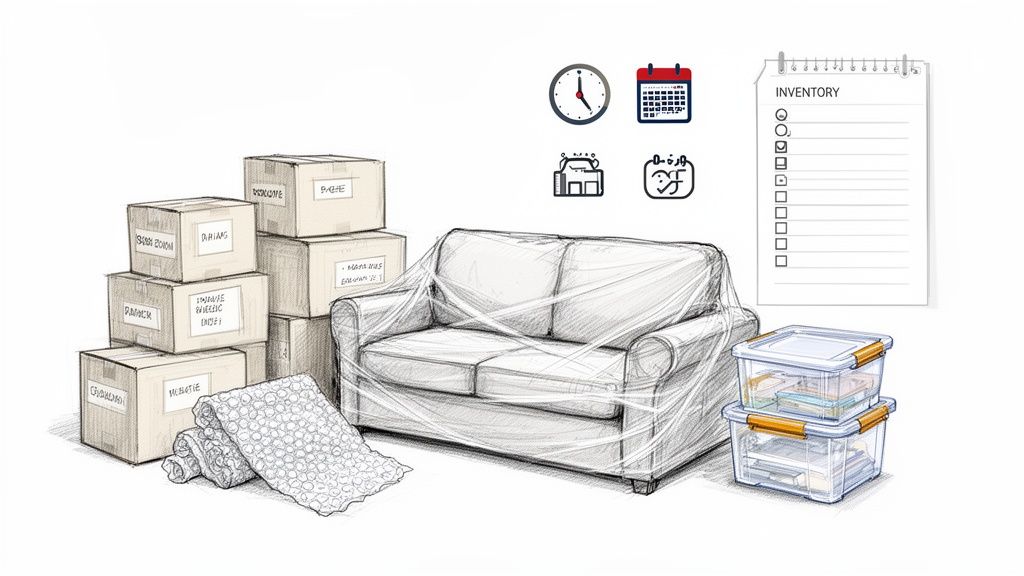
Before a single box is taped shut, you need the right kit. Grabbing used boxes from the local supermarket might feel like a smart way to save a few quid, but it’s a false economy. They often collapse under weight or, worse, soak up dampness like a sponge, putting everything inside at risk.
Investing in proper materials isn't just a good idea; it's essential for keeping your stuff secure.
- Sturdy, Uniform Boxes: New, double-walled cardboard boxes of a similar size are a game-changer. They stack securely, creating stable towers that won't topple over.
- Strong Packing Tape: This is no time to be frugal. Good quality tape keeps your boxes sealed tight and adds to their structural strength.
- Protective Wraps: Bubble wrap is your best friend for anything fragile. For bigger pieces, old sheets or dust covers will shield furniture from scratches and grime.
- Marker Pens and Labels: Get a thick, black marker and label every box clearly on at least two sides. You’ll thank yourself later when you're looking for that one specific thing.
A Step-by-Step Guide to Packing for Storage
With all your supplies at hand, it’s time to pack with a plan. This isn't about speed; a methodical approach pays dividends. Before you start, it's worth exploring some storage furniture options and decluttering tips to help figure out what you really need to store.
- Clean and Dry Everything: Make sure every single item is completely clean and bone-dry before it goes into a box. Even a tiny bit of moisture can lead to a nightmare of mould and mildew in a sealed unit.
- Disassemble Large Furniture: If it can come apart, take it apart. Bed frames, tables, and bookcases take up a fraction of the space when flat-packed. Pop all the screws and fittings into a labelled bag and tape it securely to the largest part of the furniture.
- Wrap and Protect: Use dust covers or moving blankets for all your wooden and upholstered items. When it comes to glassware or china, wrap each piece individually in packing paper before putting it in the box.
- Pack Boxes Smartly: Always put the heaviest items at the bottom and the lighter ones on top. Fill any gaps with crumpled packing paper or towels to stop things from shifting. And a golden rule: if you can't lift the box comfortably, it's too heavy.
- Label with Detail: Be specific! Instead of "Kitchen," write "Kitchen – Everyday Plates & Bowls." Make sure to clearly mark any boxes containing fragile items. For more in-depth advice, check out our complete guide on how to pack for moving.
Create a Simple Inventory
I know, making an inventory sounds like a chore, but trust me, it’s a lifesaver. It doesn’t need to be a complex spreadsheet—a simple notebook or a list in your phone’s notes app works perfectly.
Number each box and then jot down a brief summary of what's inside. For example: "Box 14: Master Bedroom – Winter Jumpers and Scarves." This simple system turns the frustrating task of finding one specific item into a quick and easy job.
This master list also becomes a crucial document for insurance purposes. If the worst should happen, you have a clear, detailed record of everything in your unit, which will make any claims process infinitely smoother. It's a five-minute job per box that can save you hours of headaches later on.
Creating a Smart Moving and Storage Timeline
A successful house move isn't just one frantic day of lifting boxes. It's a carefully timed operation, and when you throw storage when moving house into the mix, a clear timeline becomes your most valuable tool. Think of it as your roadmap, guiding you from the first thoughts of packing to finally putting your feet up in your new home.
Honestly, viewing your move as a project is the best way to tackle it. You wouldn't build an extension without a plan, so why would you move without a schedule? A well-thought-out timeline helps you juggle your removals and storage needs without dropping the ball, turning what feels like a monumental task into a series of small, achievable steps. It's all about preventing that last-minute panic and keeping you in the driver's seat.
The secret? Start early. Seriously, the moment you know a move is happening, the clock is ticking. Giving yourself a generous runway lets you do your homework, compare quotes properly, and make smart decisions without feeling like your back is against the wall.
Your Week-by-Week Action Plan
A structured timeline is your best friend for staying organised. By breaking down the weeks leading up to the big day, you can make sure every little detail is sorted and that your storage plans fit in perfectly.
6-8 Weeks Before Moving Day
This is your planning and booking window. It’s all about getting your key players locked in.
- Get Your Quotes: Start reaching out to reputable removal companies that also offer storage. This is the perfect time to book a video survey to get a precise, fixed-price quote covering both your move and any storage you might need.
- Book Your Services: Found a quote you’re happy with? Get it booked. The best companies get snapped up months in advance, especially during the busy spring and summer months.
- Start the Big Sort: It’s time to be ruthless. Go through everything you own and decide what’s going into storage, what’s coming to the new house, and what can be sold, donated, or binned.
3-4 Weeks Before Moving Day
With the main services booked, you can now shift your focus to the hands-on prep work.
- Gather Packing Supplies: If you’re doing the packing yourself, now’s the time to stock up on quality boxes, strong packing tape, and bubble wrap.
- Begin Packing Non-Essentials: Start with the things you won’t miss for a month. Think out-of-season clothes, spare bedding, books, and ornaments. Make sure you label every single box with its contents and where it’s headed (e.g., “STORAGE” or “NEW HOME – KITCHEN”).
Pro Tip: The smoothest approach is to use the same company for both your removals and storage. Having a single team handle everything—from packing your storage items to eventually delivering them to your new home—massively cuts down on handling, which in turn reduces the risk of damage.
Finalising Your Storage Logistics
As moving day looms, your timeline gets more granular, zeroing in on the final details.
1-2 Weeks Before Moving Day
It's crunch time. This is when you confirm everything and get the bulk of the packing done and dusted.
- Confirm All Details: Ring your removal and storage provider. Double-check timings, access arrangements, and go over any special instructions you might have.
- Pack an 'Essentials' Box: This is a lifesaver. Pack a box with everything you'll need on moving day and for the first 24 hours in your new place – kettle, tea bags, phone chargers, toiletries, important documents, and maybe a bottle of something celebratory. Keep this box with you, not on the van.
- Finish Packing: The goal is to have every other box packed, sealed, and ready to go.
Following a clear timeline transforms the chaos of a typical move into a calm, controlled process. And when those inevitable delays pop up, having a flexible storage plan already in place means you can pivot without the stress, ensuring your move is as smooth as it can possibly be.
Finding a Trustworthy Storage Provider
Let’s be honest, choosing where to store your belongings is a decision built on trust. You aren't just renting a space; you're handing over cherished furniture, family heirlooms, and valuable items that make your house a home. This is why finding the right provider is the most important step of all—you need to know your things are safe and secure when they’re out of your sight.
Think of it like picking a babysitter for your belongings. You wouldn’t settle for just anyone, would you?
This means looking past the headline price and the most convenient location. A reputable company will be completely upfront about its security, insurance, and access policies. They should give you total confidence that your things are in professional hands, from the moment they’re collected until they’re safely back with you.
Key Security Features to Look For
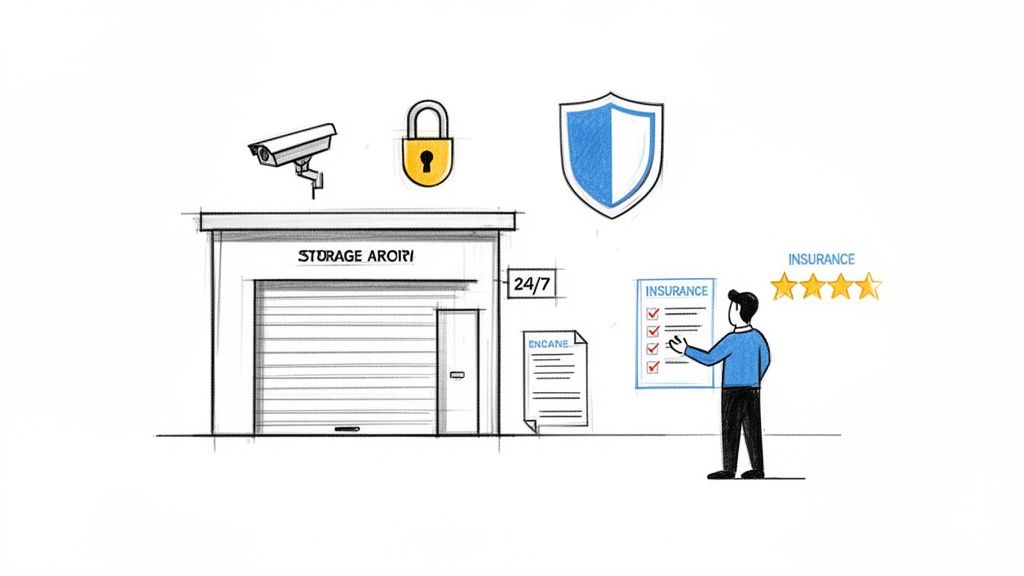
When it comes to your possessions, security is non-negotiable. A simple padlock on a door just doesn't cut it anymore if you want real peace of mind. A trustworthy provider invests in multiple layers of protection to create a truly secure environment.
When you're comparing your options, make sure these essential security measures are on your checklist:
- 24/7 CCTV Monitoring: Round-the-clock video surveillance covering all access points, corridors, and the building's perimeter is your first line of defence.
- Controlled Access: The facility should have a secure entry system, like key fobs or coded gates, to ensure only authorised customers and staff can get inside.
- Individual Alarms: Many modern facilities now offer individually alarmed units, which is a fantastic extra layer of security that alerts staff immediately to any unauthorised entry.
- On-Site Staff: Having a manager or security personnel present during business hours adds that crucial human element of oversight and allows for a rapid response if needed.
These features all work together to build a robust defence system, drastically reducing the risk of theft or damage and keeping your belongings protected around the clock.
Verifying Insurance and Reading Reviews
Insurance is your ultimate safety net. It’s a common mistake to assume your home insurance will cover items in a storage unit—most policies don't. A professional storage provider is legally required to offer specific insurance designed for stored goods. Always ask to see the policy details and get clarity on exactly what it covers, such as fire, theft, and water damage.
Beyond the official paperwork, what other people say is incredibly revealing. Check out recent reviews on independent platforms like Google or Trustpilot. One grumpy review isn't a deal-breaker, but a pattern of complaints about security lapses, surprise fees, or poor customer service is a massive red flag.
Look for patterns in the feedback. Consistently positive reviews that praise helpful staff, clean facilities, and a straightforward process are a strong sign you’re dealing with a reliable, customer-focused company.
Questions to Ask a Potential Provider
Before you sign on the dotted line, go in prepared with a list of questions. The way a provider responds will tell you a lot about their professionalism and transparency. A good company will be more than happy to give you clear, direct answers.
Here’s what you should ask:
- What are your exact access hours, and are there extra fees for out-of-hours access?
- Can I see a full breakdown of all costs? I want to know about any admin fees or deposits.
- What is your process if I need to access my items in a managed storage unit?
- What level of insurance coverage is included as standard, and what are my options to increase it?
- What specific security measures do you have, including CCTV, alarms, and on-site staff?
Taking this little bit of extra time to properly vet your provider is the best way to ensure your storage when moving house is a stress-free and secure experience. It empowers you to make a smart choice and gives you the confidence that your belongings are truly in safe hands.
Your Moving and Storage Questions, Answered
Even the most organised move can throw up a few last-minute questions, especially when it comes to storage. It’s completely normal. To help clear up any lingering doubts, we’ve put together answers to some of the questions we hear most often from our customers.
Think of this as a quick chat with an expert, designed to give you that final bit of confidence before the big day.
How Much Storage Space Do I Actually Need?
This is the million-dollar question, isn't it? No one wants to rent a huge unit only to use a corner of it. As a rough rule of thumb, the contents of a one-bedroom flat usually fit nicely into a 35-50 sq ft unit. If you're moving out of a three-bedroom house, you’ll likely need something in the 100-150 sq ft range.
But those are just ballpark figures. The best way to know for sure is to have an expert take a look. These days, you don't even need a home visit. We can do a quick video survey – you just walk us through your rooms on a video call, and we'll tell you exactly what size unit you need. It’s the simplest way to make sure you’re only paying for the space you’ll actually use.
Are My Belongings Insured While in Storage?
This is a really important one, and something people often get wrong. Your standard home insurance policy almost certainly won't cover your items once they're in a separate storage facility. It’s a common blind spot that could leave you high and dry if the unexpected happens.
Any professional storage company worth its salt will insist on proper storage insurance. It’s specifically designed to cover your goods against risks like fire, theft, or water damage while they’re in the unit. Always ask about their insurance options and make sure the cover is right for the value of what you’re storing.
What Items Can I Not Put in Storage?
For everyone's safety, all storage facilities have a list of things you absolutely cannot store. These rules aren't there to be difficult; they’re in place to protect your belongings and everyone else’s.
You'll need to find another plan for these items:
- Hazardous Materials: Anything flammable, corrosive, or explosive is a no-go. Think petrol, paint, chemicals, and gas canisters.
- Perishable Food: Any food that can go off is strictly forbidden. It attracts pests and creates a real mess.
- Illegal Substances or Stolen Goods: This one is pretty self-explanatory for legal reasons.
- Living Things: It might sound obvious, but it has to be said – no plants or animals can be kept in a storage unit.
Your moving and storage provider should give you a crystal-clear list of prohibited items before you sign anything.
Ready to take the stress out of your move with a secure, simple storage solution? SimplyPro Removal & Storage Ltd offers flexible short-term and long-term storage bundled with our expert removal services. Get a fast, accurate quote today with our easy mobile video survey.