


Moving day isn't just one long, chaotic event; it's a carefully orchestrated process. Think of it less like a sprint and more like a relay race, where your preparation hands the baton over to the moving crew's expertise to get you across the finish line. From the moment the team arrives to the last box being set down, everything follows a proven system to move your life safely and efficiently.
Your Moving Day Timeline, Hour by Hour
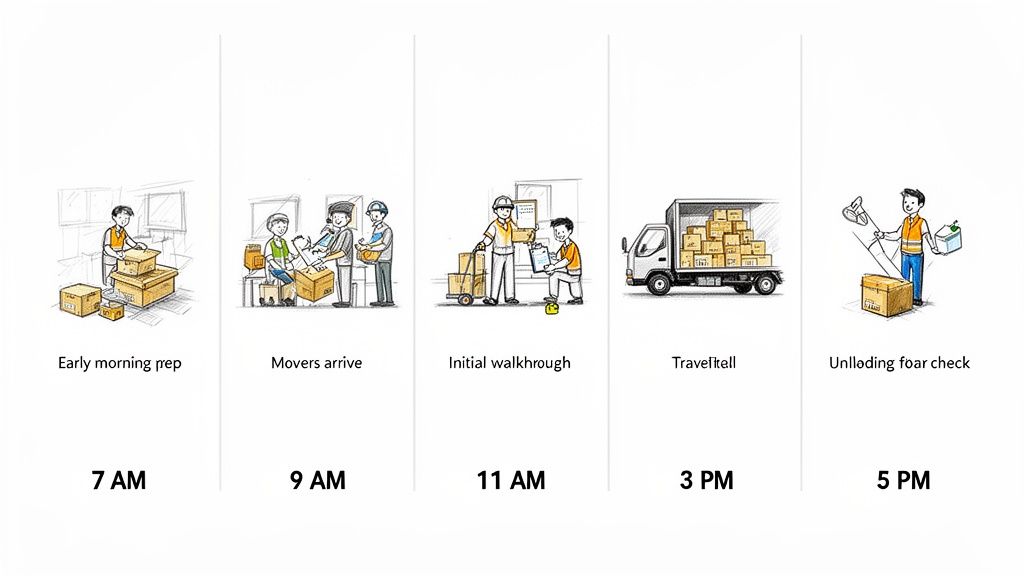
It’s easy to think of moving day as just that – a single day. But really, it’s the grand finale to weeks of planning and packing. Knowing the sequence of events helps turn what could be a stressful scramble into a predictable, manageable experience. You and your removal crew are the stars of the show, and this is your script.
The day can be broken down into a few key stages, from the early morning prep to the final unload.
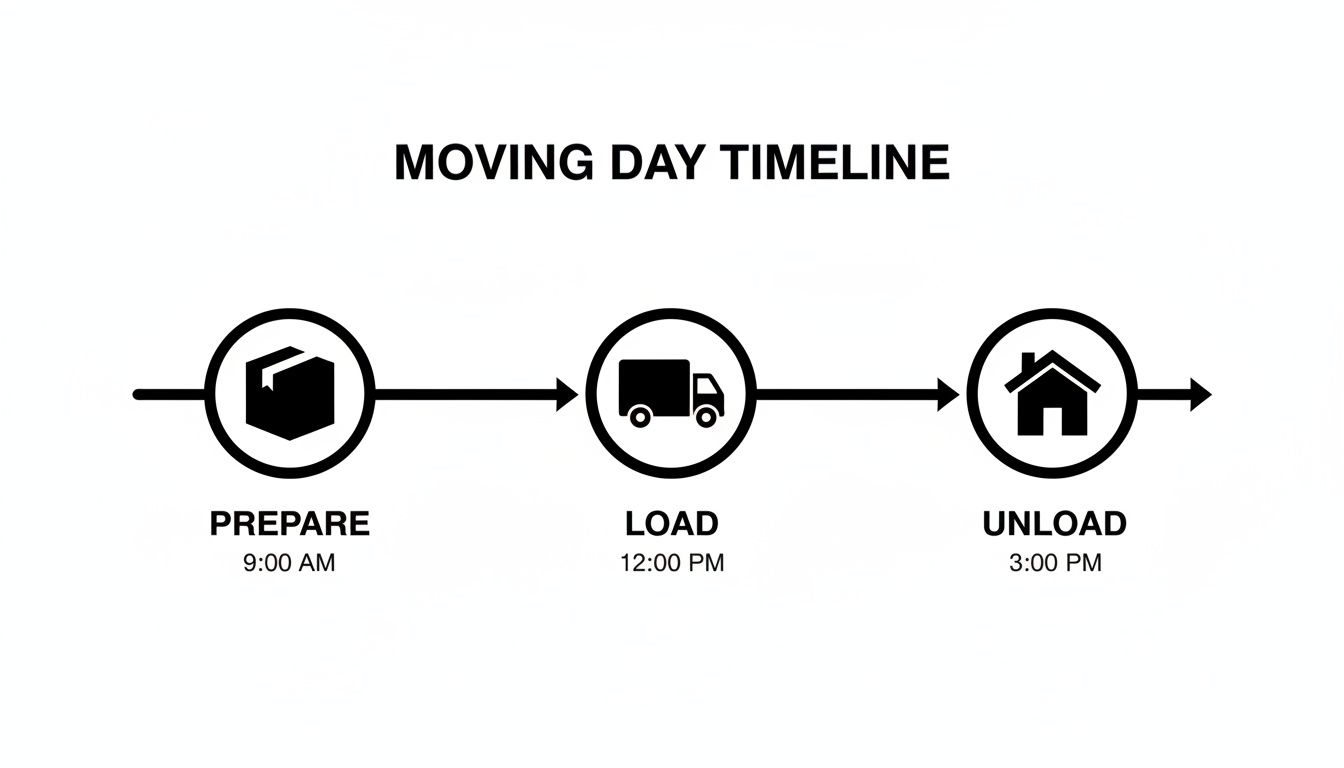
As you can see, the day has a natural flow, with each step logically following the one before it.
Before the Crew Arrives
Those first couple of hours on moving day are critical. They set the stage for a smooth day ahead. Before your SimplyPro team even knocks on the door, a few quick final checks on your part can make a world of difference.
Here’s what you should focus on:
- Clear the Decks: Make sure hallways, stairs, and doorways are completely free of clutter. This is about safety as much as efficiency.
- Secure Personal Items: Gather your passports, important documents, jewellery, and any necessary medications. Keep these with you in a personal bag or in your car.
- Pack Your "First Night" Box: This is a lifesaver. Pack a box with kettle, tea bags, toiletries, phone chargers, snacks, and maybe a fresh change of clothes. You’ll thank yourself later. Important: Keep this box with you, not on the van.
When the Movers Get There
Once the crew pulls up, the team leader will come and introduce themselves. They'll be your main point of contact throughout the day, so don't hesitate to ask them anything.
The first thing they’ll do is a quick walkthrough of your home with you. This is their chance to see exactly what’s going, spot any especially fragile items you’re concerned about, and confirm any specific instructions you might have. It’s a crucial step to ensure everyone is on the same page.
A professional crew works like a finely tuned machine. Before they move a single box, they'll prep your home by laying down protective floor runners and padding up banisters and door frames. It’s this attention to detail that prevents scuffs and scrapes, keeping both your old and new properties in pristine condition.
The Loading Process
With your home protected, the loading can begin. And it’s far more than just a strongman contest; it's a strategic puzzle.
The crew loads the van with a specific method in mind, a bit like a game of Tetris. Heavier, solid items like washing machines, sofas, and sturdy furniture go in first, forming a secure base along the walls. Lighter boxes and more delicate pieces are then carefully placed on top and secured so nothing can shift around on the road. This technique not only protects your belongings but also makes the most of every inch of space in the van.
For a complete checklist to ensure you’re fully prepared, take a look at our comprehensive guide on what to do when moving house and tick off any final tasks.
A Typical Moving Day Schedule
To give you a clearer picture, here’s a simplified breakdown of how the day usually flows and who does what.
| Time Slot | Your Responsibilities | Moving Crew Actions |
|---|---|---|
| 8:00 – 9:00 AM | Final checks, clear pathways, confirm parking is sorted. | Arrive, introduce the team, and conduct the initial walkthrough with you. |
| 9:00 – 9:30 AM | Answer any questions from the crew, keep kids/pets safely out of the way. | Protect the property with floor runners and padding. |
| 9:30 AM – 1:00 PM | Be available for questions, do a final sweep of emptied rooms. | Strategically load boxes and furniture onto the van. Disassemble any agreed-upon furniture. |
| 1:00 – 2:00 PM | Sign off on the inventory list, travel to the new property. | Finalise loading, secure the vehicle, and travel to the destination. |
| 2:00 – 5:00 PM | Direct the crew on where furniture and boxes should go in each room. | Unload the van, placing items in designated rooms. Reassemble furniture. |
| 5:00 PM onwards | Check all items are accounted for, sign the final paperwork. | Remove all protective coverings and equipment from the property. |
Of course, every move is different, so these times are just a guideline. A larger property or a long-distance move will naturally take more time, but the sequence of events remains largely the same.
What Your Professional Removal Crew Actually Does
Think of a professional removal crew less as simple heavy lifters and more like a finely tuned orchestra. Each member has a role, and their combined effort is all about moving your life from one place to another with precision, speed, and absolute care for your belongings. Getting a sense of their methodical process can really take the mystery out of moving day.
When the SimplyPro team pulls up, the first person you’ll likely meet is the crew leader. This is your go-to person for the entire day. They’re the director of the show, managing the team, answering any questions you have, and making sure the move unfolds exactly as planned, right from the initial walkthrough to the final box being placed.
A Process Built on Protection
The very first thing the crew does isn't moving boxes; it's protecting your home. Before anything gets lifted, they'll meticulously lay down protective floor runners, pad up delicate door frames, and cover banisters. This isn't just a nice touch—it's standard practice to prevent scuffs and scrapes at both your old place and your new one.
Once the house is prepped, they'll start dismantling any large furniture that needs it, like beds or wardrobes, as agreed upon beforehand. They have all the right tools and know-how to do this efficiently, carefully keeping all the bits and pieces together for straightforward reassembly later. This kind of systematic work is one of the core benefits of hiring a professional removal company.
You’ll notice the crew works in a seamless rhythm. One person might be bringing items to the doorway while another is an expert at loading the van, fitting everything together like a giant, real-life game of Tetris. This teamwork is what makes the process so smooth and surprisingly fast.
Handling Fragile and Specialist Items
Of course, not everything is a straightforward box. A professional crew is trained to handle items that need a bit more finesse and specialised equipment.
- Fragile Antiques: These get wrapped in multiple layers of thick, protective blankets and are strapped securely in the van to stop them from shifting an inch.
- Pianos or Awkwardly Heavy Items: Special dollies, heavy-duty trolleys, and lifting straps are brought out to manoeuvre these items without risking damage to them or the property.
- Artwork and Mirrors: These are usually swaddled in bubble wrap and then placed into custom picture boxes or even crated for ultimate protection during transit.
Throughout the loading process, the crew leader is often working with an inventory list, also known as a Bill of Lading. This document is a crucial checklist, ensuring every single item—from the biggest sofa to the smallest box—is accounted for before the van doors close. It’s the final piece of the puzzle that gives you complete peace of mind, knowing nothing has been left behind in the organised chaos.
Your Key Responsibilities on the Big Day
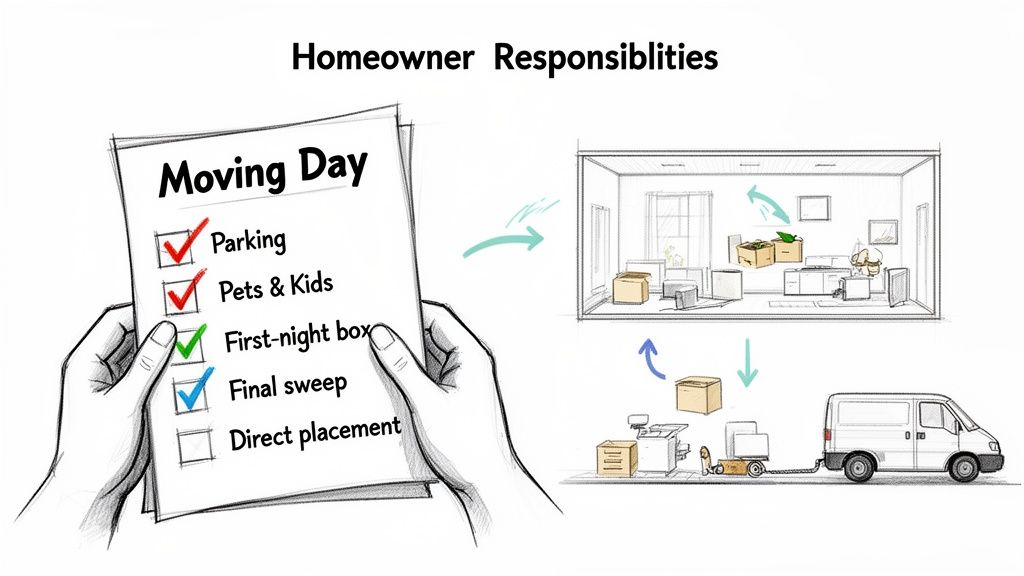
While the removal crew is handling all the heavy lifting, your job on moving day is to be the director of the operation. Think of yourself as the project manager. Your clear communication and oversight are what will make the entire process run like clockwork, turning a potentially chaotic day into a well-oiled machine.
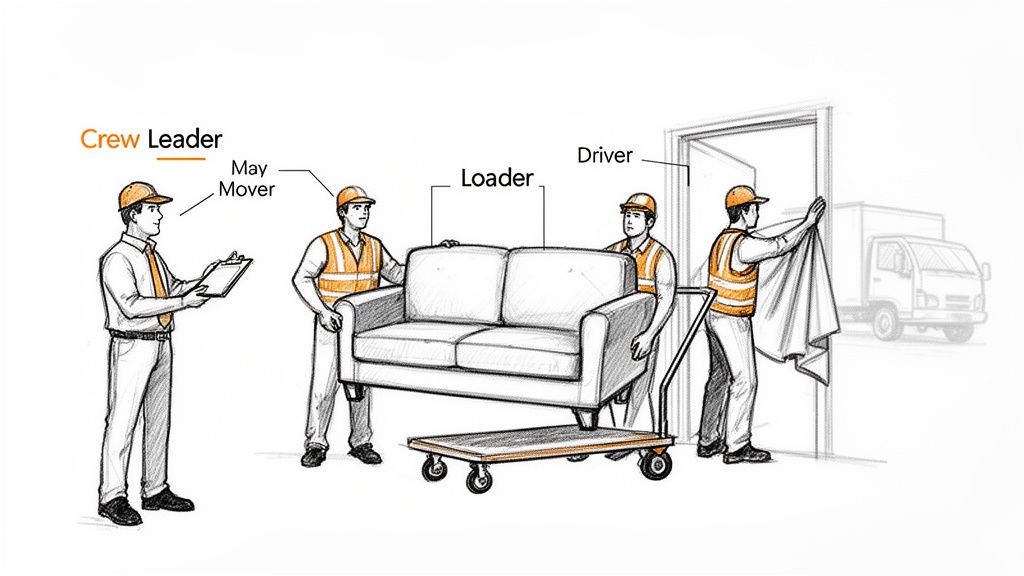
Your first, and arguably most important, task is to be there for the initial walkthrough with the crew leader. This is your moment to point out that antique vase from your grandmother, clarify which furniture is staying put, and answer any last-minute questions they might have. A quick five-minute chat at the start can prevent a world of confusion later.
Managing Access and Safety
One of the most helpful things you can do is make sure the crew has a clear and safe path to work. It all starts with parking—make sure that spot you reserved for the removal lorry is completely free before they pull up.
Beyond the parking space, a few other things fall to you:
- Keep Pathways Clear: Do a final check of all hallways, staircases, and doorways. Trip hazards are the last thing anyone needs.
- Manage Children and Pets: A busy moving site is no place for little ones or furry friends. The safest bet is to have them stay with family, a friend, or at a daycare for the day. This keeps them safe and the crew focused.
Your main job here is to create a safe, efficient workspace. When you sort out parking and keep kids and pets out from underfoot, you empower the movers to work quickly and safely, without having to navigate unexpected obstacles.
The Final Sweep and Directing the Unload
After the last box is loaded onto the lorry, you have one more crucial job at your old home: the final, thorough sweep. Don't just glance around—open every cupboard, check the loft, peek in the shed, and scan the garage. You'd be amazed what can get left behind in the rush. Using a comprehensive moving house checklist can be a lifesaver for this part. If you're renting, this is also when you'll tackle final cleaning tasks; it's wise to be familiar with any end-of-lease carpet cleaning requirements to help get your full deposit back.
Once you arrive at your new property, your hat switches from supervisor to director. As the crew starts bringing everything in, your job is to tell them exactly where it all goes. Point decisively! "The big sofa goes against that wall, the bookcase in this corner." Having a clear plan saves you the back-breaking work of shifting heavy furniture around by yourself after they've left. This guidance is a key part of what happens on moving day and makes the monumental task of unpacking feel much more manageable from the get-go.
Navigating Moving Day Paperwork and Payments
Moving day isn't just about heavy lifting; there's a crucial layer of admin that keeps everything official and above board. While the crew is busy with the boxes, your job is to manage the paperwork that legally seals the deal on your move. Think of it this way: keeping these documents in order is just as vital as wrapping your fine china.
Make sure your moving contract and insurance papers are close at hand—definitely not buried in a box somewhere. You’ll want to be able to pull them out if a question comes up. This paperwork is your official agreement, detailing everything from the services you’re paying for to the liability coverage.
That Nail-Biting Wait for Completion
If you're buying a house, the most stressful part of the day is almost always the wait for 'completion'. This is the green light from the solicitors, confirming all the money has been successfully transferred through the property chain. It's only after this confirmation that the estate agent can hand over the keys to your new place.
This is where things can sometimes grind to a halt. While it might seem tempting to move on a cheaper day, it can be a false economy. For example, Sunday is technically the least expensive day for a move, averaging about £717, whereas a Tuesday is the priciest at around £1,110. But here's the catch: a tiny 2.7% of people move on a Sunday. Why? Because solicitors and banks are usually closed or on limited hours, making a same-day completion feel like a real gamble. You can find more interesting stats on UK housing market trends at PropertySoup.co.uk.
A seasoned moving company like SimplyPro gets it. We know these delays happen and we’re prepared to work around them, though it's good to remember that waiting time fees might apply, as outlined in your contract.
Final Checks: Meters and Inventory
Right before you say a final goodbye to your old home, you have one last, very important task: take the meter readings. Grab your phone and take a clear, time-stamped photo of the gas, electricity, and water meters. This simple step is your proof against any future billing mix-ups.
Once the last box is inside your new home, the crew leader will hand you a document, often called the Bill of Lading or inventory list. This is your cue for a final check. Before you put pen to paper, do a thorough walk-through. Make sure every item on the list has arrived and is in the condition you expect. Your signature is the final word, confirming the job has been completed to your satisfaction.
Let’s be honest, even the most perfectly planned move can hit a snag. Moving day sometimes involves a bit of a waiting game, but knowing what to expect can stop a small hiccup from spiralling into a full-blown crisis. By far the most common delay we see? Waiting for the keys.
This almost always happens because of a delay somewhere in the property chain or a slow bank transfer. Your moving crew can be all packed up and ready to roll, but they legally can't set foot in your new place until the estate agent gets the official thumbs-up from the solicitors.
The Agony of Waiting for Keys
Professional movers have seen this play out hundreds of times, especially on the busiest days. It's a huge issue here in the UK, where about 34% of all house moves get crammed into a Friday. If you're moving in Bristol or Bath on a Friday, you're in a long queue of completions, and that can easily bog down the banking system. You can read more about this phenomenon on the HomeOwners Alliance website.
So, what happens? Your crew will find a safe place to park the lorry nearby and wait for your call. It’s important to know that most removal companies, SimplyPro included, have what’s called waiting time fees. This will be clearly laid out in your contract, but it's typically charged by the hour (or half-hour) for each crew member after an initial free waiting period.
Communication is everything here. Keep your crew leader in the loop with any updates you get from your solicitor or estate agent. That way, they can manage their time and be ready to jump into action the second you have those keys in your hand.
When You Can't Get the Lorry to the Door
Another spanner in the works can be physical access. A road might be unexpectedly closed, or a tight street makes it impossible for the removal lorry to get anywhere near your new front door. This is exactly why a professional pre-move survey is so valuable—our team will have already scouted out the access points.
If something completely unexpected pops up on the day, the usual solution is to bring in a smaller ‘shuttle van’. The big lorry parks as close as it safely can, and the crew uses the smaller van to ferry everything between the lorry and your home. It definitely adds time to the day, but it’s a smart workaround that ensures the move gets done safely, no matter the access challenges.
Your Moving Day Questions Answered
Even the most organised move has its share of last-minute questions. Knowing the answers ahead of time can make all the difference, turning potential worries into non-issues and keeping the day on track. Here’s a rundown of what people often ask us.
Should I Empty Drawers Before the Movers Arrive?
Yes, it’s almost always best to empty your drawers. Think of it this way: a chest of drawers is designed to hold weight when it's stationary, not while being tilted, carried, and loaded onto a lorry.
Leaving items inside adds a surprising amount of weight and makes the furniture awkward and unstable to handle. This not only increases the risk of injury for the crew but also puts stress on the furniture's joints, which could lead to damage. While a few T-shirts in a sturdy, modern dresser might get the okay from the crew leader, it's a gamble. Anything heavy, breakable, or liquid must come out. The safest bet is to have everything emptied and packed before we arrive.
What Happens if the Movers Damage Something?
Accidents are rare, but they can happen. That's why any reputable removal company, like us, is fully insured. If you notice any damage to your belongings or your property, the key is to say something immediately.
Catch the crew leader before they leave your new home and point it out. They'll document it on the official paperwork, which is the crucial first step for any claim. For your own peace of mind, snap a few clear photos of the damage from different angles right away. Then, give the office a call to get the formal claims process started. This is exactly why doing that final walkthrough is so important.
"Kindness goes a long way. Moving is tough, physical work. While you're not obligated to provide refreshments, offering a simple cup of tea or a bottle of water is a gesture that is always deeply appreciated by the crew. It helps keep them hydrated and boosts morale on a long day."
Do I Need to Provide Food or Drinks for the Crew?
You're certainly not obligated to, but it’s a gesture that never goes unnoticed. Moving is hard, physical work, and the team will always be grateful for an offer of water, tea, coffee, or a soft drink. It keeps them going.
As for food, the crew will almost always bring their own lunch, so there's no need to worry about providing a full meal. A simple offer of a drink is more than enough and really helps build a positive, cooperative atmosphere on the day.
Can I Ride in the Moving Van?
I'm afraid not. For very clear safety and insurance reasons, customers are never allowed to travel in the cab or the back of the moving lorry. This is a strict, non-negotiable policy across the entire professional removals industry.
You'll need to sort out your own transport to your new home. It’s a good idea to plan your route, factoring in any potential traffic, so you can be there ready to greet the team when they pull up. Being there on arrival means they can get started unloading right away, without any delays.
Ready to take the stress out of your move? The experienced team at SimplyPro Removal & Storage Ltd is here to manage every detail, from professional packing to careful transport. Get your free, no-obligation quote today and discover how easy moving day can be.