


Figuring out what to do when moving house really just boils down to one thing: good planning. When you break the whole process down into a clear timeline, starting about eight weeks before the big day, it stops feeling so overwhelming. Suddenly, it’s just a series of smaller, more manageable jobs that will save you a world of last-minute stress.
Your Essential Moving Timeline: From Two Months to Moving Day
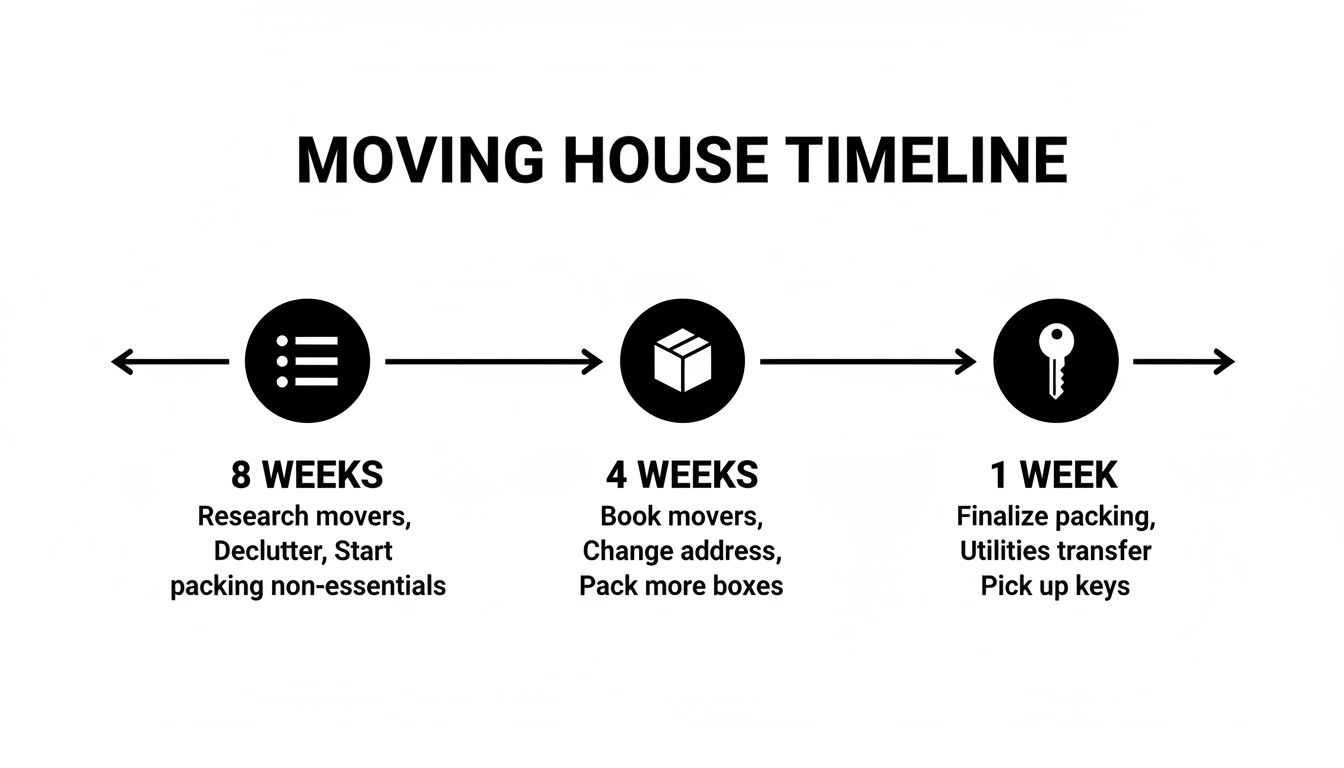
A smooth, stress-free move doesn’t happen by accident. It's always the result of a solid plan that kicks in long before you even think about taping up a box. I’ve found the best way to tackle it is by breaking the move into phases—two months out, one month out, and the final week. This gives you a clear structure and makes sure nothing important falls through the cracks. It gives you plenty of breathing room to declutter properly, book the best people for the job, and get all the admin sorted without that dreaded last-minute rush.
It’s also wise to be realistic, especially here in the UK. We have one of the slowest home-moving processes in the world. Research shows the average time from putting a property on the market to getting the keys is around 179 days. Compare that to just 53 days in the US, and you can see why building a bit of a buffer into your plans isn't just a nice idea—it's essential.
Eight Weeks Out: The Strategic Start
With two months to go, it's all about the big picture. This isn't the time for frantic packing; it’s the time for making decisions and clearing the decks. Start by walking through every room and being ruthless about what you no longer need, use, or even like. If you haven't touched it in the last year, it's probably time for it to go.
This first big clear-out is a game-changer for two reasons:
- It cuts your moving costs. Fewer things to move means you might need a smaller van or less time from the removal crew, which saves you real money.
- It makes packing so much easier. You’ll have less to pack, shift, and then find a home for on the other side. Trust me, you'll thank yourself later.
Once you have a better sense of how much stuff you’re actually taking, you can start getting quotes from removal companies. If you're moving in or around Bristol or Bath, I’d always recommend getting at least three quotes to get a fair comparison of price and service. This is also a great time to gather all your crucial documents—passports, birth certificates, property deeds—and put them all together in one safe, easy-to-find folder.
Four Weeks Out: Getting Practical
When you hit the one-month mark, things start to feel a bit more real. Now’s the time to lock in your chosen removal company and start gathering your packing supplies. You can buy boxes, of course, but you can also save a few quid by asking at local supermarkets or checking out community groups online—people are often giving them away for free.
This is the perfect window to start packing all the non-essential stuff. I'm talking about the things you can easily live without for the next month:
- Books, photo albums, and ornaments
- Clothes and bedding for the wrong season
- Anything in the guest room
- The contents of the loft, shed, or garage
As you pack, get into the habit of labelling every single box with what's inside and which room it belongs to. It feels like a chore at the time, but it’s an absolute lifesaver when you’re standing in your new home, exhausted and surrounded by a mountain of identical-looking cardboard. For a complete room-by-room guide, our detailed moving house checklist breaks down everything you need to remember.
Pro Tip: The one-month mark is your cue to switch gears from planning to doing. Booking your movers and starting on the non-essential packing are the two most important things you can tick off your list right now.
To help visualise the process, this simple table breaks down the key milestones.
8-Week Moving House Checklist
This simplified checklist outlines the key tasks to complete at different stages leading up to your moving day, helping you stay organised.
| Timeframe | Key Tasks |
|---|---|
| 8 Weeks Before |
|
| 4 Weeks Before |
|
| 1 Week Before |
|
Following this timeline ensures the most critical tasks are handled early, preventing a stressful bottleneck in the final weeks.
The Final Week: The Home Stretch
These last seven days are for final preparations and tying up all the loose ends. Get in touch with your utility providers—gas, electricity, water, and internet—to give them your move-out date and arrange for final meter readings. It’s also the time to set up mail redirection through Royal Mail so no important letters get lost in the shuffle.
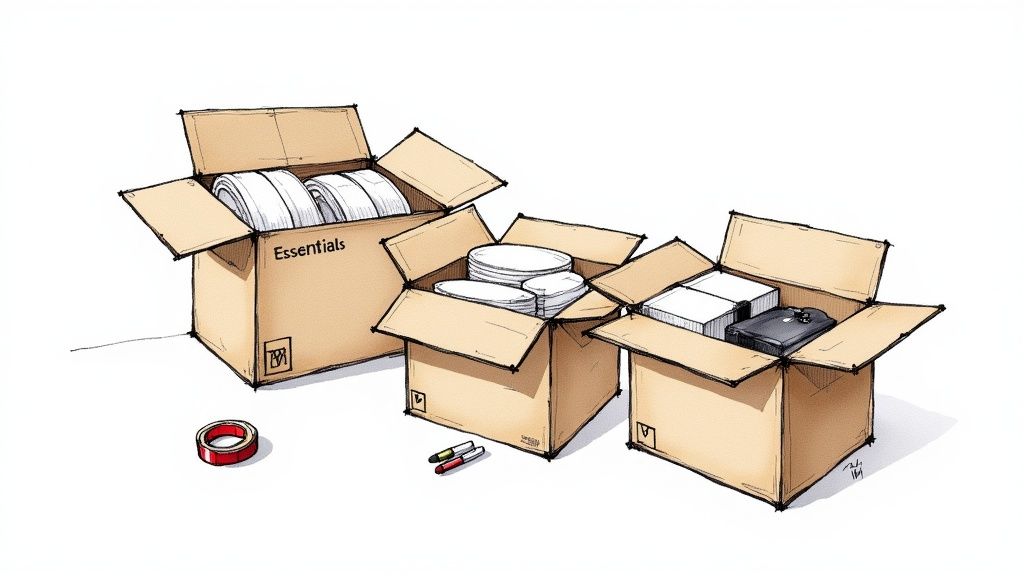
Your packing should now be down to just the everyday items. The most important thing to do this week is to pack an "essentials box." This is the box that will save your sanity on the first night. Fill it with things like toiletries, phone chargers, the kettle, tea bags, snacks, a few basic tools, and any medication you need. Crucially, this box stays with you in the car, not on the removal van. By planning things out this way, you’ll find that even the final, busiest week is completely under your control.
Choosing the Right Moving Services for Your Needs
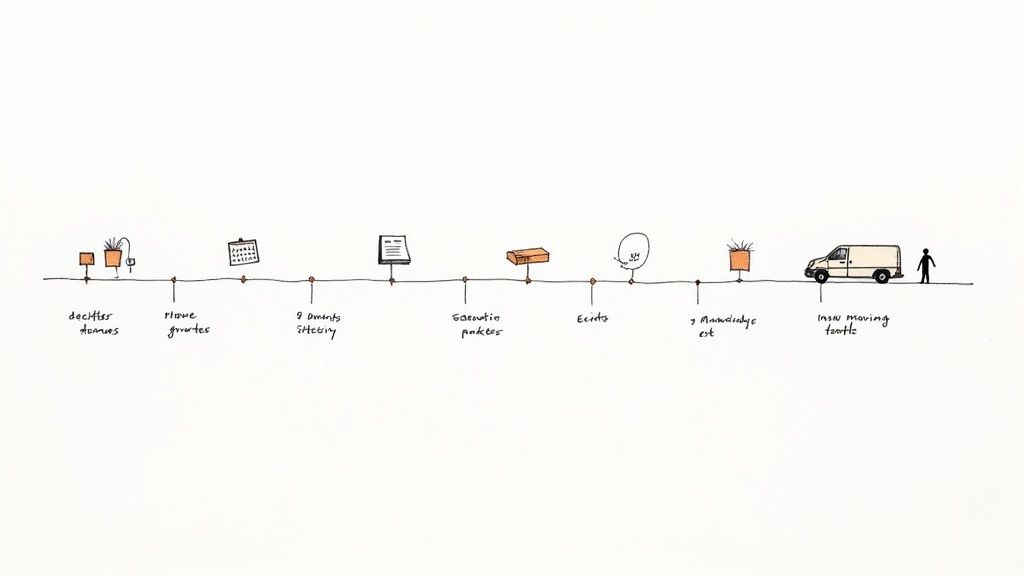
So, how are you actually going to get everything from your old home to your new one? This is one of the biggest decisions you'll make in the entire moving process. Broadly, you have two choices: call in the professionals or go down the DIY route with a hired van.
Neither is right or wrong. It all comes down to your budget, your timeline, and frankly, how much heavy lifting you're willing (and able) to do yourself.
A DIY move can look like the budget-friendly option at first glance, but those costs have a habit of creeping up. You’ve got the van hire, the fuel, all the boxes and bubble wrap, and maybe even a day or two of unpaid leave from work. You get complete flexibility, but all the stress and physical work lands squarely on your shoulders.
Professional Movers vs DIY Approach
Hiring a professional removal company is essentially trading money for peace of mind. A good team will handle all the loading, driving, and unloading, which makes moving day so much less stressful. Crucially, they’re also insured. That insurance is your safety net, protecting your belongings while they're on the road.
To figure out which path is for you, think about these key things:
- How much stuff do you have? Moving out of a small flat might be manageable with a van and a few willing mates. A four-bedroom family home? That's a different story and almost always calls for the pros.
- How far are you going? A quick hop across Bristol is one thing. Relocating to the other side of the country is a massive logistical challenge that professionals are built to handle.
- Do you own anything precious or awkward? If you have a grand piano, a fragile antique wardrobe, or valuable artwork, professional movers have the specialist equipment and know-how to get it there in one piece.
Vetting Your Removal Company
If you decide to hire the professionals, it’s vital to do your homework. Please don't just accept the first quote you find. Try to get at least three written quotes from different companies so you can compare not just the price, but exactly what’s included.
When you’re chatting with potential movers, dig a bit deeper than the bottom-line cost.
- What level of insurance cover do they provide as standard?
- Are packing materials and services an optional extra?
- Will they dismantle and reassemble bulky items like beds or wardrobes?
- Could there be any hidden charges for things like navigating flights of stairs or dealing with tricky access?
A trustworthy company will have no problem answering these questions clearly. For a much more detailed checklist, have a read of our guide on what to look for in a removal company.
Key Takeaway: Always get confirmation that the removal company has both 'Goods in Transit' and 'Public Liability' insurance. This is non-negotiable. It protects your possessions during the move and covers any accidental damage to either your old or new property.
When to Consider Storage Solutions
Let’s be honest, moving dates rarely line up perfectly. You might be downsizing, renovating, or stuck in a chain with a gap between selling your old place and getting the keys to your new one. This is exactly when professional storage can be a lifesaver.
Putting some of your belongings into storage can help you declutter before viewings, making your home feel bigger and more attractive to buyers. It also gives you some much-needed breathing room during a complicated move. Modern storage facilities in the Bristol and Bath area offer all sorts of unit sizes with great security and flexible access, so you only pay for what you need.
Timing is everything. Did you know that in the UK, August is the busiest month for moving, and almost 34% of all moves happen on a Friday? If you're planning a summer move, especially on a Friday, you absolutely must book your removal company at least six to eight weeks ahead. Leave it any later, and you’ll struggle to find a good firm with availability.
How to Pack Smartly and Protect Your Belongings
Packing is often the point where a move tips from feeling organised into pure chaos. The secret isn't just about buying more bubble wrap; it’s about having a system. Smart packing isn't just about getting things from A to B in one piece—it's about making your life ten times easier when you start unpacking at the other end.
A little extra thought at this stage will save you from hours of frustration later, especially when all you want is a cup of tea but you can't find the mugs.
Protecting Your Valuables and Fragile Items
Let’s talk about the items that cause the most stress: the breakables. When it comes to glassware and plates, the trick is to use smaller, sturdier boxes. A massive box filled with crockery is a recipe for disaster. It's incredibly heavy, and the contents are far more likely to shift and smash.
When you're packing plates, resist the urge to lay them flat. Instead, wrap each one individually in packing paper and stand them on their edge, just like you’d load a dishwasher. This vertical approach makes them much stronger and less prone to cracking under pressure.
For glasses, stuff the inside of each one with crumpled paper before wrapping the outside. Pack the heaviest items at the bottom of the box and the lighter, more delicate pieces on top. Crucially, fill every single gap with more paper or even soft tea towels to stop anything from rattling around in transit.
Electronics and Furniture Care
Your tech needs some special attention. If you’ve managed to keep the original boxes for your TV or computer, now’s their time to shine. If not, don’t worry – just wrap them securely in thick blankets or bubble wrap, making sure the screens are well-padded. Always take photos of the cable setups behind your devices before unplugging anything. Trust me, it’s a simple trick that turns a reconnection nightmare into a breeze.
With furniture, the main enemies are scratches and dents.
- Protect Corners: Use proper corner protectors or even some cut-up cardboard to shield the sharp edges of tables and drawers.
- Wrap Surfaces: Use moving blankets or old duvets for large, flat surfaces like tabletops. Secure them with packing tape, but be careful that the tape only sticks to the blanket, never directly onto the furniture's finish.
- Dismantle When Possible: If something can be taken apart, like a bed frame or dining table, do it. Pop all the screws and bolts into a labelled plastic bag and tape it securely to the largest part of the item it belongs to.
This might feel like a lot of effort, but it’s what prevents that heart-sinking moment when you unwrap your favourite table and find a huge scratch. If it all feels too much, remember a professional packing service is always an option. Our guide on how to pack for moving dives into even more detail.
Game-Changer Tip: Pack a 'first night' essentials box. This box travels with you in the car, not in the lorry. Fill it with the kettle, tea bags, coffee, mugs, phone chargers, toiletries, towels, a basic toolkit, and any crucial medication. It’s an absolute lifesaver.
Labelling and Sustainable Options
Good labelling is your unpacking roadmap. Don't just scrawl "Kitchen" on a box. Get specific: "Kitchen – Mugs & Glasses" or "Living Room – Books." On every box, you need two things: the destination room and a quick summary of the contents.
This system means you can direct the removal team to put boxes straight into the right rooms, saving you from shifting them all later. More importantly, you can find that "Kettle & Mugs" box first and get a well-deserved brew on amidst the boxes.
Finally, think about moving beyond single-use cardboard. Plenty of local companies now offer reusable plastic moving crates for hire. They're strong, they stack perfectly, and they're much better for the environment. It’s a simple way to reduce waste, and you won’t be left with a mountain of cardboard to deal with afterwards.
Navigating Moving Day Like a Pro
This is it. After weeks of planning and packing, the big day has finally arrived. Moving day often feels like organised chaos, but with a clear head, you can keep things running smoothly and keep stress at bay. Your focus will be split between two locations: saying a final goodbye to your old home and making your first hello to the new one.
Think of yourself as the director of the operation. The morning is all about a methodical, calm exit. Your removal team will have their own system, so your role is to be available, answer questions, and make sure everyone knows the plan.
The Final Checks at Your Old Home
Before you drop those keys off for the last time, there are a few things you absolutely must do. Getting these small tasks ticked off now will save you from major headaches like surprise bills or arguments over the property's condition down the line.
Your first job is to brief the movers. Walk them through the house, pointing out anything especially delicate or any boxes that need careful handling. Crucially, show them what is not to be loaded onto the lorry – this means your essentials box, important documents, and any personal bags.
Once the van is packed up, it's time for one last walkthrough.
- Check Every Nook and Cranny: Seriously, open every cupboard. Check the loft, the garage, and the garden shed. It’s astonishing what can get left behind in the rush.
- Snap Your Meter Readings: Take a quick, clear photo of your gas, electricity, and water meters. Having that time-stamped visual evidence is your best defence against any future billing mix-ups.
- Document the Condition: Whip out your phone and take a quick video or a few photos of each empty room. This shows you've left the place clean and tidy, just as you should.
This final sweep is your last opportunity to make sure you've got everything and have left the property ready for its new owners.
Managing Kids and Pets on Moving Day
The constant flow of strangers, loud noises, and general upheaval can be genuinely distressing for children and pets. Their wellbeing should be a real priority. Honestly, the best-case scenario is to have them stay with family or a trusted friend for the day, well away from the chaos.
If that’s not on the cards, set up a "safe zone" for them in one empty room. For kids, this means their favourite toys, some snacks, and maybe a tablet. For pets, make sure they have their bed, water, and a few familiar toys. Stick a big, clear sign on the door so the moving crew knows to stay out.
Crucial Tip: Try to keep your pet’s routine as normal as you can. A good walk before the movers even show up can help a nervous dog, and making sure their food and water are easy to get to provides a little bit of stability in a very strange day.
Arriving at Your New Property
The moment you arrive at your new address, the game changes. Now, it's all about receiving your belongings in an organised way. Before you let the movers open the lorry doors, take a minute to pop inside and run a few essential checks.
First things first, make sure the utilities are on. Flick a light switch, run a tap, and check if the heating is working. It is so much easier to sort out a problem with the utility company at 2 pm than it is at 9 pm when all you want to do is collapse.
Next, have a plan for where things go. A simple, hand-drawn floor plan taped to the front door showing the movers which room is the "Master Bedroom" or "Office" is a game-changer. This small bit of communication stops them from asking you where every single box should go. Ask them to stack boxes against the walls, keeping the main walkways clear for bringing in the big furniture.
Finally, give the property a quick inspection. Look for any new scuffs or damage that wasn't there when you last viewed it, and take photos. This establishes the condition of the place from the moment you took ownership. Getting this right turns a potentially frantic arrival into a smooth, efficient start to life in your new home.
Your First Weeks: Turning a New House into a Home

The removal lorry has driven away, the front door is closed, and you’re standing in a sea of cardboard boxes. Moving day might be over, but the real work of making this place feel like yours is just getting started. These first few weeks are a funny mix of mind-numbing admin and the much more personal task of settling in.
The best way to get through it without feeling completely overwhelmed is to have a game plan. By getting the urgent stuff out of the way first and having a system for the unpacking, you’ll transform the chaos into a comfortable, functioning home much faster than you think.
First Things First: Tackle the Essential Admin
Before you even think about where the sofa should go, it’s time to get the paperwork sorted. Getting your address updated quickly stops bills from going astray, post from getting lost, and protects you from potential identity headaches. Make this your priority list for week one.
-
Council Tax: Your first stop should be the local council’s website. You need to register at the new address to get the council tax bill in your name and, just as importantly, make sure you’re taken off the bill for your old place. Councils like Bristol City Council and Bath & North East Somerset Council have simple online forms to get this done.
-
DVLA & Car Insurance: This one’s a legal requirement. You have to update the address on your driving licence and your vehicle logbook (the V5C). Not doing so can land you with a surprisingly hefty fine. You also need to tell your car insurance provider, as your new postcode will likely affect your premium.
-
Electoral Roll: It takes about two minutes to update your details on the electoral roll online, but it’s so important. Not only does it mean you can vote, but it also gives your credit score a healthy boost.
-
Banks & Pensions: Let all your financial institutions know you’ve moved—banks, credit card companies, and any pension or investment providers. It's a critical security step you don’t want to skip.
Finally, double-check that all the utility accounts—gas, electricity, water, broadband—have been officially switched over to your name from the day you moved in. You don’t want to end up paying for the last owner's hot showers.
A common mistake is thinking mail redirection is a catch-all solution. It's a fantastic safety net for anything you've missed, but it's no substitute for updating your address directly with every important organisation.
Unpacking with a System, Not Chaos
With the admin under control, you can finally face that mountain of boxes. The secret here is to resist the urge to just open boxes at random, which only leads to more mess. A methodical, room-by-room approach works every time.
Start with the kitchen. Once you can make a cup of tea and a proper meal, the whole house immediately feels more liveable. After that, focus on the main bedroom and at least one bathroom. This creates a core living space—a sanctuary where you can escape the boxes and recharge at the end of a long day.
As you unpack each box, make these two checks a habit:
- Damage Inspection: Look over fragile items carefully for any chips or cracks from the journey. If you used an insured removal company, they'll have a specific timeframe for you to report any damage, so don't delay.
- Inventory Check: If you made an inventory list before the move (and I hope you did!), tick things off as you unpack. It’s the quickest way to spot if anything has gone missing.
Sometimes a move isn’t straightforward. If you're dealing with renovations or delays, finding temporary housing solutions can be a lifesaver during these initial weeks.
Settling into Your New Neighbourhood
Making a house a home is about more than just unpacking. It’s about building a connection with your new surroundings. Once you’ve made a dent in the boxes, get your shoes on and go for a wander.
Take a walk and get your bearings. Find the nearest supermarket, GP surgery, pharmacy, and a nice local park. Knowing where these essentials are will help you feel grounded. If you’ve got kids, locating the local library or playground is a brilliant way to help them feel at home, too.
And don’t underestimate the power of saying hello. Popping next door to introduce yourself to your neighbours can make a world of difference. It gives you a friendly face to turn to and helps you feel like part of the community from day one. It's a busy time, but these small human connections are what truly complete the move.
Got a Last-Minute Moving Question? We’ve Got the Answer.
Even the most organised move can throw a curveball. Just when you think you’ve ticked every box on your list, a question pops into your head that you hadn't even considered. It’s completely normal, and having a quick, reliable answer can be a real lifesaver.
This is where we tackle those nagging "what if" scenarios. Think of this as your go-to source for those tricky, last-minute queries that can keep you up at night. From sudden date changes to what to do when you first walk through the door, let's get those final details sorted.
What Happens if My Completion Date Changes Last Minute?
This is the big one, the fear that haunts every home mover. And yes, in the UK property market, it's a genuine possibility. If your completion date suddenly shifts after you've booked your removal company, the first rule is: don't panic. The second is to contact them immediately.
Experienced removal firms have seen this happen countless times. They understand the nature of property chains. Most will work with you to find a new date, but be prepared for a potential postponement fee, as per their terms. This is why clear communication is everything. The more notice you can give them, the more likely they are to be flexible and help you out.
A Pro Tip From Experience: Before you even book your movers, make sure you ask about their specific policy on date changes. Knowing the potential costs and procedures upfront will save you a massive headache if things go sideways.
Do I Really Need to Clean the Property Before I Leave?
In a word, yes. The accepted etiquette is to leave the property in a condition you'd be happy to find it in. At a minimum, this means "broom swept" – all your belongings gone, all rubbish removed, and a good vacuum and wipe-down of all surfaces.
If you're a renter, the standard is much higher. Your tenancy agreement will almost certainly detail a requirement for a professional-level clean. This isn't just a suggestion; it's one of the main reasons landlords deduct money from security deposits. Don't give them an easy reason to keep your cash.
How Should I Handle My Old Keys?
Once the sale completes, you need to be ready to hand over every single key associated with the property. People often forget just how many there are. You’ll need to gather:
- All copies of house keys (front, back, patio doors).
- Any keys for lockable windows.
- Keys for the garage, shed, or any other outbuildings.
- Security alarm fobs or codes.
Your estate agent or solicitor will give you the final instruction on the handover. The most common process is dropping them off at the estate agent's office once you get the call confirming completion. Whatever you do, never give keys directly to the buyers unless your solicitor has explicitly told you to.
When Can I Actually Start Moving In?
This is a waiting game. You can only collect the keys and officially start moving into your new place once the seller’s solicitor has confirmed receipt of the funds from your solicitor. This is the moment of completion.
On the day, this can happen anytime from late morning to late afternoon. It's vital to keep your removal crew in the loop, as they'll be waiting for your green light. This is precisely why that "essentials box" with tea, coffee, and snacks is a godsend. Once your estate agent calls to say the keys are ready, it's all systems go!
What if Something Is Broken or Missing at the New House?
Before a single box comes off the van, do a quick walkthrough of your new home. Your main job is to check that all the fixtures and fittings you were promised are actually there. The seller should have filled out a TA10 Fittings and Contents form, which is a legally binding list of everything from the carpets and curtains to the oven and garden shed.
If you spot something missing, or discover new damage, get your phone out immediately and take photos. Your first call should be to your solicitor. They'll advise on the next steps, which usually involves contacting the seller's legal team to sort it out. Time is of the essence here, so act fast.
We know moving is a huge undertaking, but you don't have to face it alone. The section below covers some of the most frequently asked questions we hear from our customers to help you feel even more prepared.
FAQ on Moving House
| Question | Answer |
|---|---|
| How far in advance should I book a removal company? | We recommend booking 4-6 weeks in advance, especially if you're moving on a Friday or at the end of the month, which are peak times. |
| Do I need to empty drawers before the move? | For lightweight items like clothing, it's usually fine to leave them in. For heavier items like books or paperwork, it's best to pack them in boxes to prevent damage to the furniture. |
| Can movers transport plants? | Most will, but it's not ideal for the plants, especially on long journeys. It's best to discuss this with the company beforehand. Some may have restrictions. |
| What can't a removal company take? | Prohibited items typically include flammable liquids (petrol, paint), pressurised containers (aerosols), hazardous materials, and perishable food. |
| Should I tip the removal crew? | It's not required, but it's a much-appreciated gesture for a job well done. A common amount is £10-£20 per person, or simply providing drinks and lunch can go a long way. |
Hopefully, these answers clear up a few more of your concerns and help make your moving day run that much more smoothly.
For a seamless and stress-free move in Bristol, Bath, and the surrounding areas, put your trust in the experts at SimplyPro Removal & Storage Ltd. With over two decades of hands-on experience, our professional team is equipped to handle everything from packing and transport to secure storage, making sure your belongings arrive safe and sound. Get your fast, no-obligation quote today and let us take the weight off your shoulders.