


When you start thinking about moving house, the first thing that often comes to mind is the removal van. But the reality is, that's just one piece of a much larger financial puzzle. The average total cost to move house in the UK, once you factor in everything from buying and selling, is a hefty £13,018.
A Snapshot of UK Moving Costs
Getting a handle on the full financial picture is the first, and most important, step in planning a smooth move. It’s easy to get tunnel vision and focus only on the removals, but the final bill is a cocktail of several significant costs. These figures can swing wildly depending on where you are in the country, the value of your property, and how much help you need.
For many people, the total cost comes as a bit of a shock. That £13,018 average covers everything from stamp duty and legal fees to surveys and the physical move. In places like Bristol and Bath, where the property market is particularly lively, these costs can feel even more pronounced. If you're moving in the South West, you might find our local breakdown of average removal costs particularly useful.
The Three Pillars of Moving Expenses
To budget properly, it helps to think of your moving expenses in three main buckets. Each plays a different role, and the size of each bucket changes based on your situation.
- Property Transaction Costs: This is usually the biggest expense, with Stamp Duty Land Tax (SDLT) taking the top spot. Your legal fees for conveyancing also sit here.
- Selling Costs: If you're selling your current home, you'll need to factor in estate agent fees. These are almost always a percentage of your final sale price.
- Logistical Costs: This is the practical side of things – hiring a professional removal company, buying packing materials, and maybe even paying for storage if there's a gap between properties.
The chart below gives you a clear visual of how these costs stack up, showing just how much of the budget is eaten up by Stamp Duty.
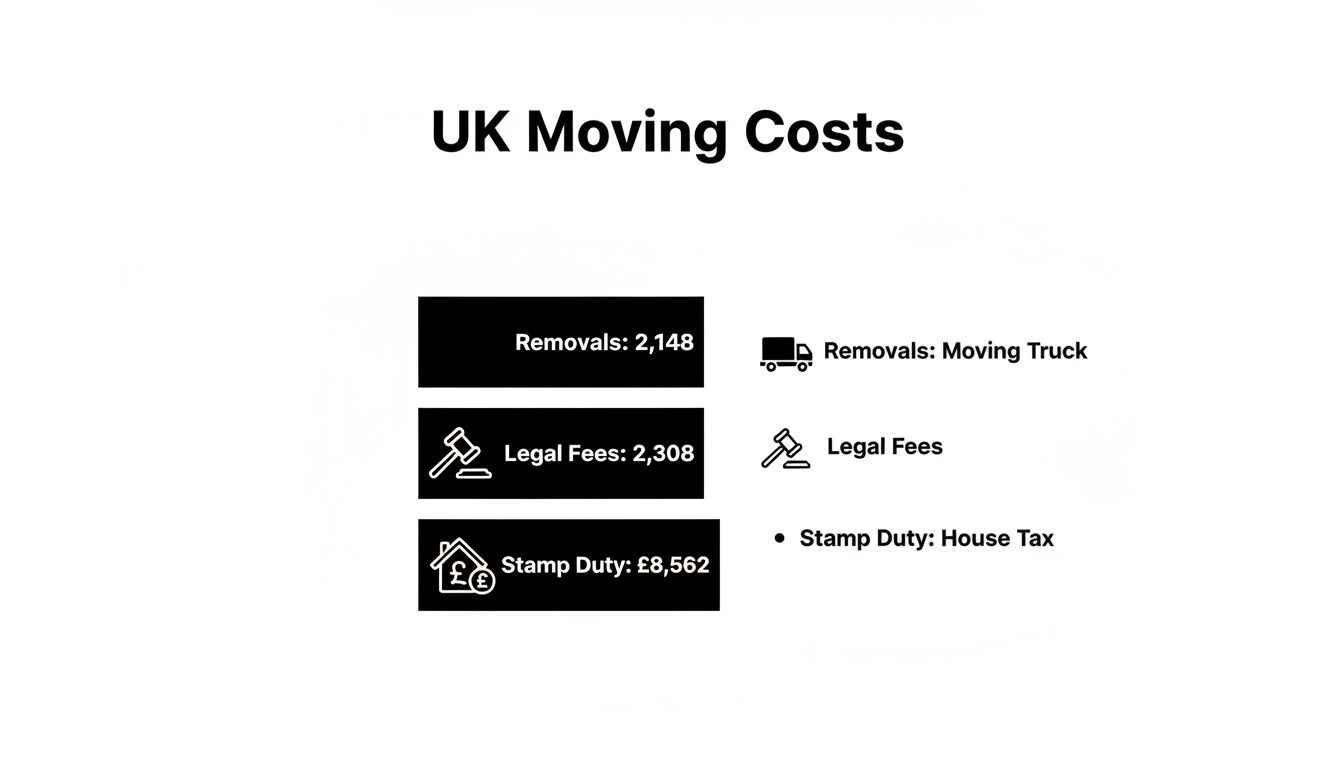
As you can see, while removals and legal work are significant, it's the government taxes that make the biggest dent in your wallet. Grasping this from the outset is vital for realistic financial planning and avoids any nasty surprises down the line. Now, let’s get into the nitty-gritty of each of these costs.
Breaking Down the Core Moving Expenses
The removal van is what everyone pictures when they think of moving house, but honestly, that's just the tip of the iceberg. The real cost of moving house in the UK is a collection of different, often hefty, expenses that you absolutely need to get your head around. If you break it all down piece by piece, you can build a budget that won’t give you any nasty surprises.
Think of it like putting together a piece of flat-pack furniture. You need every single screw, panel, and dowel accounted for before you start. If you miss one crucial part, the whole thing ends up wobbly, and your moving budget is no different.
Recent figures show just how much these costs have ballooned. The average cost to move in England recently shot up to a record £17,831, a massive 27% increase from the previous year. This was mainly down to changes in tax thresholds, but it means that the costs of simply moving can eat up a huge chunk of an average yearly salary. You can read the full analysis on rising moving costs if you want to dig into the market pressures behind the numbers.
Navigating Stamp Duty Land Tax
For most people buying a home, the biggest single cost is Stamp Duty Land Tax (SDLT). It’s a government tax you pay when you buy a property over a certain price in England and Northern Ireland. It’s important to know that Scotland and Wales do things differently—they have Land and Buildings Transaction Tax (LBTT) and Land Transaction Tax (LTT), respectively.
SDLT works on a sliding scale, a bit like income tax. You only pay the specific rate for the part of the property price that falls into each band.
- Up to £250,000: 0%
- £250,001 to £925,000: 5%
- £925,001 to £1.5 million: 10%
- Above £1.5 million: 12%
First-time buyers get a bit of a break, paying zero stamp duty on properties up to £425,000. If the property costs up to £625,000, they pay 5% but only on the amount between £425,001 and £625,000. Getting this calculation right is a cornerstone of an accurate budget.
Understanding Conveyancing and Legal Fees
This is what you pay a solicitor or licensed conveyancer to handle all the legal nitty-gritty of transferring the property into your name. It’s far more than just filling in forms; they do essential searches with the local authority, draft and check contracts, and make absolutely sure the property title is clean and legal.
Think of a conveyancer as the captain of your legal ship. They navigate the tricky waters of property law to get you to your destination—completion day—without hitting any legal icebergs that could sink your purchase.
You can expect this to cost somewhere between £850 and £1,500. This can creep up for more complicated purchases, like leasehold properties, which always involve extra legal legwork. Always ask for a full breakdown of their fees so you know exactly what you’re paying for, including things like search fees and bank transfer charges.
Demystifying Estate Agent Fees
If you’re selling your home at the same time, you'll have estate agent fees to factor in. This is almost always a percentage of the final sale price, usually somewhere in the region of 0.75% to 3.0%, plus VAT. To put that in perspective, a 1.5% fee on a £300,000 house comes to £4,500 plus VAT.
That fee covers a lot of ground:
- Valuing your property to hit the right price point.
- Marketing your home on property portals and other channels.
- Showing potential buyers around your home.
- Fielding offers and negotiating to get you the best possible deal.
Some agents now offer a fixed-fee service, which can look very attractive at first glance. Just be aware that this is often an upfront payment you make whether they sell your property or not, so make sure you weigh up the pros and cons.
Choosing the Right Property Survey
Getting a property survey before you buy is non-negotiable. It's a professional inspection by a qualified surveyor to uncover any skeletons in the closet—we're talking damp, subsidence, a dodgy roof, you name it. A good survey can save you thousands of pounds in unexpected repair bills down the line.
The Royal Institution of Chartered Surveyors (RICS) outlines three main types of survey:
- Level 1 (Condition Report): This is the most basic and cheapest option, really only suitable for new-builds or modern homes that are in obviously good shape. It gives you a simple ‘traffic light’ rating for different parts of the property. Expect to pay £300 – £500.
- Level 2 (HomeBuyer Report): A more detailed look, this is the go-to choice for most standard properties. It points out any urgent issues that might affect the home's value. The cost is typically £400 – £600.
- Level 3 (Building Survey): The most thorough survey you can get. It's essential for older properties, larger homes, or anything a bit unusual. It’s also the right choice if you're planning on doing major renovation work. Prices start from £600 and can go up to £1,500 or more.
How Much Will a Professional Removal Company Cost?
Once you’ve budgeted for the solicitors and sorted out the Stamp Duty, the next big ticket item is the move itself. Working out the cost of moving house in the UK isn't a case of picking a number out of a hat. It's a bit like pricing up a holiday – the final bill depends on how many people are going, how far you're travelling, and whether you want the all-inclusive, five-star treatment or just the flight.
Any decent removal company builds its quote on the same logic. They need to get a proper handle on the size and scope of your move to give you a fair and accurate price. This isn't just about them; it's about making sure the right size lorry and the right number of people turn up on the day, preventing any nasty surprise charges.
The Key Ingredients of Your Removal Quote
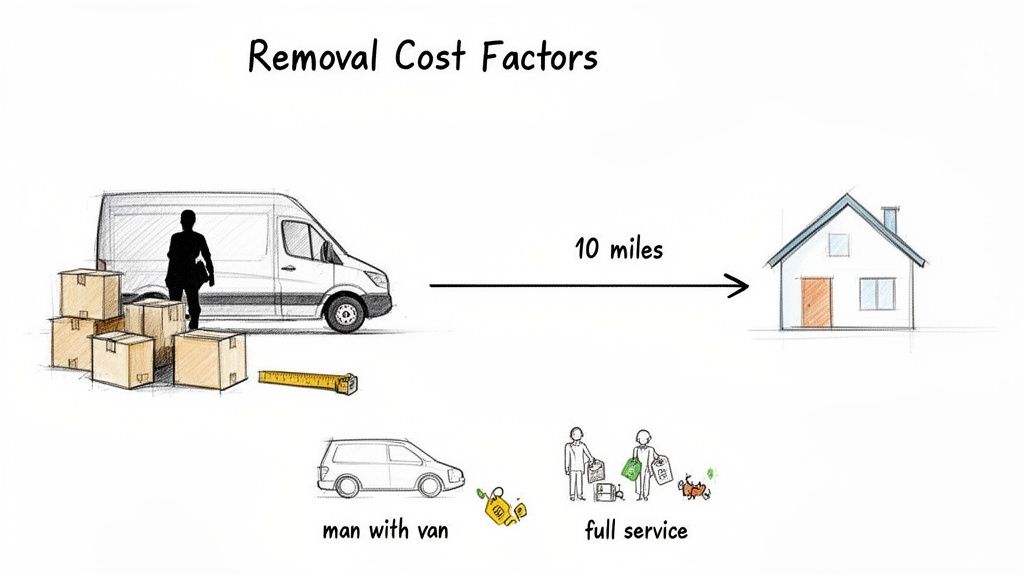
Every home is different, but when a professional mover puts a quote together, they're always looking at three main things. Getting your head around these will show you exactly what you’re paying for.
-
How Much Stuff You Have: This is, without a doubt, the biggest factor. We don't really care about how many bedrooms you have; it's the sheer volume of your belongings that matters. A minimalist three-bed house will be far cheaper to move than one bursting at the seams with furniture, books, and boxes of cherished clutter. The volume tells us what size lorry we need (a 7.5-tonne wagon or a smaller Luton van?) and how many pairs of hands are required to get it all loaded and unloaded efficiently.
-
The Distance of the Move: It sounds obvious, but a local job across Bristol will naturally cost less than a long-haul trek up to Manchester. The mileage directly affects fuel costs and, more importantly, the amount of time the crew is dedicated solely to your move. That time is a huge part of the labour cost.
-
Access to Your Properties: This is the practical detail that’s so easy to forget but can make a huge difference. Are we dealing with several flights of stairs? Can we park the lorry right outside, or is it a permit-holders-only situation? Tricky access, like a long walk from the lorry to your front door or navigating a tight country lane, adds time and complexity, and that will be factored into the final price.
A proper quote is more than just a figure on a page; it’s a breakdown of the time, labour, and resources needed to make your move go smoothly. A thorough assessment from the start avoids that dreaded "oh, that'll be extra…" conversation on moving day.
What Level of Service Do You Need?
Not all removal services are cut from the same cloth, and the level of help you opt for will have a big impact on the bottom line. To figure out what's right for you, it helps to compare the common options. For a deeper dive, check out our guide to the average cost of moving companies.
Here’s a quick rundown of what you can expect at different price points.
Comparing Removal Service Levels
| Service Level | What's Included | Best For | Estimated Cost Range |
|---|---|---|---|
| Basic Man & Van | A driver with a van to transport your pre-packed boxes and furniture. You'll likely need to help with the lifting. | Smaller moves, students, or just moving a few bulky items. A great budget-friendly option if you're happy to do the grunt work. | £300 – £600 |
| Standard Removal | A professional crew arrives to load everything, drive it to your new home, and unload it into the rooms you specify. You do all the packing and unpacking yourself. | This is the go-to for most families. It strikes a great balance between cost and getting the heavy lifting done for you. | £950 – £1,300 |
| Full-Service Move | The works. This includes all packing materials, a team to professionally pack your entire house, dismantle and reassemble furniture, transport, and unloading. | Anyone short on time, moving with young kids, or who simply wants the most stress-free, hands-off experience possible. | £1,500 – £2,200+ |
As you can see, the jump from a standard service to a full pack-and-move is significant. But paying for a professional packing service is about more than just saving yourself a few weekends surrounded by boxes and tape.
Expert packers use high-quality materials and know exactly how to protect your valuables, which drastically cuts down the risk of breakages. For your delicate china or expensive electronics, that extra investment can provide real peace of mind and might even save you money in the long run.
Uncovering the Hidden Costs of Moving
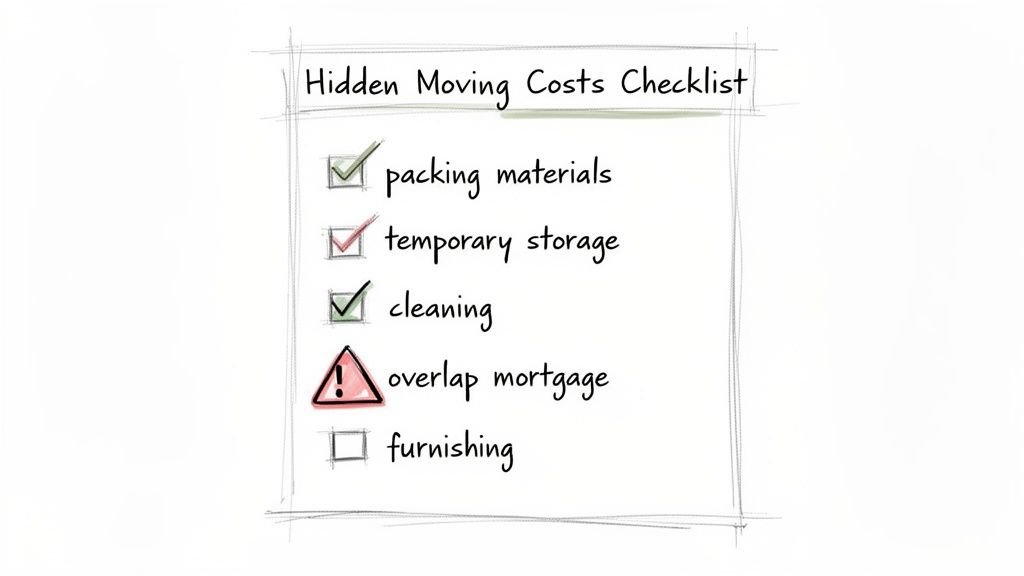
It’s a classic moving story: you’ve meticulously planned your budget, accounted for the removal lorry and the main services, only to be caught out by a wave of smaller, unexpected expenses. These are the hidden costs that can derail even the most organised move, turning a manageable budget into a source of last-minute stress.
Think of it like packing an emergency kit before a long road trip. You hope you won’t need it, but you'll be incredibly relieved it’s there if you do. By anticipating these little extras from the outset, you can factor them in and avoid any nasty surprises when the final bills start rolling in.
And these surprises are more common than you'd think. Recent research found that one in five UK home movers got hit with unforeseen expenses. Things like sudden indemnity policies or simply needing new curtains were enough to throw their budgets off course.
Pre-Move and Logistical Extras
Before a single box is loaded onto the lorry, a few costs can already start to add up. These are the practical expenses that come with the territory of packing up one life to start another.
- Packing Materials: If you're doing the packing yourself, you'll need a mountain of boxes, bubble wrap, tape, and marker pens. For a typical three-bedroom house, this can easily add £100 to £300 to your overall spend.
- Temporary Storage: Got a gap between moving out and moving in? You might need to put your belongings into storage. Depending on the size of the unit, this could set you back anywhere from £80 to £200+ per month.
- Mail Redirection: To make sure you don't miss bank statements or important letters, setting up a Royal Mail Redirection is a must. This typically costs around £36 for three months for the main person moving.
End of Tenancy and New Home Setup
Getting your old place ready for the next person and making your new house feel like home also comes with its own price tag.
An end-of-tenancy clean, for example, is often non-negotiable for renters who want their full deposit back. It’s also a thoughtful touch for sellers leaving their property in great shape. If this is on your to-do list, our guide on https://www.simplyremovalsbristol.co.uk/end-of-tenancy-clean-prices/ can give you a clear idea of what to budget.
Then there's the new place itself. For peace of mind, it’s always wise to figure out how to change your house locks as soon as you move in. A locksmith will usually charge between £80 and £150 per lock.
Budgeting for hidden costs isn't about being pessimistic; it's about being realistic. A small contingency fund, perhaps 10-15% of your total moving budget, provides a crucial safety net for these inevitable but unpredictable expenses.
Major Financial Overlooks
Beyond the small stuff, some larger financial items can deliver a real shock if they’re not on your radar. These often crop up during the handover period or are tied to the immediate needs of your new property.
- Overlapping Bills: For a short while, you might find yourself paying council tax, utilities, or even mortgage payments on two properties at once.
- Immediate Repairs and Redecorating: That "minor advisory" on the survey might suddenly feel a lot more urgent. And let's be honest, the previous owner’s taste in feature walls rarely matches your own.
- New Furnishings: It's a common problem – your old sofa is just too big for the new living room, or you finally have space for a proper dining table. The cost of new furniture can quickly spiral into the thousands if you're not careful.
By creating a simple checklist of these potential costs, you can transform them from unexpected shocks into manageable, budgeted-for line items.
How to Keep Your House Moving Costs Down
Watching the quotes add up can feel a bit overwhelming, but don't worry. There are plenty of smart, practical ways to bring the cost of moving house in the UK down without having to compromise on quality. Making a few clever decisions early on can lead to some surprisingly big savings, keeping you in control of your budget.
Think of it like packing for a holiday when you’ve got a strict luggage limit. You have to be a bit ruthless, deciding what’s essential and what can be left behind. It’s the same idea here; quite simply, the less you move, the less you pay.
This is why the most important money-saving job starts weeks before a removal lorry even pulls up.
First Things First: Declutter and Downsize
Every single item in your house has a price tag on it—not what you paid for it, but what it will cost to move it. Removal quotes are almost entirely based on the sheer volume of your belongings, so making that volume smaller is your secret weapon for saving cash.
Before you even look at a packing box, go through each room and be brutally honest about what you actually need to take with you. This isn't just about binning old clutter; it's about choosing what deserves a place in your new home.
A proper decluttering session pays off in several ways:
- A cheaper removal quote: Fewer belongings mean less space is needed on the lorry and less time for the crew to load everything up.
- Lower packing costs: You'll spend a lot less on boxes, tape, and bubble wrap.
- A chance to make money: Selling good-quality items you no longer want on Facebook Marketplace or Vinted can give your moving budget a welcome top-up.
Here's a good rule of thumb: if you haven't used it in a year and it doesn't have any real sentimental value, it's time to sell it, donate it, or recycle it. Don't pay a moving company to transport things you no longer even want.
Be Clever with Your Timing and Materials
Beyond downsizing, a bit of strategic timing can unlock some serious savings. The day of the week you decide to move has a massive impact on the price you'll be quoted.
Fridays and weekends are peak times for moving, and removal firms price them at a premium. If you have some flexibility, booking your move for a Tuesday, Wednesday, or Thursday will nearly always get you a more competitive price. Moving mid-month is also usually cheaper than the frantic end-of-month rush.
You can also make a real dent in your expenses by being resourceful with packing materials. While buying a full set of brand-new boxes is easy, it's definitely not the cheapest option.
- Ask local shops: Supermarkets and off-licences often have plenty of sturdy cardboard boxes they're happy to give you for free.
- Check online community groups: Sites like Freecycle or local Facebook groups are brilliant for finding people giving away their used (but perfectly good) moving boxes.
- Use what you already own: Towels, duvets, and clothes are fantastic for padding out boxes and protecting fragile items, and they don't cost you a penny.
Of course, it’s all about striking the right balance. For anyone looking to cut costs, understanding the qualities of affordable moving and storage companies helps you find a firm that gives you great value without cutting corners. Sometimes, paying for a professional to pack your most fragile or valuable items is a smart investment, as it prevents costly breakages that would wipe out any savings you made on boxes. It's about finding that sweet spot between your budget and your peace of mind.
Getting an Accurate and Fair Removal Quote
Relying on a vague estimate is one of the quickest ways to see your moving budget spiral out of control. To really get a handle on the cost of moving house in the UK, you need a detailed, fixed-price quote. Think of it less as a guess and more as a guarantee from your removal company, protecting you from nasty surprises on the big day.
It’s a bit like getting your car repaired. You wouldn’t just accept the mechanic saying, "Oh, it'll probably be a few hundred quid." You'd want an itemised list of parts and labour. A removal quote should be just as transparent, spelling out exactly what's included so there are no grey areas.
From Guesswork to Guarantee
The old way of getting a quote involved a surveyor visiting your home, which was often a pain to schedule. Thankfully, things have moved on. Modern, forward-thinking firms now use much slicker methods like video survey technology.
This is a game-changer. You just use your smartphone to walk a removal expert through your home, room by room. They get to see everything for themselves – from the sheer volume of your stuff to that awkward corner in the hallway – all without anyone needing to set foot through your door. It’s faster, far more accurate than a simple phone call, and it leads to a binding, fixed-price quote you can actually rely on.
An accurate quote is all in the detail. The more a removal company knows about your specific situation, the less risk there is for everyone. A firm that insists on a thorough survey, whether in-person or on video, is a firm that takes fairness and transparency seriously.
Key Information for Your Quote
To get a quote that's rock-solid, you need to have a few key details ready. Any professional company worth its salt will ask you about these things:
- Your Inventory: A full list (or a clear video view) of all your furniture and a rough idea of how many boxes you'll have.
- Specialist Items: Be sure to mention anything that needs a bit of extra TLC, like a piano, large artwork, or a fragile antique grandfather clock.
- Access at Both Ends: They'll need to know about parking restrictions, flights of stairs, lift access, or any long walks from the lorry to your front door.
- Extra Services: Be clear about whether you need help with packing, dismantling furniture, or perhaps even storage.
Giving them all this information upfront is the best way to get a fair price that won’t suddenly change. It turns your quote from a hopeful guess into a concrete figure you can build your budget around.
Got Questions About Moving Costs? We’ve Got Answers.
Trying to pin down the financial side of a move can feel a bit like chasing shadows. To help you finalise your budget with confidence, we’ve put together straight-up answers to the questions we hear most often about the cost of moving house in the UK.
Think of this as your final checklist. It’s about making sure every detail is covered so you can plan your move feeling calm and in control.
When Is the Cheapest Day to Move House in the UK?
If you’ve got a bit of flexibility, you can play the system to your advantage. The cheapest days to move are nearly always mid-week—think Tuesday, Wednesday, and Thursday.
Come Friday, everyone is trying to move before the weekend, and demand for removal companies goes through the roof, taking prices with it. The same goes for the end of the month when most rental contracts are up. If you can aim for a mid-month, mid-week slot, you’re almost guaranteed to get a better price.
How Much Should I Budget for Packing Materials?
Decided to do the packing yourself? Smart move, but don't forget to budget for the materials. For a typical 3-bedroom house, you should probably set aside between £100 and £300.
That should cover all the essentials:
- Good, sturdy boxes in a mix of sizes
- Rolls of bubble wrap for anything delicate
- Plenty of strong packing tape (you'll use more than you think!)
- Marker pens to label everything clearly
Of course, the alternative is to let the pros handle it. When you book a professional packing service, all these materials are usually included in the price, which saves you the hassle and ensures your things are packed properly.
For the vast majority of house moves, a fixed-price quote provides invaluable peace of mind. It protects you from unexpected costs due to delays like traffic or access issues, allowing you to budget with certainty.
Is a Fixed-Price Quote Better Than an Hourly Rate?
For a full house move, a fixed-price quote is almost always the way to go. It gives you a single, locked-in cost. No surprises. Even if the crew gets stuck in traffic for an hour, you won’t pay a penny more. That certainty is gold when you're trying to manage a budget.
An hourly rate might sound tempting for a tiny job, like shifting a sofa down the road, but it’s a gamble for a whole house. You're betting on everything going perfectly. A fixed quote, based on a proper survey, takes all the guesswork out of the equation.
Do I Really Need Moving Insurance?
Any decent removal company will have its own insurance, but you need to know what it actually covers. Often, their standard liability only covers an item's current, depreciated value—not what it would cost you to replace it new.
Don't be shy; always ask to see their policy documents. For total peace of mind, especially if you have high-value or sentimental items, it's worth looking into a separate, comprehensive moving insurance policy. This will cover your belongings for their full replacement value, just in case the worst happens.
Ready to get a clear, fixed-price quote for your move in Bristol or Bath? SimplyPro Removal & Storage Ltd makes it easy with our fast and accurate mobile self-video surveys. Get your personalised quote today and plan your move with confidence.