


Moving your entire life from one end of the country to another is a huge undertaking. That’s where professional cross country moving services come in – they’re designed to take the entire logistical puzzle off your plate. This isn’t like shifting your things a few streets over in an afternoon; a long-distance relocation is a complex project that needs careful planning, secure transport, and experienced hands from start to finish.
Starting Your Cross Country Move From the South West
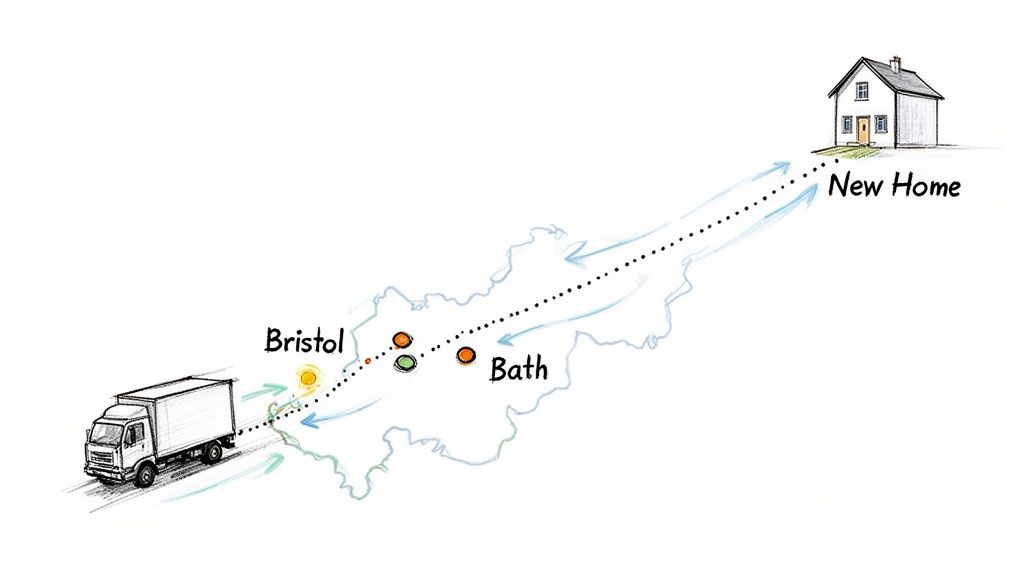
Uprooting from a vibrant hub like Bristol or the beautiful city of Bath to a completely new part of the UK is more than a change of postcode. It's a major life event. The sheer distance involved in a cross-country move brings a whole new set of challenges you just don't face with a local job.
Think of it this way: a local move is like a daily commute—predictable and fairly simple. A cross-country move, on the other hand, is a full-blown expedition. It demands a completely different set of skills to manage the distance, the timing, and the safe transport of everything you own over hundreds of miles.
Cross Country vs Local Move What You Need to Know
The biggest difference between a local and a long-distance move boils down to planning, timing, and risk. Let's break down what that really means for you.
| Aspect | Local Move (e.g., within Bristol) | Cross Country Move (e.g., Bristol to Wigan) |
|---|---|---|
| Planning Horizon | Can be organised a few weeks in advance. | Requires months of planning for logistics, routes, and scheduling. |
| Transport | Usually a single van and crew for a one-day job. | Often involves larger lorries, potentially multiple vehicles, and multi-day transit. |
| Packing | Standard packing may suffice, as items are moved quickly. | Expert packing is crucial. Items must withstand hundreds of miles of vibration and potential shifting. |
| Cost Structure | Typically an hourly rate or a fixed price for the day. | Based on the volume of goods, distance travelled, and any extra services like storage. |
| Scheduling | Collection and delivery happen on the same day. | Collection and delivery can be days apart, requiring precise coordination. |
| Risk | Lower risk of damage due to short transit time. | Higher risk; comprehensive insurance is an absolute must-have. |
As you can see, the scale is completely different. A long journey means more time on the road, which increases the chance of your belongings getting damaged if they aren’t packed and loaded by people who know what they’re doing.
Professional cross-country movers are geared up specifically to handle these risks. They manage the critical details that are easy to miss if you go it alone:
- Logistical Coordination: Figuring out the right size lorry, crew, and the most efficient route.
- Secure Transport: Using proper padding, straps, and loading techniques to keep furniture and fragile items safe.
- Comprehensive Insurance: Providing proper goods-in-transit cover, so you have complete peace of mind.
- Precise Timing: Juggling collection and delivery dates that might be days apart to fit around your travel plans.
Embracing the National Trend
If you're planning a big move, you're in good company. Every year, over 2.1 million Brits pack up and relocate across the country. We're seeing a real trend of people moving to towns like Birkenhead, Wigan, and Northampton, chasing more space and affordability. For anyone in the South West considering a similar move, using a professional service ensures your bulky items get there in one piece, fully insured and expertly handled. You can read more about these UK moving trends on Stora.
A professional cross country mover transforms a daunting logistical puzzle into a seamless, managed process. Their role is to handle the complexities of the journey so you can focus on the excitement of starting a new chapter in your life.
In the end, choosing a professional service isn't just about hiring a lorry and some muscle. It’s an investment in a partner who genuinely understands the unique pressures of a long-haul move, making sure every last detail is handled with care from your old front door in Bristol or Bath to your new one.
Understanding the Cost of Cross-Country Moving Services
When you're planning a long-distance move, one of the first questions is always about the cost. Let's be honest, getting a straight answer can sometimes feel like trying to nail jelly to a wall. The price for cross-country moving services isn't a fixed menu item; it's a sum of several moving parts, and understanding them is the key to creating a realistic budget and dodging any nasty surprises down the line.
Think of it this way: your belongings are passengers on a long trip. The more stuff you have and the further it all has to go, the more the journey will cost. It really is that simple at its core. The two biggest line items on any quote will always be the volume of your goods and the distance they need to travel.
The Main Cost Drivers
Every moving quote is built on a few fundamental pillars. Each one has a direct impact on the final number you'll see.
- The Sheer Amount of Stuff: Movers usually price a job based on how much space your belongings will take up in their lorry. Moving a one-bedroom flat is naturally going to be far cheaper than a four-bedroom house, simply because it takes up less room and requires less manpower.
- The Distance You're Moving: The mileage between your old home in Bristol and your new one matters. This figure covers not just the fuel but also the driver's time and the general wear and tear on the vehicle during a long haul.
- Access at Both Ends: This is one people often forget. Are there flights of tricky stairs? Is there a long walk from where the lorry can park to your front door? Any access challenges can add to the labour time, which will be factored into your quote.
On top of these core elements, any extra services you opt for will adjust the final bill. For instance, choosing a full professional packing service will increase the cost, but it'll save you countless hours and massively reduce the risk of your valuables getting damaged. Similarly, if there's a delay between moving out and moving in, you might need to budget for temporary storage.
A good quote isn’t just a number. It's a clear, transparent breakdown showing you exactly how the specifics of your move—from the size of your home to the services you need—add up to the final cost. It gives you the power to see what you're paying for.
A Real-World Example: Bath to Northampton
Let's put this into practice. Imagine you're moving the contents of a three-bedroom house from Bath to Northampton, which is a trip of about 120 miles. The first thing a moving company will do is work out the volume of your possessions. They'll look at everything, from the big items like sofas and beds down to estimating the number of boxes you'll need for books, clothes, and kitchenware.
Next, they’ll factor in the operational costs for that 120-mile journey. Finally, they'll ask about the extras. Do you want the team to expertly pack your fragile glassware? Do you need them to dismantle and then reassemble your wardrobes at the other end? Every time you say "yes," it adds value and tweaks the cost, giving you a service that's truly built around your needs. For a more in-depth look, our guide on the average removal costs breaks things down even further.
Modern Quoting: Mobile Self-Video Surveys
Thankfully, the days of having to book time off work for an in-person survey are fading. Many modern cross-country moving services now offer mobile self-video surveys, and they are a game-changer. This clever approach lets you use your smartphone to give a moving expert a virtual tour of your home.
You simply walk them through each room, pointing out everything that needs to be moved. It's incredibly quick, convenient, and surprisingly accurate. This allows the movers to gather all the details they need for a precise quote without the faff of scheduling a home visit, letting you get on with planning your budget with real confidence.
Your 8-Week Cross-Country Moving Timeline
A successful long-distance move is all about smart planning and good timing. Let’s be honest, the list of things to do can feel completely overwhelming. The trick is to break it down. An eight-week countdown is what we professionals use because, quite simply, it works. It turns that mountain of stress into small, manageable weekly goals.
This guide will walk you through everything, week by week, from that first "we're actually moving" moment right through to settling into your new home. By chipping away at the tasks, you'll dodge the last-minute panic that so often comes with a big move.
Ready? Let’s get started.
8 Weeks Out: The Planning Phase
This is where it all begins. Your main job right now is to get a solid plan of action in place. Start by walking through your home, room by room, and deciding what you absolutely must take, what can be sold or donated, and what’s heading for the bin. Now is the time to be ruthless—the less you move, the less it will cost.
Once you have a rough idea of what you’re taking, it’s time to find the right people for the job.
- Create a Moving Binder: This might sound a bit old-school, but having all your documents, quotes, and receipts in one place is a lifesaver.
- Research Movers: Look for reputable firms that specialise in long-distance moves from the Bristol and Bath area. Check their reviews and ask around.
- Request Quotes: You should aim for at least three detailed quotes. This is also a great time to ask about their mobile self-video survey options for a more convenient estimate.
- Set Your Budget: Use the quotes you receive to create a realistic moving budget. Don't forget to factor in a buffer for those unexpected costs.
6 Weeks Out: The Booking and Sorting Phase
With your research done, it’s time to make some decisions. Choose the moving company that feels right for your needs and budget, and get your moving dates booked in. Good movers, especially during peak seasons like summer, get booked up months ahead, so securing your slot early is vital.
This is also the week to start gathering your packing supplies if you're doing some of it yourself. You’ll need a good stock of sturdy boxes in various sizes, strong packing tape, bubble wrap, and permanent markers for labelling. If you have kids, now is the time to notify their schools and arrange for their records to be transferred.
4 Weeks Out: The Packing Begins
The four-week mark is when things start to get physical. Start by packing the things you don't use every day. This means out-of-season clothes, books you’ve already read, ornaments, and the bedding from the guest room. This gradual approach stops you from getting completely swamped in the final days.
As you pack, be disciplined about labelling. Every box should be clearly marked with its contents and the room it’s destined for. Trust me, you’ll thank yourself when you’re unpacking at the other end. It’s also a good time to start making a dent in the food in your pantry and freezer.
This visual shows how distance, the volume of your belongings, and the specific services you choose are the three big factors driving your final moving cost.
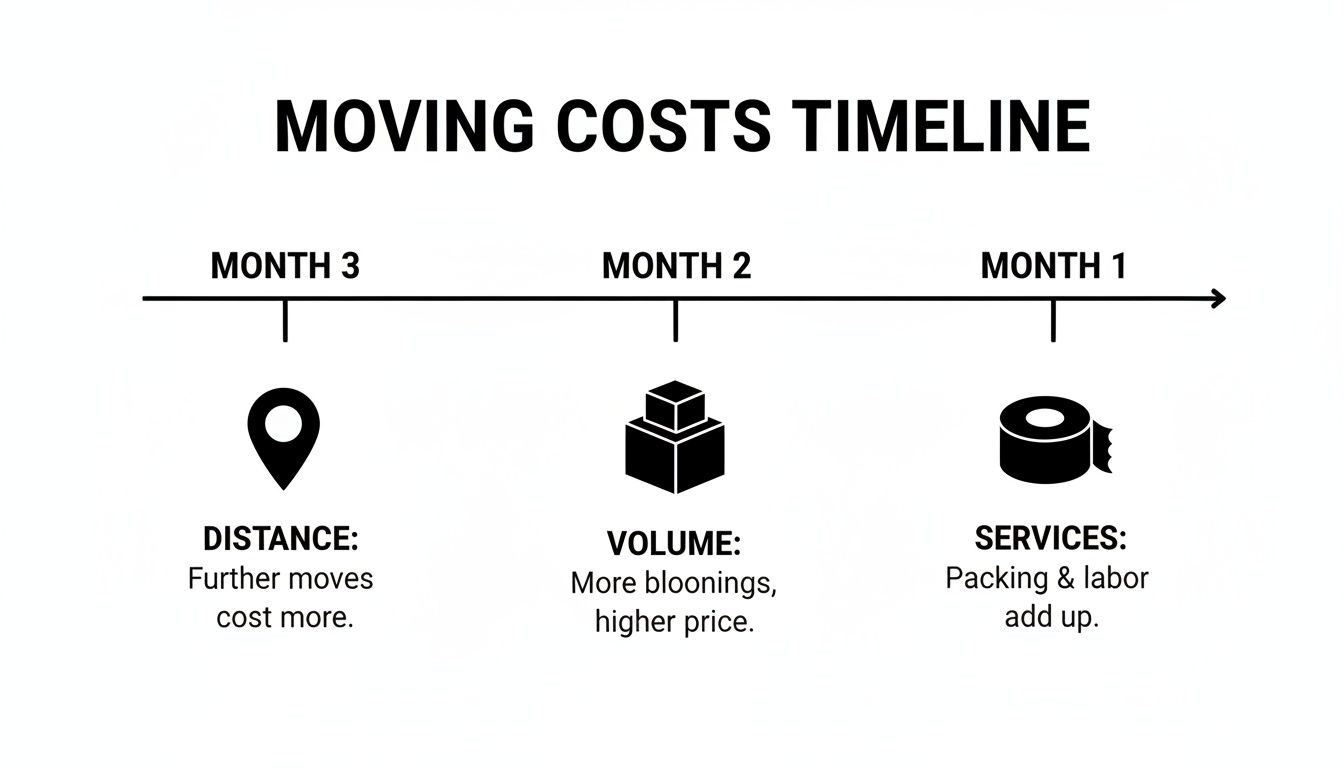
As you can see, the price naturally goes up with the miles and the amount of stuff you have, which is why that ruthless decluttering early on is your best cost-saving strategy.
2 Weeks Out: The Admin Push
With just two weeks to go, your focus should pivot towards the paperwork and admin. It’s time to let everyone know you're moving.
- Contact Utility Providers: Arrange to have services like gas, electricity, water, and internet disconnected at your old home and, crucially, connected at your new one for your arrival.
- Update Your Address: Get in touch with banks, credit card companies, subscription services, and your GP surgery to give them your new details.
- Redirect Your Mail: Set up a mail redirection service with Royal Mail. It’s a great safety net for any mail you might have missed.
- Confirm with Movers: Give your moving company a quick call to confirm all the final details for moving day, like arrival times and key contact numbers.
The Final Week: The Last Details
You’re on the home stretch! This last week is all about packing the last few bits, final confirmations, and getting ready for that first night in your new place.
Pro Tip: Pack an "essentials box" last. This means it’s loaded onto the lorry last and will be the very first thing you open. It should have toiletries, a change of clothes for everyone, phone chargers, tea/coffee supplies (kettle, mugs!), and any important documents you need to hand.
Finish packing everything else, leaving out only what you need for the last day or two. Make sure to defrost your fridge and freezer at least 24 hours before the movers arrive. Finally, before you hand over the keys, do one last walkthrough of your empty home to make sure nothing has been left behind.
Sticking to a clear plan like this is the key to making your cross-country move as smooth and organised as possible.
To help you stay on track, we've put together a simple summary you can use as a quick reference.
Essential 8-Week Moving Countdown Checklist
| Week | Key Tasks to Complete |
|---|---|
| Week 8 | Plan & Research: Declutter room by room. Research long-distance movers in the Bristol/Bath area. Create a moving binder to stay organised. |
| Week 7 | Get Quotes: Contact at least three reputable movers for detailed quotes. Ask about their video survey options for convenience. |
| Week 6 | Book & Sort: Choose your mover and book your moving date. Start gathering packing supplies (boxes, tape, wrap). Notify schools and arrange for record transfers. |
| Week 5 | Start Pre-Packing: Begin packing non-essential items like out-of-season clothing, books, and decorative items. Clearly label every box. |
| Week 4 | Continue Packing & Admin: Continue packing room by room. Start using up food from the freezer and pantry. Begin filling out change of address forms. |
| Week 3 | Notify Services: Inform utility companies (gas, electric, internet) of your move date. Arrange for services to be connected at your new home. |
| Week 2 | Final Admin Push: Confirm all details with your moving company. Set up mail redirection with Royal Mail. Update your address with banks, doctors, and subscriptions. |
| Week 1 | Final Pack & Prep: Finish all packing. Pack your "essentials box" last. Defrost the fridge/freezer. Do a final walkthrough of your empty home. |
This checklist breaks a huge job into small, achievable steps, helping you feel in control every step of the way.
How to Choose a Reputable Mover in Bristol and Bath
Choosing a mover for a long-distance relocation isn't like hiring a lorry for an afternoon. You're entrusting a company with literally everything you own, so it's easily one of the biggest decisions you'll make in the whole process. Get it right, and the journey is smooth and secure. Get it wrong, and you're in for a world of stress, delays, and damaged belongings.
For anyone planning cross country moving services from Bristol or Bath, knowing what to look for is your best line of defence. It’s not a complicated process, but it does require a bit of homework. You need to look beyond a flashy website and dig into how they really operate.
Look for Proven Experience and Genuine Feedback
First thing’s first: check their track record. A company with years of experience in long-distance moves has seen it all before. They understand the unique logistics of a multi-day journey, which is a completely different ball game compared to a simple local job.
Just as important are genuine customer reviews. Don’t just glance at the cherry-picked testimonials on their website. Head to independent platforms where you’ll get a much more balanced picture. Reading about other people’s experiences gives you a real feel for how a company handles pressure, communicates with its clients, and solves problems when things don't go to plan. You can see how we handle feedback by checking out our own collection of Bristol removal company reviews.
A mover’s reputation is built one job at a time. Consistent positive feedback over many years is the clearest signal of a company that values professionalism and customer care. It’s the difference between a promise and a proven track record.
Verify Insurance and Operational Standards
This part is absolutely non-negotiable. Any professional moving company must have comprehensive 'Goods in Transit' insurance to cover your belongings on the road. Before you sign anything, ask to see proof of their policy and get a clear understanding of the coverage it provides. It’s your safety net against any unforeseen bumps along the way.
Another critical thing to ask is about their fleet and crew. Does the company run its own dedicated vehicles, or do they subcontract the work out? A company with its own fleet has direct control over vehicle maintenance and staff training, which almost always results in a higher, more consistent standard of service.
Ask the Right Questions During Your Survey
Whether your survey is in-person or via a mobile video call, this is your chance to size them up. A good surveyor won't just count your boxes; they’ll ask thoughtful questions, offer packing advice, and walk you through their entire process.
Use this time to get all your own questions answered. Here are a few essentials to have ready:
- How do you calculate the final cost? Always ask for a detailed breakdown to make sure there are no hidden fees lurking.
- What's your policy for delays? You need to know what happens if your move-in date at the new property gets pushed back.
- Who will be my point of contact on moving day? Having a direct line to someone who can help provides huge peace of mind.
- Do you offer packing services, and how does that affect my insurance? Some policies require professional packing for full coverage on fragile items, so it's good to know upfront.
By asking these questions and doing your due diligence, you can confidently find a partner you can trust. It’s the surest way to ensure your cross-country move from the South West is handled by professionals who will treat your home and belongings with the same care as you do.
Mastering the Art of Packing for a Long Haul
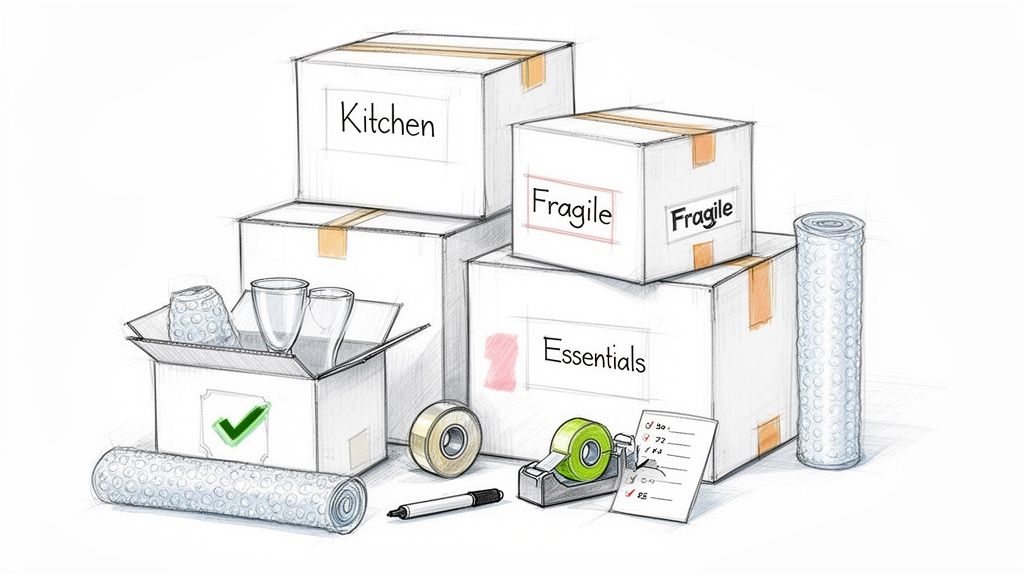
When your life’s possessions are about to travel hundreds of miles, packing is more than just a chore. It’s your first line of defence. The constant vibrations, inevitable bumps, and shifting inside a lorry on a long journey can be surprisingly tough on your belongings. Getting the packing right is what makes sure everything arrives in one piece.
This is especially true for your most delicate items. While it’s tempting to do it all yourself to save a bit of cash, it’s well worth thinking about what professional cross country moving services bring to the table – particularly their expert packing options.
Is Professional Packing the Right Choice for You?
Think of professional packers as specialists. They know exactly what a long-distance move can throw at your things. They don't just chuck stuff in boxes; they use industry-grade materials and time-tested techniques to build a protective shield around each item.
This service really comes into its own for:
- Fragile and High-Value Items: Your artwork, antiques, or that collection of delicate glassware need more than a bit of bubble wrap. Professionals use specialised cartons and can even build custom crates.
- Time-Sensitive Moves: If you’re juggling work and family, a full packing service can literally save you days of hard work and stress.
- Insurance and Peace of Mind: Many moving insurance policies provide better cover for items packed by the removal firm’s crew. If the worst happens, the claims process is usually much simpler.
Opting for a professional packing service is an investment in security and efficiency. It transforms one of the most stressful parts of moving into a seamless, hands-off process, letting you focus on the bigger picture of your relocation.
For many people, the cost is easily justified by the huge drop in stress levels and the lower risk of having to replace expensive or sentimental items broken on the way. It’s a serious consideration for any big move.
Essential DIY Packing Strategies
If you decide to take on the packing yourself, your success will boil down to two things: the right materials and the right methods. Trying to save money here is a false economy you’ll likely regret when you start unpacking.
Your shopping list needs to go beyond basic cardboard boxes. Make sure you get:
- Heavy-Duty Boxes: Double-walled boxes are non-negotiable for heavy things like books, records, or kitchenware.
- Specialised Wraps: Use plain packing paper for general items and save the bubble wrap for more delicate pieces.
- Strong Packing Tape: Don't buy the cheap stuff. You need a quality adhesive that will keep your boxes sealed tight for the whole journey.
- Clear Labelling System: A few permanent markers and a simple, consistent labelling system will be your best friends when it comes to unpacking.
A golden rule of packing: always put heavier things at the bottom of the box and lighter ones on top. Be sure to fill any gaps with crumpled packing paper to stop items from rattling around. For a complete walkthrough, check out our guide on how to pack for moving.
This level of care is also crucial for anyone making a two-step move. In the year ending June 2023, the UK saw a provisional 693,000 long-term emigrations. Many of these moves involve a long-distance trip to a storage facility before the final journey abroad, making professional-standard packing vital for protecting goods over many months.
Your Cross-Country Move Questions, Answered
Planning a move across the country is a huge undertaking, so it's only natural to have a long list of questions. A big move is full of unknowns, and getting clear, straightforward answers is the best way to feel confident and in control of the journey ahead.
This section tackles the most common queries we get from our customers in Bristol and Bath. We’ll cut through the jargon and give you practical advice on hiring and working with cross-country moving services, making sure you have all the information you need.
How Far in Advance Should I Book Moving Services?
This is probably the first question on everyone's mind, and the answer is simple: the earlier, the better. For any long-distance move, we always advise booking your removal company at least 6 to 8 weeks before you plan to move.
That timeframe isn't just a random suggestion. Booking this far ahead gives you some serious advantages. For starters, it pretty much guarantees you can lock in your preferred moving date, which is crucial if you're moving during the peak summer months when the best companies get booked up fast.
It also leaves plenty of time for a proper, detailed survey of your home, whether that's an in-person visit or a video call. This is key to getting an accurate quote and ensuring the crew arrives with the right-sized vehicle and equipment. And honestly, booking early can often get you a better price, as you're not scrambling at the last minute. If your move involves anything particularly complex, like specialist items or international shipping, pushing that to 10-12 weeks is a very smart move.
How Does a Mobile Self-Video Survey Work?
The old-school, in-person survey has been a fixture in the removals industry for decades, but technology has given us a much more convenient way of doing things. A mobile self-video survey is exactly what it sounds like: a way for a moving expert to get a full virtual tour of your home using just your smartphone.
The process is surprisingly simple but incredibly effective. At a scheduled time, a surveyor will give you a video call. You then simply walk them through your home, room by room, pointing your camera at all the furniture, boxes, and other bits and pieces you need to move. You can open cupboards, show them the contents of the garage, or give them a peek into the loft—it gives the surveyor a complete picture of everything.
This technology is a real game-changer for busy people. It means you don't have to take a day off work for a home visit, and you still get a fast, flexible, and impressively accurate fixed-price quote for your move.
The surveyor will chat with you and ask questions as you go, just like they would if they were standing right there. The result is a precise quote based on what they can see in real-time, making it one of the most efficient ways to start planning your cross-country moving services.
Is Paying for Professional Packing Worth It?
This question always comes down to balancing your budget against the benefits, but when you're moving long-distance, the value of a professional packing service is massive. Yes, it's an extra cost, but it's an investment that truly pays for itself in peace of mind, time saved, and the safety of your belongings.
Think about it: your life's possessions will be travelling for hundreds of miles, bumping and vibrating along the way. Professional packers are trained experts. They know exactly how to protect everything, using industry-grade materials and proven techniques to wrap everything from your everyday plates to priceless family heirlooms.
Here’s why it’s usually the right call:
- Superior Protection: Pros use the right tool for the job—double-walled boxes for heavy books, special wraps for fragile electronics, and custom crates for art. This slashes the risk of damage.
- Huge Time Savings: Packing an entire house can eat up your evenings and weekends for weeks. A professional crew can often have it all done in a single day, leaving you free to focus on everything else.
- Insurance Compliance: This is a big one. Many removal insurance policies will only provide full cover for damage if the items were packed by the professionals. Opting for the service means your goods are protected both physically and financially.
For anyone on a tight schedule or with a lot of fragile, valuable items, professional packing turns one of the most stressful parts of moving into a smooth, managed process.
What if My New Home Isn't Ready on Moving Day?
This is a scenario that causes a lot of sleepless nights, but it happens more often than you'd think. Delays in the property chain are a common culprit, but any good moving company will have a solid plan B ready to go.
If you get the bad news that your move-in date has been pushed back, the first thing to do is call your moving company. Let them know immediately. They will work with you to figure out a solution, which almost always involves putting your belongings into a secure storage facility.
Your possessions will be carefully unloaded into a clean, dry, and secure storage unit until you finally get the keys to your new place. Once you have a new move-in date confirmed, you just let the company know, and they’ll schedule the final leg of the delivery. This kind of flexibility is a cornerstone of professional cross-country moving services and provides a vital safety net against the unexpected bumps in the road that can crop up during a property sale. It turns a potential crisis into a simple logistical step.
Ready to start planning your long-distance move from Bristol or Bath? The team at SimplyPro Removal & Storage Ltd has the experience and expertise to make your journey smooth and stress-free. From accurate video surveys to professional packing and secure storage, we handle every detail. Get your free, no-obligation moving quote today!