


Moving a fridge freezer might look like a straightforward job, but it's one of those tasks where a little bit of prep saves a world of hassle. Get it wrong, and you could be looking at a damaged appliance, scratched floors, or worse. The secret to a smooth, damage-free move isn't brute force; it's having the right kit and a solid plan before you even think about pulling the plug.
Your Complete Checklist for Moving a Fridge Freezer
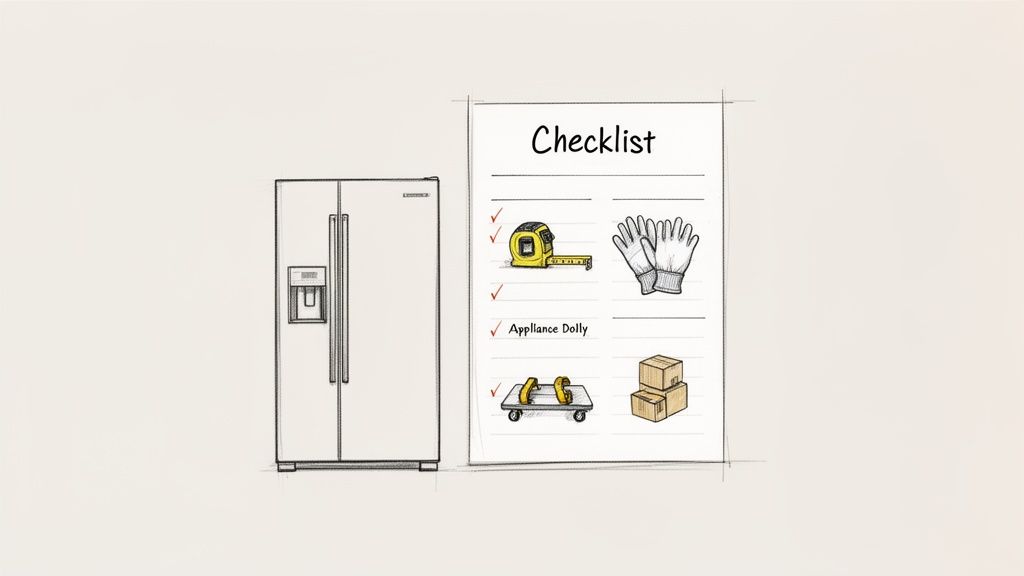
Trying to wrestle a heavy, top-heavy appliance without the proper gear is asking for trouble. We've seen it all: gouged wooden floors, dented door frames, and even fridge doors swinging open mid-lift. A few minutes spent gathering the right supplies completely changes the game, turning a risky manoeuvre into a controlled, manageable process.
Take an appliance dolly, for example. It’s not just a nice-to-have; it's essential. It's built specifically to handle the awkward height and weight of a fridge, offering stability you simply won't get from a standard sack trolley.
The Right Tools for the Job
Here's a breakdown of the necessary equipment for moving your fridge freezer, comparing a DIY approach with the all-inclusive professional service.
Essential Tools for a Safe Fridge Freezer Move
| Tool or Equipment | Its Purpose in the Move | Sourcing it Yourself | Included with Professionals |
|---|---|---|---|
| Appliance Dolly | The non-negotiable hero. Its tall frame and straps keep the fridge upright and secure, preventing dangerous tilting. | Hire from a tool shop | Yes, always |
| Heavy-Duty Moving Blankets | Essential for padding. They protect the fridge's finish from scratches and absorb impacts against walls and doorways. | Purchase or hire | Yes, standard issue |
| Strong Tape / Stretch Film | Keeps the blankets wrapped tight and, crucially, ensures the fridge and freezer doors stay firmly shut during the move. | Buy from a DIY store | Yes, industrial grade |
| Gloves with Good Grip | Protects your hands and provides a much better hold when manoeuvring the dolly, especially around corners. | Buy from a DIY store | Yes, for all crew members |
| Basic Toolkit | You'll likely need a spanner or screwdriver to disconnect water lines for ice makers or water dispensers. | Check your toolbox | Yes, fully equipped |
| Tape Measure | For checking the fridge dimensions against every single doorway, hallway, and staircase on its route out of the property. | Check your toolbox | Yes, as part of the survey |
Having the right tools is half the battle won. A well-equipped team can move an appliance with a level of safety and efficiency that's tough to replicate on your own.
Our Top Tip: Don’t just measure the fridge. Measure every doorway, tight hallway, and tricky corner on its exit path. It's a five-minute check that prevents the gut-wrenching moment of realising it won't fit when you're halfway down the stairs.
This list gives you the foundation for moving the appliance itself. For a wider view on planning your entire relocation, be sure to check out our complete moving house checklist, which breaks everything down room by room.
Once you’ve got your gear sorted, it's time to get the appliance itself ready for the journey. This part starts long before moving day.
Getting Your Fridge Freezer Ready for the Move
Honestly, getting the prep right is probably the most important part of the whole job. It's the groundwork that stops you from dealing with soggy boxes, nasty smells, or a broken appliance at the other end. This isn't a last-minute task you can squeeze in on moving day; you really need to start thinking about it at least 48 hours before the van is due to arrive. That gives you plenty of time to defrost, clean, and secure everything properly without rushing.
Think of it this way: moving an unprepared fridge is like trying to carry a big, heavy box full of water and loose glass. It’s just asking for trouble. A bit of planning puts you in control and makes sure your fridge arrives at your new home in one piece.
First Things First: Empty Everything Out
The very first job is to clear out every single thing from both the fridge and the freezer. I know it sounds obvious, but you’d be surprised. Trying to move a fridge with food still inside is a nightmare – it adds a surprising amount of weight, making it far more dangerous to lift. Plus, anything left inside will rattle around, with a good chance of cracking a shelf or damaging the interior walls.
This is also the perfect chance to have a good clear-out. Be ruthless. That jar of chutney that’s been there for a year? Bin it. The mystery frozen lump at the back of the drawer? It's time to say goodbye. Keep a cooler box with ice packs handy for essentials you need to take with you, but try to eat your way through as much as you can in the week before you move.
Here's a little rule of thumb we always follow: if you haven't used it in the last few months, don't pay to move it. Starting fresh in a new home is so much easier without clutter you didn't even want in your old one.
Once it's completely empty, you can get started on the most crucial stage: the big defrost.
The All-Important Defrost and Clean-Up
Skipping the defrost is hands-down one of the biggest mistakes people make. Once the fridge is unplugged and on the move, all that ice is going to melt. You'll end up with a puddle of water in the moving van, which can damage the fridge's own electronics, ruin your other furniture, and create a serious slip hazard for the crew.
Here’s how to tackle it properly:
- Pull the Plug: Disconnect the fridge freezer from the mains. If you’ve got an ice maker or water dispenser, you’ll also need to disconnect the water line – check your user manual for how to do this safely.
- Get Ready for Water: Put a few old towels or some absorbent sheets around the bottom of the appliance. It’s a good idea to have a mop and bucket on standby, just in case.
- Let It Melt: Prop the fridge and freezer doors wide open to get the air circulating. Depending on how much ice has built up, this can take anywhere from 8 to 24 hours. Whatever you do, don't try to speed things up by hacking at the ice with a knife or screwdriver. You could easily puncture the cooling system, and that's an expensive fix.
After the ice has all gone, it’s time for a proper clean. A simple solution of bicarbonate of soda and warm water works wonders. Wipe down every surface inside – shelves, drawers, door seals, the lot. This gets rid of any spills and stops mould and mildew from taking hold while it’s switched off in transit. A clean, dry fridge is a happy fridge.
Securing All the Loose Bits
The final prep step is to make sure nothing can rattle, slide, or swing open during the move.
Start on the inside by taking out all the removable parts. This usually includes:
- Glass and plastic shelves
- The salad crisper drawers and door trays
- Ice cube trays or any other loose containers
These bits are often surprisingly fragile and can easily get cracked. If you're wondering how best to protect them, our guide on packing materials for moving has some great tips. Wrap each part up in bubble wrap or a moving blanket and pop them in a clearly marked box.
Next, sort out the outside. Coil the power cable up and tape it firmly to the back of the fridge so it doesn't get caught underfoot or drag along the ground.
Finally, and this is crucial, you have to secure the doors. A fridge door flying open while someone is carrying it is incredibly dangerous. You can use strong tape, but it often leaves a horrible sticky mess or even pulls the paint off. A much better way is to wrap the whole unit tightly in moving blankets secured with straps. For extra security, a few wraps of hand stretch film will hold the doors shut tight without leaving a single mark.
And that’s it. With the fridge empty, clean, and all wrapped up, it's officially ready for the journey.
Safe Lifting and Transport Techniques
This is where the real work begins. Moving a fridge freezer is as much about smart technique as it is about brute force. Get it wrong, and you're looking at a pulled muscle, a dented fridge, or a fresh new gouge in the hallway wall. From the moment you slide the dolly underneath to the final strap in the van, every step needs to be deliberate and safe.
You'd be surprised how many fridges are on the move every year. In the UK, we buy around 3.2 million new ones annually, a figure that's shot up by 17% since 2019. With nearly 29 million households and over 130 million large appliances in them, that’s a lot of heavy lifting. It's no wonder that damage during transport, often to the delicate compressor or refrigerant lines, is one of the most common reasons for costly repairs. For a deeper dive into these figures, this detailed government report offers some fascinating insights.
Using an Appliance Dolly the Right Way
Your best friend for this job is an appliance dolly. It's not your standard sack truck; it’s taller and comes with built-in straps, giving you the leverage and stability you need to keep the fridge upright and secure.
First, slide the dolly's base plate completely under the side of the fridge. Never try to load it from the front or back—the weight isn't balanced properly, and it'll be dangerously unstable. You'll need a helper to tilt the fridge back just a few inches, allowing you to slip the dolly into position before gently setting the appliance back against the frame.
Next up, the straps. You should have at least two. Wrap them tightly around the middle and upper parts of the fridge. They need to be cinched down so the appliance feels like an extension of the dolly itself. A wobbly fridge is an accident waiting to happen, especially when you hit a bump or try to pivot around a corner.
Of course, all this comes after you’ve done the essential prep work.
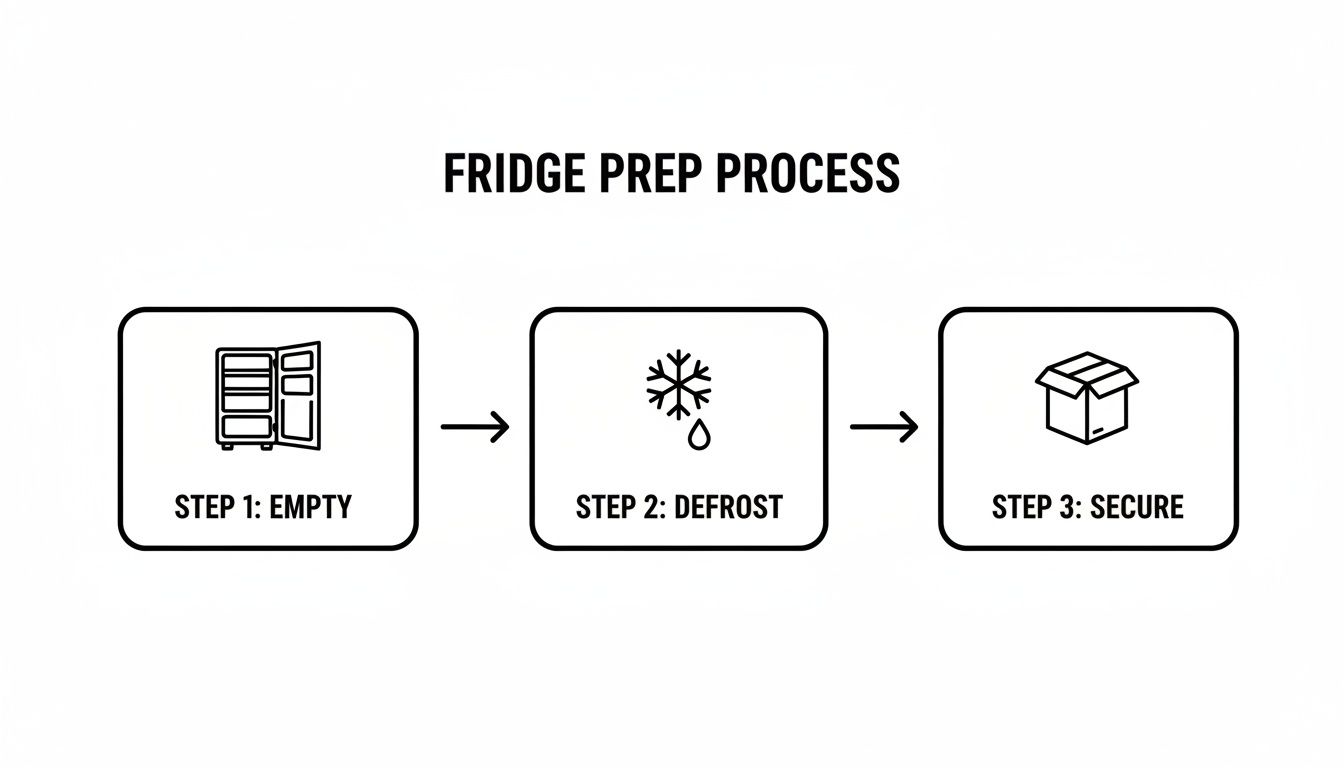
Don't even think about lifting until you've emptied, defrosted, and secured everything. It’s the non-negotiable foundation for a damage-free move.
Why Keeping it Upright Is So Important
You'll hear this piece of advice over and over again, and for good reason: always keep a fridge freezer as upright as possible during a move. There’s a simple bit of science behind it. Inside the compressor, which is the engine of your fridge, there's a special oil that keeps all the moving parts lubricated. If you lay the fridge on its side, that oil can leak out and travel into the coolant lines.
If you plug the fridge in while the oil is still in the wrong place, the compressor will try to start without proper lubrication and can quickly burn out. Trust me, it’s one of the most common (and expensive) mistakes we see. Keeping it vertical protects the whole system.
A Pro Tip From Experience: When you're ready to move, tilt the dolly back just enough to balance the weight over the wheels. An angle of about 45 degrees is the sweet spot. Tilt it too far, and you risk that oil shifting; too little, and you're just making the job harder than it needs to be.
Navigating Tricky Corners and Doorways
This is where things can get hairy. Before you even lift the fridge, walk the path from the kitchen to the van and spot your challenges.
- Tight corners: Take these slow and steady. One person should guide the top of the fridge around the turn while the other steers the base of the dolly.
- Narrow doorways: Is it going to be a tight squeeze? Just take the door off its hinges. It’s a five-minute job that can save you from an afternoon of filling and repainting door frames.
- Stairs: This is a minimum two-person job, no exceptions. The person at the bottom steers, while the person at the top acts as the brake, controlling the descent one step at a time. Clear, constant communication is absolutely critical here.
Wrap the appliance in moving blankets. Seriously. Even a minor bump can leave a permanent scratch on a stainless steel finish or take a chunk of plaster out of your wall. A bit of padding goes a long way.
Securing the Fridge Freezer in the Van
Once you've got it safely outside, the last hurdle is securing it for the drive. The best spot in the van is right up against the bulkhead (the wall behind the cab) or tucked into a corner. This gives you two solid surfaces for support.
Use proper ratchet straps to anchor the fridge to the van’s tie-down points. I’d recommend one strap around the middle and another higher up. Crank them down until the unit is completely solid—it shouldn't be able to slide, rock, or tip, even if you have to brake hard. For extra security, you can box it in with other heavy items like a sofa or a chest of drawers. This attention to detail is what ensures your fridge arrives at its new home in the exact same condition it left.
Getting Your Fridge Freezer Settled In
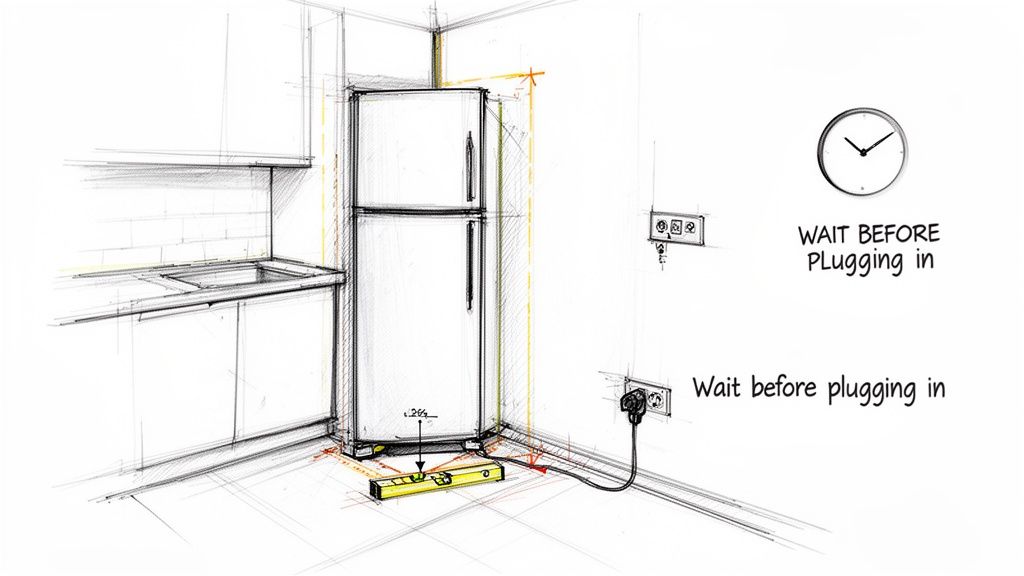
So, the heavy lifting is done and your fridge freezer is standing in its new kitchen. Fantastic. The first instinct is always to plug it in and start filling it up, but hold fire for a bit. This last stage is just as critical as the journey itself for keeping your appliance happy and healthy for years to come.
Believe me, rushing this part is one of the most common—and costly—mistakes we see. The trip, even a short one across Bristol, will have shaken up its internal workings. The compressor oil and coolant need time to settle back where they belong, and a little patience now will save you a massive repair bill down the line.
That All-Important Waiting Period
Before you even think about plugging it in, you have to let the fridge stand upright and untouched. This is absolutely non-negotiable.
During transit, the oil that lubricates the compressor can easily slosh into the refrigerant lines. Power it on too soon, and you risk running the compressor without proper lubrication, which can cause serious, permanent damage.
So, how long do you wait? It really depends on how it was moved:
- Kept upright? Give it a minimum of 4 hours. That's usually enough time for everything to settle from the bumps and vibrations of the road.
- Tilted on its side? You'll need to wait much longer. A good rule of thumb is to let it stand for at least as long as it was tilted. To be completely safe, we always recommend waiting a full 24 hours.
Think of this waiting time as a free insurance policy for your fridge's health. It costs you nothing but a bit of patience and could easily save you hundreds of pounds. Don't be tempted to skip it.
While you're waiting, you can get its new spot perfectly prepared.
Finding the Perfect Spot in Your Kitchen
Where you put your fridge freezer directly affects how much it costs to run and how long it lasts. The key is giving it room to breathe. The cooling coils, which are usually on the back, get rid of heat. If air can't circulate freely around them, the fridge has to work much harder to stay cool, and your electricity bills will show it.
Here are a few simple placement tips we always follow:
- Mind the gap: Make sure there's at least a 2-3 inch gap behind the unit and about a 1-inch gap on top and on the sides.
- Avoid heat: Keep it well away from direct sunlight, radiators, and your oven. The warmer its surroundings, the more energy it will guzzle.
- Check the plug: Ensure the power lead can reach the socket comfortably without being stretched taut or getting pinched behind the unit.
Levelling Up for a Perfect Seal
Once you've picked the spot, the next job is getting it perfectly level. A wobbly, unlevel fridge isn't just annoying; it can cause the doors to seal incorrectly. A poor seal lets warm air creep in, forcing the appliance to run constantly just to keep things cool.
Most fridges have adjustable feet at the front. You can usually turn them by hand or with a spanner to raise or lower each corner. Grab a spirit level and place it on top of the fridge itself (not on a door shelf, as they can sag) to check it's level from front-to-back and side-to-side. A pro tip: many manufacturers actually recommend a very slight backward tilt, as this helps the doors swing shut on their own.
The Final Countdown to Cold
Right, the waiting period is over and you can finally plug it in and switch it on. But don't start loading your food back in just yet. The appliance needs time to get down to its ideal operating temperature.
It can take anywhere from 4 to 12 hours for a fridge freezer to get cold enough to safely store your groceries. Have a quick look at the manufacturer’s manual for their specific advice. Once it feels properly cold inside, you can start restocking, starting with your frozen items first.
For anyone tackling a built-in model, the process has a few extra quirks. You can find more specific advice in our detailed guide on fitting an integrated fridge freezer.
DIY Move vs. Hiring a Professional Removal Service
So, you’re looking at your fridge freezer and thinking, “How hard can it be?” It’s a classic crossroads every homeowner faces: do you roll up your sleeves and go it alone, or do you bring in the professionals? While doing it yourself might seem like a great way to save a bit of cash, it’s worth taking a moment to consider what’s really at stake. This isn’t just about manpower; it’s about protecting your appliance, your home, and your back.The DIY approach can quickly become a false economy. The costs start creeping in well before you even lay a hand on the appliance. You’ll need to hire a proper appliance dolly, source some heavy-duty moving blankets, and get your hands on strong ratchet straps or a large roll of stretch film. These aren't exactly common household items, and the hire costs for quality gear can add up surprisingly fast.
But beyond the equipment, the biggest risk is things going pear-shaped. Fridge freezers are notoriously heavy and awkwardly balanced. One misstep can lead to a deep gouge in your wooden floor, a chunk taken out of a door frame, or a nasty dent in the side of the fridge. Suddenly, your "money-saving" move has left you with a repair bill that dwarfs what a professional team would have charged.
The Hidden Costs of a DIY Move
When you really break it down, the DIY route is loaded with hidden expenses. It’s not just about the equipment hire; it's the cost of your time, the risk to your safety, and the very real potential for expensive mistakes. Think about the sheer physical effort involved—using the wrong lifting technique can lead to a serious back injury, with consequences that last a lot longer than moving day.
Before you commit to doing it yourself, honestly consider these factors:
- Your Time: Moving a fridge can easily swallow a whole afternoon. You've got to go and collect the hired equipment, carefully prep and wrap the appliance, painstakingly manoeuvre it out of the house, and then return the gear. A professional crew can often have the entire job done in less than an hour.
- Property Damage: Are you prepared to foot the bill for scuffed walls, damaged flooring, or chipped paintwork? These "little" accidents are incredibly common during DIY moves and can be frustratingly expensive to put right.
- Personal Injury: This is a big one. A modern fridge freezer can weigh well over 100kg. One wrong move could mean a pulled muscle, a trapped finger, or something much more severe. It's just not worth the risk.
- Appliance Damage: Dropping the appliance or even tilting it too far can permanently damage the sensitive cooling system. One slip could ruin your fridge freezer, forcing you to buy a brand new one.
The question you should be asking isn't "Can I move it myself?" but rather, "Is it really worth the risk to save a relatively small amount of money?" For most people, when you weigh it all up, the answer is a clear 'no'.
The Clear Advantages of Professional Help
Calling in a professional removal service like SimplyPro is really an investment in peace of mind. You're not just paying for muscle; you're paying for expertise, specialised equipment, and, crucially, comprehensive insurance. Our teams have moved hundreds of fridge freezers and know exactly how to handle them safely and efficiently.
An experienced crew turns up with everything they need for the job. They use industrial-grade dollies, thick protective blankets, and have the techniques to navigate tight corners and awkward staircases without leaving a single mark. They also understand the critical importance of keeping the appliance upright to protect the compressor—a vital detail that many DIY movers don't realise.
Most importantly, any reputable professional service is fully insured. In the unlikely event that something does go wrong, you’re completely covered. You won’t be left out of pocket for repairs to your home or for a replacement appliance. That level of security is something a DIY move simply can't match.
Thinking About Responsible Disposal
What if you're not moving your old fridge, but getting rid of it to make way for a new one? This is where a professional service becomes even more essential. In the UK, large household appliances are a major contributor to e-waste, generating around 167,000 tonnes of it every year. Cooling appliances are a huge part of that problem. You can learn more about these environmental insights and see the full e-waste statistics here.
You can’t just leave an old fridge freezer out on the kerb for collection. They contain harmful refrigerants that must be disposed of according to strict environmental regulations. A professional removal company can handle this for you, ensuring your old appliance is transported to a licensed recycling facility where it will be dealt with safely and responsibly.
Common Questions About Moving a Fridge Freezer
Even with the best-laid plans, a few questions always pop up when you're about to move a fridge freezer. Knowing the answers can be the difference between a smooth transition and a real headache. Here are some of the most common queries we get from folks around Bristol.
Think of this as your go-to list for those nagging last-minute doubts. Getting these details right is key to protecting your appliance and making sure it's ready to go in your new kitchen.
How Long Should My Fridge Be Off Before Moving It?
You need to switch off and defrost your fridge freezer at least 24 hours before you plan to move it. Honestly, this isn't optional – it's crucial for avoiding a mess. Giving it that much time guarantees that any ice buildup on the evaporator coils has fully melted, preventing water from leaking all over the place during transit.
This 24-hour window also gives you plenty of time to properly clean and dry the inside. Trust me, a damp fridge shut tight in a moving van is a recipe for mould and strange smells that you really don't want to deal with later.
Why Is It So Important to Keep a Fridge Upright When Moving?
Keeping a fridge vertical is all about protecting the compressor, which is basically the engine of the whole system. There's a special oil inside the compressor that keeps everything lubricated. If you lay the fridge down, this oil can easily seep into the sealed coolant lines where it absolutely should not be.
If you then plug it in while that oil is still in the wrong place, the compressor runs dry and can seize up completely. That’s a catastrophic failure, and it's not repairable. The only truly safe way is to use an appliance dolly to keep it upright from start to finish.
Expert Insight: This is the number one reason professionals are so strict about keeping appliances upright. One small mistake here can mean you're out buying a new fridge. It's just not worth the risk.
How Long Do I Wait to Plug in a Fridge After Moving It?
Once you've got the fridge freezer settled in its new spot, you absolutely must let it stand unplugged for at least 4 hours. This gives any compressor oil and refrigerant that might have been sloshed around during the move a chance to settle back down where they belong.
Now, if it had to be tilted quite a bit—maybe to get up a tricky flight of stairs—you should play it safe and wait up to 24 hours. Plugging it in too soon is probably the most common (and most expensive) mistake we see people make after a move.
Can I Move a Fridge Freezer by Myself?
In a word, no. We would never recommend trying to move a fridge freezer by yourself. They're incredibly heavy, but they're also tall and top-heavy, making them dangerously unstable. It’s a huge risk for personal injury, not to mention damage to the appliance or your floors and walls.
You need two strong people at a minimum, along with the right gear like an appliance dolly and heavy-duty straps. For more general appliance queries beyond just moving, you might find answers in these common fridge freezer questions. But when it comes to the actual move, calling in professionals is always the safest bet.
When you're dealing with something as bulky and expensive as a fridge freezer, why leave it to chance? The experienced crew at SimplyPro Removal & Storage Ltd has the proper equipment and know-how to handle it safely, giving you one less thing to worry about on moving day. Contact us today for a free, no-obligation quote for your Bristol move.