

So, you've spent the day pruning, weeding, and tidying up, and now you're faced with a big pile of garden waste. What's the next step? Deciding what to do with garden waste really comes down to three choices: you can recycle it yourself at home, use the council's collection service, or call in a professional clearance company to handle it all for you.
Your Guide to Smart Garden Waste Solutions
Picking the right method isn't complicated. It's mostly about how much waste you've got, what your budget looks like, and frankly, how much time and effort you want to put in. Often, the best strategy is a mix of all three throughout the year. That huge clear-out after winter might need a professional touch, but the weekly clippings from the lawn are perfect for your own compost bin.
Thinking about this upfront saves a lot of hassle later. Each option has its own perks and is designed for different situations. For instance, composting is a brilliant, low-cost way to feed your soil, but it's not going to make a dent in a pile of thick branches overnight. Council collections are handy, but they can be surprisingly strict about what they'll take and how much.
Finding Your Best Disposal Method
The best solution is the one that fits your garden and your project. A small city courtyard garden has completely different needs than a sprawling suburban plot getting a full makeover.
This simple decision tree breaks it down visually. Think of it as your first fork in the road: DIY composting for the green-fingered, council services for routine upkeep, and professional help when you just need it gone.
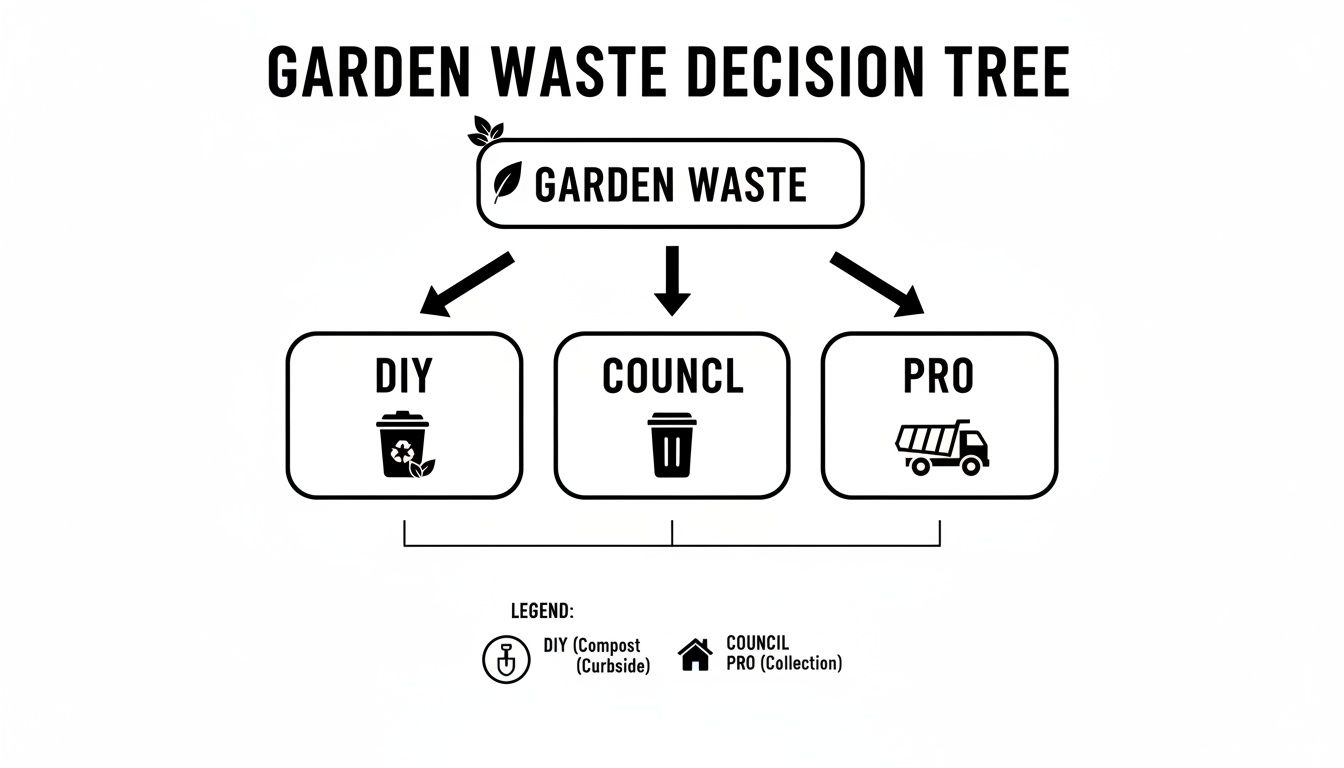
As the diagram shows, the scale of your job is the biggest factor. It points you toward the most sensible starting point, whether you're dealing with a few trimmings or an entire tree.
To help you compare your options even more easily, here’s a quick-glance table. It lays out the pros and cons of the main methods so you can see what works for you, whether you’re prioritising cost, convenience, or your carbon footprint.
Comparing Your Garden Waste Disposal Options
This table is a quick reference for the most common ways to manage garden waste. It highlights the key differences to help you match the method to your needs for any given task.
| Method | Best For | Typical Cost | Effort Level | Environmental Impact |
|---|---|---|---|---|
| Home Composting | Small, regular amounts of green waste; eco-conscious gardeners. | Low (initial bin cost) | Medium | Very High (positive) |
| Council Collection | Consistent, manageable amounts; convenience. | Low-Medium (£40-£80/year) | Low | High (positive) |
| Recycling Centre | Mixed waste types; occasional large loads. | Free (cost of fuel/time) | High | High (positive) |
| Professional Service | Large volumes, bulky items, or urgent clearances. | Medium-High (from £80+) | Very Low | Varies (choose licensed carriers) |
As you can see, there's a solution for every scenario. The trick is knowing which one to use and when.
Turn Your Waste into Black Gold with Home Composting
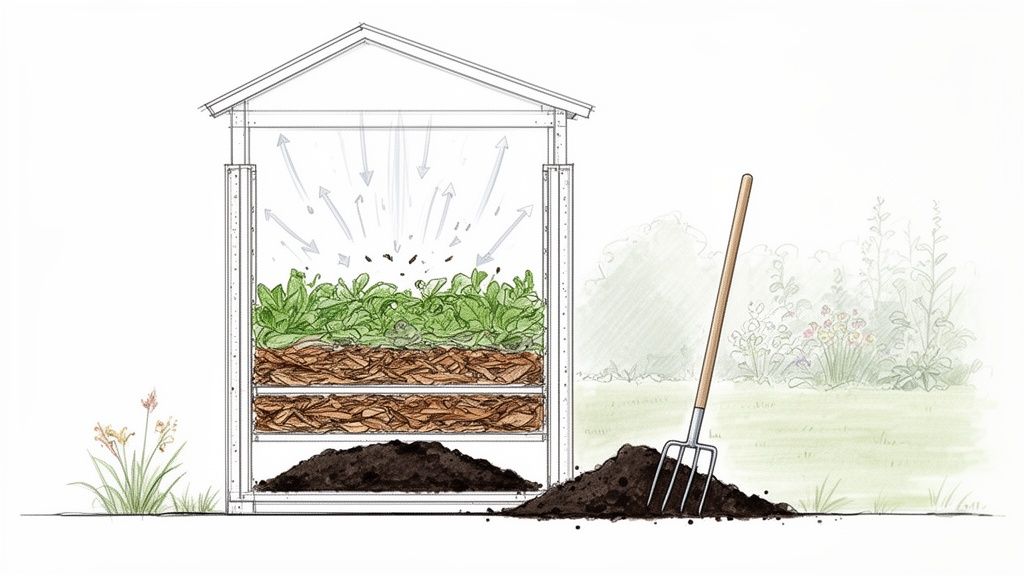
If you're after the most satisfying and sustainable answer to your garden waste problem, you don't need to look any further than your own back garden. Home composting is a wonderfully simple, natural process that turns your lawn clippings, prunings, and even kitchen scraps into a dark, crumbly, and nutrient-packed material lovingly known as 'black gold'.
Think of it as the ultimate closed-loop recycling system. Instead of having all that valuable organic matter hauled away, you get to create a powerful soil conditioner that will give you healthier, stronger, and more vibrant plants. It’s a win-win: you reduce waste, save money on fertilisers, and do wonders for your garden's ecosystem.
Your humble compost bin is also part of a much bigger picture. The UK has been making a real push to cut down on biodegradable waste heading to landfill, and home composting is a huge part of that success. Between 2022 and 2023, the amount of this waste sent to landfill plummeted from 6.3 million to 5.3 million tonnes. That's a massive 1 million tonne reduction in a single year, and your efforts at home really do contribute.
The Secret Recipe: A Balanced Diet for Your Compost
The secret to great compost is all about balance. Just like us, your compost pile needs a good mix of ingredients to thrive. It all boils down to two simple categories: 'greens' and 'browns'.
-
'Greens' (Nitrogen-Rich): These are the fresh, moist materials. Think of them as the 'accelerator' in your compost, providing the nitrogen that gets the microorganisms working. We're talking about things like grass clippings, fresh weeds (before they set seed!), and fruit and veg peelings from the kitchen.
-
'Browns' (Carbon-Rich): These are the dry, woody bits. They provide the carbon, which is the essential energy source for those same microbes. Browns also add structure and create crucial air pockets, stopping your pile from turning into a slimy, smelly mess. Good examples are fallen leaves, small twigs, torn-up cardboard, and straw.
The golden rule for a happy, healthy compost pile is to aim for a ratio of roughly one part 'greens' to two or three parts 'browns' by volume. This balance gives the microbes everything they need to work their magic efficiently, without kicking up a stink.
Getting Started: Your First Compost Bin
Getting your compost system up and running is dead easy. You can buy a dedicated compost bin from any garden centre (your local council might even offer them at a discount), or you can just build a simple heap in a corner of your garden. The main thing is to pick a spot that's level, well-drained, and gets a bit of sun to keep things warm.
Here’s a simple step-by-step guide to get your first pile going:
-
Build a Base Layer: Start with a layer of coarse brown material at the bottom, like twigs or scrunched-up cardboard. This is really important for good drainage and air circulation.
-
Add Your First Layers: Now, start adding your greens and browns in alternating layers, a bit like making a lasagne. A layer of grass clippings, then a layer of dry leaves, then your kitchen scraps, and so on.
-
Keep it Moist: Your compost pile should feel like a wrung-out sponge – damp, but not dripping wet. If it looks too dry, decomposition will grind to a halt. If it’s waterlogged, it can get smelly. A quick spray with the hose is all it needs if it's looking parched.
-
Turn it Regularly: Every couple of weeks or so, grab a garden fork and give the pile a good turn. This mixes everything up and gets oxygen in, which is vital for the decomposition process and really speeds things along.
Troubleshooting Common Composting Problems
Even seasoned gardeners run into the odd compost snag. Don't worry – a simple tweak is usually all it takes to get things back on track.
-
Problem: The pile is smelly. This is the classic sign of too much nitrogen (too many 'greens') and not enough air.
- Solution: Get more 'browns' in there! Mix in shredded paper, torn cardboard, or dry leaves to soak up moisture and create air pockets. Turning the pile will help, too.
-
Problem: Nothing seems to be happening. The pile has gone cold, and decomposition has slowed right down.
- Solution: It’s most likely too dry. Add some water to get it damp again. It could also be that it needs a nitrogen boost, so add a fresh layer of grass clippings or kitchen scraps to kickstart the process.
Composting is a bit of an art and a science, but it’s a very forgiving one. For those who love a bit of tech, you might even find it interesting to explore AI-based composting recommendations which look at optimising the process. But honestly, with a little bit of attention, you’ll be making your own black gold in no time.
Your Council's Green Waste Collection Service
While home composting is brilliant for turning kitchen scraps and some garden clippings into black gold, it can’t always handle everything. When you’re faced with a mountain of grass cuttings or a heap of hedge trimmings, your local council's garden waste collection is often the easiest and most reliable solution.
Think of it as a subscription service for your garden. You pay an annual fee, they give you a green wheelie bin, and they come and empty it on a regular schedule – usually every fortnight. It’s a simple system designed for the common, everyday waste that a healthy garden produces.
This kind of service has become a big deal for UK councils. By 2025, a whopping 92% of them are offering garden waste collections. The majority (84%) run them as a paid subscription. The impact is clear: 59% of all our garden waste is now properly recycled or composted each year, showing just how effective these schemes are. You can dig into more of these stats over on permiserv.com.
Playing by the Green Bin Rules
To get the most out of the service, you need to know what to put in the bin. The rules are pretty consistent from one council to the next, but getting it right means your bin will always be collected and the waste can be turned into quality compost.
Here’s a general guide to what’s usually allowed in and what needs to stay out:
-
What Goes In:
- Grass cuttings and fallen leaves
- Twigs and small branches (the rule of thumb is nothing thicker than your wrist)
- Hedge trimmings
- Weeds (but not invasive ones like Japanese Knotweed – they need special handling)
- Dead flowers and old plants
-
What Stays Out:
- Soil, turf, and large stones
- Food waste of any kind (this includes pet waste)
- Large logs or thick branches
- Plastic bags, plant pots, or any other non-organic rubbish
- Rubble or hardcore from DIY projects
So why can't you chuck in a bit of soil or old turf? It's all about weight and contamination. Soil is incredibly heavy and can make the bins too dangerous for the collection crews to lift. More importantly, it messes up the finely-tuned composting process that all the green waste goes through.
A Local Look: Bristol and Bath Council Services
If you live in our patch, here’s what you need to know. Both Bristol and Bath offer great subscription services, but with a few key differences.
Bristol City Council:
The service here runs from February to November. You can sign up for one or more 240-litre green bins. The key thing to remember is that collections stop over winter, so you'll need another plan, like home composting, for those colder months.
Bath & North East Somerset (B&NES) Council:
B&NES offers a year-round fortnightly service, which is handy. You get a choice of bin size – a standard 240-litre or a smaller 140-litre if your garden is tiny. They also sell single-use garden waste sacks for those one-off big clear-outs, giving you a bit more flexibility.
Taking a Trip to the Tip
What about all the stuff that can't go in the green bin? For chunky branches, old turf, or a barrow-load of soil, your local Household Waste Recycling Centre (HWRC) – or 'the tip', as we all call it – is the right place.
Before you load up the car, always check your local council's website. You almost always need to book a slot online these days, and they often have rules about what kind of vehicle you can bring (vans and trailers might need a special permit). A bit of prep work at home, like separating wood from soil and other green waste, will also make your visit much faster.
4. Call in the Professionals for a Hassle-Free Garden Clearance
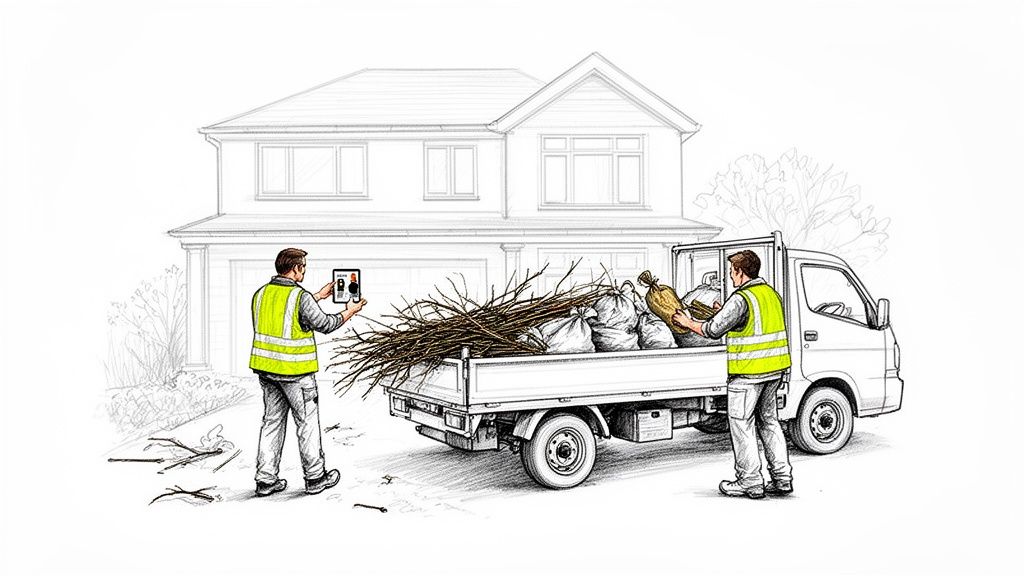
Sometimes, the pile of garden waste is just too big. After a major landscaping project, clearing an overgrown jungle of a garden, or even during the chaos of a house move, you can be left with a mountain that your compost bin or the council's green bin just can't handle.
This is where professional garden clearance services are an absolute godsend. They offer a completely hands-off solution for those overwhelming jobs.
Think about it. You’ve just spent weeks wrestling with old decking, pulling up tired turf, and hacking back unruly shrubs. The very last thing you want is to spend your weekend making endless, muddy trips to the local tip. Hiring a professional team turns that final, grimy chore into a single phone call. They turn up, they load up, and just like that, the waste is gone. You're left to actually enjoy the space you've worked so hard to create.
It’s all about saving you time, back-breaking effort, and a whole lot of hassle. It’s the ultimate convenience when you’re short on time or the job requires more muscle than you can spare.
How Does Professional Garden Waste Removal Work?
Booking a professional clearance is a surprisingly simple process, designed to be as efficient as possible. While every company has its own way of doing things, the general steps are pretty similar and all focus on making your life easier.
Here's a typical rundown of what to expect:
-
Get in Touch for a Quote: You’ll start by contacting them to describe what you need clearing. Many modern services now use video surveys – you just walk them through the waste on a video call from your phone, which means they can give you a quick and accurate quote without even visiting.
-
Book Your Slot: Once you’ve agreed on the price, you book a two-hour arrival window that suits your schedule. A good team will always confirm the booking and give you a heads-up when they’re on their way.
-
The Clearance Itself: A uniformed crew arrives with the right size vehicle for your job. They do all the heavy lifting, loading everything from bags of leaves and soil to bulky branches and even dismantled sheds. You really don't have to lift a finger.
-
Tidy Up and Responsible Disposal: After loading everything, they'll give the area a good sweep-up, leaving it tidy. The waste is then taken to a proper commercial recycling facility to be sorted, ensuring as much as possible is kept out of landfill.
Why You Must Check for a Waste Carrier Licence
When you're choosing a company for your garden clearance, there is one thing that is absolutely non-negotiable: they must have a Waste Carrier Licence. This isn't just a bit of paperwork; it's your legal protection.
Issued by the Environment Agency, this licence proves a company is authorised to transport and dispose of waste correctly and legally. Hiring someone without one is a huge risk. If your waste gets fly-tipped—even if you had no idea it would happen—you could be held responsible and face hefty fines of up to £5,000.
Always ask to see proof of a company's Waste Carrier Licence. A reputable service will be more than happy to show you their licence number, which you can easily check online. This simple step gives you complete peace of mind.
By choosing a licensed professional, you are fulfilling your legal 'duty of care'. It’s the smart, responsible choice that protects your wallet and our local Bristol and Bath countryside from the blight of fly-tipping. It's well worth getting a handle on the costs involved, so you can see how an expert guide to garden clearance costs breaks it down.
Is a Professional Collection Really Worth It?
Let’s be honest about the alternative for a big clear-out. You could spend your Saturday morning stuffing your car full of muck, getting the boot filthy, driving to the recycling centre, waiting in a long queue, unloading it all, and then doing it all over again. And again.
Or, you can make one phone call. A professional team arrives and the entire pile is gone in a fraction of the time. Yes, there's a cost, but the value is clear when you add up your own time, fuel, and the sheer physical effort you save. For large volumes of garden waste, it’s often not just the easier option—it’s the most efficient one by a country mile.
Creative Ways to Reuse Garden Waste
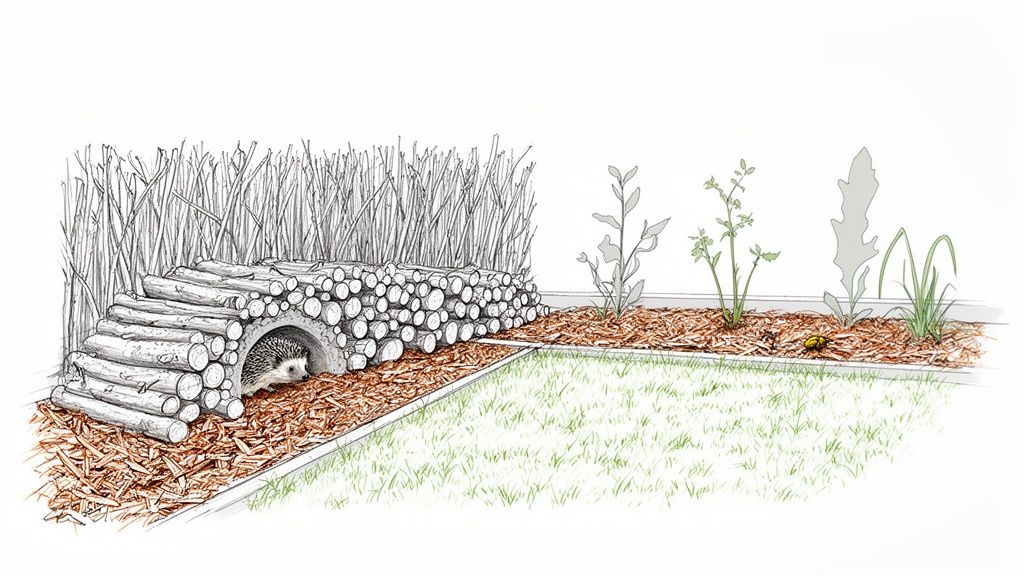
Before you start bagging up every last twig and leaf, take a moment. What you see as a pile of garden waste could actually be a brilliant resource for your garden. Many of the cuttings, prunings, and leaves can be put straight back to work, creating a healthier, self-sustaining ecosystem that saves you a job.
This idea of a ‘circular garden economy’ is all about feeding the garden with what it produces. It's a remarkably efficient way to cut down on the amount of waste you need to get rid of, all while improving your soil and giving your plants a boost. It’s a simple change in mindset: seeing potential in every fallen leaf and pruned branch.
Doing our bit with garden waste really matters. The UK's garden waste recycling rate is a respectable 59%, but that figure shines when you compare it to other materials. Plastic waste recycling, for example, is just 10%, while metals hit 41% and textiles only 16%. By finding uses for your garden waste at home, you're taking pressure off the entire system.
Create a Living Mulch
One of the simplest and most effective ways to reuse garden materials is to turn them into mulch. Think of it as a protective blanket for your soil, spread over the surface of your flowerbeds and veg patch. It’s a fantastic destination for all those woody prunings and fallen leaves.
While composting is great, mulching is another powerful tool in your sustainable gardening arsenal. You can learn more about the benefits of mulching for sustainable land management to see just how much good it does.
Here’s how to turn common garden waste into top-quality mulch:
- Shredded Branches: Woody prunings that are too thick for the compost bin can be fed through a garden shredder. The resulting wood chips make a brilliant, long-lasting mulch.
- Leaf Mould: Rake up your autumn leaves into a pile in a quiet corner and just leave them. In a year or two, they’ll break down into a dark, crumbly, and nutrient-rich soil conditioner that plants absolutely love.
- Grass Clippings: Don't always feel you have to collect the clippings when you mow. Leaving a light scattering on the lawn—a trick known as ‘grasscycling’—returns valuable nitrogen straight back to the soil.
By spreading a layer of mulch, you're doing so much more than just tidying up. You're stopping weeds in their tracks, helping the soil hold onto precious moisture during dry spells, and even regulating the temperature to protect your plants' roots.
Build a Haven for Wildlife
Believe it or not, your garden ‘waste’ can be a five-star hotel for local wildlife. Creating habitats from logs, branches, and leaves is a wonderful way to use up larger garden debris while inviting more biodiversity into your space. A garden teeming with beneficial insects, birds, and predators is your best defence against pests.
It’s surprisingly easy to build a few simple structures that make a massive difference:
- Log Piles: Find a quiet, shady corner and simply stack up any logs, thick branches, or old stumps. This creates the perfect damp, cool shelter for beetles, centipedes, and even provides a safe spot for hedgehogs or toads.
- Dead Hedges: This sounds grim, but it’s a beautiful, rustic feature. Drive two rows of stakes into the ground and loosely fill the gap between them with twigs, branches, and woody prunings. It quickly becomes a thriving corridor and home for birds and insects.
These small actions can completely change how you view garden waste, turning a chore into an opportunity. This kind of creative thinking can be applied to other things, too; our guide on how to dispose of unwanted furniture has some great ideas for repurposing other large household items you might be clearing out.
Staying Safe and on the Right Side of the Law
When it comes to getting rid of garden waste, it’s not just about tidying up. You’ve also got to do it legally and safely. Getting this wrong can lead to hefty fines, seriously unhappy neighbours, and can even harm the local environment. Knowing the rules is your first and most important step.
A classic point of confusion is the garden bonfire. It might feel like a traditional, easy way to clear a pile of branches, but lighting up comes with some pretty strict rules. The smoke can be legally classed as a ‘statutory nuisance’, and if it blows across your neighbour's garden while they’re trying to enjoy a cuppa, you could be hit with an on-the-spot fine.
Most councils, including Bristol and Bath, strongly discourage bonfires. The smoke isn’t just annoying; it pumps pollutants into the air and can be a real problem for people with asthma or other respiratory conditions. It’s always best to look at other options first.
Your Legal ‘Duty of Care’
If you pay someone to take your waste away, the law says you have a ‘duty of care’. This is a big one. It means you’re legally responsible for what happens to your rubbish, even after it’s driven away from your house.
This law exists to fight fly-tipping, a miserable issue that scars our beautiful countryside. If you hire a 'man-with-a-van' who turns out to be unlicensed and just dumps your old hedge trimmings in a lay-by, you could be the one facing a fine of up to £5,000.
To stay protected, you absolutely must check that any waste removal service you use has a valid Waste Carrier Licence from the Environment Agency. Ask to see their licence number and check it online. Any reputable firm will be more than happy to show you.
Choosing a fully licensed and insured provider is non-negotiable. For instance, when you need a complete clear-out, a professional team can take care of everything from grass cuttings to old sheds, making a house clearance in Bristol a simple, stress-free, and legally sound process.
Hands-On Safety Tips for Handling Garden Waste
Let's not forget the physical side of things. A day in the garden can involve everything from wrestling with thorny bushes to operating some serious machinery. A few simple precautions can make all the difference and keep you free from injury.
Here are a few safety essentials to bear in mind:
- Gear Up: Always pull on a pair of thick, sturdy gardening gloves. They’ll save your hands from sharp thorns, splinters, and sap from plants like euphorbia. A pair of solid, closed-toe boots is also a must-have to protect your feet.
- Handle with Respect: When you’re tackling prickly customers like roses or brambles, chop them down into smaller, more manageable sections before you try to move them. It makes them far easier to bag up and reduces the risk of getting scratched to bits.
- Machine Smarts: Using a garden shredder or chipper? Take five minutes to read the instructions properly. Never, ever put your hands down the chute—that's what the plunger is for. And always wear safety glasses to protect your eyes from flying chips of wood.
Your Garden Waste Questions Answered
We’ve covered the main ways to handle your garden waste, but a few specific questions always seem to crop up. Let's get you some quick, clear answers to the most common ones.
Can I Put Soil and Turf in My Green Waste Bin?
This is a big one, and the short answer is no. Your council’s green waste collection is really just for compostable plant matter – think grass clippings, leaves, and small twigs.
Soil and turf are surprisingly heavy and dense. They can make the bins too heavy for the collection lorries to lift safely and can even damage the machinery at the processing plant. What's more, soil can contaminate the finely-tuned composting process councils use. For chunky amounts of soil or old turf, your best bet is either a trip to your local Household Waste Recycling Centre (HWRC) or calling in a professional clearance service.
What’s the Fastest Way to Get Rid of a Lot of Garden Waste?
If you're staring at a mountain of green waste after a big garden overhaul, the quickest way to make it disappear is to hire a professional garden waste removal company. Sure, you could do countless trips back and forth to the tip, but a dedicated service can clear the whole lot in one go.
They’ll do all the heavy lifting and loading, and you won’t have to worry about how to dispose of it all responsibly. It saves you a massive amount of time, a sore back, and keeps your car from turning into a mobile compost heap.
Is It Legal to Have a Bonfire in My Garden?
This is a bit of a grey area. While a bonfire isn't strictly illegal, you can easily land yourself in hot water. If the smoke from your fire drifts over and becomes a pain for your neighbours – blowing into their garden or through open windows – the council can classify it as a ‘statutory nuisance’, which could lead to a fine.
Most local councils strongly advise against bonfires because of the air pollution and general annoyance they cause. It’s always better to look at greener options like composting, using the council collection, or hiring a removal service first.
When you need a quick, reliable, and hassle-free solution for your garden clearance, SimplyPro Removal & Storage Ltd is here to help. Our professional teams can handle any amount of garden waste, making sure it’s all disposed of responsibly. Get your free, no-obligation quote today.